Review Uniswap cross-chain debate, encryption unicorn is still the original intention?

CryptoBricks
1. The origin of disputes: anti-bifurcation BUSL
Vampire attack
On 26 August 2020, Sushiswap added a SUSHI Token on top of a copy of Uniswap source code to decentralize protocol governance to community users.precursorIt has been argued that Liquidity Provider (hereinafter referred to as LP) is the core role of new liquidity pool to achieve growth flywheel [1], so Sushiswap has been referred to Uniswap since its launch. The core logic of LPs that attracted Uniswap's capital pool through SUSHI's Tokenomics design was to give SUSHI HODLers more equity in order to achieve retention.
Sushiswap's three-tier attack:
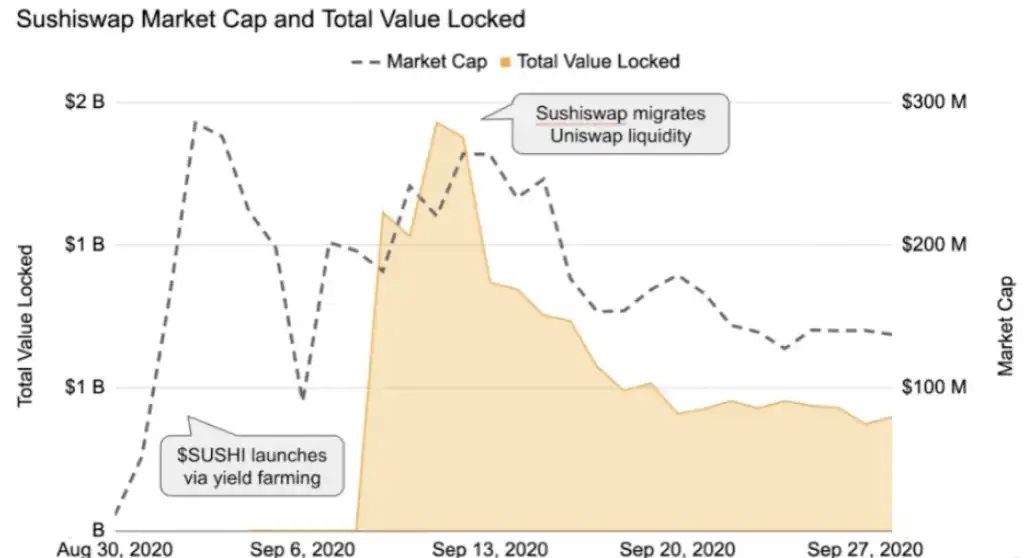
Data source: DeFi Pulse, Coinbase
Commercial source code license
Despite Uniswap regaining its crown as head DEX with $26B of trading volume in early 2021 (Jan 1, 2021) through the issuance of Governance Token UNI and liquidity mining incentives for its pool, But Sushiswap was also close behind at $1.3B. Considering the increase of DeFi Summer at that time, Uniswap TVL's rise cannot exclude the presence of a large amount of money entering the Crypto component, and its market share is still eaten by Sushiswap. A forked protocol is still the fourth largest in terms of market share in DEX today (Feb, 2023) [3].
Therefore, in order to prevent such attacks from affecting protocol stability, Uniswap applied for V3 before it went liveCommercial source code license, except those licensed under GPL-2.0 or highercontracts/interfaces/andcontracts/libraries/And inMIT licenseOr unlicensed files, Uniswap V3's core code is all thereBusiness Source License 1.1 (Bus-1.1)Under the License [4], which states that "a Change License is available to any person from the date of change, or four years after the first Public distribution of a particular version of the licensed work under this License - GNU General Public License v2.0 or later, And the right to copy, modify, create derivative works, redistribute and non-productively use licensed works [5]. In short, after the Bus-1.1 license expires (Apr 1, 2023), anyone can deploy Uniswap V3 on any chain and profit. Thus, this is where Uniswap governance comes in. Uniswap urgently needs to deploy protocols on the BNB Chain to gain market share.
Two, cross-chain disturbance
Uniswap governance Process
As updated by devinwalsh in January 2023Community Governance Process Update [Jan 2023], Uniswap's current governance process is:
Stage 1: Request for Comment (RFC)
The second stage: Temperature Check
Stage 3: Governance Proposal
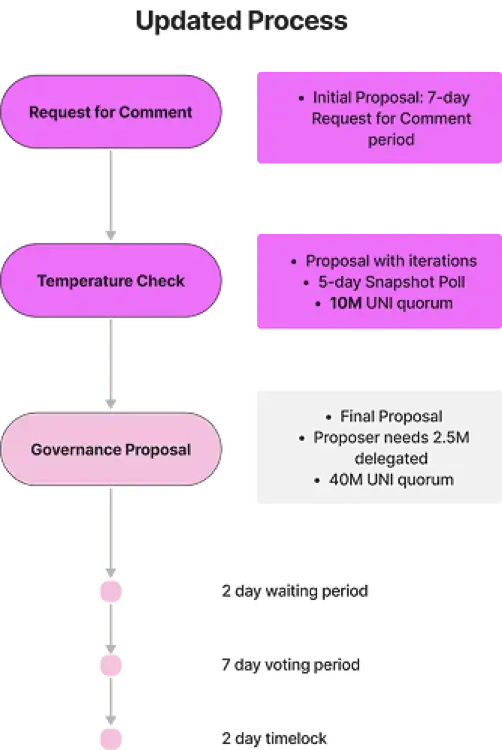
According toDeploy Uniswap v3 (1/0.3/0.05/0.01) on BNB Chain (Binance) Deploy UnisWAp V3 (1/0.3/0.05/0.01) On BNB Chain (Binance)As planned by the proposer ilia_0x, the process of this proposal is as follows:
2. Uniswap v3 + Governance Bridge Deployment on BNB Chain Testnet. Tests and Simulations.
5. Uniswap v3 Deployment to BNB Chain mainnet
6. Subgraph Deployment
7. Uniswap UI integration*
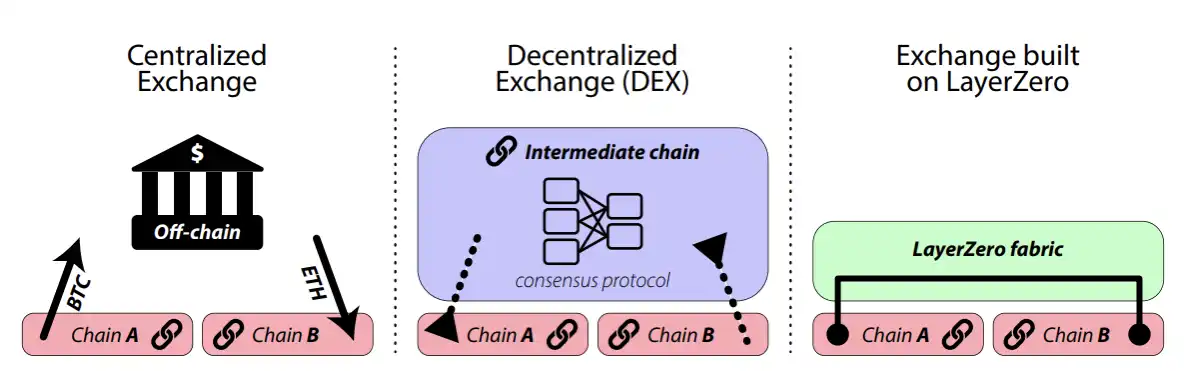
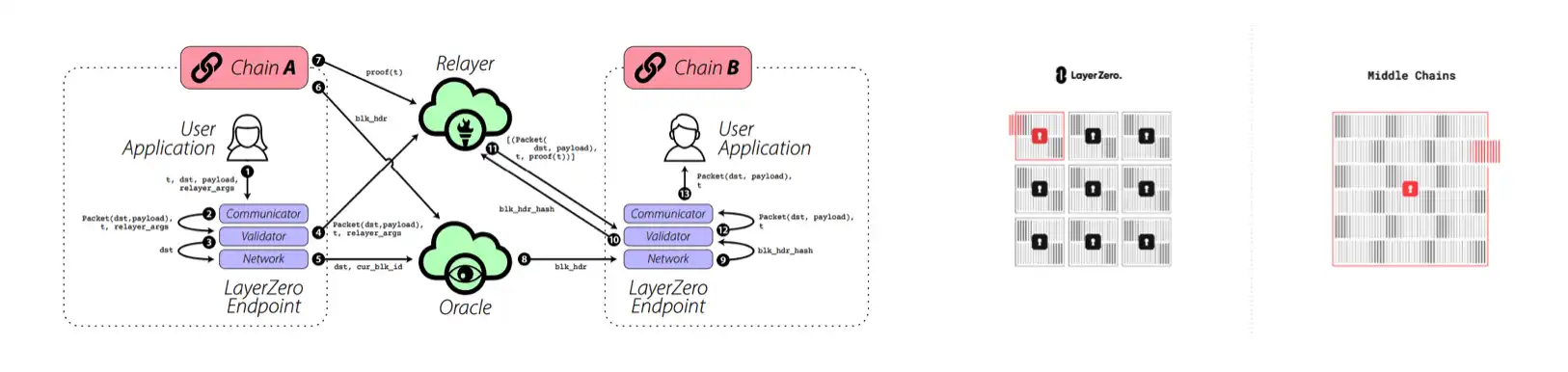
However, when the community passed by a margin of 20M UNI, 80.28%Should Uniswap v3 be deployed to BNB Chain?After the temperature check vote, the community was divided on the choice of cross-chain tools. Unlike Sushiswap, Uniswap currently supports Ethereum and its Layer 2, so deploying the protocol at Layer 1 like BSC requires inter-chain information transfer, asset transfer, and other functions through community-selected cross-chain tools. The controversy also centers on Jump Crypto, Folius Ventures backed Wormhole, and a16z and Sequoia Investments' LayerZero.
Comparative analysis of tools across chains
Rethinking the cross - chain after the storm clears
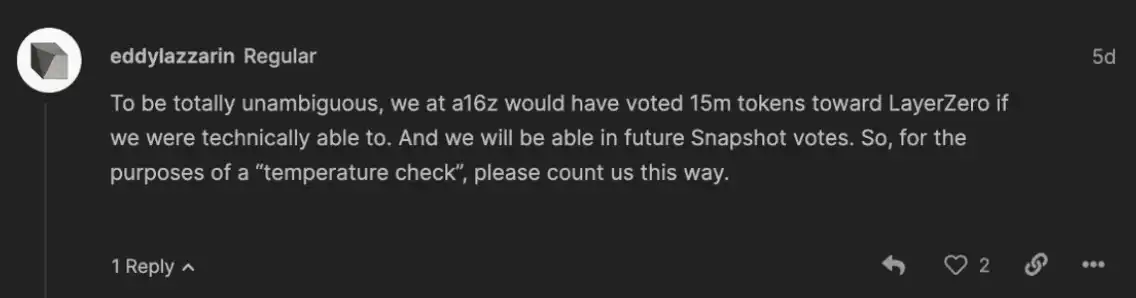
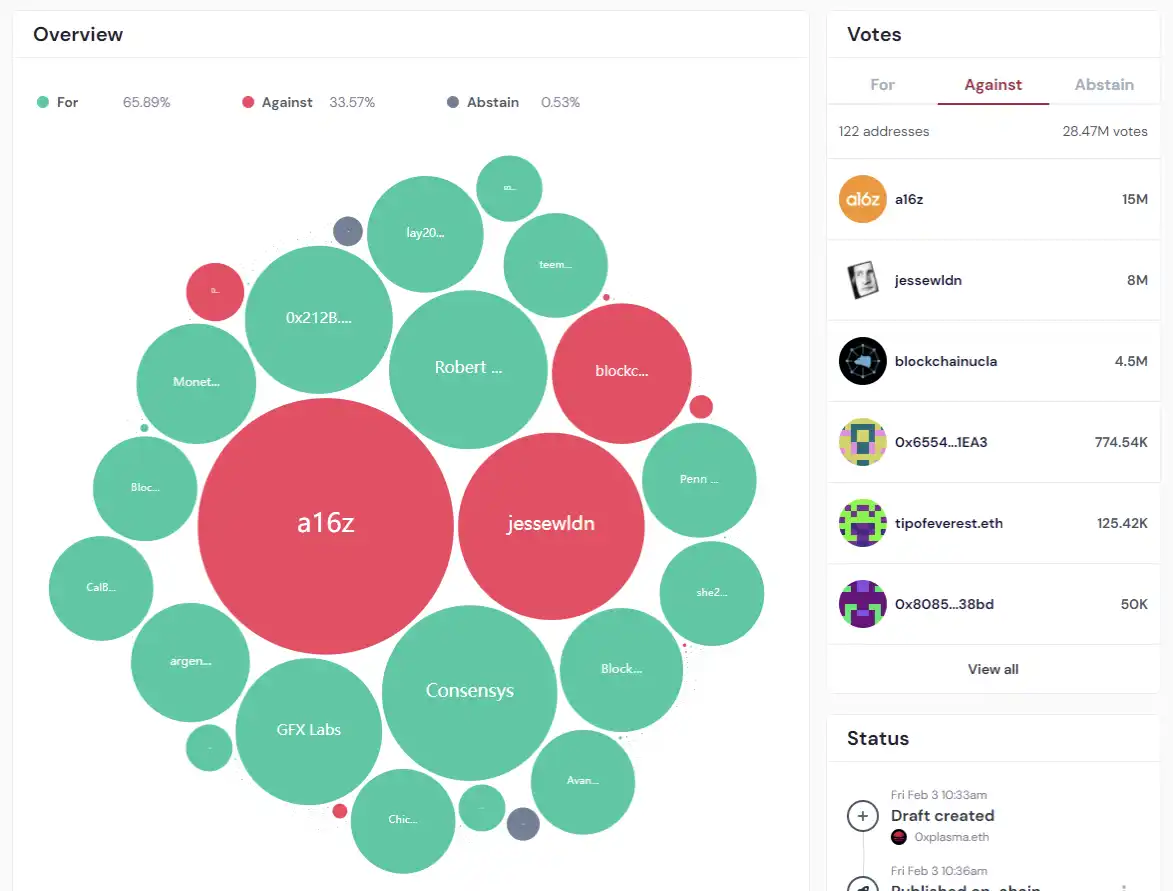
In the face of opposition from a16z 15M UNI, Wormhole finally resisted the pressure and became the final choice of the community with 55.88M UNI, 65.89%. Even though LayerZero put forward the concept of Omnichain, cross-chain is no longer a one-to-one channel, but a one-to-many network, thus greatly reducing the risk of deployment contract. However, considering only the migration of Uniswap to a BSC chain, the risk level of a contract deployment is similar to Wormhole's, while LayerZero's benefits are more significant for Sushiswap's multi-chain ecosystem. Uniswap's selection of Wormhole and LayerZero's Sushiswap also form cross-chain tool risk hedging. In addition, LayerZero is actually "non-endorsing" compared to Wormhole, and instead leverages a kind of relationship withNostrSimilar logic shifts the risk to protocols, but with Uniswap's billion-dollar daily volume of DEX, the risk is less manageable than getting a few spam messages. Wormhole, which is endorsed by more than 13 top Crypto institutions (accounting for more than 2/3 of the verification nodes), may have no lower evil cost than LayerZero. And Jump Crypto, which spent $300 million to plug the hole, does add another layer of insurance to the Wormhole.
3. Power game under decentralization
Reference materials:
[1]: https://www.notion.so/access2everything/Uniswap-5bea623734af432fb3230cda05ba225c
[2]: https://messari.io/report/the-sushi-chronicles
[3]: https://dune.com/queries/4319/22558
[4]: https://github.com/Uniswap/v3-core#licensing
[5]: https://github.com/Uniswap/v3-core/blob/main/LICENSE
[6]: https://mp.weixin.qq.com/s/pN2axW6_8VspgOUEYx7YCA
[7]: https://gov.uniswap.org/t/community-governance-process-update-jan-2023/19976
[8]: https://gov.uniswap.org/t/community-governance-process-update-jan-2023/19976
[9]: https://www.tally.xyz/gov/uniswap/proposal/31
[10]: https://gov.uniswap.org/t/rfc-update-deploy-uniswap-v3-1-0-3-0-05-0-01-on-bnb-chain-binance/19734
Welcome to join the official BlockBeats community:
Telegram Subscription Group: https://t.me/theblockbeats
Telegram Discussion Group: https://t.me/BlockBeats_App
Official Twitter Account: https://twitter.com/BlockBeatsAsia

 Related Articles