What are the projects that a16z and Coinbase are optimistic about in the "Crypto Index"?


Original author: Ignas, DeFi researcher
Original translation: Leo, BlockBeats
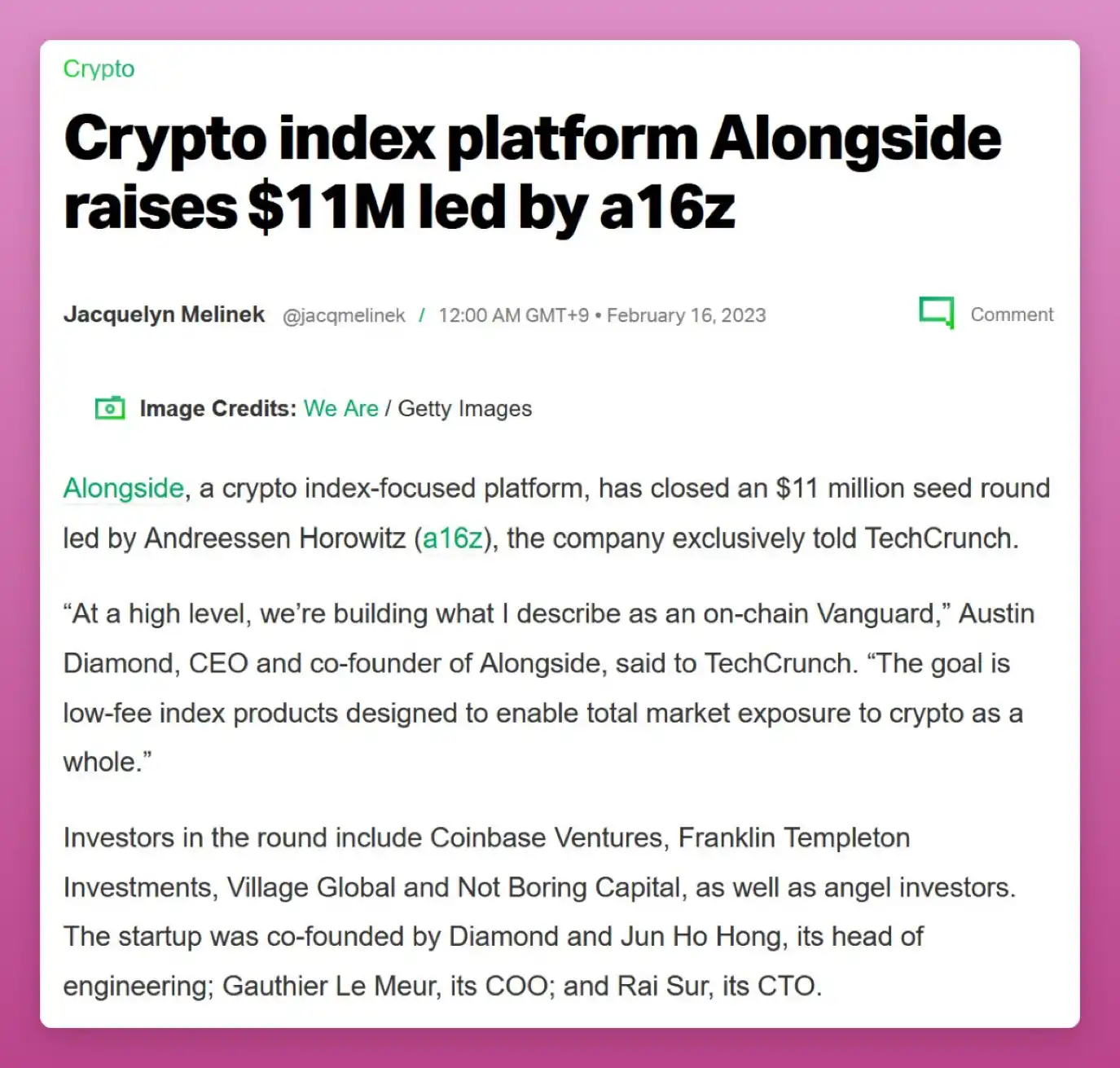
Recently, the crypto index platform Alongside completed $11 million in financing, led by a16z, with participation from Coinbase Ventures, Franklin Templeton Investments, Village Global and Not Boring Capital. For users, the project seems unfamiliar, and for a crypto project that is not hot, it can complete this level of financing - the financing amount and investment institutions are very good, backed by high-quality venture capital, which may be the next "wealth code" in the crypto market. To this end, BlockBeats looked up the content related to the crypto index track. Previously, DeFi researcher Ignas wrote an article about this track. Compiled as follows:
Data shows that stock indexes account for 18% of the TradFi stock market. Crypto indexes only account for 0.007% of the crypto market. Therefore, the moment for on-chain indexes to shine may be earlier than you think. Here are the reasons for being optimistic about crypto indexes:
Alongside, a cryptocurrency index platform, completed an $11 million financing last week, led by a16z and participated by Coinbase Ventures. In fact, DeFi projects usually raise $1 million to $4 million. DeFi index projects are all undercapitalized, and Alongside's crypto market index (AMKT) has only 341 holders. Venture capital is usually forward-looking, so this is an area that cannot be ignored.
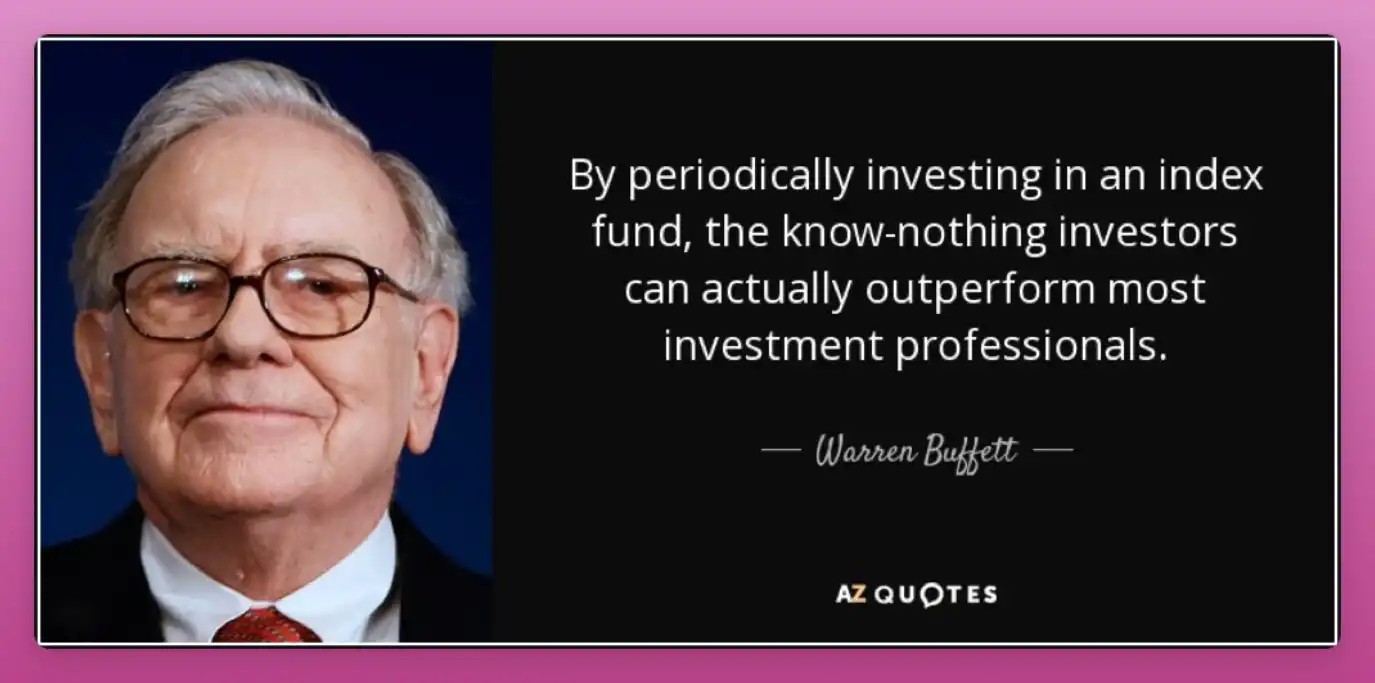
Buffett once said in his early years: "By regularly investing in index funds, an amateur investor who knows nothing can often beat most professional investors." Stock indexes obtain information by tracking the trends of a group of stocks, such as the S&P 500. But crypto indexes are still in their early days, and most experienced crypto natives believe they can manage their positions better.
For investors, the performance of projects and tokens needs to be constantly measured and judged. The current crypto market is based on BTC and ETH as benchmarks. In order to prove its value, the crypto index needs to surpass them. However, the largest DeFi index (DPI) developed by Index Coop has been lagging behind ETH.
If you believe in the future of DeFi, it makes sense to hold ETH because ETH is the foundation of the DeFi ecosystem and DeFi blue-chip projects are built on it. The same applies to the NFT ecosystem, and ETH also serves as a token for the growth of NFT adoption.
In addition, ETH does not have the "inflation" that plagues DeFi tokens and is widely recognized as the best collateral for cryptocurrencies. However, some DeFi tokens have performed far better than ETH, so a good index must bring higher upside potential while minimizing risk.
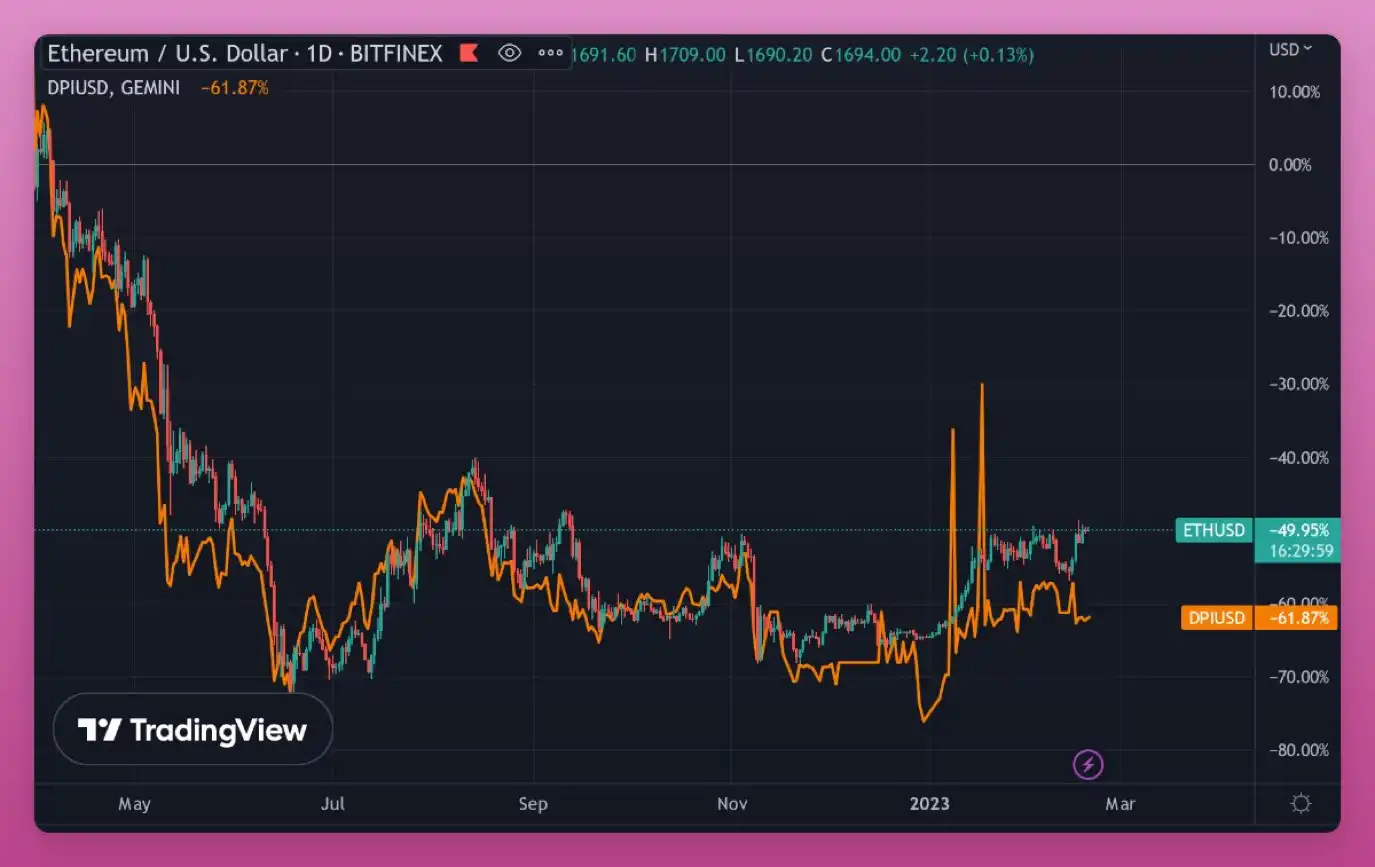
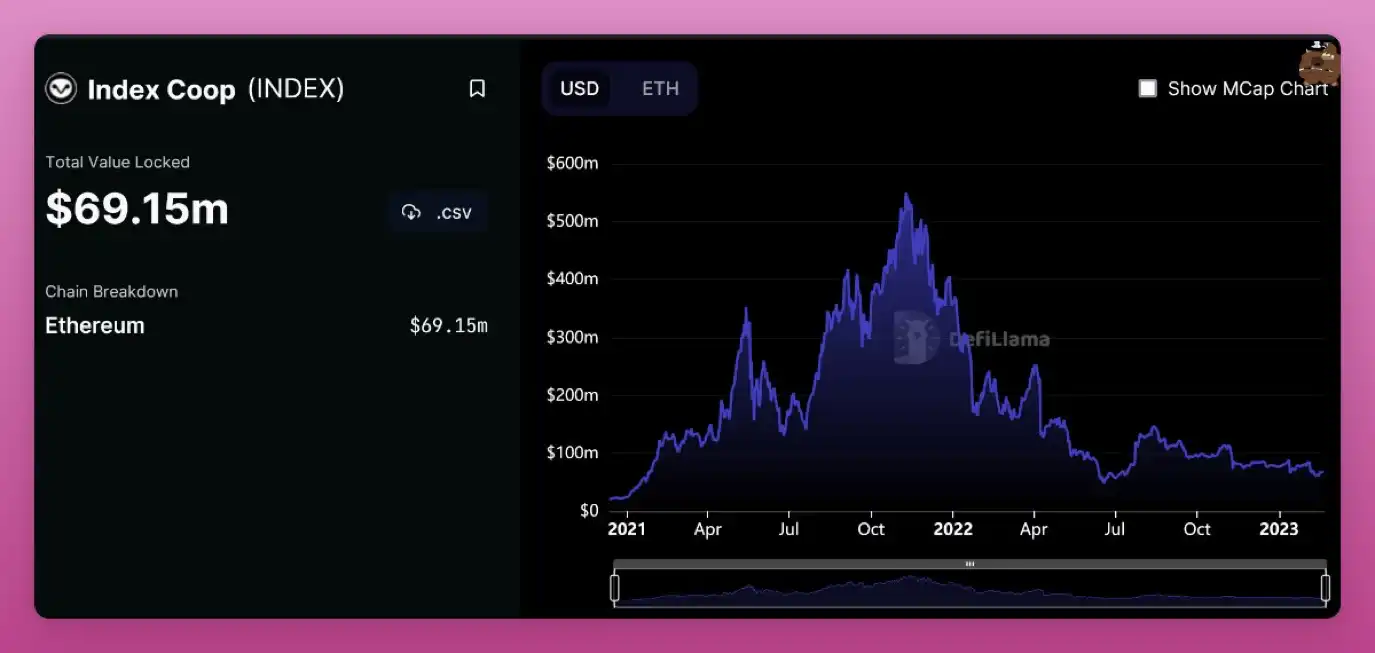
During the DeFi Summer, new DeFi projects emerged every day, and DPI's popularity surged, making it difficult to synchronize all developments in the field. High Gas also prevented small investors from diversifying their investments in multiple DeFi tokens. Finally, because investors believed that these indexes were too risky, the market correction in the fall of 2021, DPI and other indexes fell back, and people still felt that these indexes were too risky and chose to exit, which was also the main reason for capital outflow.
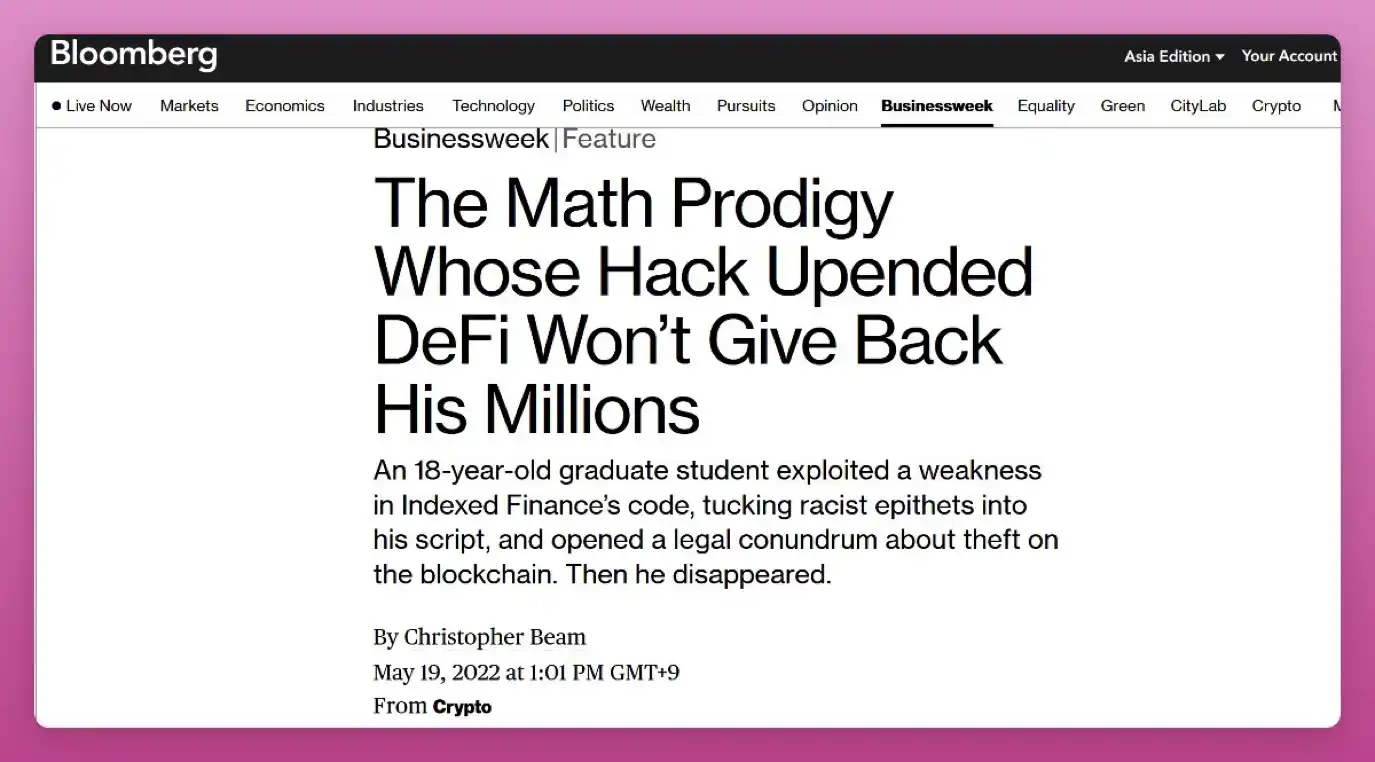
For example, in October 2021, Indexed Finance DEFI5 was attacked and stolen, losing about $18 million in assets. The attacker was an 18-year-old mathematician who used flash loan transactions to rebalance the index pool. Therefore, in the context of such high crypto correlation, it is safer to hold ETH or BTC.
However, as mass adoption and the market mature, crypto indexes will become meaningful and the track is expected to grow. I think Alongside’s recent $11 million seed round is the “trigger” for the crypto index era.
Alongside’s CEO once said: “Our goal is a low-fee index product that aims to make the entire market accessible to the entire cryptocurrency.”
For example, the company's first product is called Alongside Crypto Market Index (AMKT), which is a centralized solution consisting of 25 assets, weighted by market capitalization, designed to give people broad exposure to the entire crypto market through a single token, and its assets are managed by Coinbase.
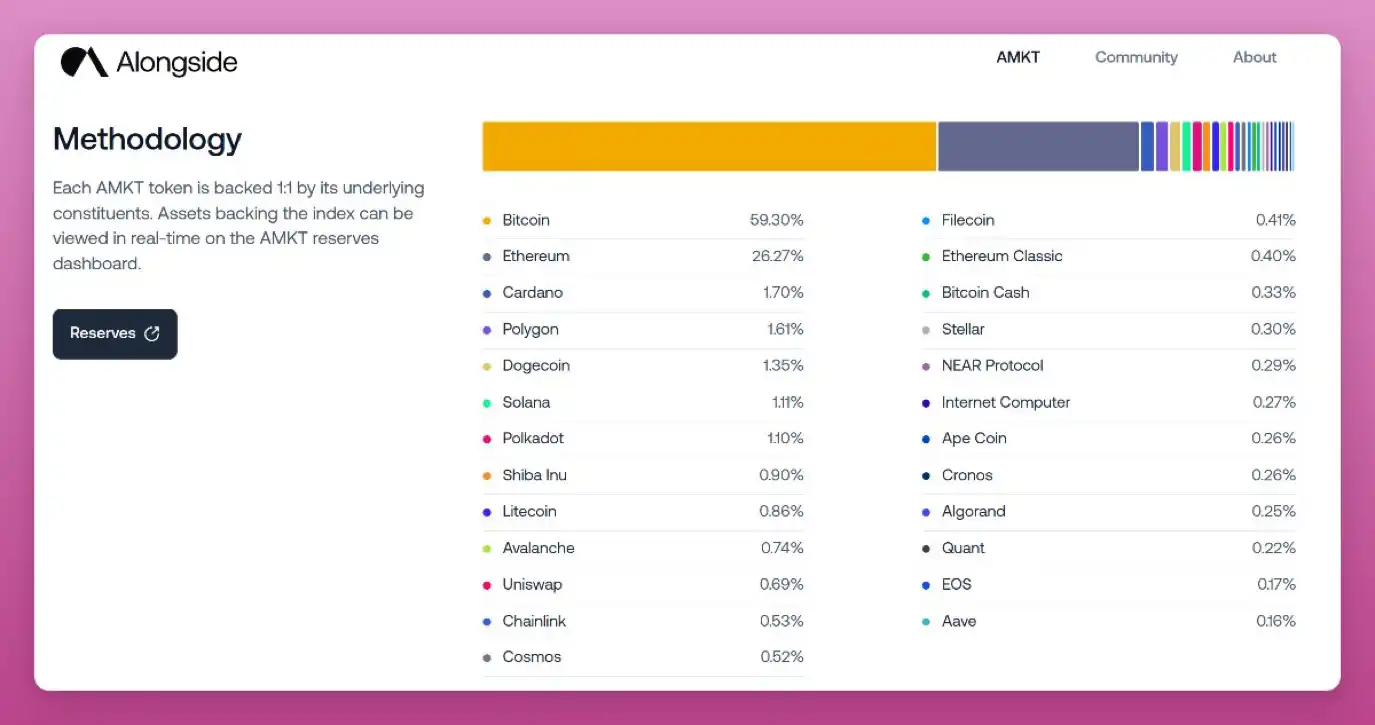
In the TradFi market, indices are public capital allocations, and they follow a set of guidelines called "methodologies", usually weighted by market capitalization, adding or removing assets based on their market capitalization. AMKT currently only supports 25 crypto assets because other assets do not have liquidity depth.
Currently, the main crypto index builders in the crypto market include:
-Index Coop
-Alongside Finance
-Phuture Finance
-Indexed Finance
-PieDAO
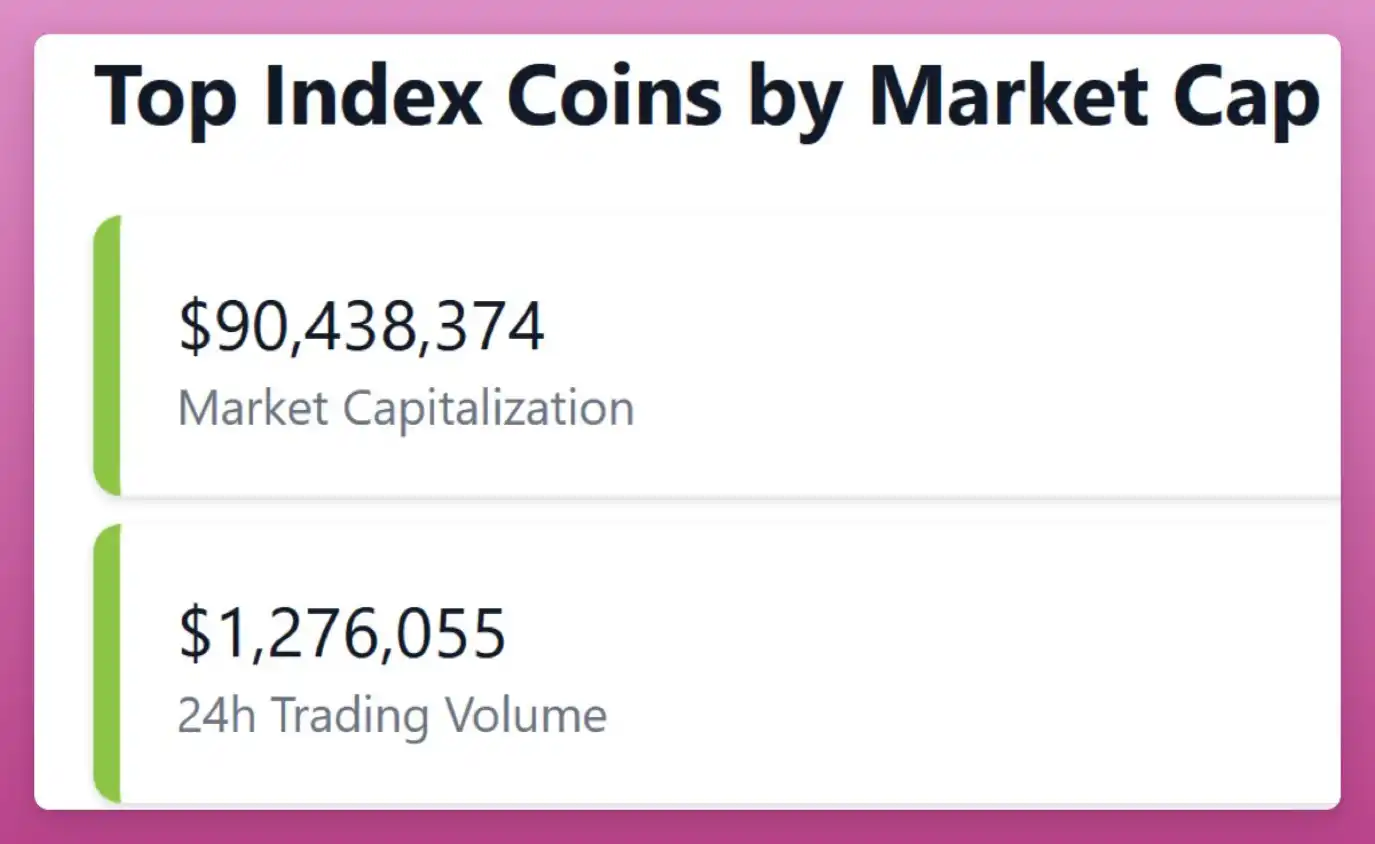
Data shows that the market capitalization of the crypto index field is very low, at about US$90.4 million.
Index Coop
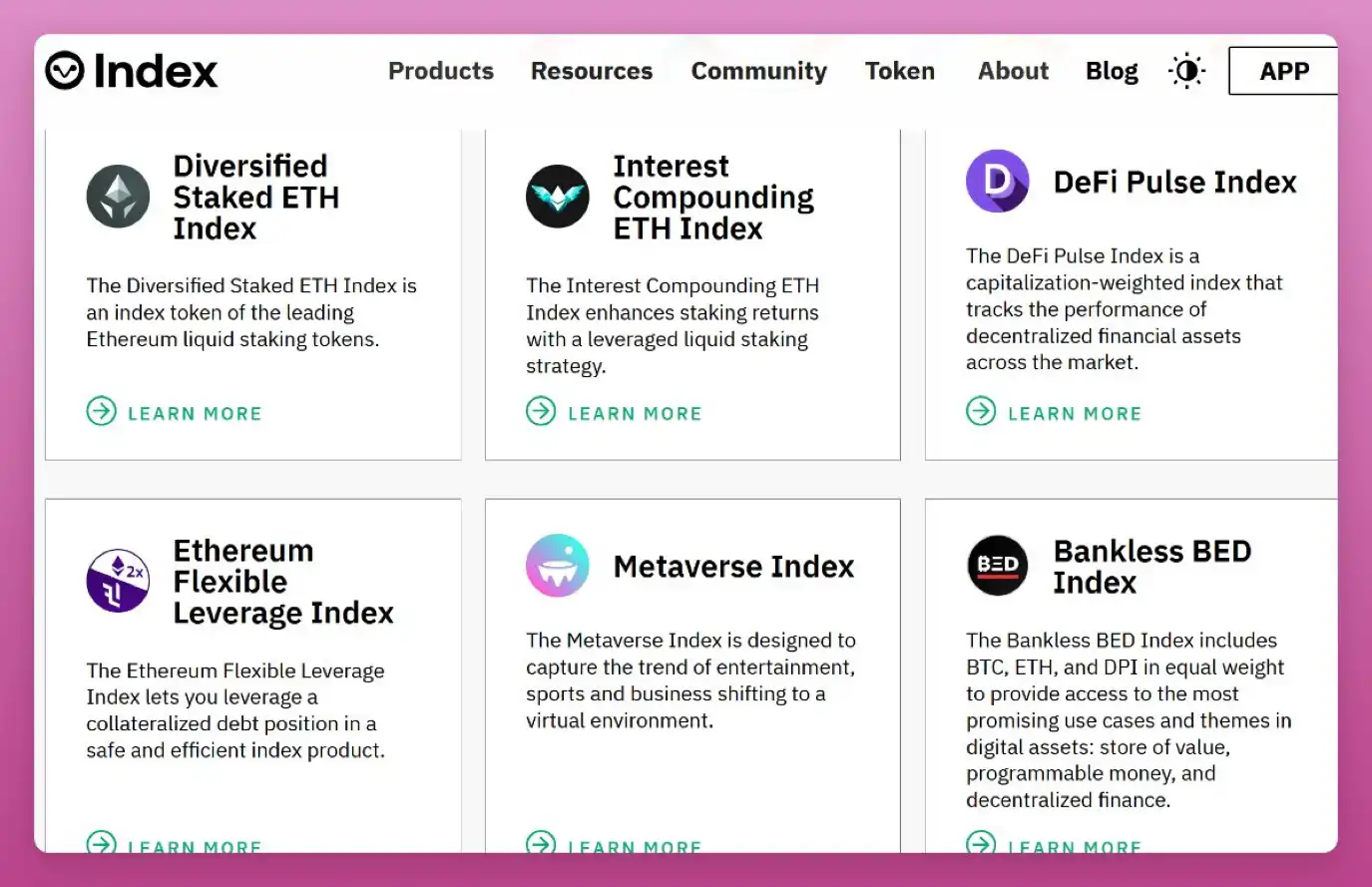
The crypto indices launched by Index Coop include:
-DeFi Pulse Index (DPI)
-Metaverse Index (MVI)
-Bankless BED Index (BED)
Most of the TVL is ETH LSD, and it seems that they prioritize staking ETH services.
Phuture Finance
Phuture Finance is different from Alongside. They provide non-custodial, on-chain and yield-generating products. Including:
-Phuture DeFi Index (PDI)
-Colony Avalanche Index (CAI)
-USDC Savings Vault (USV)
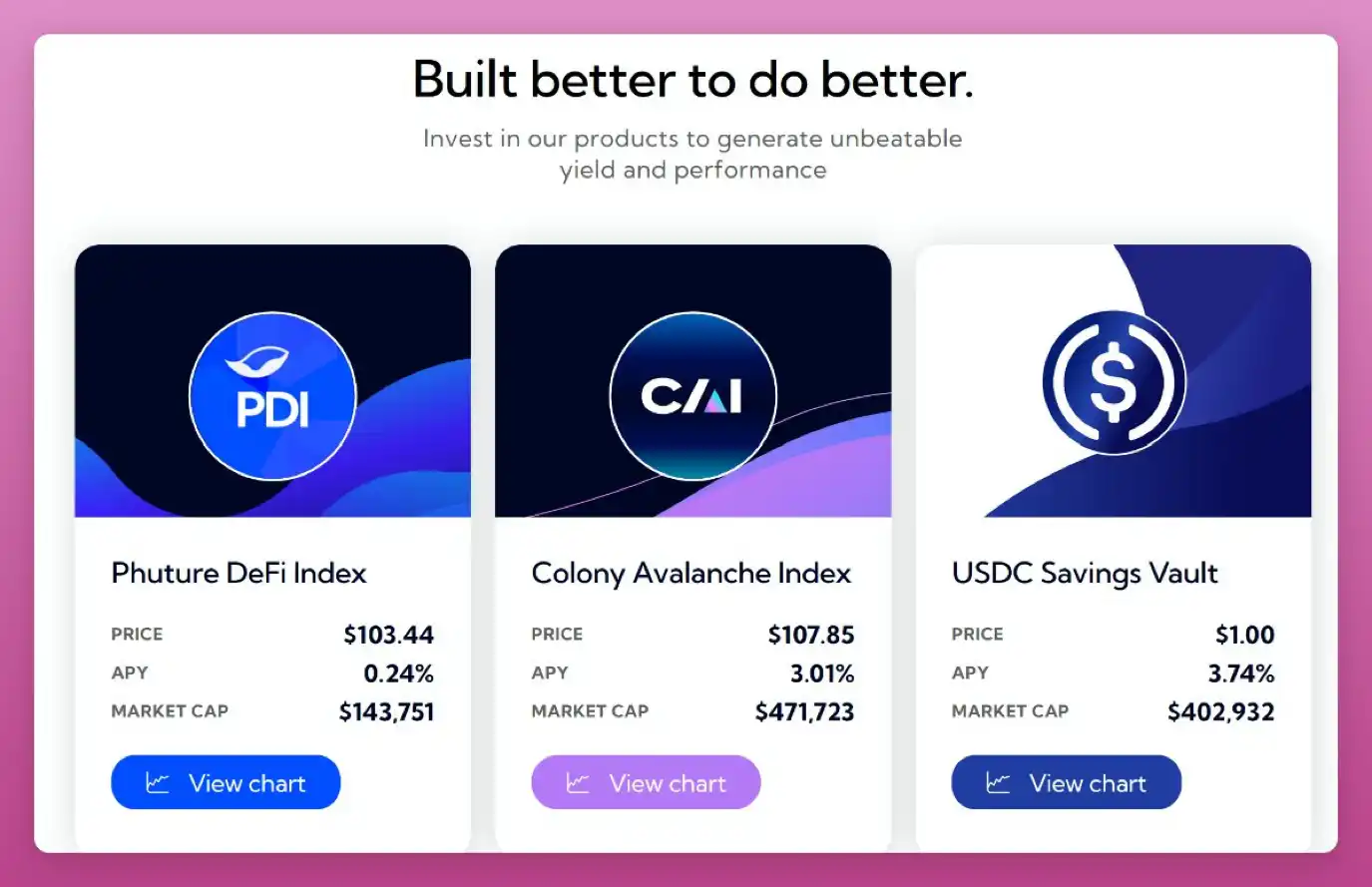
PDI follows the market capitalization weighted approach, with transactions executed through 0x, which means that users can execute large transactions because users have 100% of the asset mint rights, and Phuture has been integrated with Yearn to allow some assets to generate returns.
Indexed finance
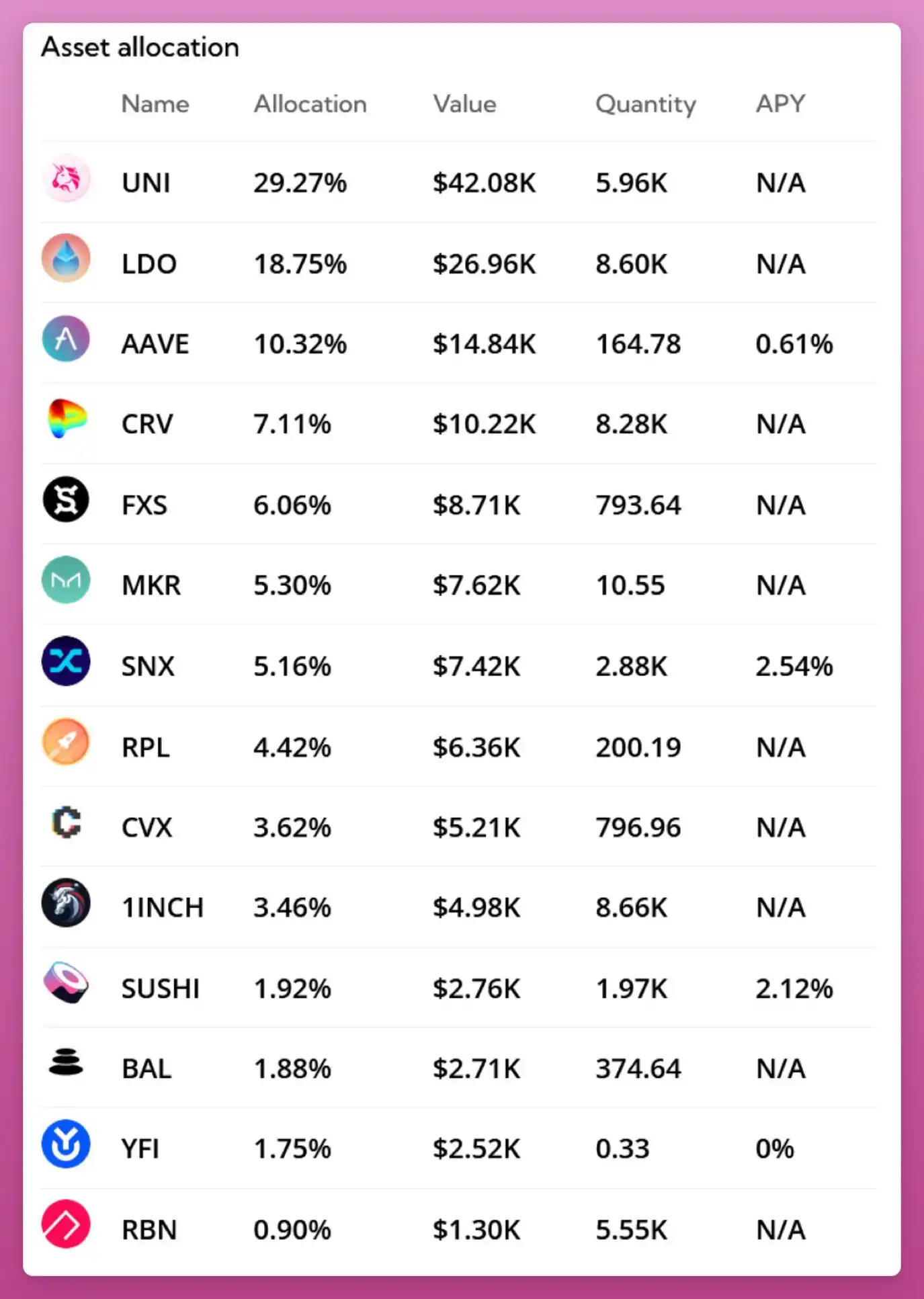
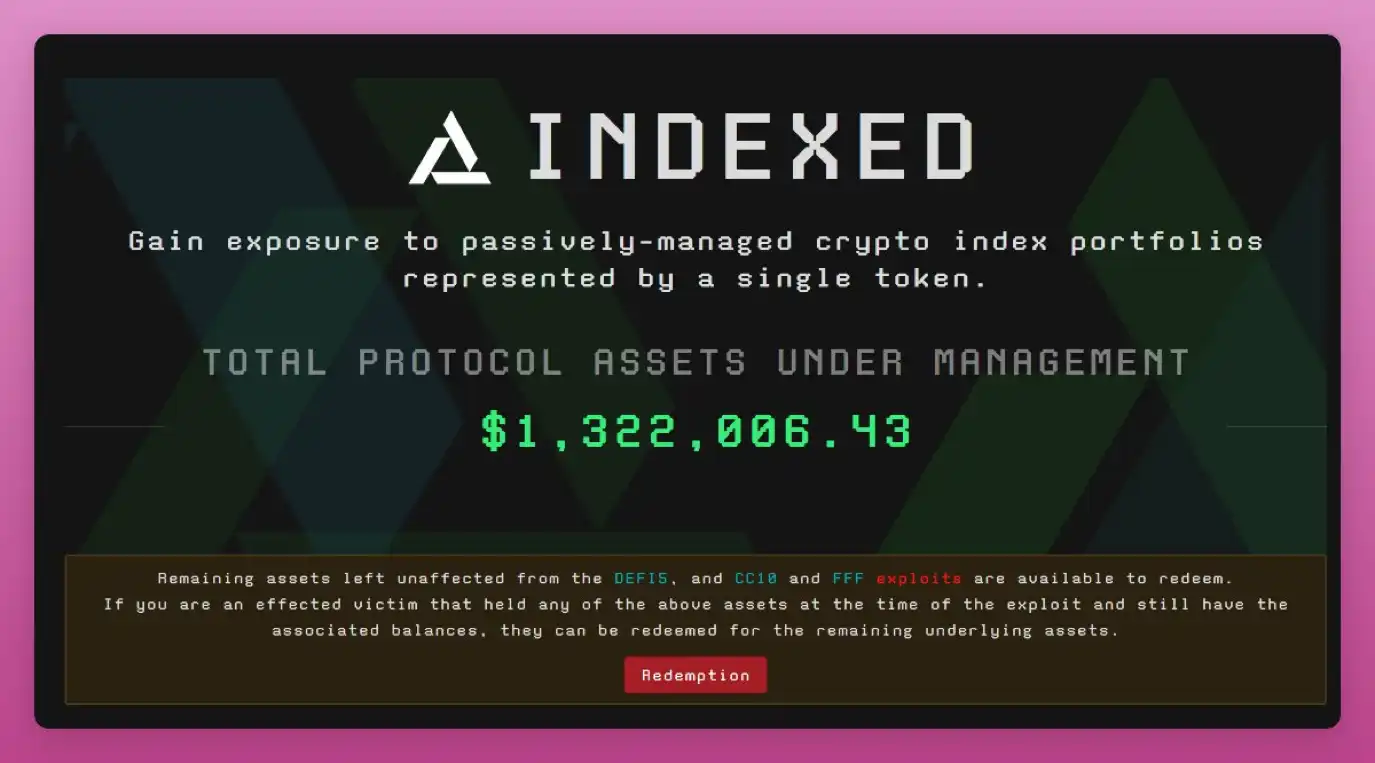
As mentioned earlier, Indexed finance was attacked and has not yet recovered from the attack. Their last message on Twitter was 6 months ago, and they are not active on Medium and Discord. The money left by the hacker can currently be withdrawn, and there is still 1.3 million US dollars in their smart contract.
PieDAO
PieDAO is an early adopter of crypto indices, architected through Balancer pools, and they recently announced a shift from passive to active management, where “holders manage the funds owned by the DAO and are responsible for generating yield.”
The key is “due to the limited market adaptability of index products in the crypto ecosystem.” Their index business was loss-making, so they moved to a revenue-generating fund yield business through active governance. Lesson: Timing is critical.

Conclusion
One of the drawbacks of crypto index products is that almost all crypto indexes can only manage a small number of assets. What happens when a crypto index can allow 30 assets? Or more, like a de facto TradFi index? For example, the S&P 500 has 500 different assets.
So, it's still early days for crypto indices, this is my contrarian narrative trading mindset, because indices make sense in TradFi, and as the market matures, they will also prevail in the crypto market, the current solution only supports 30 tokens, but I'm more looking forward to the emergence of 500 tokens like the S&P in the future crypto market.
Diversified, industry-specific indices will allow me to invest in emerging, growing crypto industries, but I don't have time to keep an eye on them. Maybe I don't need a DeFi index, but for me, the Metaverse, AI, or NFT indexes are attractive, they will help me save gas fees.
Of course, the main goal of a crypto index product is to outperform the market, which requires the index to include newer, higher-growth-potential assets that are not correlated with BTC or ETH, but being able to do this safely in the crypto industry is not an easy task.
Original link
Welcome to join the official BlockBeats community:
Telegram Subscription Group: https://t.me/theblockbeats
Telegram Discussion Group: https://t.me/BlockBeats_App
Official Twitter Account: https://twitter.com/BlockBeatsAsia

 Related Articles