IOSG: A Systemic Opportunity for NFT Financialization? Overview of the course 152 events
原文标题:《 IOSG Weekly Brief |新入局者 Blur 带领的 NFT-Fi 创业热潮(行业图谱)#162 》
Original article by Sally, IOSG Ventures
Foreword
As the NFT market gradually recovers, the competition for users in the trading market gradually develops into a heated stage. So far, Blur, an emerging NFT aggregator project, has outtraded Opensea.
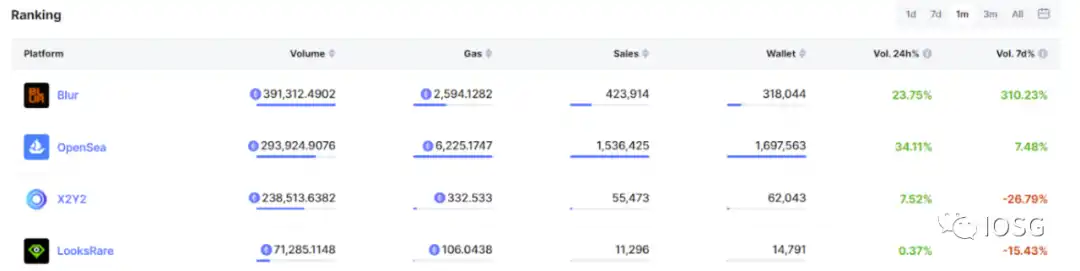
Source: NFTScan
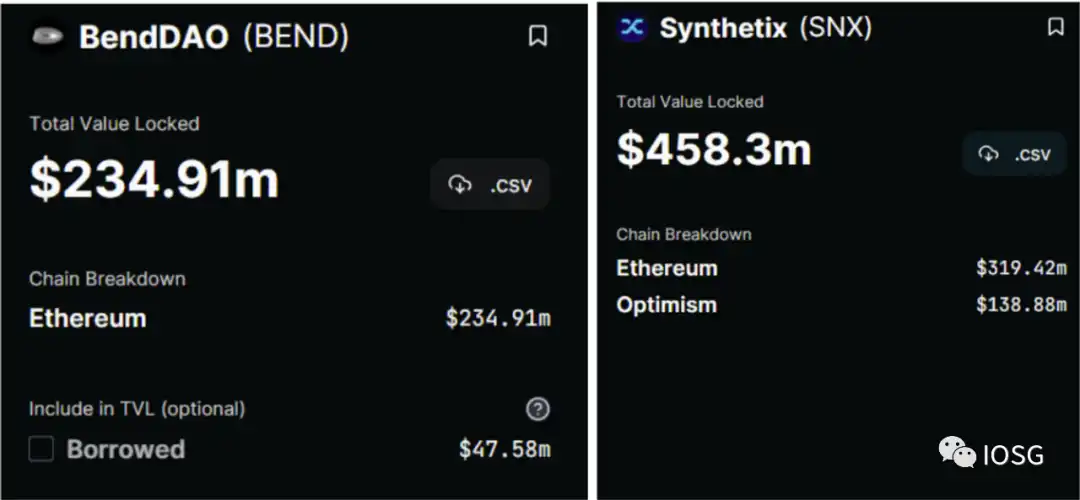
Meanwhile, TVL, the NFT loan agreement represented by Benddao, continues to hit new highs. As of February 20th, according to Defillama data, BendDAO's total TVL has exceeded $200M, and the gap between the total amount of EVM chain and Synthetix is gradually narrowing.
On the other hand, other leading projects in the NFT Fi circuit, such as X2Y2, NFT.Fi, JPEG "d, etc., have also seen big jumps in macro lending volumes since the end of last year.
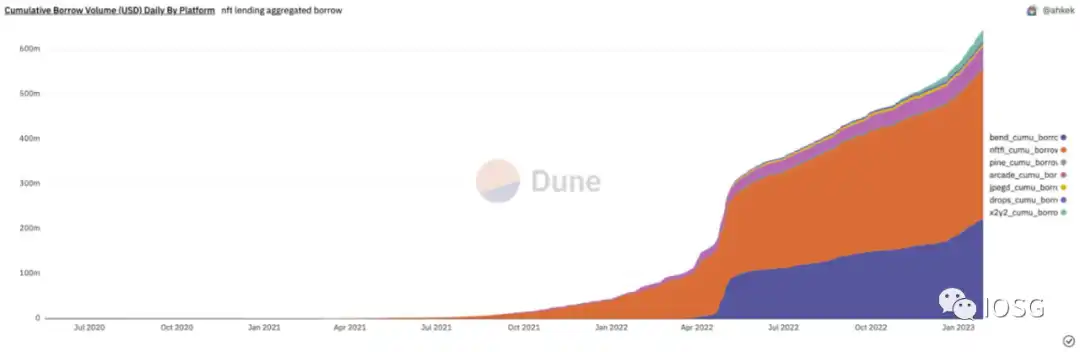
Source: Dune @ahkek
And this may herald a real systemic opportunity for the NFT Fi circuit, which has been in the spotlight since last summer but has yet to explode.
Theoretical framework for the financialization of NFT
Conceptual deconstruction: We have pointed out in past articles that the significance of the financialization of NFT is to help expand and increase the consensus and demand for NFT. After recognizing the significance and importance of NFT financialization, the next more central question is -- how should we understand the concept of NFT financialization?
From A purely economic point of view, the interesting but not necessarily correct point we are trying to make is to divide the NFT into A and B: A is the NFT with ornamental and collection value; Category B refers to the NFT with useful value. On this basis, the financialization of Class A NFT is compared with the financialization of artworks, and the financialization of Class B NFT is compared with the financialization of commodities:
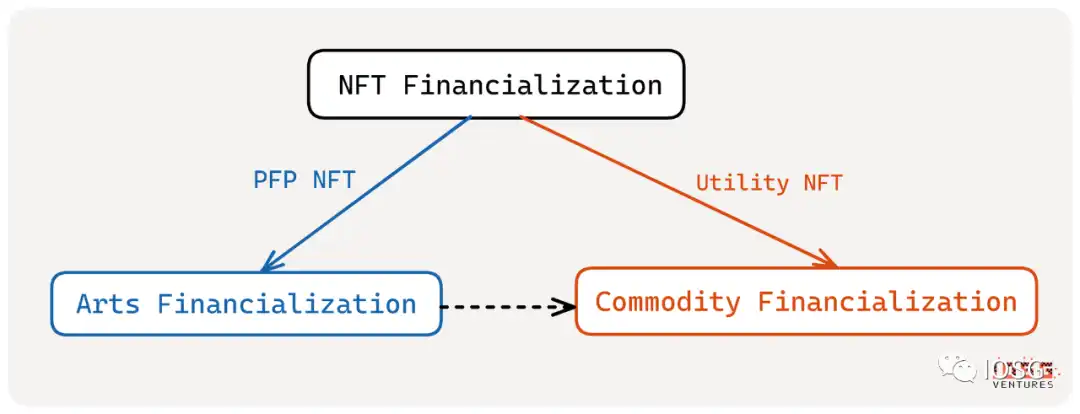
Punk, Azuki, Doodles and other pictures, avatars, and pure art paintings can be simply divided into Category A, which is for viewing and collection purposes only. The logical commonality between this kind of NFT and artworks lies in:
Non-fungible (Non-fungible)
Without utility
Without fundamentals, the world is in fundamentals.
Valuation based on personal sentiment
Membership token NFT issued by a brand such as Starbucks Odyssey and gaming NFT that supports the internal operation of entertainment products such as StepN sneakers can be categorized as Class B. And the logical commonality between them and commodities is:
Semi-fungible
With utility
fundamentals With certain fundamentals
Valuation based on functions
Industrial deconstruction
After understanding and discussing the concept, we also need to further examine the industrial structure of NFT Fi vertically according to the direction of segmentation. Although there has been a lot of discussion about the NFT Fi map in the market, we prefer to divide it into three tiers from top to bottom:
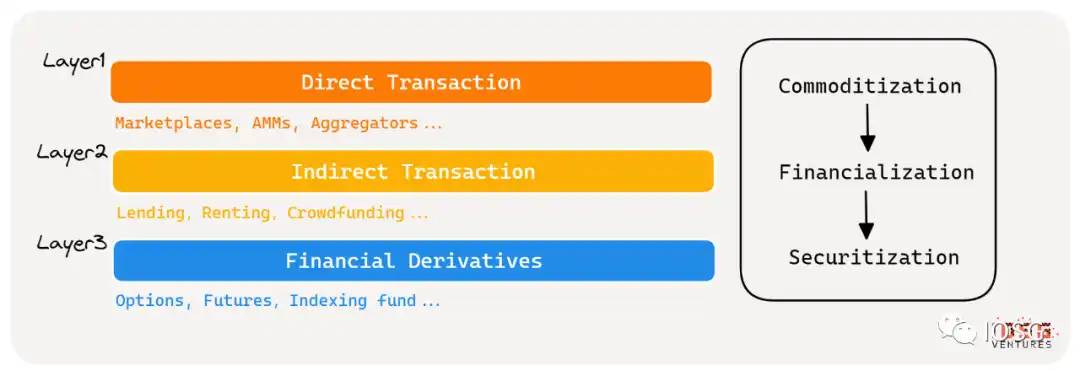
(1) The first layer is the Marketplace, Aggregator, AMM and other direct trading layer that provides exchange between NFT and FT
(2) The second layer is the indirect transaction layer that provides NFT custody and mortgage financing for lending, renting, crowdfunding, etc.
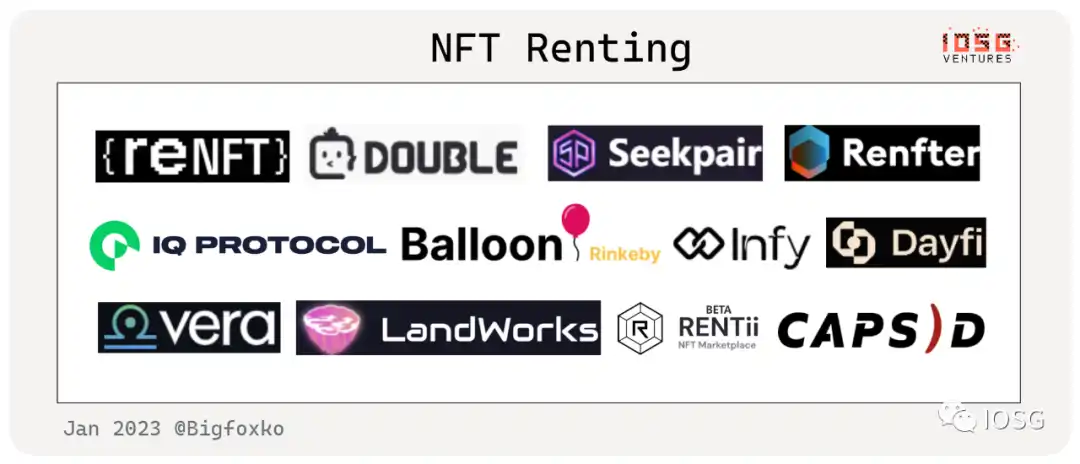
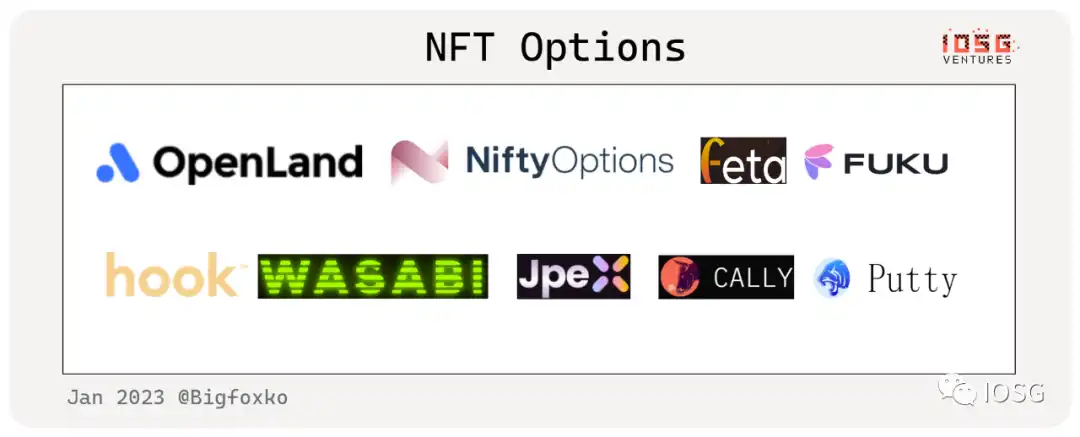
(3) The third layer is the financial derivative layer that promotes trading risk and leverage, such as options, futures and indexing fund
The evolution of these three levels from direct trading to indirect trading to financial derivatives is the reflection of NFT's deepening of financial affairs from commercialization, financialization and securitization.
We believe that the NFT liquidity solution with reasonable pricing mechanism, smooth user experience and sustainable trading model will ultimately lead to the consolidation of the complete industrial structure of NFT Fi to take off.
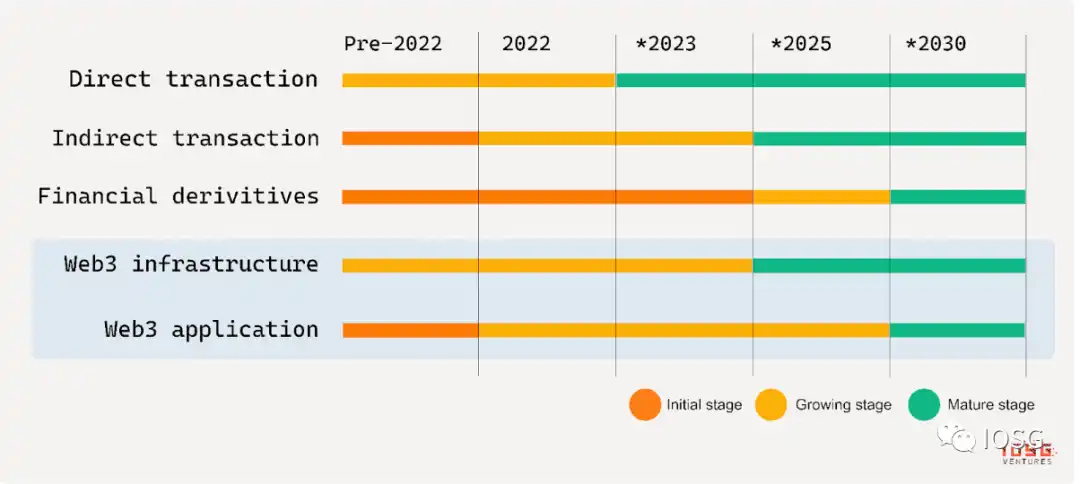
Track map of NFT financialization
Based on the above theoretical framework, we scanned 152 projects still in operation on the current track and drew the following track maps for reference:
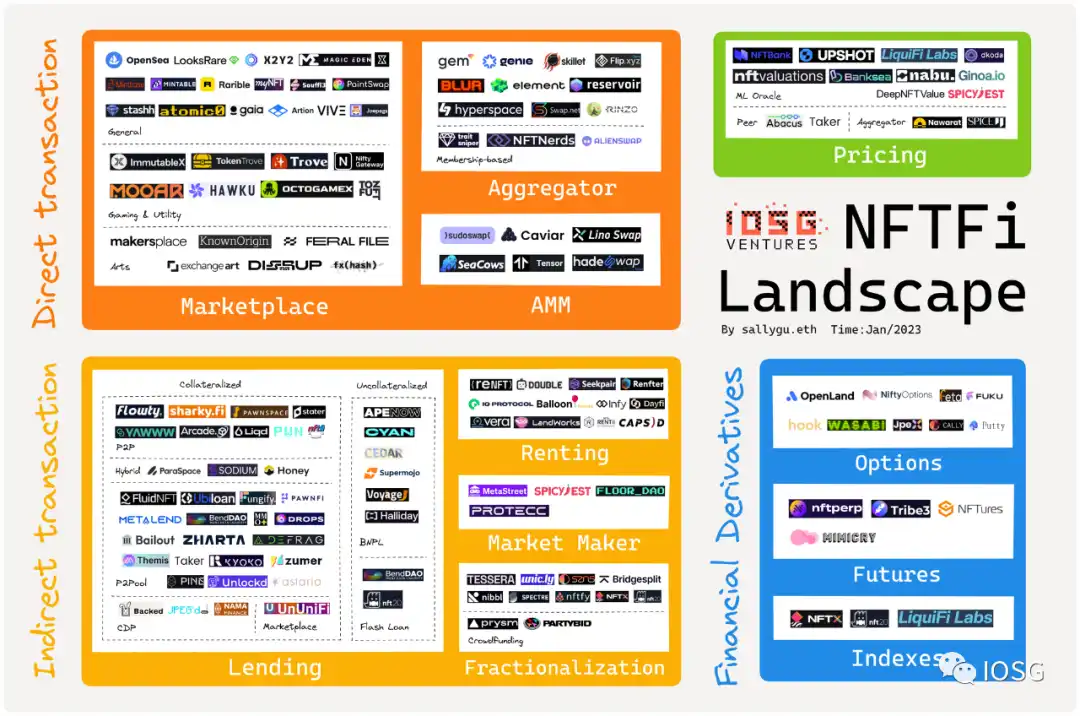
Direct trading layer (52 items)
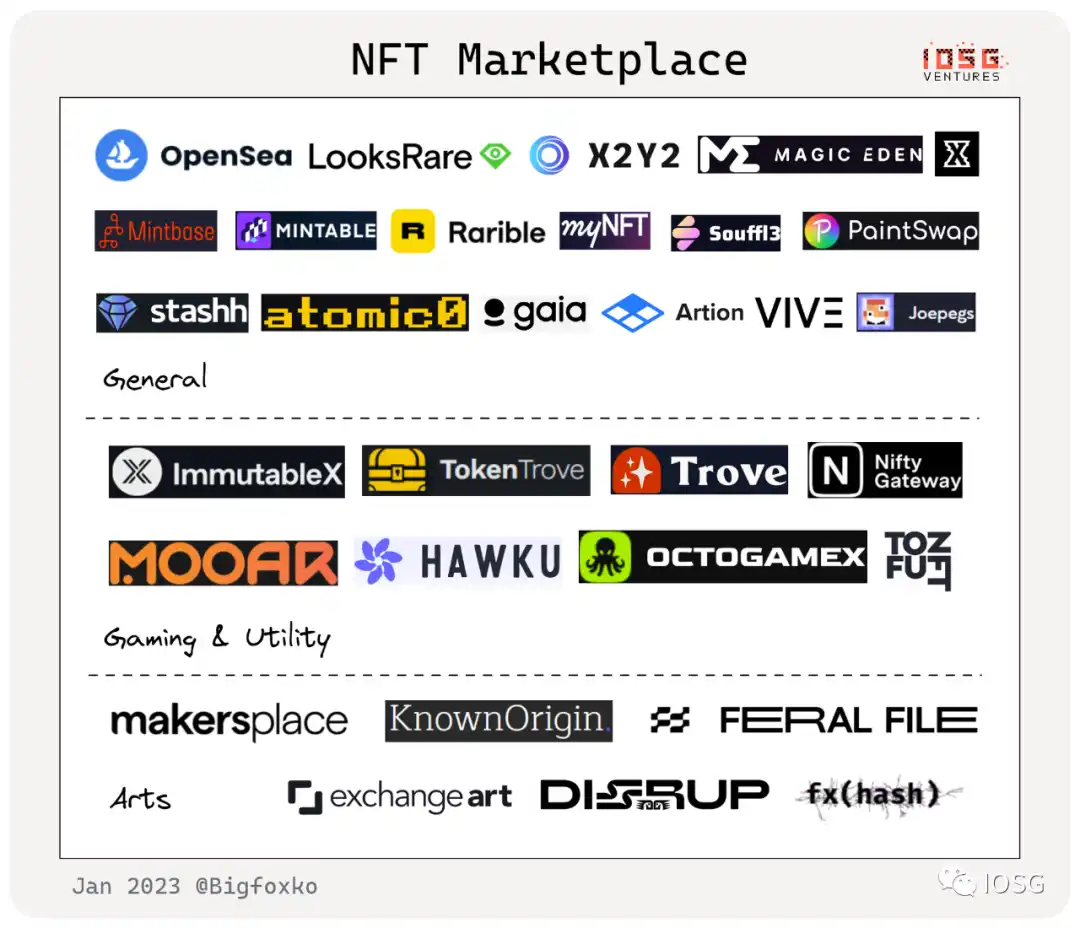
For the NFT Marketplace, we divide it into three categories based on its functions:
NFT General Marketplace represented by OpenSea, LooksRare, X2Y2, etc., distributed in different chains
The vertical trading market of practical NFT such as games is represented by Trove and Nifty Gateway
Art NFT vertical trading market represented by KnowOrigin, makersplace, etc
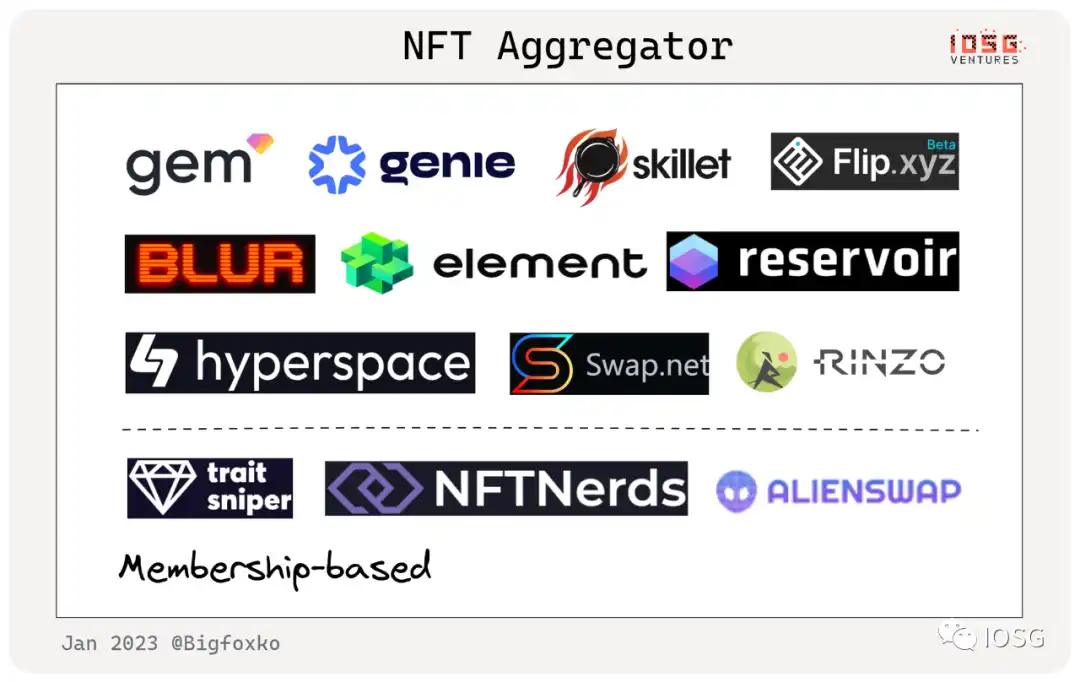
For NFT Aggregators, we will divide them into two categories based on accessibility:
NFT aggregators represented by Blur, Gem, Genie, etc., are publicly accessible to all users
Represented by NFTNerds, TraitSniper, etc., NFT aggregator implements paid membership access
As for NFT automatic market makers (AMMs), we mainly included Bonding Curve based AMMs represented by Sudoswap and Caviar. As an important decentralized solution for instant liquidity of FT and NFT, we believe it will play an even more central role in future direct transactions.

Marketplace vs. Aggregator
As more players enter the market, there is a clear trend towards greater demand for NFT's transaction speed and purchase efficiency (liquidity). In OpenSea or other traditional NFT markets, the model of waiting slowly for a project to come online and waiting slowly for an auction is becoming a little outdated. In Blur's similar aggregators, the more professional data analysis capabilities allow people to sell and buy at a faster pace, so it is more of a "trading platform". The market has proven that, for now, NFT players are more likely to embrace "efficiency first." At the same time, we have noticed that the integration of data analytics capabilities and aggregator classes is becoming increasingly close as users demand more NFT trading and professional DeFi traders come in.
Aggregator vs. AMM
While Blur's bid-to-earn model turns traditional liquidity incentives on their head in a big way, delivering a tenfold increase in aggregation speed over Gem, there is no moat to sustain its flow over the long term. While subsequent aggregators align their bidding models, improve the user experience (adding more dealer-friendly features in tandem) and even further vamp attacks, it's hard to predict Blur staying on top. This is exactly what we would be wary of with a centralized trading platform that relies on the order book model.
Assuming that the core demand is to seek the "fastest way to do business", AMM may well be a better option, as it allows for an instant exchange between NFT (erc721) and ETH (erc20) by removing bidding and centralising bidding, and is easier to modularize. Integrated into other platforms such as NFT lending in the form of an SDK. DeFi AMMs like Uniswap are a good benchmark: the main advantages of Uniswap compared to CEX are higher conversion efficiency (especially for long-tail assets), better user experience, better composability, fair incentive system, and no licensing. We expect that after many iterations and market honing, the advantages of these DeFi AMMs will be fully realized in future NFT AMMs.
Indirect trading layer (70 items)
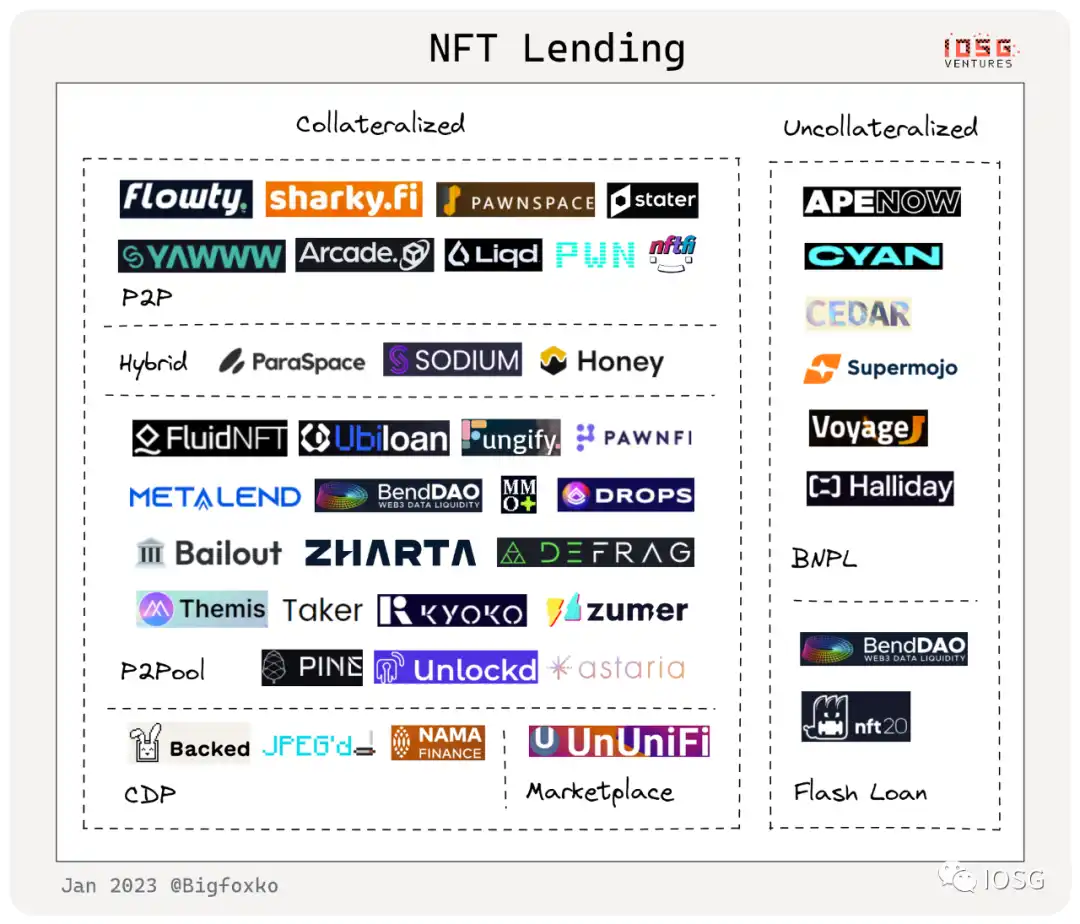
For NFT loan agreement (Lending), we mainly divide it into excess mortgage loan and unsecured loan based on its lending mode.
At present, most NFT loan paradigms are Compound, and there are three types of Aave protocols: point-to-point matching, liquid pool and stablecoin, which provide functions such as excess mortgage loan or flash loan. A new breed of unsecured private lending, such as BNPL, could introduce a more diverse audience on the demand side. We can more intuitively understand the two vertical categories of mortgage lending and unsecured lending from the following figure:
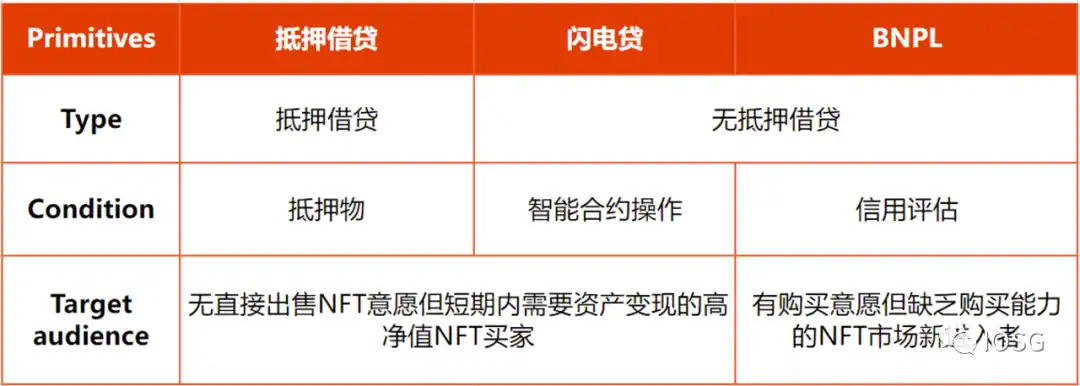
As deposits, loans and loans are the most basic components of any banking system, we think it is the most reasonable choice to first project the focus of the indirect transaction layer to the direction of NFT lending.
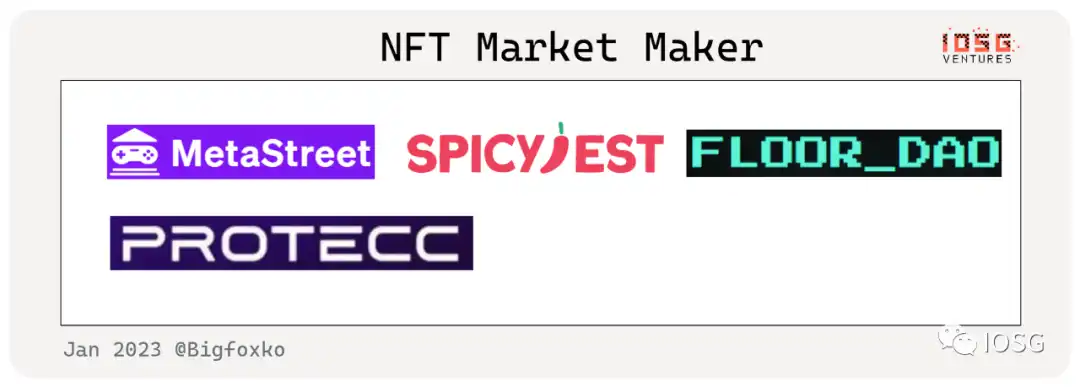
For NFT liquidity providers (Market makers), the solutions represented by MetaStreet have been deeply involved in every aspect of the NFT ecosystem.
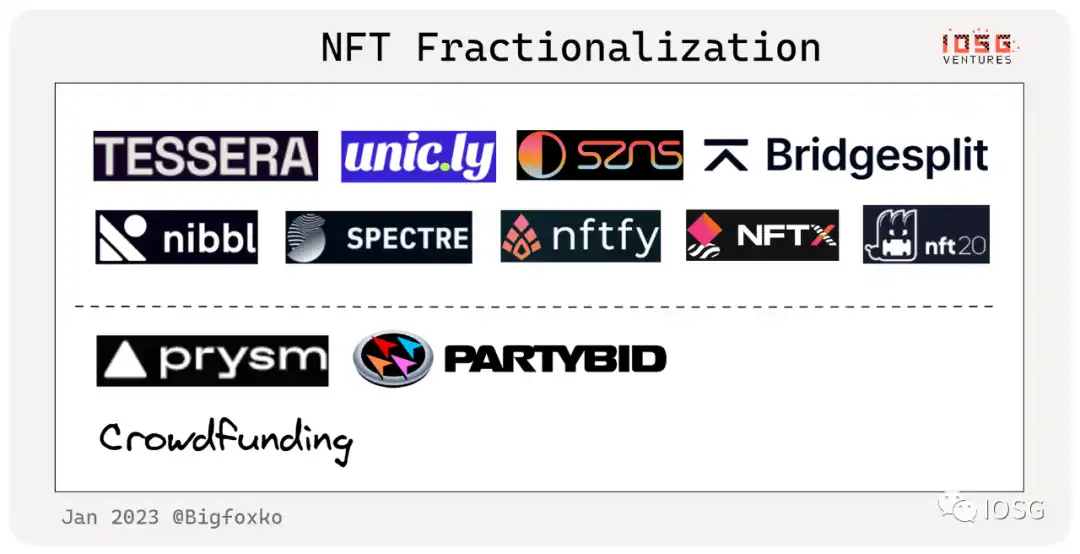
For NFT fragmentation (Frantionalizaton), we divide it into:
unic.ly and nibbl are representative of traditional solutions that divide NFT into multiple tokens to lower the holding threshold
partybid is a crowd-funding scheme that reduces the threshold of speculation by dividing ownership through common holding
As a buyer of NFT, we believe that we are still in a vertical gaming landscape where we can grow and reach a certain audience. The demonstration and exploration in other scenarios are still limited by the lack of NFT categories, and it is difficult to find PMF(Product-market fit) in a short time.
Collateralized Lending vs. BNPL
Leasing is actually a split of third-party payment based on time, and the difference between buy now pay later (BNPL) and ordinary leasing is as follows: 1. The act of sharing is performed by different subjects. 2. The payment time is distributed.
As the on-chain credit system matures and the demand for credit grows, we need more diversified credit products to meet the needs of different groups of cryptocurrency users. And the decentralized "credential" system represented by Maker is probably not a portable solution in the NFT scenario:
On the one hand, NFT is usually sold as a complete commodity and has a higher selling price than FT (for most php class NFT); On the other hand, the groups of NFT holders/players and Defi users are different (and may overlap somewhat), but the general inference is that most NFT collectors will have little incentive to engage deeply in complex lending systems without the lure of a huge return on investment.
In other words, if the traditional defi lending mode is translated into the NFT scenario, the audience will be very limited and the later growth will be weak.
We think BNPL solutions like Cyan are a good entry point to get NFT users involved in the lending system. It is also possible that the NFT BNPL platform will work with Maker, CreDA, and others to build a complete cryptocurrency credit system in the future (such as building a larger credit commission system similar to Aave). So even though such a product is still in its infancy and the risk-management model is untested (whether it will work in the face of a large influx of users), we believe that this is probably the most promising direction for the next cycle and will keep an eye on it.
Financial derivative layer (16 projects)
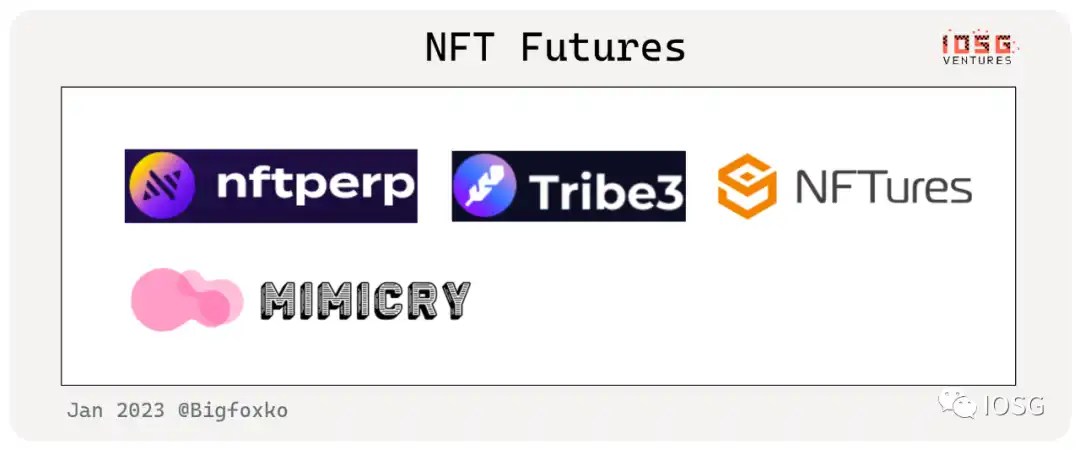
Because the whole NFT financial derivative layer is still in the preliminary stage, we simply include the three categories of options, Futures and Indexes here. Compared with options, futures derivatives may cost less to educate users and generate more traffic.
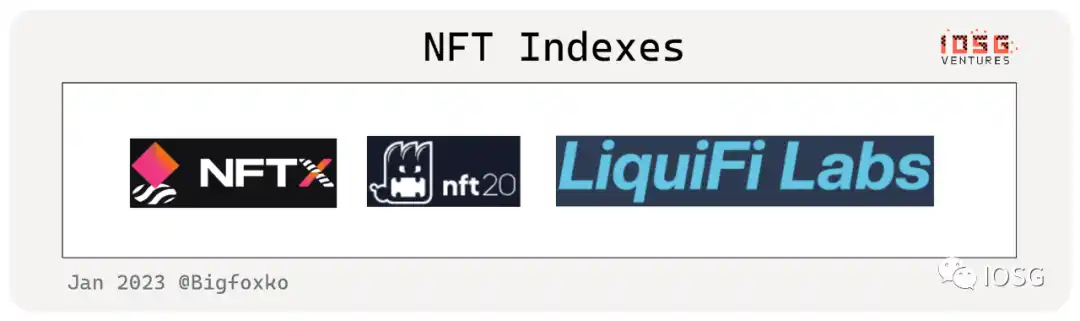
Investing in illiquid assets such as real estate or art packaged into indices is a more common approach in traditional financial markets than fragmented solutions. As far as Art is concerned, common Art indexes include: Mei Moses Art Index, Art Market Researcher, Art price indices and so on. For commodities, common indexes include: international major commodity index, CRB commodity index, S&P GSCI Commodity index and so on.
This indexing method can not only help institutional and ordinary investors to diversify their portfolios, but also have a satisfactory performance in terms of returns. In the 40 years from 1950 to 1990, the real return on investment in the arts was 8.2 per cent. During the same period, interest rates were 8.9% for the S&P 500, 9.1% for the Dow Jones Industrial Average, 1.9% for government bonds, 2.2% for corporate bonds and 1.3% for Treasury bonds. Over the past decade, art has returned an average of 8.5% a year, slightly beating stocks.
NFTX and NFT20 are creating an emerging asset class in Web3, similar to the art/commodity index. On this basis, LiquiFi Labs and others use ML pricing technology to eliminate the volatility factors of dishwashing manipulation and build a more secure and reliable index category. We are also looking forward to more exponential products coming into the public eye in the future.
Write at the end
David Ricardo, the Austrian representative, pointed out in the Principles of Political Economy and Taxation that the value of some commodities can be determined only by their scarcity, and labor cannot increase their quantity, so their value will not decrease due to the increase in supply. Deloitte's art Finance survey also shows that 80% of collectors consider buying and selling art as an investment. The film's creed of arms dealers is to trade art through the Geneva free port to avoid taxes.
IOSG believes that NFT financialization is likely to be the next tipping point for web3 growth in the era of fat apps, and encourages more collectors, builders, and developers to join us in exploring the broader financial application scenarios of NFT.
More track subdivision research will be disclosed in the full edition of NFT Fi Report.
Original link
Welcome to join the official BlockBeats community:
Telegram Subscription Group: https://t.me/theblockbeats
Telegram Discussion Group: https://t.me/BlockBeats_App
Official Twitter Account: https://twitter.com/BlockBeatsAsia
 Related Articles