Luna, the founder of Luna, is making a comeback after an eight-month absence
Original title: Crypto fugitive Do Kwon plots comeback after $60bn Terra collapse
Original article by Rob Stevens, Trista Kelley, Ekin Gen, DL News
Logicrw, BlockBeats
After the $60 billion collapse of the Terra Empire, crypto fugitive Do Kwon is plotting a comeback. The frustrated CEO of Terraform Labs, whose Terra stablecoin collapsed last year, is working on new products and hiring new staff to beef up his engineering department.
Zion Schum, director of communications at Terraform Labs, confirmed to DL News that despite being wanted by his native South Korea and Interpol, the CEO is "actively involved in the day-to-day operations of the company."
His involvement involves "every aspect of the strategic direction of all the products Terraform Labs develops," Schum says.
Even if Crypto is a business of second chances, the attempt by a long-unloved man to turn himself around is bold.
Terra's demise contributed to the demise of hedge fund Three Arrows Capital and crypto lenders Celsius and Voyager. Soon after the UST failure, Terra quickly restarted its project. The new blockchain uses the same name, but ditches the failed Stablecoin - raising suspicions that Kwon could cause another market crash.
Although Kwon's whereabouts are unknown, South Korean prosecutors say he has fled to Serbia. Schum, Terraform Labs' communications director, declined to provide Kwon's location and he couldn't be reached for comment.
To get the new chain up and running, the company is opening up more than a dozen jobs, including full-stack engineers and contract developers.
Terraform Labs has posted several such openings since Terra closed down last May. At least one developer has since joined the company, according to LinkedIn; A TFL spokesman said the company now has about 40 to 50 employees.
To get the new chain up and running, the company is opening up more than a dozen jobs, including full-stack engineers and contract developers. Terraform Labs has posted several such openings since Terra closed down last May. At least one developer has since joined the company, according to LinkedIn; A TFL spokesman said the company now has about 40 to 50 employees.
Earlier this month, Kwon personally discussed the job's responsibilities with an interested candidate. The candidate told DL News,It was an opportunity to work with "the most talented people in DeFi.. A spokesman for TFL declined to comment on Kwon's involvement.
The grand vision of Terraform Labs
Kwon's charges aside, Terraform Labs' grand vision is to rebuild Terra as a multi-chain "Layer 1" protocol. The company is working on several projects to expand its network.
In January, Terraform Labs launched a cross-chain wallet called Station. So far, the wallet has received around 24 Cosmos blockchain support.
TFL's new wallet looks much like the one it made for the old Terra network, with added support for other Cosmos chains. A TFL spokesperson said there are plans to expand Station to EVM-compatible chains in the near future.
In November, Terraform Labs said it was developing an economics module called Alliance. After the blockchain registers the Alliance, its Token holders can pledge their tokens to another chain. This allows the holder to gain additional revenue while keeping both networks safe.
Participating protocols can choose which Alliance chains to accept tokens from through governance voting. Eligible tokens include native tokens and complex derivatives.
Other networks have tools that offer similar services, such as Osmosis's Superfluid Staking. Unlike Superfluid Staking, however, Alliance does not require the pledgers to be liquidity providers, thereby sparing them from so-called impermanence losses.
The innovation TFL claims is that Alliance automates this process and provides financial incentives to distribute the benefits between blockchains. Schum (director of communications at Terraform Labs) said the ability to generate trading revenue is expected to "attract users, liquidity and talent from other ecosystems."
The company plans to begin rolling out Alliance next month. So far, five projects have indicated they will implement Alliance at launch.
Kwon's third protocol, Feather, makes launching a new blockchain easy. These new blockchains are powered by a Terra on-chain validator that has chosen to join Feather and come with tools such as a blockchain browser and cross-chain wallet.
Following a series of announcements this month, Terra's Token LUNA price surged from $1.29 to a high of $2.50, according to CoinMarketCap, and is now back at $2.31.
Some of the rise can be explained by the rise in the price of bitcoin, which has risen from $16,669 to $23,282 over the same period.
But even after the announcement, Terra's audience remained small. A dashboard on Flipside Crypto shows just 12,868 users.
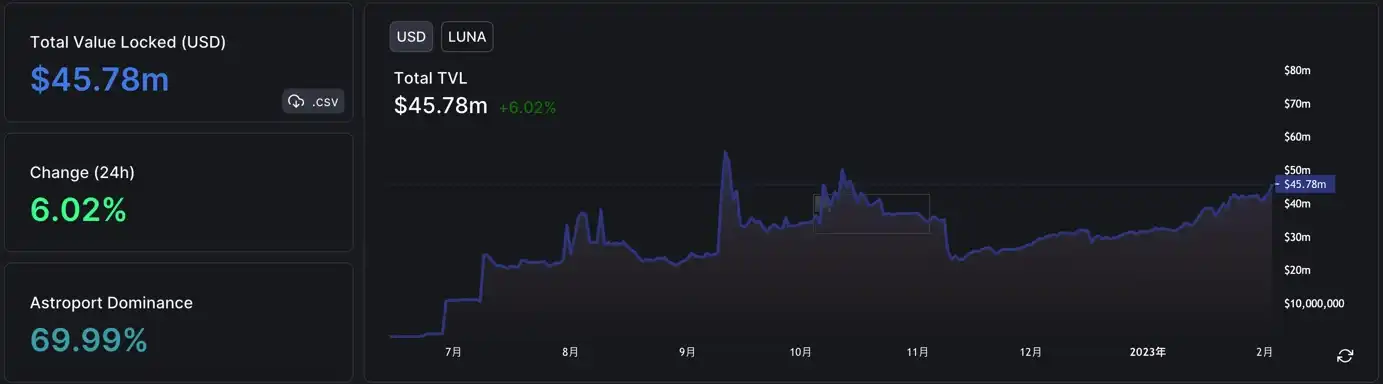
After Terra went out of business because of its poor design, the concern was what good TFL's new tools could actually do.
Hyungsuk Kang worked as a software engineer at Terraform Labs in the second half of 2020 before setting up his Stablecoin protocol. He told DL News that the TFL staff at the time had little experience in blockchain development.
Mr Kang says many TFL employees discuss internally the possible failure of their projects. Mr Kang points to the failure under Mr Kwon, whose return to TFL will no doubt be worrying. Schum, director of communications at Terraform Labs, declined to comment on the experience level of TFL employees in the early days of the company.
Terra is likely Kwon's second attempt at algorithmic stablecoin. Kang and other former TFL employees allege that Kwon was the driving force behind Basis Cash, a revived version of a failed algorithmic stablecoin called Basis (which raised $133 million before shutting down in 2018). A TFL spokesman declined to comment on the allegations.
While running TFL, Kwon had to sort out his legal problems. Serbia does not have an extradition treaty with Kwon's home country, South Korea, but both sides have previously agreed to requests made under the European Convention on Extradition.
Legal experts say if Mr. Kwon is extradited, he could file a legal complaint against Serbia that might keep him from returning home for several years. At least two of Terraform's employees live in Serbia. None of them responded to DL News' request for comment.
That may give Kwon plenty of time to participate in the next bull market and another chance to attract novice investors who are unaware of the sector's previous failures.
"I don't think he can repair his image, "Doo Wan Nam, South Korean co-founder of blockchain Node verification company Stable Node, told DL News. "It's not that [South Koreans] are tolerant, it's that they're forgetful."
Original link
Welcome to join the official BlockBeats community:
Telegram Subscription Group: https://t.me/theblockbeats
Telegram Discussion Group: https://t.me/BlockBeats_App
Official Twitter Account: https://twitter.com/BlockBeatsAsia