Take AXS, SAND and DYDX as examples to analyze the market effect brought by Token unlocking
Token Unlocks aren't all cut from the same cloth
Original article by Conor Ryder
Kate, Marsbit
Note: This post is from @ConorRyder's Twitter feed, which MarsBit has collated as follows:
Token unlocking is not exactly the same
Note that $AXS and $SAND pump before unlocking, performing 50% and 45% better than $ETH
Unlocking is considered a bearish catalyst, so I looked at the data to find out why are some people more bearish than others
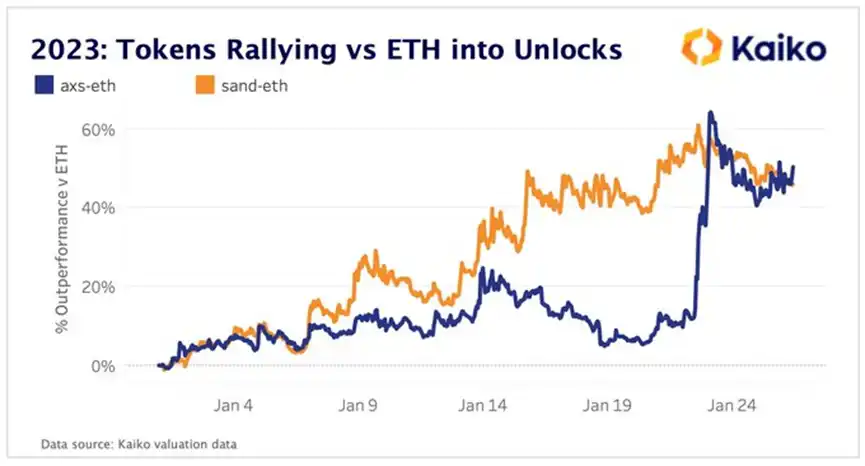
If Token unlocking is bearish, what can we expect from prices like $AXS and $SAND after this rally?
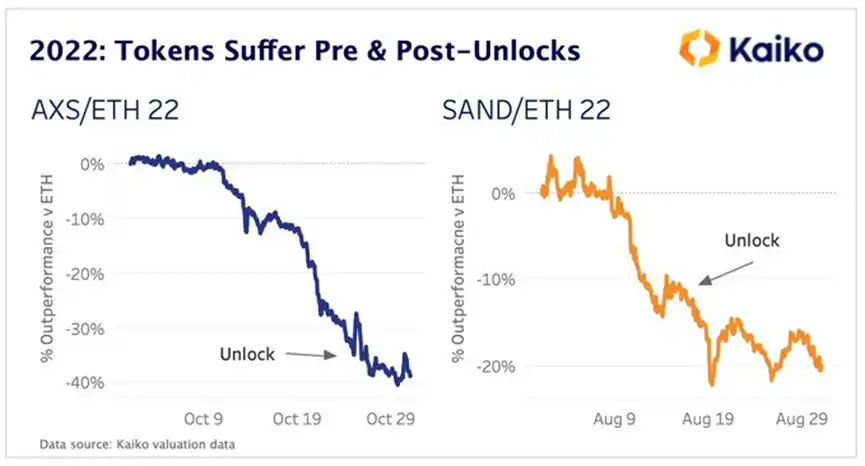
Fortunately, both tokens were unlocked last year, so we can see how they behave on ETH
Not so good
Data at the transaction level show more interesting insights
Last year's $AXS unlock released 8 per cent of the maximum supply, about a quarter of which went to early investors
Lead to selling pressure on the day of unlocking, which balances out a few days later
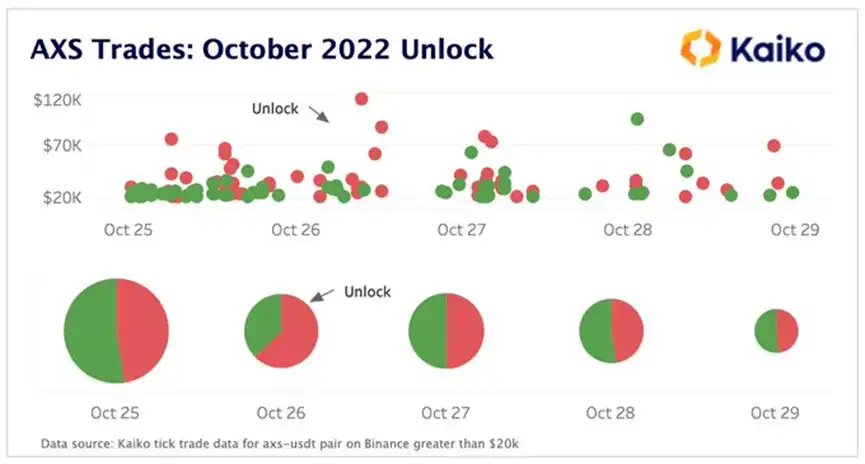
This is in stark contrast to the January 23 unlock, when only 1.8 per cent of the supply was released
Importantly, none of this was allocated to early stage investors - it was all allocated to stakeholders
The difference is huge, with a lot more buying than selling on and after unlock day
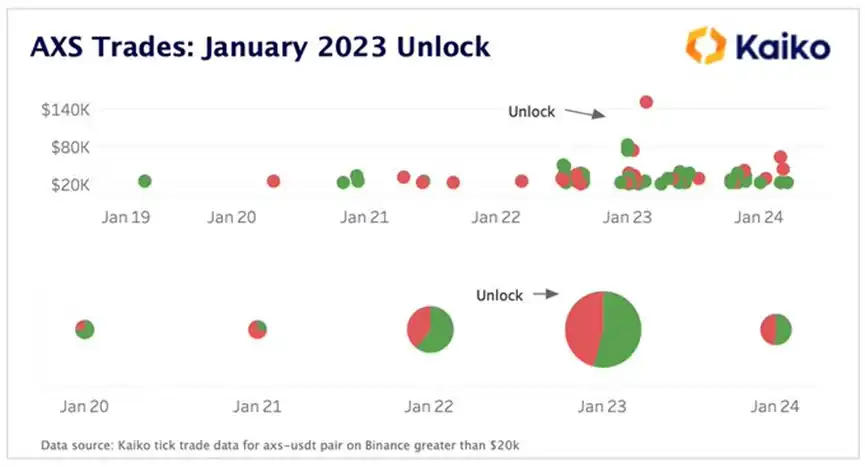
Thus, the 25% allocation led to selling pressure for investors on the lock day, but it balanced out later
What about 50 percent?
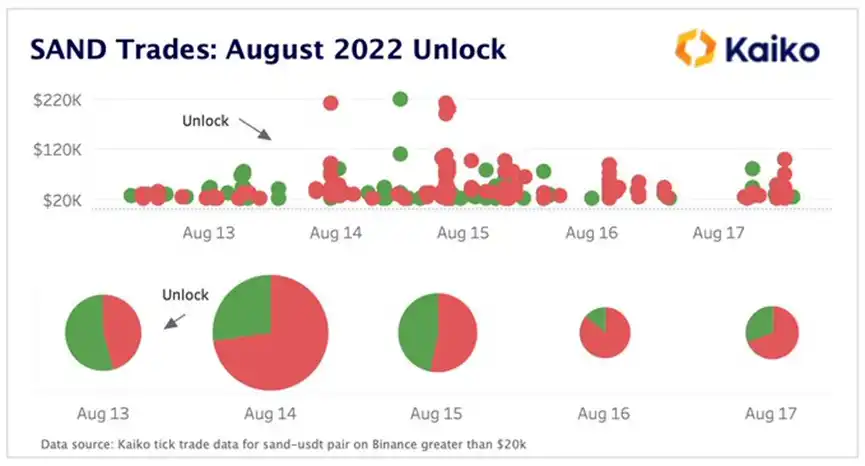
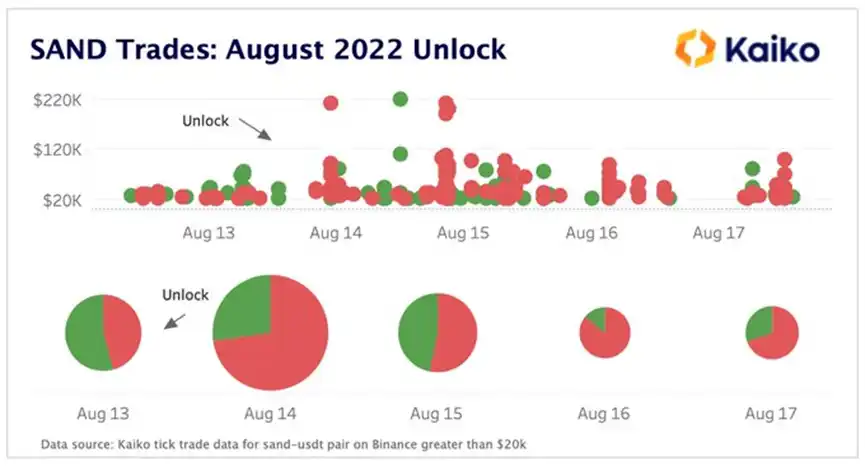
$SAND unlocked 12 percent of the supply in August, half of which went to investors
Leading to several days of intense selling pressure
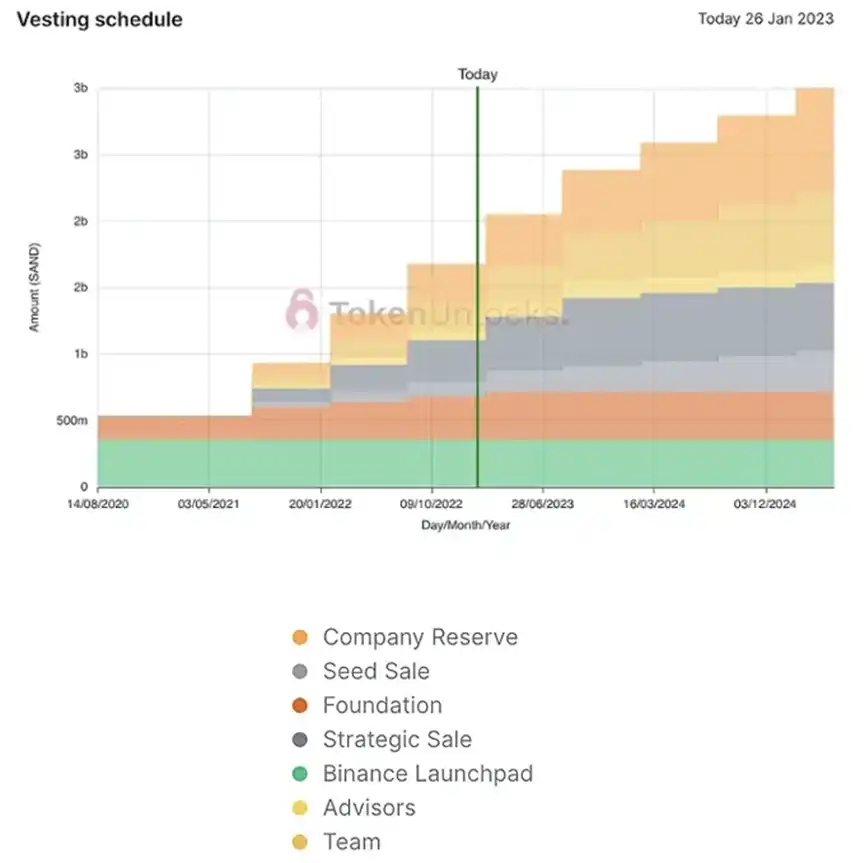
Now $SAND faces it all again on February 14, when 12% of the supply is released, half of which goes to investors
Expect strong selling pressure, especially after the Token's recent rally
If that's not proof enough that a 50% allocation to investors is a recipe for disaster, here's another example:
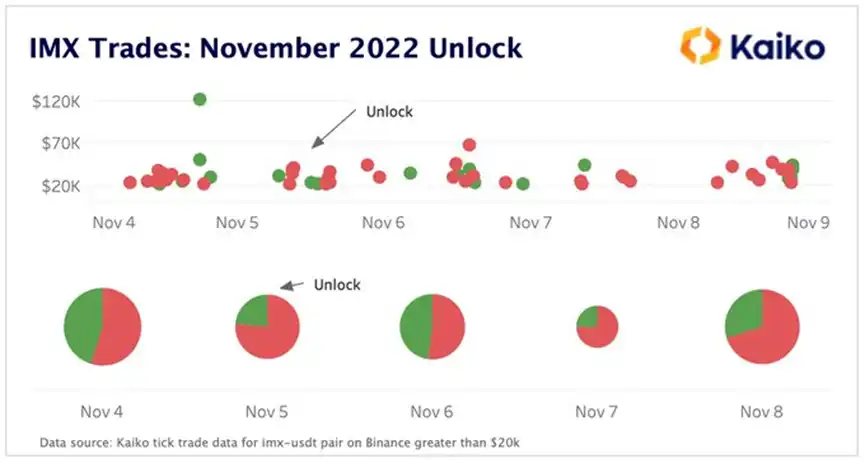
In November, $IMX released 18 per cent of the total supply, with 50 per cent going to investors
Again, in the days following the unlock, a flood of sell orders exceeded the bill
Now it's $DYDX, which has delayed unlocking until December
That would be a huge unlock, with 15% of the total supply freed up and, you guessed it, half going to investors.
Once the news broke, the stock price jumped 20% and the interest increased 50%
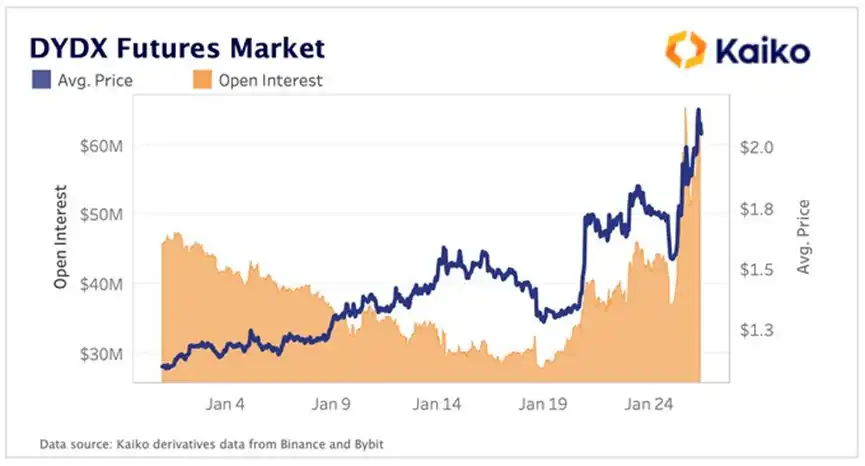
After looking at the CEX liquidity data, I am convinced that $DYDX will see a huge move
It is lower in depth than $AXS and $SAND, which means fewer orders are required for price changes
With 50% going to investors and little liquidity, the dydx team probably knew tokens would be affected
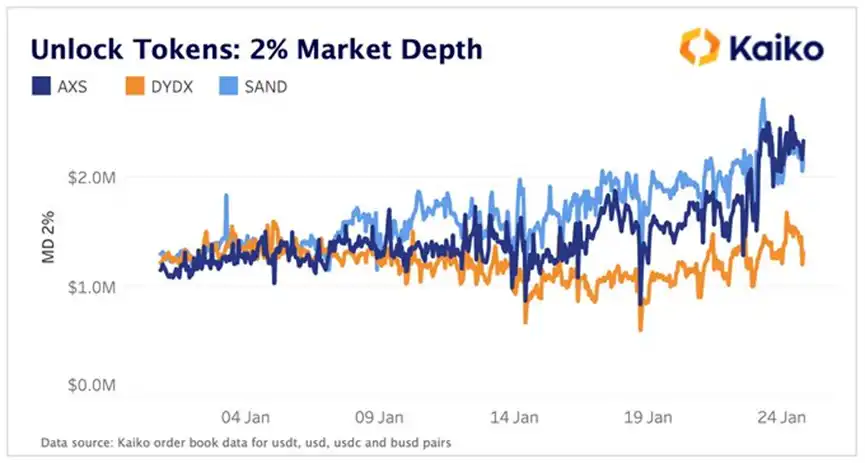
What about $AXS, $DYDX, $SAND, and other unlocks?
- $AXS has few investors unlocked, so the rally may have support
- $SAND has 50% huge unlock for investors
- $DYDX has no headwinds in the near term, and may be planning a v4 release in December to overwhelm the unlock
In summary, I would say that for investors, unlocking needs to be a concern: if around 50%, expect heavy selling pressure
Shout out to @Token_Unlocks and @UnlocksCalendar to unlock this research
The link below is to @KaikoData's full article
Token Unlocks: Not All Built The Same
Original link
Welcome to join the official BlockBeats community:
Telegram Subscription Group: https://t.me/theblockbeats
Telegram Discussion Group: https://t.me/BlockBeats_App
Official Twitter Account: https://twitter.com/BlockBeatsAsia