Galaxy Digital: Ethereum merges 100 Diaries
原文标题:《100 Days After the Merge》
Christine Kim is a Galaxy researcher
Galaxy official website
Kxp, BlockBeats
introduction
About 100 days ago, Ethereum made a historic transition to a proof-of-equity consensus protocol. It is also the most complex and risky upgrade to Ethereum since its launch, and some of its features need to be improved. The merger took place on September 15, 2022, and lasted about two epochs, or about 13 minutes. In this short time, Ethereum merged with Beacon Chain, a PoS network parallel to Ethereum, which launched on December 1, 2020. With the merger, the beacon chain officially becomes Ethereum's consensus engine or consensus layer (CL), while Ethereum becomes an execution layer (EL) and is responsible for the execution of user transactions, not the settlement or finalization of transactions. For a more detailed overview of Ethereum's transition to PoS, see Galaxy's on MergersResearch compilation.
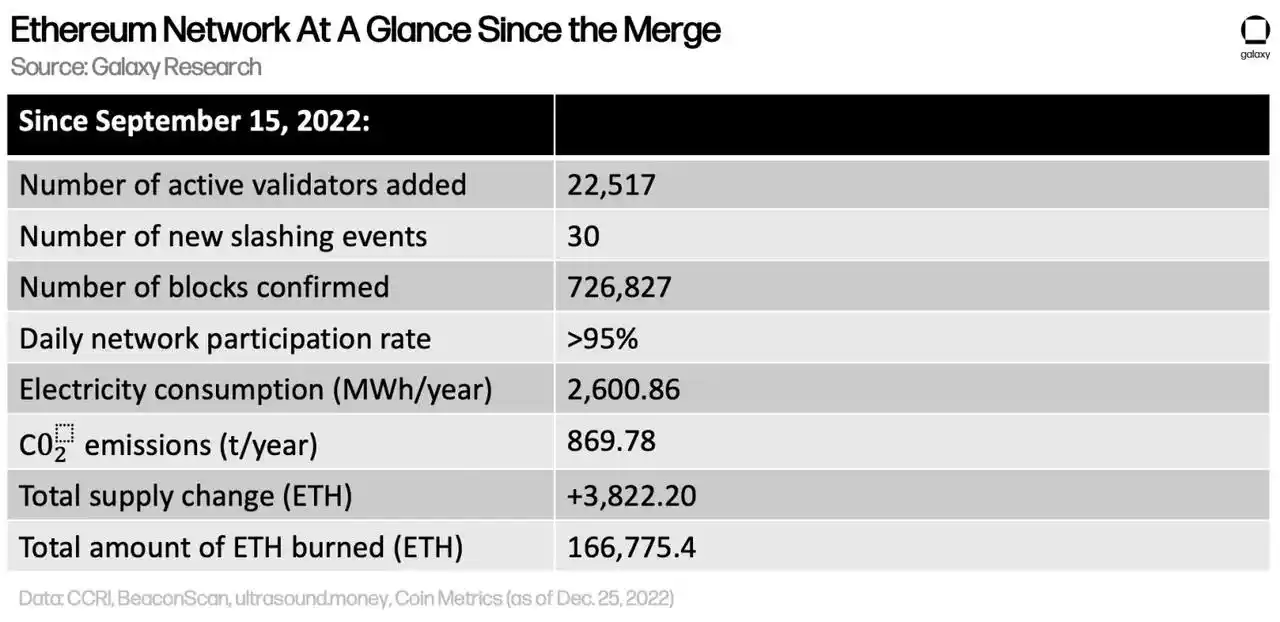
On the day of the merger, Ethereum forked out of proof-of-work (PoW) and got rid of this energy-intensive block generation. Since then, Ethereum's power consumption has dropped by more than 99%,From 22.9 million MWH/yr to 2,600 MWH/yr now. While Ethereum's energy usage has decreased dramatically since the merger, the energy consumption of other PoW blockchains has increased rapidly. Ethereum Classic (ETC), a PoW version of Ethereum that was first launched in 2016, had its network hash in the days leading up to September 15It's almost quadrupled. Since then, the hash value of ETC has declined from a high of 280+ TH/s to 120 TH/s on December 24, 2022, but it is still relatively high compared to its hash value in August 2022. Ravencoin is also a GPU mined blockchain (just like Ethereum before the merger) with the same hash value before the mergerIt's quadrupled. CoreWeave is a large Ethereum miner that has now shifted its main businessTransition to cloud computing services, without abandoning its original GPU resources. Not all of Ethereum's miners shut down their machines and operations after the merger. Instead, many of them moved their computing power to other blockchains.
Ethereum has had three straight months of steady growth since it started relying entirely on validators rather than miners. As of 25 December 2022, there are 491,461 active verifiers on Ethereum, each of which has pledged 32 ETH. There are currently 15.7 million ETH on the network, accounting for 13% of the total supply. Since Ethereum's transition to PoS, Ethereum's PoS consensus protocol has confirmed more than 726,000 new blocks. The network participation rate on Ethereum, the percentage of validators who are online and actively performing their duties, has remained constant on a daily basisMore than 95%.
While the merger resulted in significant changes to Ethereum's core specification, it did not have a significant impact on end users or Dapps, as the upgrade did not cause any significant network outages. Although there are technical risks associated with the merger (Galaxy ResearchHowever, Ethereum's core developers managed to successfully complete the consensus change without causing network downtime, while providing the same execution environment for users and DApp developers. Ethereum will see several major upgrades over the next few years, but the success of this merger has given core developers more confidence that they can manage Ethereum effectively while maintaining security in the face of increasingly complex protocol code.
This report presents ten key metrics that will be used to assess the impact of the merger on Ethereum over the 100-day period. First, we delved into the impact of the merger on Ethereum's monetary policy by examining network issuance and destruction rates. The report then uses some metrics to illustrate the impact of Ethereum's new consensus mechanism on maximum extractable value (MEV) and verifier node operators. It is important to note that although the merger improved the network in terms of inflation rates and block time uniformity, the upgrade did not significantly increase MEV revenue or verifier rewards as expected, mainly due to an overall decrease in on-chain activity levels in the current market environment. The decline in overall activity along the chain is due to broader market conditions. Finally, this report provides a comprehensive overview of the withdrawal process for pledged ETH, which will be implemented in Ethereum's next major upgrade, the Shanghai Upgrade.
Ethereum network data metrics
Index 1: ETH circulation and destruction rate
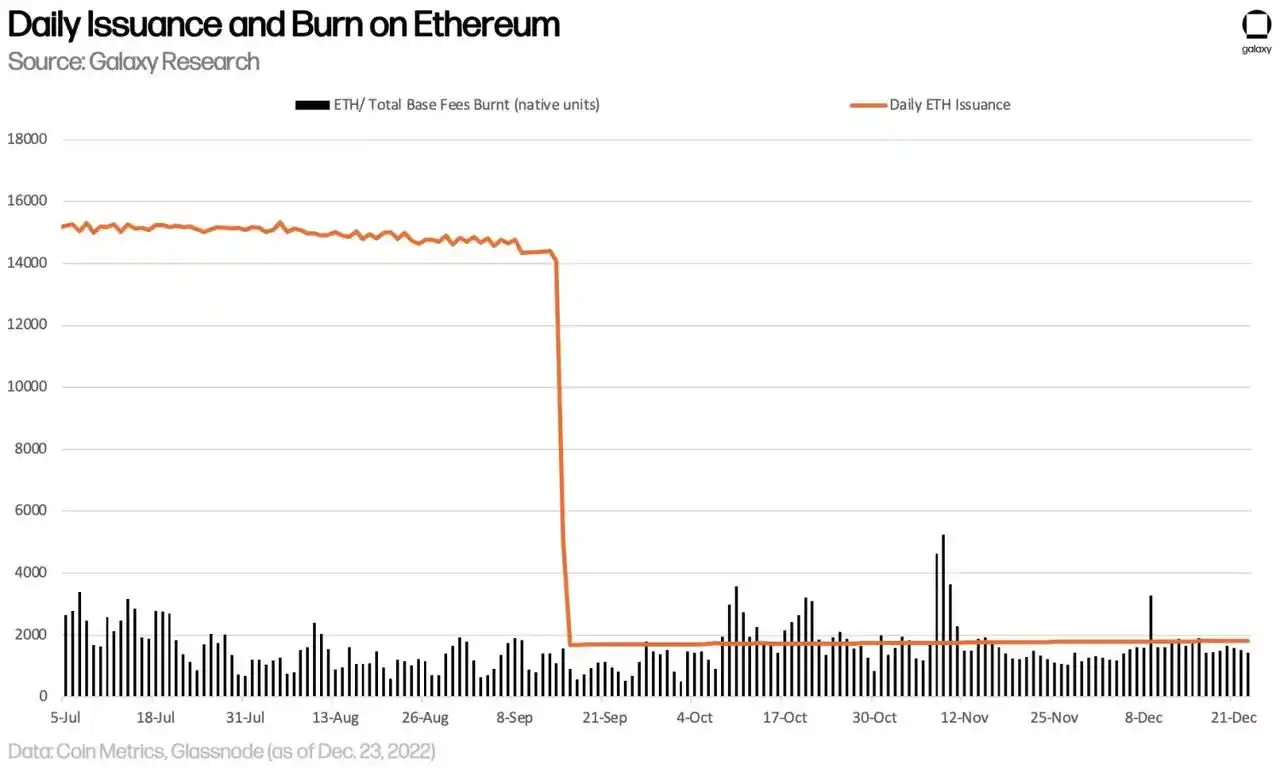
The daily circulation of ETH has dropped from about 15,000 ETH to less than 1,800 ETH. At the same time, the daily destruction rate of ETH has not changed significantly since the merger. As ETH issuance has declined and the destruction rate has remained relatively stable, Ethereum's net supply has changed little, growing by just over 3,000 ETH in 100 days. In this case, Ethereum has an annualized inflation rate of 0.12%, compared to around 4% to 5% prior to the merger. As we expected, Ethereum's transition to proof of equity has greatly impacted the network's monetary policy, cementing ETH's value proposition as a store of value asset.
Indicator 2: Block output time
After the merger, block-out times on Ethereum became more predictable and the speed increased. Previously, miners had to compete their calculations to release blocks. Now Ethereum randomly selects validators and generates blocks every 12 seconds, reducing the volatility of block release times. In addition, the Ethereum network no longer has a difficulty bomb mechanism to artificially increase the block time, which has reduced the block time from approximately 14 seconds before the merger to 12 seconds after the merger. Over the past 100 days, the number of blocks confirmed per day has increased significantly, from about 6,000 blocks per day prior to the merger to more than 7,000 blocks per day. Because of these upgrades, the total number of blocks and transactions confirmed daily on Ethereum has reached an all-time high, as shown in the chart below. While these improvements did not significantly increase the scalability of the Ethereum network, the merge did stabilize the block-out time, thereby improving the user experience to some extent.

Index 3: Missing block rate and witness message missing rate
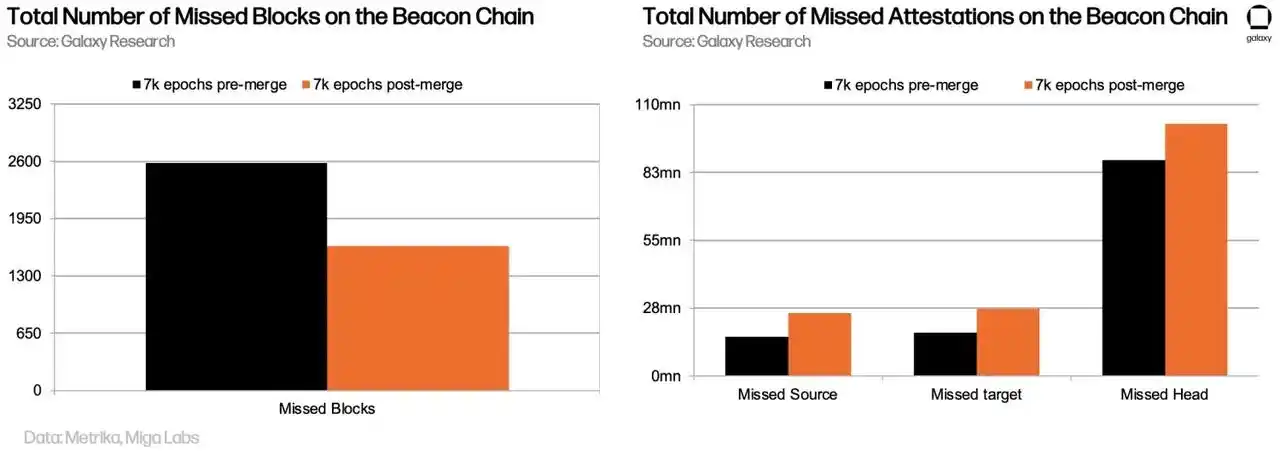
After the merger, the missing block rate of the beacon chain was reduced by 36.70%, indicating that the additional tip and MEV reward made verifiers more willing to receive the block reward on Ethereum. With the increase of the total number of active verifiers after the merger, the missing rate of witness messages also increased slightly. Verifiers can often earn money by sending witness messages (i.e., voting on the correct blocks and transactions), but sometimes they can be randomly selected to generate blocks and get a higher reward, though the chances of this happening are extremely slim, at 1/491,461. The verifier needs to vote on the source checkpoint, target checkpoint, and chain header block when sending witness messages to gain revenue. In the course of the verifier's operation, no matter how long the downtime may result in the missing of the witness message within a short period of time, and since the verifier is rarely responsible for the block, the downtime often does not result in the occurrence of the missing block.
Mev-related data indicators
Indicator 4: Adoption rate of MEV-Boost
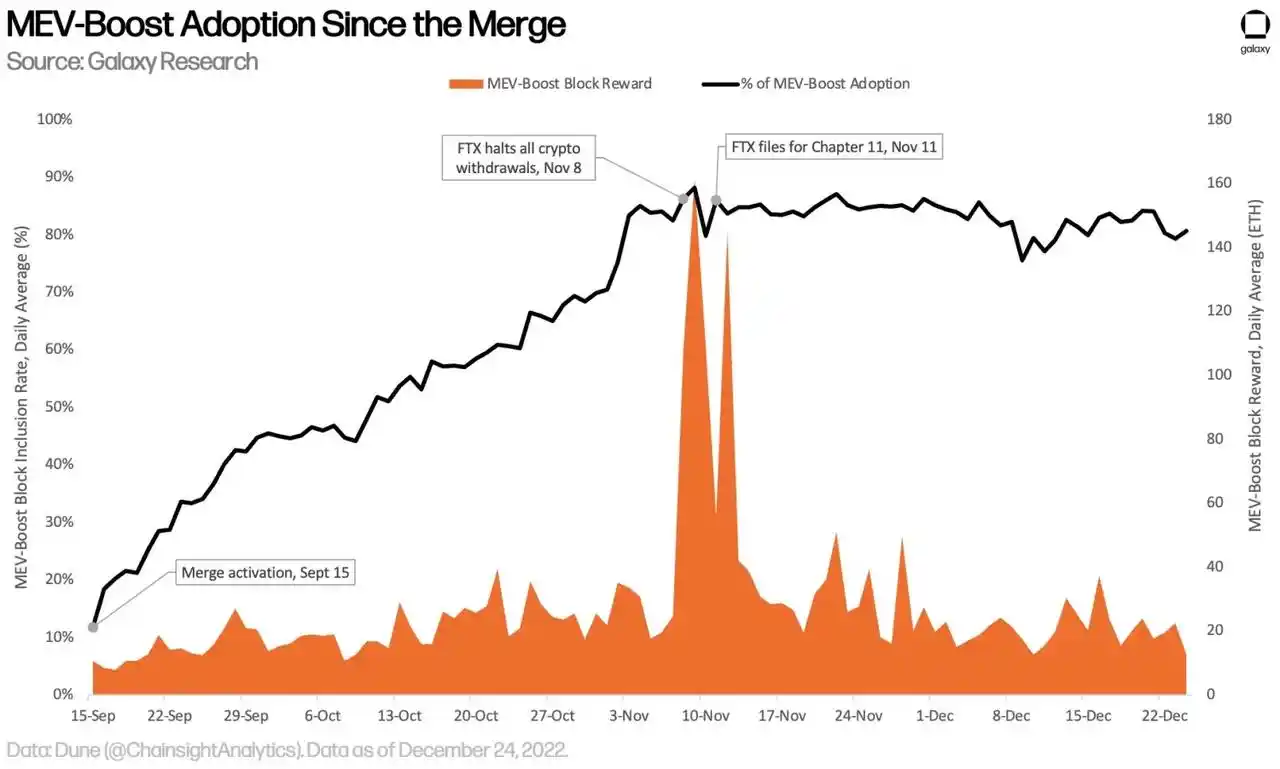
The merged Ethereum ushered in a new era of MEV extraction and separated block building from block proposal. Most validators run throughMEV-BoostTo earn MEVs, the software helps them connect to multiple third-party relays, known as off-chain trading markets, where they can auction off pre-built blocks containing MEVs. Relay stations facilitate honest bidding and block content transfer between block builders and verifiers, while builders can take lucrative bundles of transactions from MEV searchers and bundle them with transactions from local memory pools and private order streams to build blocks that make them the most money.
At the time of the merger, there were five relay operators in the market, of which Flashbots had more than 60% market share. 100 days later, and now againThere are three operators running uncensored, unlicensed Repeaters, and Flashbots' market share has fallen toLess than 30%. The number of verifiers earning MeVs with MEV-Boost on Ethereum has also climbed steadily, from just over 10% at the time of the merger to around 80% now.
Indicator 5: Amount of MEV earned daily
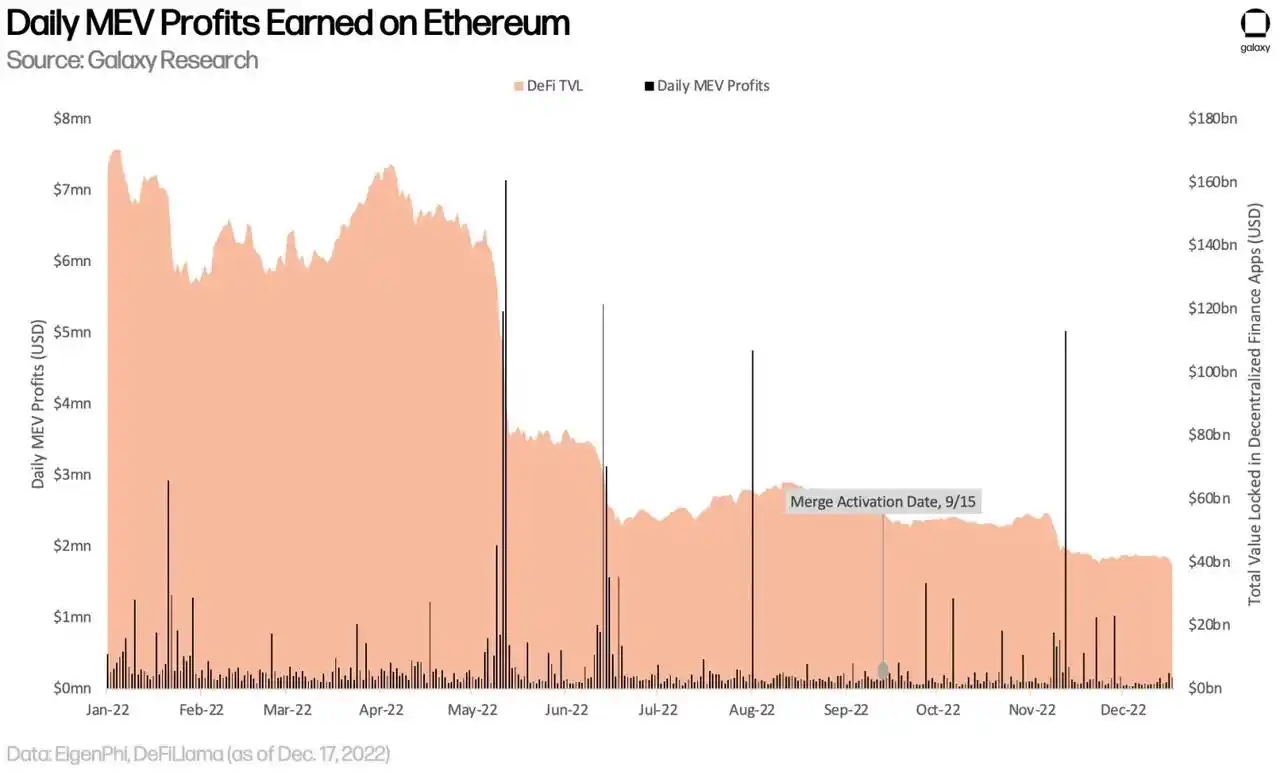
While the infrastructure for MEVs on Ethereum has changed dramatically since the merger, the amount of MEVs earned by stakeholders has remained relatively stable. The climb in MEVs throughout 2022 is generally associated with increased activity and volatility in DeFi apps. After the Luna/Terra crash in May, the general panic in the market saw a significant drop in on-chain activity on Ethereum, and it wasn't until FTX also crashed that on-chain activity began to spike in response to market volatility. If you want to learn more about the DeFi event on the chain in November, read thisGalaxy Research reports.
Indicator six: The number of blocks reviewed versus the number of blocks not reviewed
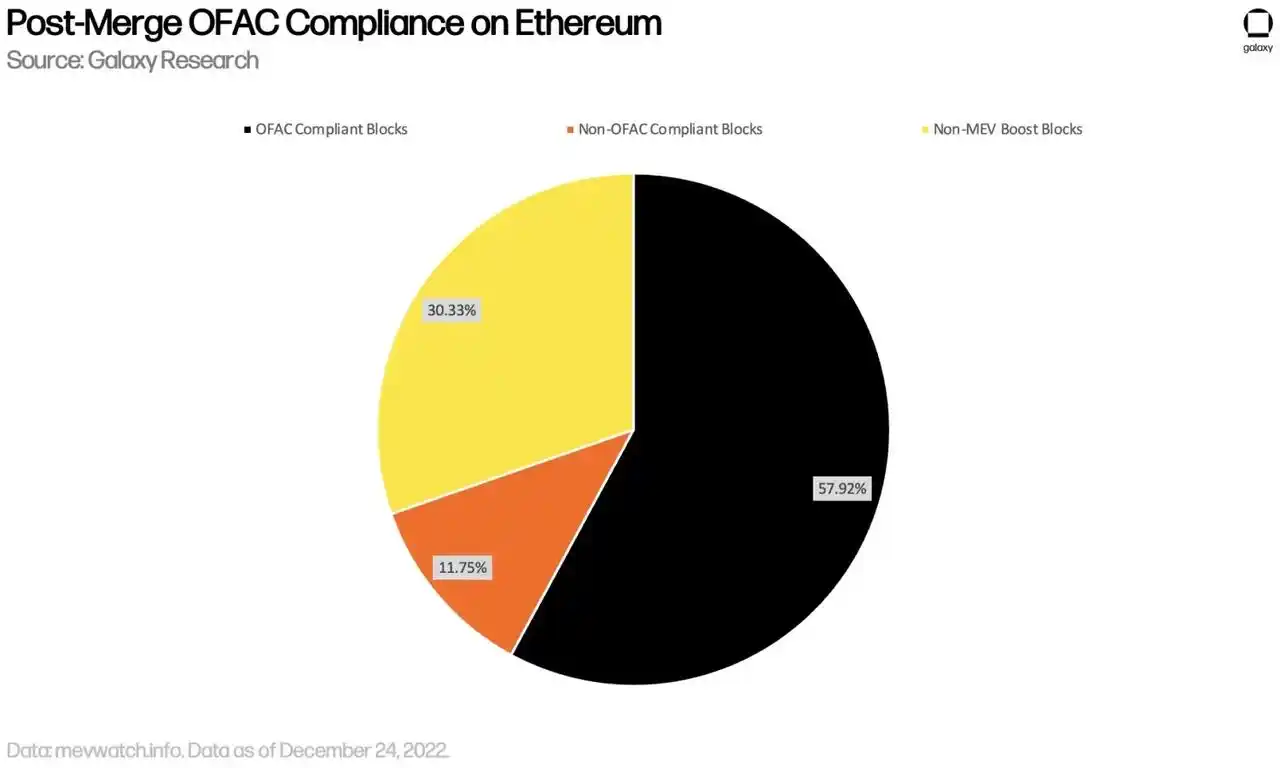
One of the downsides of adopting MEV-Boost is that it increases the number of blocks under review on Ethereum. It is estimated that over 57% of the blocks on Ethereum in the last 100 days have been generated by review relays, such as Flashbots relays, which automatically filter out transactions that interact with addresses on FinCEN SDN (sanctioned entities) list. While relays are voluntary, the existence of uncensored relays will continue to ensure that all transactions are confirmed, but if most relays review transactions for some reason, the credibility of Ethereum's global, performless network will be challenged.
Verifier related data indicators
Index 7: Income from mortgage
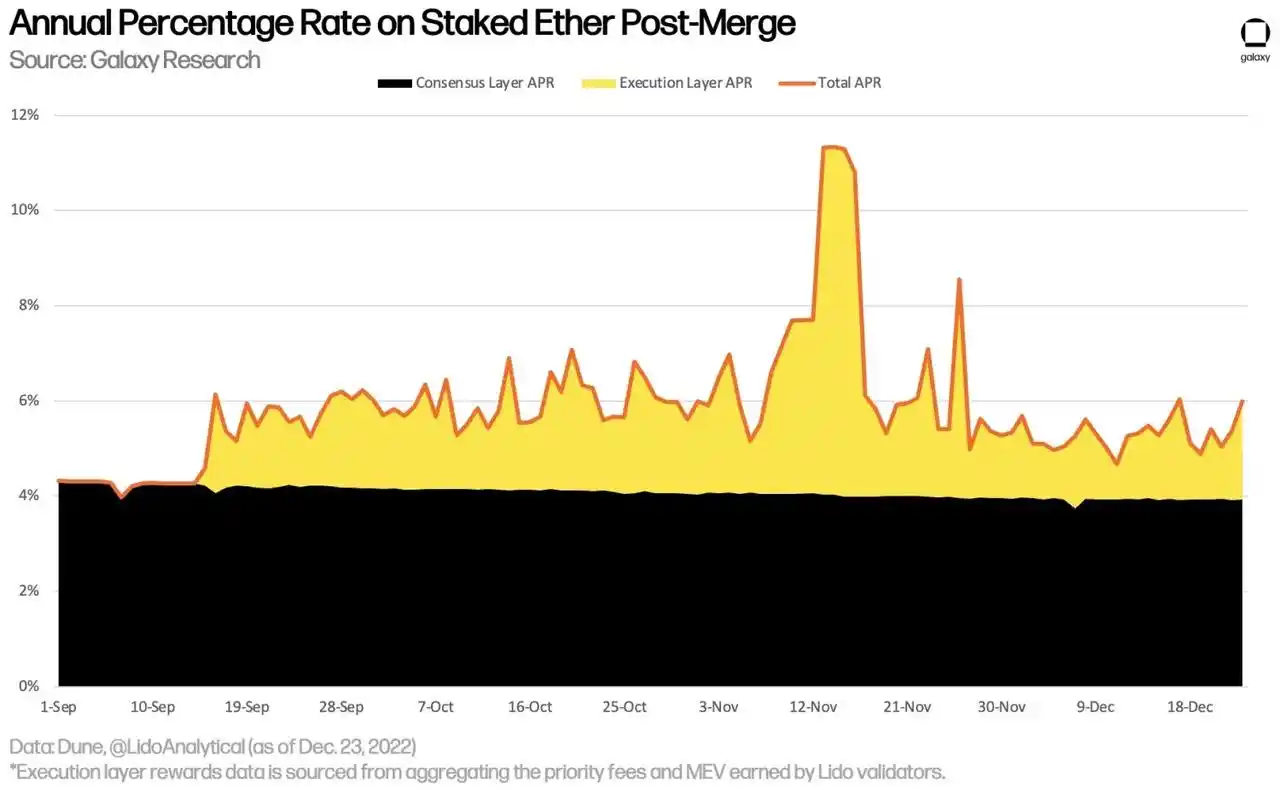
In addition to effectively reducing the overall power consumption of the Ethereum network, the second expected impact of the merger is that it changes the verifier reward model. Since the merger, Ethereum validators have been able to earn liquidity rewards in the form of MEVs and tips. These rewards are no longer limited to highly specialized operators who manage large mining hardware data centers, but are now available to ordinary Ethereum node operators as well. The total verifier award (compounded on 32 pledged ETH) is expected to grow based on the amount of tips and MEVs miners received prior to the mergerMore than double. However, this estimate does not take into account deteriorating macroeconomic conditions, reduced demand for block space, and lower Gas costs on Ethereum after upgrading, so the actual payback for validators is lower than expected. Unlike rewards in Ethereum's consensus layer, rewards from tips and MEVs are highly volatile and completely dependent on specific network activity.
Since the merger, the annual return on pledged ETH has increased from approximately 4 per cent to between 5 and 6 per cent. The rewards earned on Ethereum's consensus layer (CL) remain at a fixed rate until future network upgrades, while the rewards earned from the execution layer (EL) have a wide range of fluctuations and are dependent on user activity. The only time verifier rewards doubled in the last 100 days was the week of November 7 after the FTX crash, as there was a spike in DeFi activity on Ethereum. If macroeconomic conditions improve and Ethereum's network usage increases, executive rewards are expected to rise, increasing the total annualized return on pledged ETH.
As the chart below shows, the consensus layer award has decreased slightly over the past 100 days as the total number of verifiers has increased, which is also a design feature of the merger. The return on pledged ETH issued by beacon chain will change in the opposite direction depending on the number of Ethereum verifiers. If you want to learn more about the dynamics of Ethereum's revenue after the merger, read thisGalaxy ResearchReport.
Indicator 8: Market share of Ethereum "pledge as a Service" providers
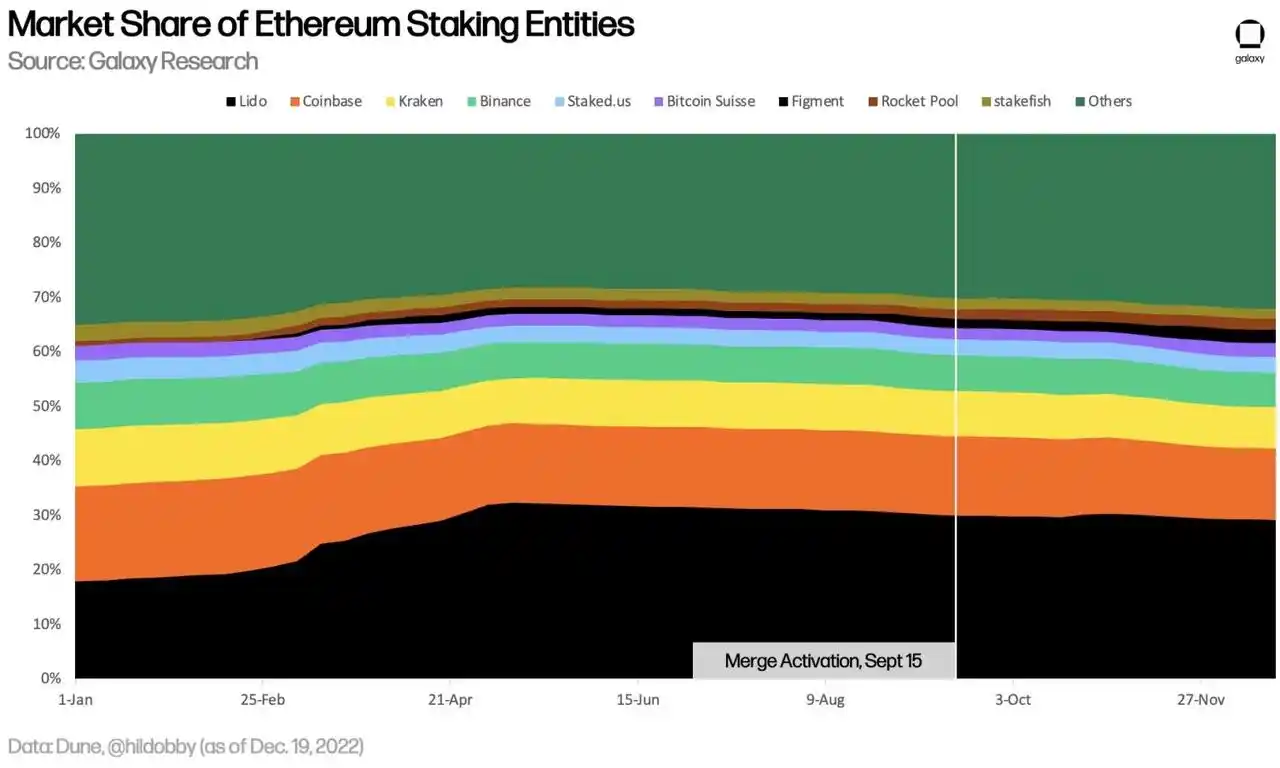
Since the merger, the number of active verifiers has increased by 22,517, resulting in a 15% increase in Ethereum's ETH pledges compared to pre-merger levels. It is worth noting that the increase in new validators over the past 100 days has had little impact on the share of pledged ETH by large entities such as Lido, Coinbase, and Kraken. Lido controls about 30% of verifiers and continues to dominate the Ethereum pledge market. In terms of changes to the veritable node operators and the pledge ETH they control, the merger has had little impact on the pledge market landscape.
Metric 9: Market share of Ethereum block builders
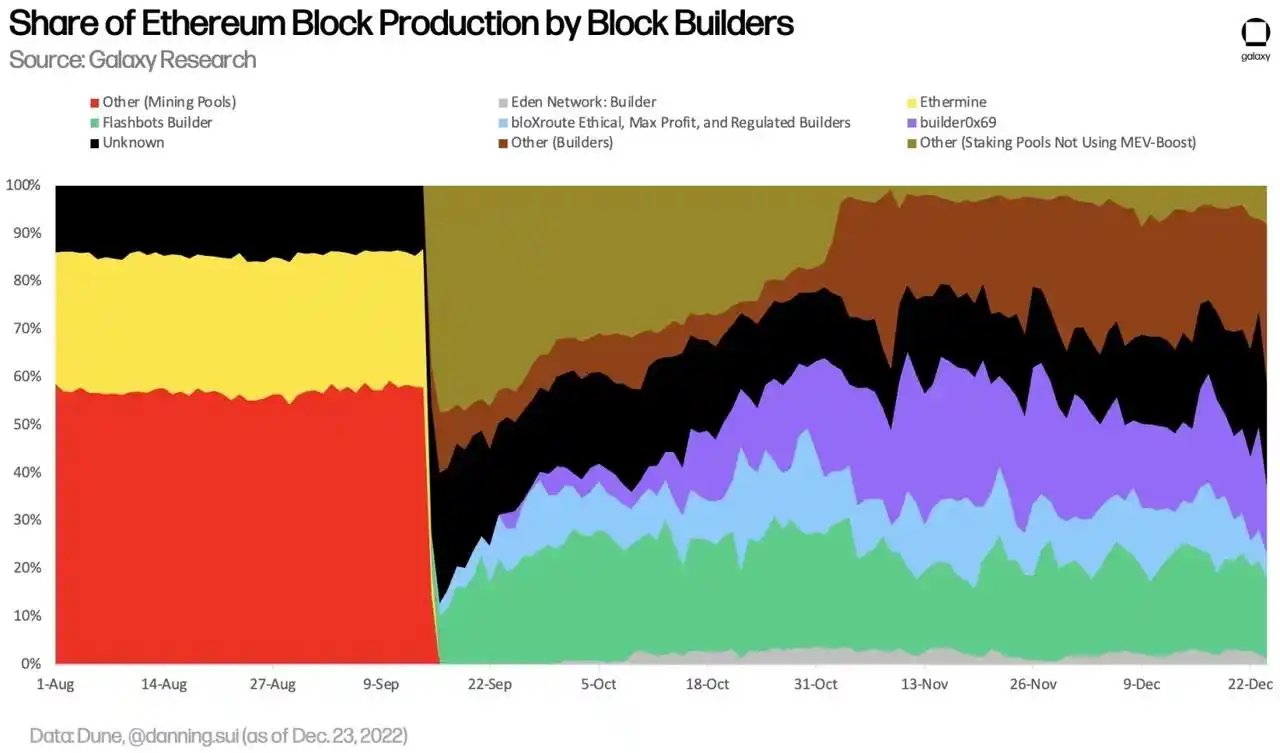
However, from the perspective of Ethereum block production, the merger has significantly changed the role of the verifier, and now the task of block building has been completely delegated to third party entities such as Flashbots, BloXroute, Eden, and other pseudomanical "builders". Over the past 100 days, as MEV-Boost usage has increased, the percentage of Ethereum blocks generated by verification node operators who do not use MEV-Boost has declined dramatically. Ethereum pledge entities are not the same as those responsible for putting transactions in the public Ethereum memory pool into blocks, they only receive blocks from relays. Over 80% of the blocks on Ethereum are generated off-chain by builders and relays, which not only makes Ethereum more complex, but also increases its regulatory risk.
Index 10: Validator queue and loss limit coefficient
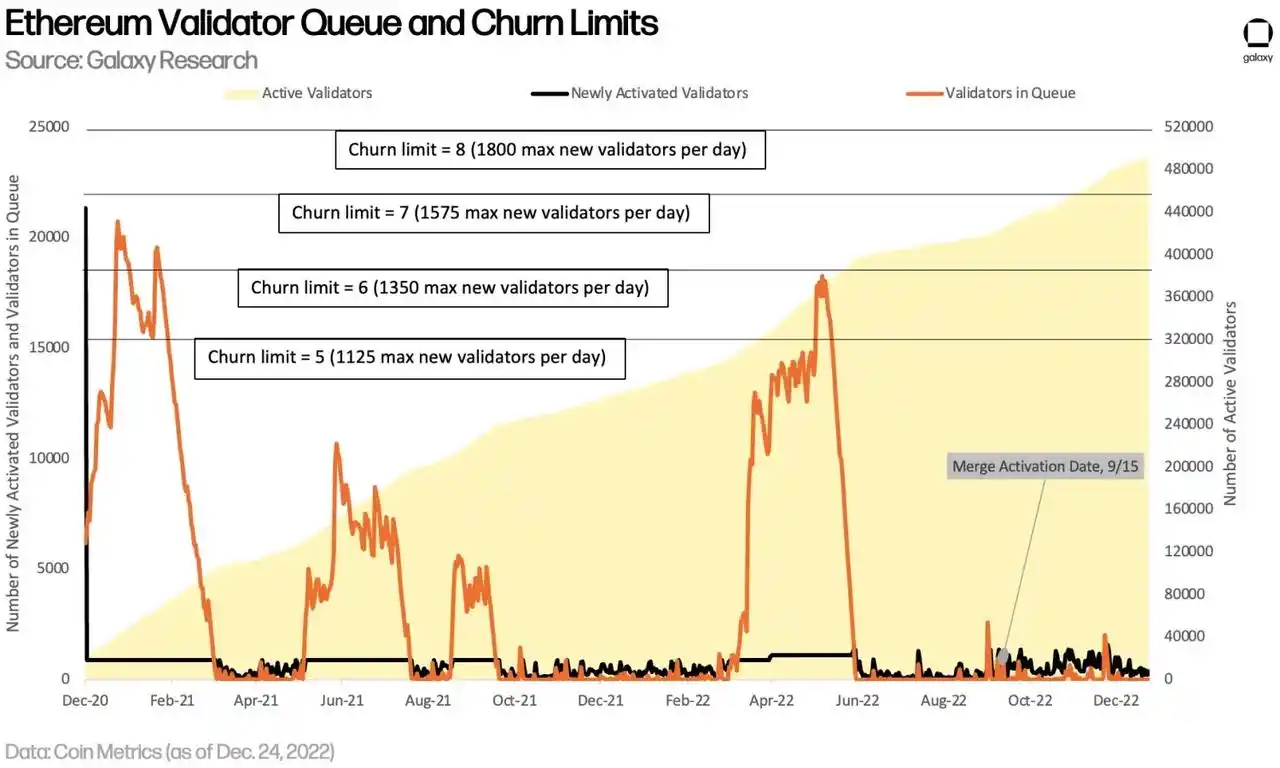
Forty-nine days after the merger, on November 3, 2022, the total number of validators exceeded the 458,752 threshold. As a result, the churn limit factor, which specifies the maximum number of new validators entering and exiting, has been increased from six to seven per epoch. Currently, the daily limit for the number of verifiers that can enter the Ethereum in-and-out queue is 1575 instead of 1350. Once the total number of active verifiers is reached524288The loss limit factor will be increased again to 8 per epoch.
Looking ahead to Shanghai upgrade
With the merger completed, Ethereum's core developers are already working on their next major network-wide upgrade, the Shanghai Upgrade. Technically, the Shanghai upgrade is just an upgrade name for the Ethereum implementation layer, while Capella is an upgrade name for the Ethereum consensus layer. However, given that the two network upgrades will take place simultaneously, the Shanghai upgrade is also often used to refer to both upgrades. The Shanghai upgrade will primarily increase the drawdown capabilities of pledged ETH, making it easy for verifier node operators to extract their consensus layer awards, as well as their full pledge balance on the beacon chain.
Since it is currently not possible to extract part or all of ETH from the beacon chain, there is urgent social pressure on Ethereum's core developers to enable this feature as soon as possible since the mergerDay by day. In late October, Ethereum began planning in earnest for its next major upgrade after the merger. After several weeks of discussions, Ethereum's core developers met in early DecemberagreeOther improvements to the Shanghai upgrade will be put on hold as necessary to speed up the implementation of pledged ETH extraction. The feature is expected to go live around March 2023.
Below, I will give a detailed overview of the process of the verifier node operator to extract pledged ETH after the upgrade in Shanghai.
Partial withdrawal
All verifiers who wish to extract consensus layer rewards must ensure that their withdrawal vouchers have been updated with the new"0x01This is also the requirement to withdraw the full balance of pledged ETH. Initially, when the beacon chain was first rolled out, the verifier node operator was asked to specify a withdrawal address that would be deposited to an address on the Ethereum consensus layer. At the time, plans to convert Ethereum by linking beacon chains to the existing Ethereum network had not been developed. Therefore, there is no reason for the verifier to specify the withdrawal address on Ethereum instead of the beacon chain.
However, given the design of the merge and the fusion of the beacon chain with Ethereum, the verifier needs to update its withdrawal voucher to 0x01 so that withdrawals can be transferred directly to the Ethereum execution layer address. Early inIn March 2021After the 0x01 withdrawal certificate is added to the beacon chain, the new verifier can choose to specify a Ethereum withdrawal address, although most people choose to create a default beacon chain withdrawal address in 0x00 format. According to Ben Edgington, product lead for Ethereum core developer and consensus layer client Teku, there are approximately 302,154 verifiers using 0x00 drawdown vouchers and 186,722 verifiers using 0x01 drawdown vouchers on the beacon chain.
Once the Shanghai upgrade goes live, changes to withdrawal certificates will begin to be processed online in a similar way to withdrawals. Each block of the network can only process a maximum of 16 partial or full withdrawals and generates a block every 12 seconds. Again, the network will only be able to process a maximum of 16 withdrawal voucher changes per block. This means that it will take about 100 hours for the Ethereum network to run and update the withdrawal vouchers for Ethereum's entire verifier set. For those verifiers whose withdrawal credentials are already in 0x01 format, the network will automatically transfer their consensus layer reward balance to their specified execution layer address, with no additional action required by the verifier node operator.
Every 12 seconds, the network scans the active verifier set based on the verifier index number. developerCurrently under discussionLimit the network scan of withdrawals to a maximum of 1,024 validators at a time to avoid extreme situations. For example, if the network scans most (or all) of the verifier set, with few or no qualified extracts to process, this will delay the block time. Based on the number of active validators on Ethereum as of December 24, 2022, the network's ability to scan for withdrawals dictates that each block can only handle a maximum of 16 withdrawals. To reiterate, if the verifier's consensus layer reward balance is greater than zero, the network will automatically extract it to the Ethereum address they specify.
All withdrawals from the beacon chain will be made on EthereumSystem-level operationThese operations are pushed to the Ethereum virtual machine (EVM) instead of being processed by the executive layer first. As a result, withdrawals will not be recognized as transactions initiated by normal users on the blockchain or smart contracts, but instead will be recognized as a new type of object in the Ethereum block with separate fields in the bulk. In addition, given the limited number of withdrawals that can be processed per block on Ethereum, and the negligible additional operating costs of processing the maximum number of withdrawals relative to the cost of executing user and smart contract transactions, withdrawals generally do not involve Gas fees.
Full withdrawal
The verifier will be subject to the same attrition rate as the new verifier in and out when fully withdrawing the pledged ETH, which means that the beacon chain can handle up to 7 verifier exits per epoch. Once the verifier successfully exits, they are placed in the withdrawal queue. To extract the full pledged ETH, the verifier node operator must have updated their withdrawal voucher to the new "0x01" format mentioned above.
Assuming the operator has completed the update, the next full withdrawal will be processed along with the partial withdrawal. The network periodically scans an active set of verifiers, each block processing up to 16 partial or full withdrawals. To reiterate, the draw scan is based on the verifier index number, and a maximum of 1024 verifiers can only be scanned per block to prevent any extreme cases that could cause block time delays. If the network needed to process the withdrawals of all the verifiers in the active verifier, a complete withdrawal from the exited queue would take about 100 hours to process.
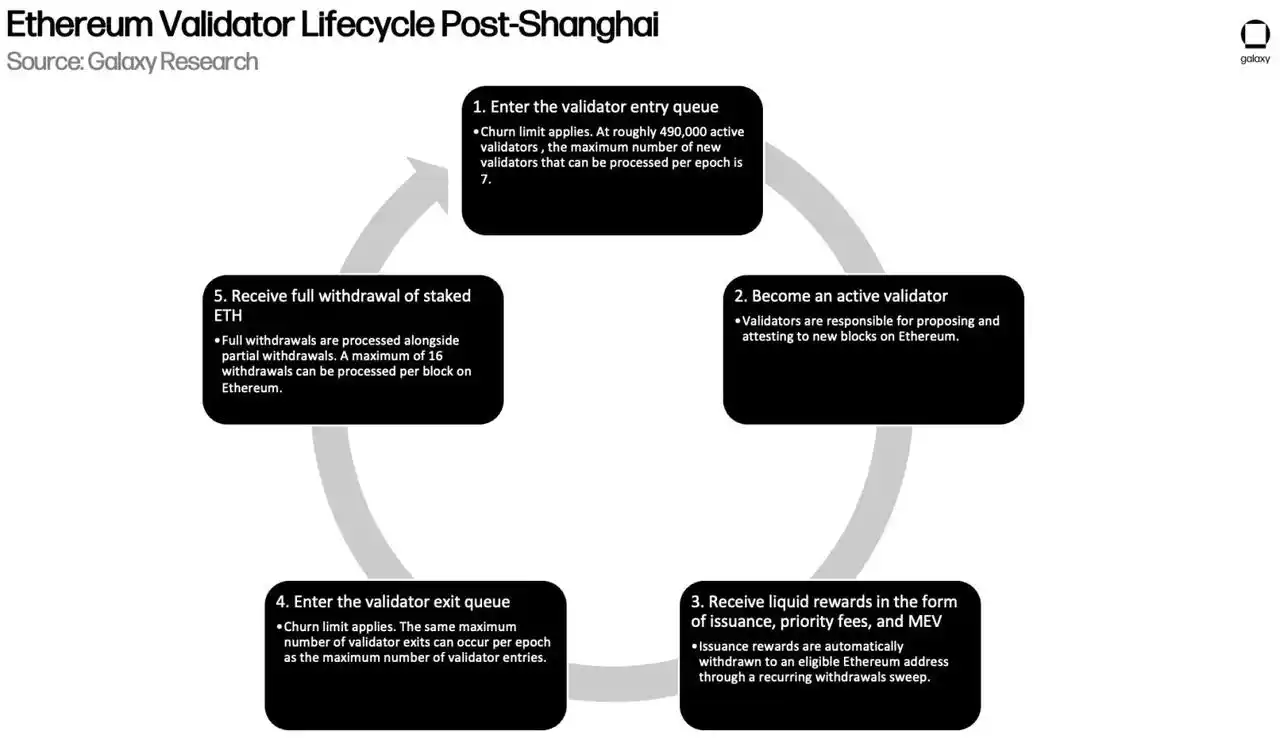
In fact, 1,084 verifiers have already quit Ethereum and are waiting to get into the Shanghai upgrade queue (step 5 above). Of these, 864 were voluntary opt-outs, most likely initiated by verifier node operators who wanted to exit the pledge without being penalized by the network for going offline; The other 220 verifiers were forced out because of the forfeit mechanism, which punishes verifiers who violate network rules, especially those who present multiple blocks in a slot or send multiple witness messages. These 1,084 exiting verifiers indicate that there may be at least 1,084 pending full withdrawals and 34,688 pending pledged ETH on the beacon chain shortly after the Shanghai upgrade activation.
conclusion
As expected, the merger has fundamentally impacted ETH offerings, block timing and the MEV supply chain. However, due to the unexpected downturn and volatility in the market, the rate of return on pledged ETH was also lower than expected, remaining in the range of 5%-6% instead of above 10% as envisaged. In addition, mergers pose significant challenges to Ethereum's censorship resistance due to censorship relays and the involvement of third-party block builders. Since September 15, more than half of all blocks generated on Ethereum have been generated by review relays. Since November, though, the percentage of on-chain reviews has fallen slightly, with the growth of new non-censored relay operators and pseudonymous builders.
Following the completion of Ethereum's most high-profile and complex upgrade, the Ethereum core developers are already working on the Shanghai upgrade, which will primarily activate the extraction capabilities of pledged ETH. This feature has been a key missing feature in the validator lifecycle since Beacon Link launched in December 2020. Once successfully enabled, the network will be able to process the maximum number of withdrawals in each block. Since the number of validators has now reached 490,000, it will take approximately 100 hours for the network to process withdrawals and withdrawal voucher changes for each active validator. Soon after the Shanghai upgrade is completed, users and enterprises will reassess their pledges and earnings, and will issue a large number of verifier entry, exit, withdrawal and withdrawal voucher change requests in a short period of time. The merger is definitely an important milestone for Ethereum, but there are several more important goals still to be achieved on Ethereum's roadmap.
Welcome to join the official BlockBeats community:
Telegram Subscription Group: https://t.me/theblockbeats
Telegram Discussion Group: https://t.me/BlockBeats_App
Official Twitter Account: https://twitter.com/BlockBeatsAsia
 Related Articles