Interpreting the drama between DCG, Genesis and Barry Silbert, what is the current situation at DCG?

原文标题:《 Anatomy of the DCG Dumpster Fire 》
原文来源: Jack Inabinet,Bankless
The DeFi way
The market is going through a little bit of a rally, but we won't lie, there's still a lot to be nervous about.
This week, we take a look at all the drama surrounding DCG, Genesis, Grayscale and Gemini clients. This is not a very good situation.
Uncover the Barry Silbert mess

Screenshot: Real Vision Finance
It's been a big week for Barry.
On January 2, Gemini co-founder Cameron Winklevoss tweeted an open letter to Barry Silbert, CEO of Digital Currency Group (DCG), Request Silbert to publicly commit to reaching an agreement with Gemini creditors to repay Genesis Global Capital by Jan. 8.
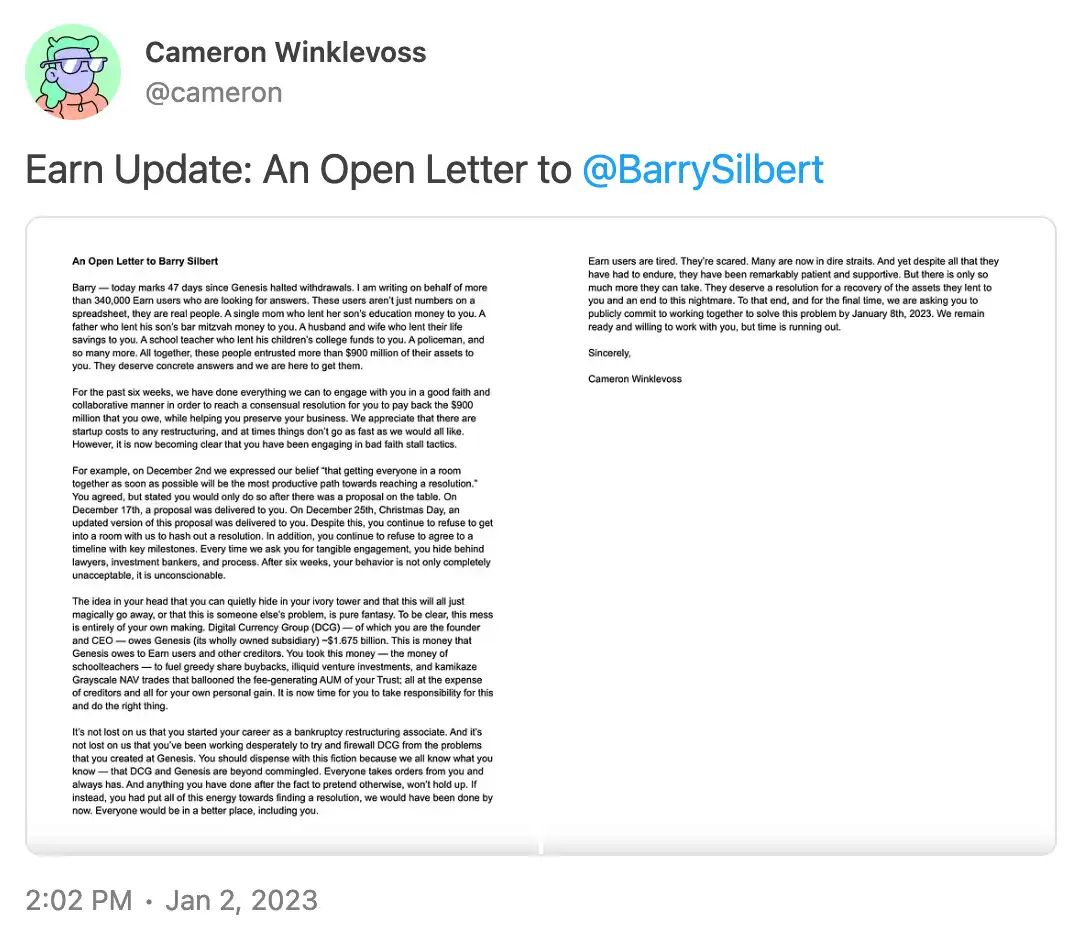
In a heartbreaking spiritual appeal, Winklevoss offers a glimpse into the suffering of Gemini's retail depositors: From "the father who lent his son his bar mitzvah money" to "the single mother who lent his son his education," all became collateral for DCG's "voracious stock buybacks, illiquid venture capital, and kamikaze gray-scale net worth" that swelled the amount of assets under management (AUM) generated by the (gray-scale) trust.
Genesis' biggest creditor, Gemini, is owed $900 million. That's all very well, but Cameron, may I point out your obvious hypocrisy?
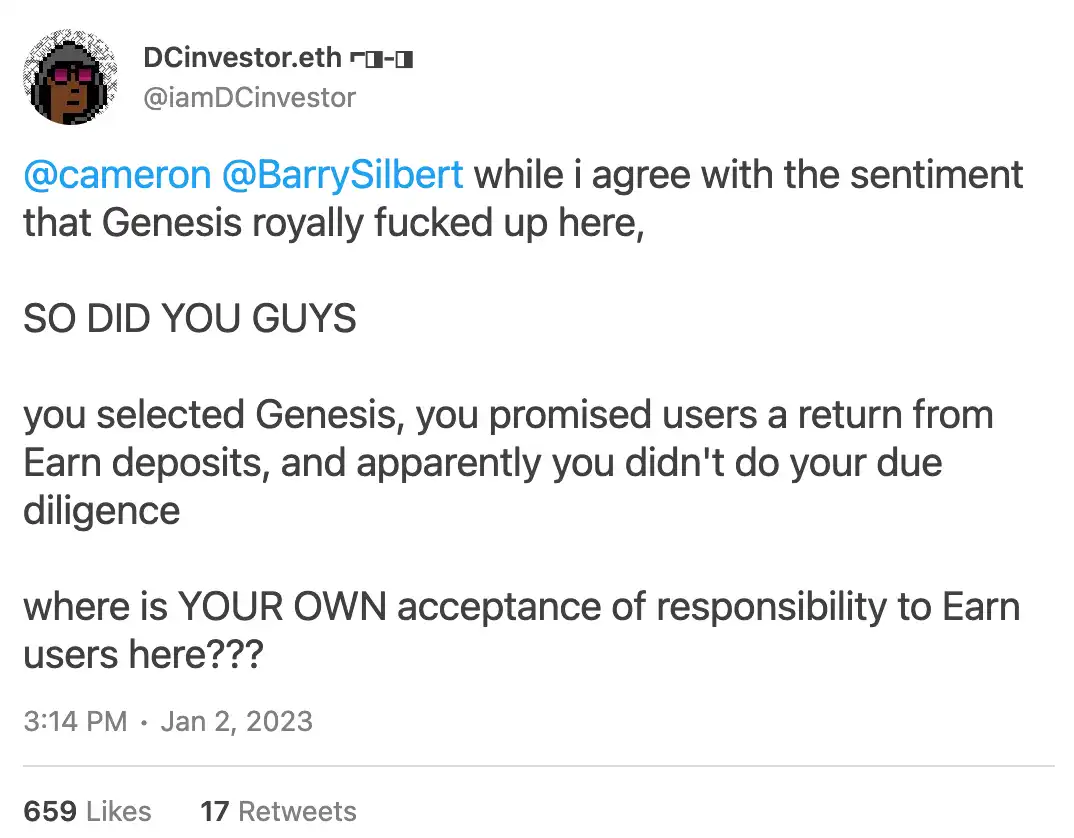
Encryption big V "DCinvestor. Eth on twitter" reply "Cameron Winklevoss" said : "While I agree that Genesis screwed up here, so did you. You chose Genesis with the promise of earning a return on your savings, but you clearly failed to do your due diligence."
You can't ignore Gemini's Fee Scrape!

Source: Gemini
That being said, at least the Winklevii family is trying to get better, DC!
While I'm by no means suggesting that Winklevii should bear The financial burden for Genesis's missteps, or that Earn depositors weren't aware of the risks they were taking, it does sound a bit like The pot calling the kettle black...
But that's beside the point, because today, we're going to delve into the state of DCG's balance sheet and examine the growing obstacles between DCG and its efforts to defend its equity.
debt
After Luna crashed back into orbit and 3AC descended into hell, Genesis had a big hole in its balance sheet. To keep its lending arm solvent, DCG assumed 3AC's debt and Genesis's role as creditor.
Without liquidity, Genesis overcame insolvency through "accounting wizardry".
As 3AC fired on Genesis's balance sheet, DCG was forced to issue a $1.1 billion promissory note to its subsidiary over 10 years. There is also an existing intercompany loan that matures in May for $575 million. In addition, DCG has a $350 million Eldridge credit outstanding.
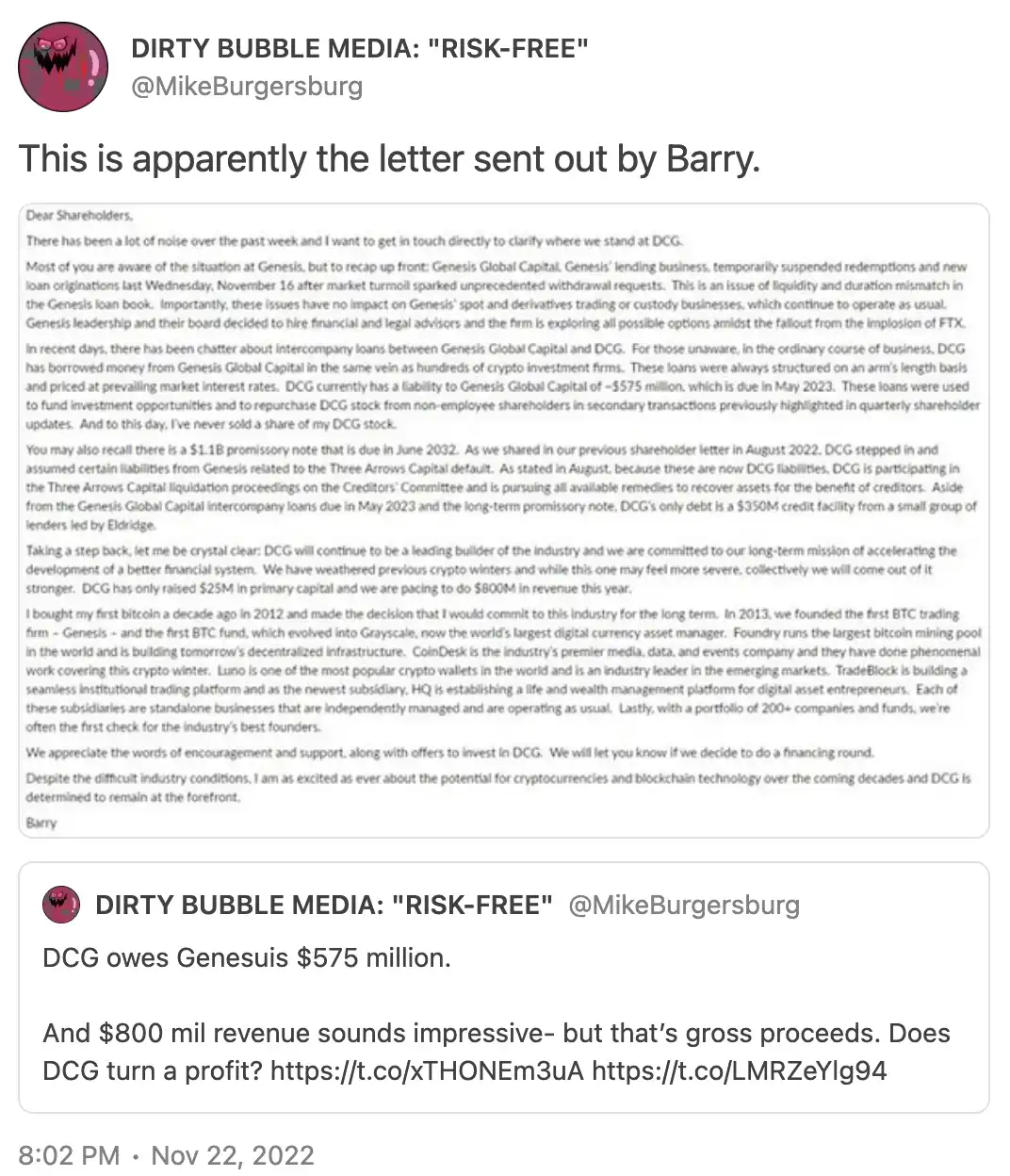
Overall, DCG has more than $2 billion in outstanding debt.
assets
I'm sure savvy Bankless readers may have deduced that it could be a challenge for DCG to find a way to bridge that gap in a bear market.
Grayscale, GBTC and ETHE assets are currently the most liquid assets on DCG's books. Value can be extracted from these positions in two ways. Unfortunately for DCG, neither option generates enough cash.
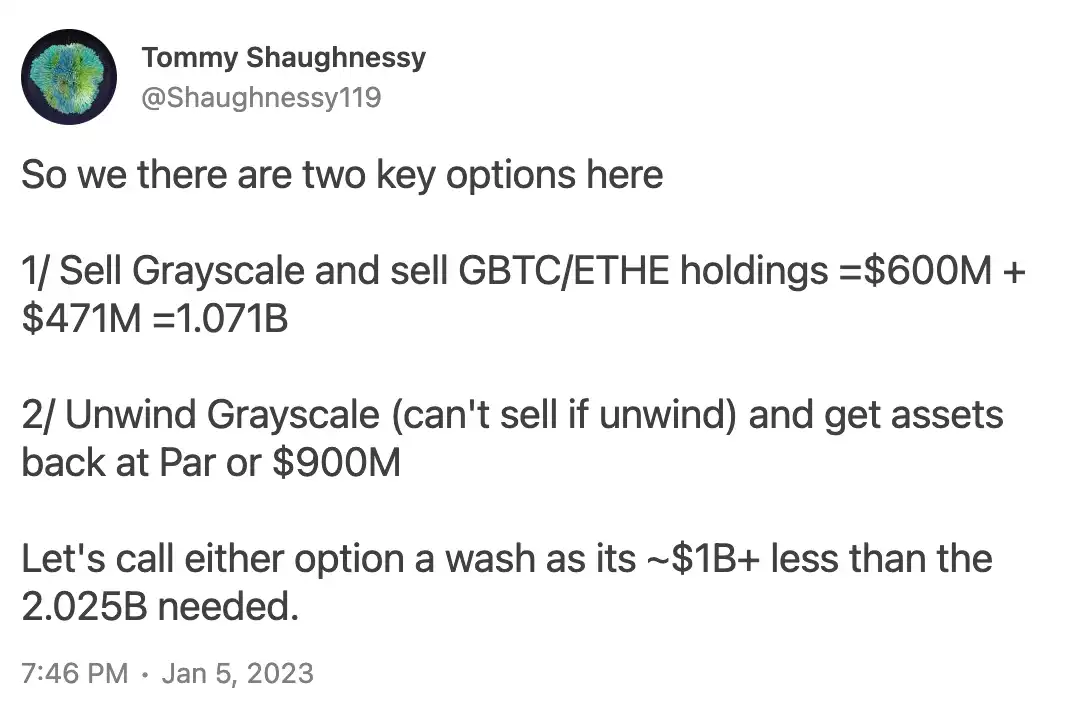
Delphi Digital co-founder Tommy Shaughnessy said on twitter : "DCG here there are two key options: 1. Sell grayscale and sell GBTC/ETHE holdings - $600 million + $471 million = $1.071 billion; 2. Unwind grayscale (cannot be sold if unwind) and recover assets at par or $900 million. We see either option as futile because it falls about $1 billion short of the $2.025 billion needed."
The GBTC discount, currently 45.1%, would be further increased if DCG chose to pay a higher option.
Are you still trading GBTC?
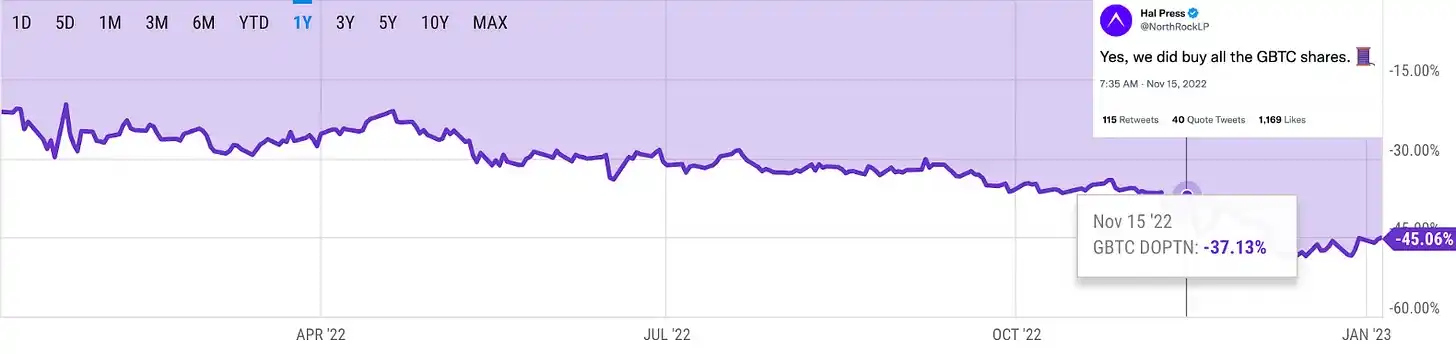
Data source:YCharts .Twitter
That leaves DCG with about $1 billion on its venture-capital book. Suffice to say, the future of DCG looks grim.
Realistically, it needs a potential buyer to pay for the deal to make sense.
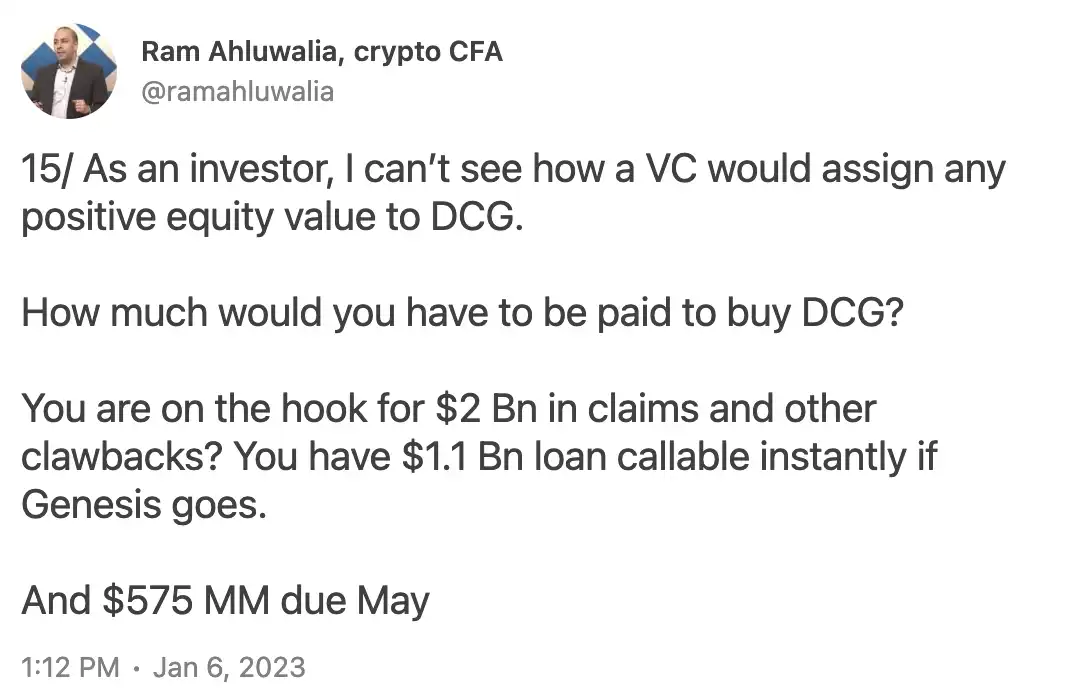
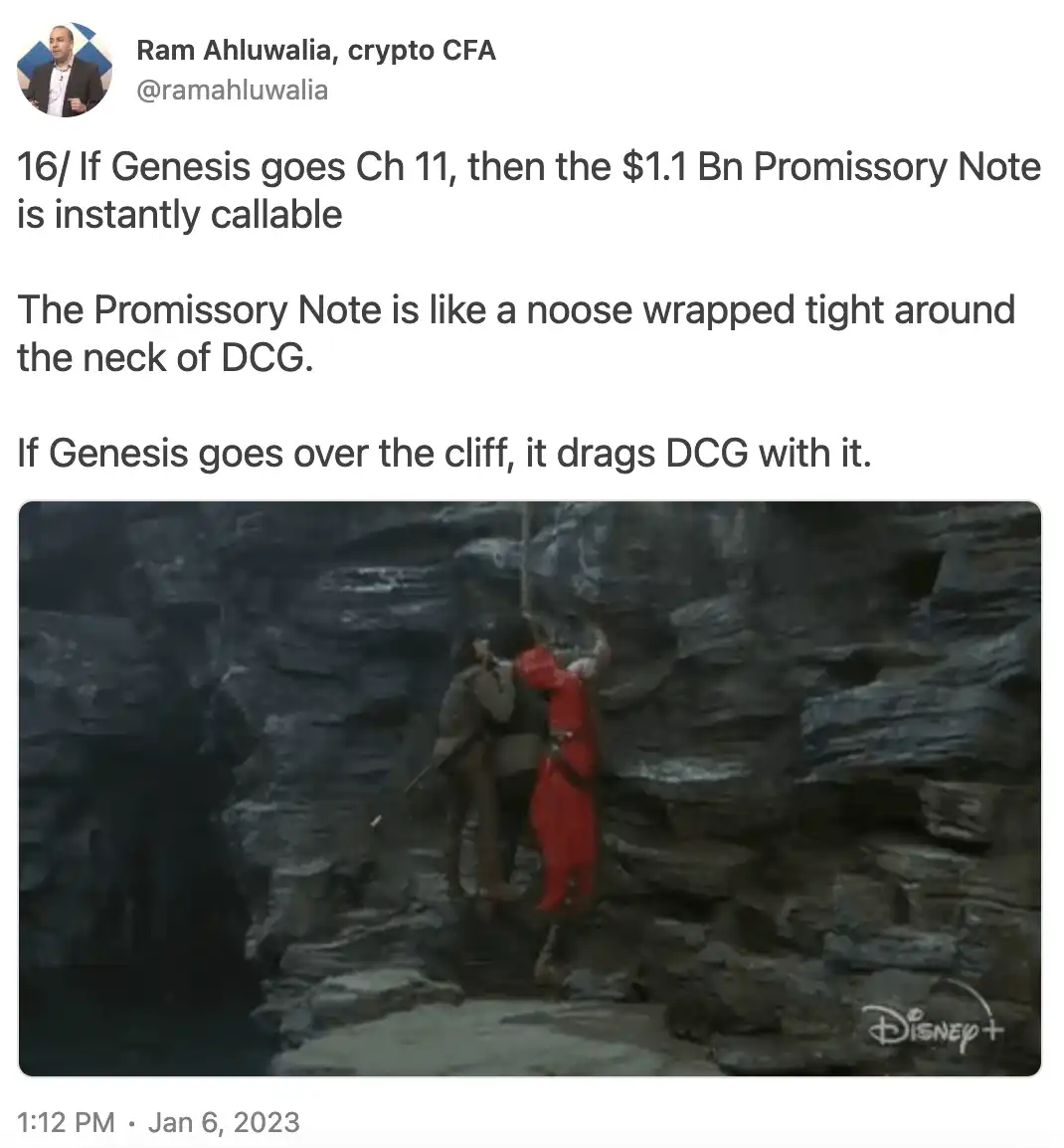
Encryption investment consultancy Lumida Wealth, chief executive of Ram Ahluwalia said, "as an investor, I don't see how venture capital (VC) company will assign DCG any positive equity value. You're liable for $2 billion in claims and other recovery costs? If Genesis goes bankrupt, you have $1.1 billion in loans immediately redeemable and $575 million due in May."
Somehow, things have gotten even worse for a company that raised money at a $10 billion equity valuation just over 14 months ago!
problem
Digital Currency Group is running out of options to settle claims from Genesis creditors and keep it alive, but that doesn't mean Mission Impossible can't get a little more!
Monopoly Money has left
As you might have guessed in 2022, Digital Currency Group's business didn't pick up in the New Year.
After a disastrous year for cryptocurrencies, it's somewhat comforting to hear that the wallets of the richest people in the space have fallen along with those of the rest of us.
However, if one of your subsidiaries happens to be a cryptocurrency wealth management platform, you may not experience this joy.
Like much of the financial industry, wealth management is a fee-based industry, meaning that the larger your asset under management (AUM), the more money you make.
Money is easy to come by in a bull market, but hard to come by in a bear market.
DCG clearly learned that lesson, and in the company's latest round of layoffs, it put its WM division on the chopping block. Out the door with 60 employees.

Another saleable asset and revenue stream disappeared. Hello, sunk cost!
In the midst of frenzied spending cuts, any individual or group that becomes unprofitable due to changing market conditions will be put on the chopping block by DCG.
While this has had a positive impact on DCG's cash flow, it also indicates that the company is experiencing extreme economic distress.
Redeemable liability
The key factor.
The once-glorious DCG empire's best chance (highly unlikely) must struggle to recover from a crypto crash in 2022.
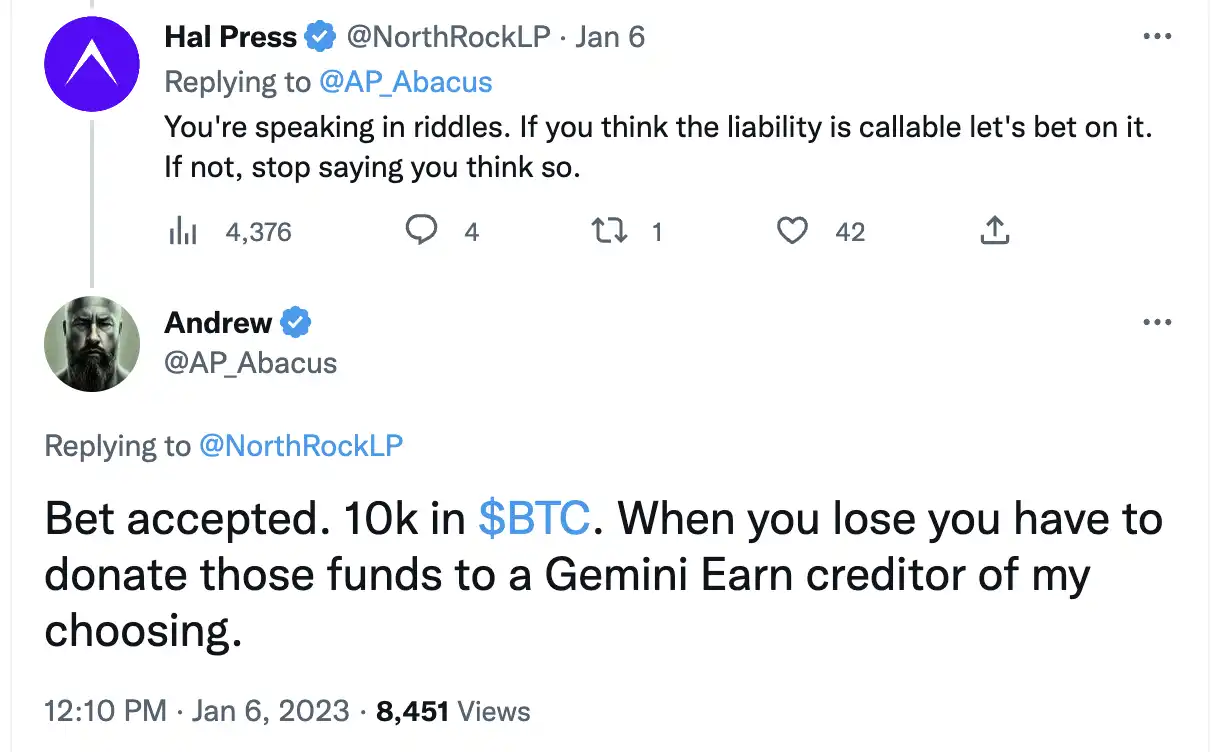
Hal Press on BTC the cause of loss of $10000.
Ironically, DCG may have shot itself in the foot in this regard, as it would dictate the terms of these intercompany notes!
Callable loans enable note holders to demand repayment. At present, DCG is indifferent to the callable note structure because it controls the actions of holder Genesis.
In bankruptcy proceedings, however, this is no longer the case and creditors of the property may go to court to collect their debts.
While it's unclear whether the 10-year note is actually redeemable, DCG's hesitancy about putting Genesis through bankruptcy could indicate that it is.
The FBI?
You think Gensler (SEC chairman) and Garland (U.S. Attorney General) aren't circling the rotting carcass of a key crypto group like regulatory vultures? Late Friday, they did the same quietly.
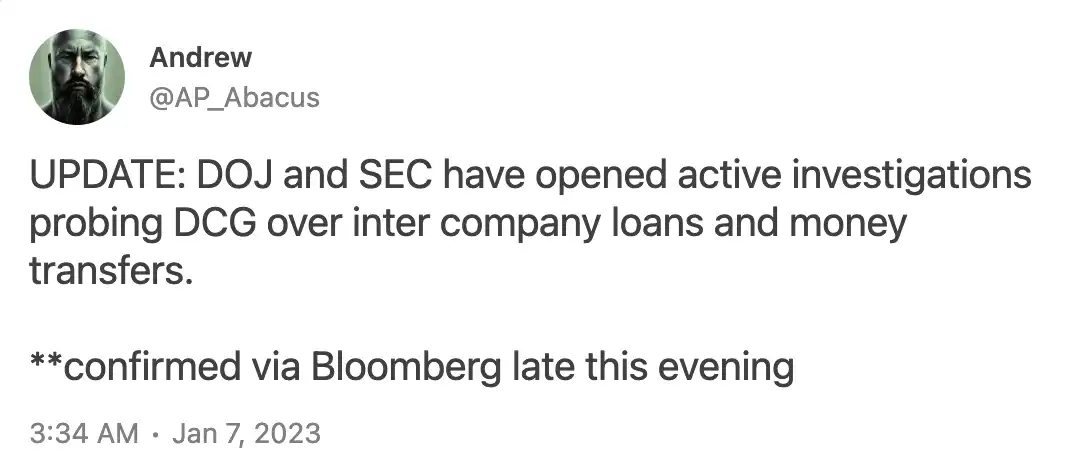
Bloomberg said that in addition to "what investors were told about the trades," investigators are "reviewing the transfers between [DCG] and [Genesis]."
The deals in question might be:
A $575 million loan to DCG due in May 2023; And/or $1.1 billion of promissory notes due 2032.
While the FBI may be interested in these deals for a variety of reasons, one thing is clear: Barry's situation is getting grimmer.
Original link
Welcome to join the official BlockBeats community:
Telegram Subscription Group: https://t.me/theblockbeats
Telegram Discussion Group: https://t.me/BlockBeats_App
Official Twitter Account: https://twitter.com/BlockBeatsAsia

 Related Articles