A review of Nervos Development Progress in 2022: "Metabolism" of CKB Cell
Nervos Metabolism - A Recap of Development 2022
Originally written by janx, encryption researcher
Kelly
There is a deep connection between software development and architecture design, as can be seen from the words used in both: infrastructure, modules, framework, and so on. This interesting connection inspired me for this review -- we can use concepts from the history of architecture to look back at the technological development of Nervos in 2022.
Metabolism was an architectural movement in postwar Japan in the 1960s. Their unique insight is to view architecture as a living organism that changes through interaction with and positive impact on the environment.
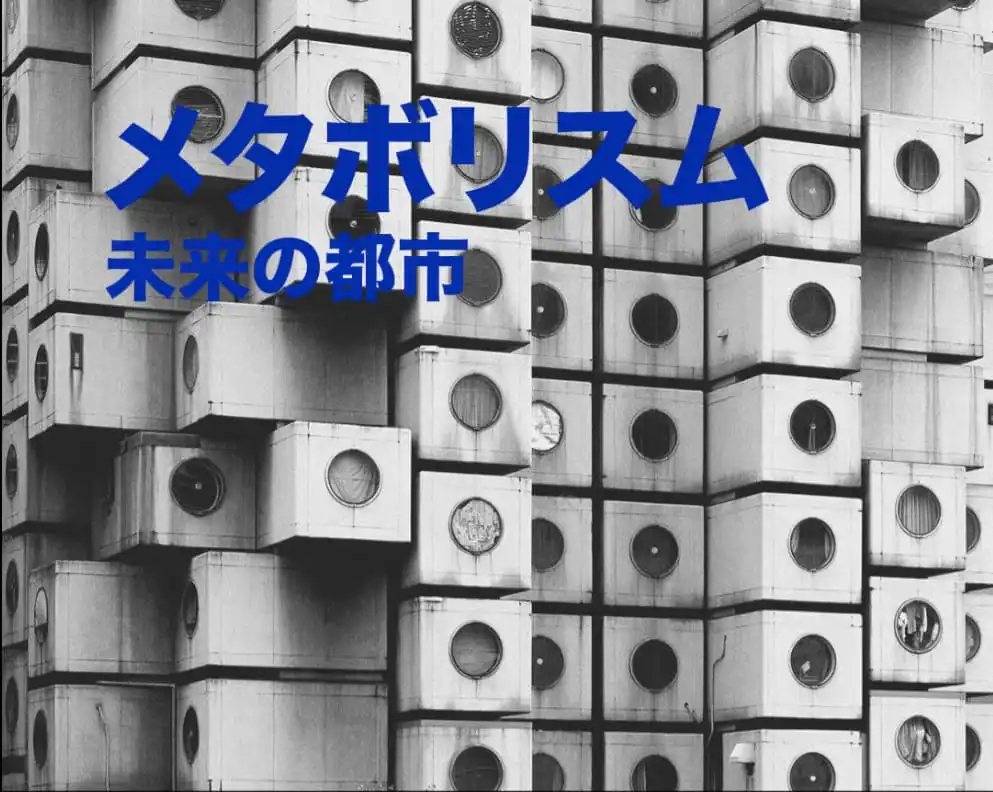
Nakagin Capsule Tower, Kisho Kurokawa, 1970
In the same way, Nervos sees the blockchain network as a living organism that absorbs energy from the environment and continues to grow, forming new independent memories and functions through interaction with the environment, moving human forms of organization to a new stage, and eventually becoming the neural network of human society.
As the intellectual leader and chief advocate of the Metabolism movement, Kiyonori Kikutake's vision for ocean cities is equally impressive. Under the background of the expanding land population and rising sea level in modern society, the dream of human migration from land to sea has come back to people. Kikutake, a core member of the "Metabolism" doctrine, proposed his original concept of the "ocean city" in 1959, which saw the ocean city as the basic unit of the new human community.
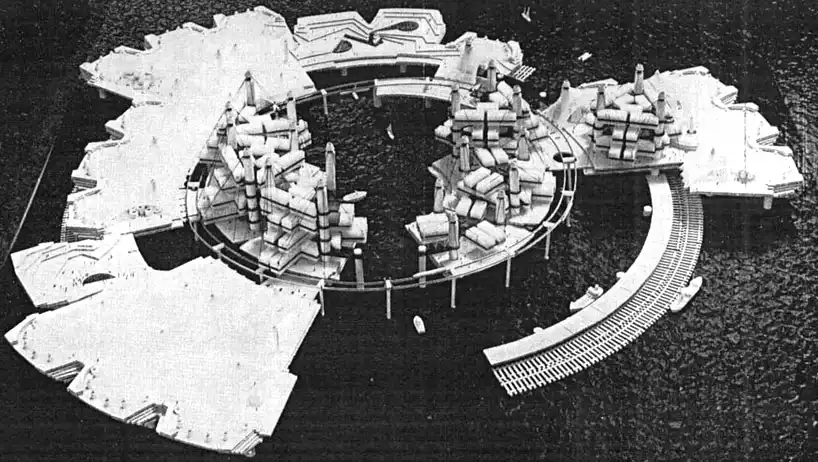
Floating Structure of Kikutake's "Marine City", 1960
Similarly, the Internet today also faces slowing user growth and a highly saturated market. Internet platforms are highly centralized and have become predators that devour user data. The Internet has strayed from its original purpose of being free and open, and has become a data-gobbling beast. This is the driving force behind our desire to reinvent the Internet and build Web3. If we can move from land to ocean and outer space, we can move from Web2 to Web3.
Thanks to Shan Lin and Yan Niu for introducing the architectural movement of Metabolism. Thanks to Annie Peng for editing the article for making it more readable.
Layer 1: Metabolism driven by Cell

Nakagin Capsule Tower, Kisho Kurokawa, 1970
Like CKB, Nakagin Capsule Tower designed by Kurokawa Kisho, the most representative architectural work of metabolism, is also developed around "cells". Each "cell" is a cube space that is easy to disassemble and reassemble, like a capsule apartment. For the occupants, the cell holds memories of their daily lives. In addition, the "cell" has the ability to flow flexibly, like living cells circulating throughout the city.
The design of CKB takes "Cell" as the basic unit to store all kinds of data maintained by collective consensus called "Common Knowledge". CKB Cell flexibility is achieved by DNA-like Cell scripts that encode different rules of behavior. CKB cells also have a life cycle that drives CKB metabolism through constant consumption and creation.
The first hard fork of CKB
CKB successfully activated itsThe first main netHard fork, say goodbye to Lina and welcome the new main net Mirana. Mirana is the result of two years of hard work since CKB launched in 2019 - including virtual machine version control, extensible block heads, cryptographics-friendly instruction sets (such as RISC-V B extensions)And so on. After the hard fork,CKB address formatIt has also been upgraded to provide users with a more consistent cross-app experience.
In the process, we learned a lot. The hardest thing is explaining what happens after a hard fork to ecological players like miners, pools, trading platforms, wallets and developers. Assist them with upgrades and testing; Make sure everyone is prepared before the hard fork activates. Collaboration is difficult, but worth it; That is the price we are willing to pay for real devolution. Thank you all for making the network upgrade go smoothly!
CKB-VM RVV Extension
CKB-VM RVV (RISC-V Vector Extension) added to CKB-VMVector supportSo that it can process multiple data elements with a single instruction set. Although it was a lot of work to implement the RVV instructions, we still implemented all the instructions, developed full functional, compatibility, and fuzziness tests (RVVS are so new that there are no mature testing tools), migrated some encryption algorithms, and went through several rounds of optimization. Our recent evaluation shows that encryption algorithms running on CKB-VM (e.g. bn128) have a potential slowdown of less than 10 times, which is much shorter than other virtual machines.
Although we've made a lot of progress, the amount of work required to get it into production is difficult to estimate, so the best option is to get it into production at the next hard fork.
Light client
In 2022, we finished CKBLight client 1A key part of CKB's blueprint. It uses a sample-based protocol (FlyClient based) to avoid downloading and validating all blocks. This will enable users to interact with CKBS in resource-constrained environments, such as mobile devices or web browsers.
CKB is still developing itThe first soft fork, the fork will support light clients. To support some future features, CKB Light client Soft Fork will be usedExtensible block headerThe extensible block header has been added to Mirana's hard fork as any data field in the block header.
Once the test net is up, we will be able to test the light client protocol in a real world environment. The ideal conditions for starting mainnet are after 1 or 2 pilot light client applications, for exampleNeuron,NexusWait for the wallet,CKBullIt's been tested on the test site.
Open Transaction
Open TransactionIt is to construct the coordination mechanism outside the chain of transactions. Transaction originators can do this through off-chain collaborationInteresting and complex task, such as a multi-sign workflow, CoinJoin, or Token exchange, just sign part of the transaction and leave the rest to others. With Open Transaction, we can break down the structure of a transaction into smaller steps, each with a different modular solution. The modular Open Transactionn ecosystem expands the possibilities of CKB DApps while lowering the barriers to development.
The outer layer of the chain that works with the CKB core will provide support for Open transactions. If some of its features are found useful in practice, they may be incorporated into the CKB core. The feature design process began in October, with a working MVP expected in 2023.
Tools: For better developer experience
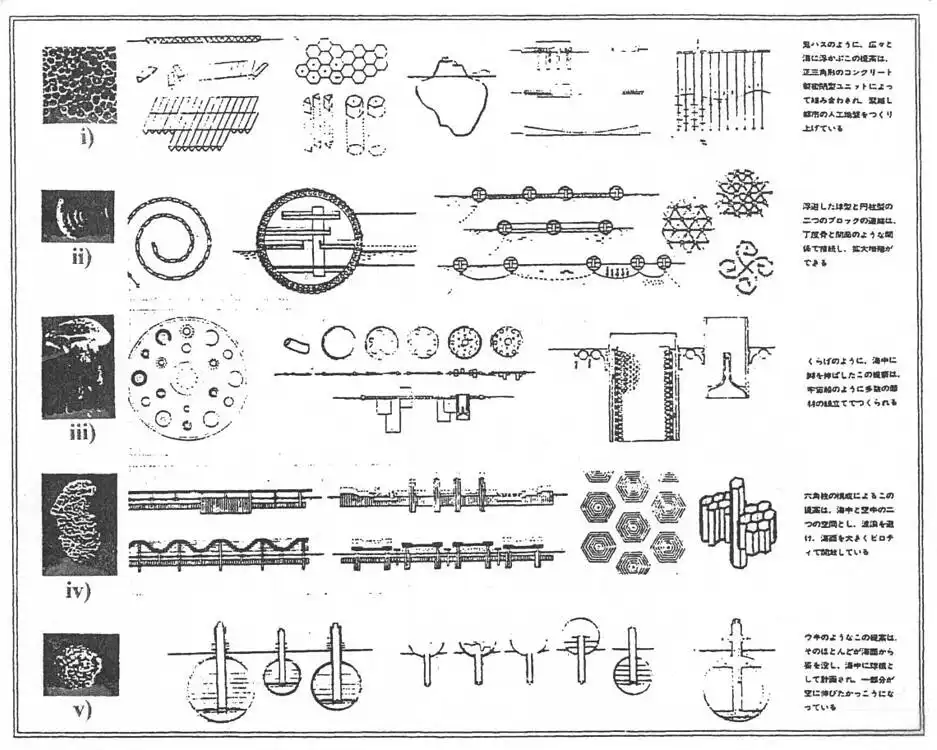
Basic Types of space formatics for "Marine City", Kiyonori Kikutake, 1960
Kikutake divides Ocean City projects into two categories: concentric floating structures on a city scale and linear ocean cities on a national scale. He has designed a number of structural solutions for ocean cities, which provide basic ideas and patterns for urban developers.
The difference between Nervos and Web2, or even Ethereum, is as great as the difference between land and sea. The huge difference at the bottom creates a huge barrier for developers who are new to Nervos, so we have to constantly improve the tools and lower the barriers to entry to make it easier for developers to get things done.
xUDT
xUDTIt's an extension of sUDT, and it includes a lot ofimproveThese improvements were made when the community used sUDT. Developers can use xUDT to create an extension script that checks if the token issuance is below a certain threshold, attaches a time lock to the token transfer, and even allows itStore the user's balance in Sparse Merkle Tree. xUDT simplifiesGeneration of programmable tokens.
The latest xUDT scripts have been deployed on the test network. Once the code is approved and tested, it will be deployed to the main network.
Omnilock
OmnilockIs a new lock script designed specifically for interoperability. It is an extensible lock that supports various transaction verification modes used by major blockchains such as Bitcoin, Ethereum, EOS, and Dogecoin. Omnilock has a Compliance module that can be used in conjunction with xUDT's Regular Compliance Extension (RCE) to interoperate the UDT with traditional finance. If enabled, the specified administrator can revoke the tokens held by the user as he sees fit. Omnilock and RCE are used togetherERC-1404The proposal.
Omnilock has been deployed to the Mirana main network.
Taproot on CKB
TaprootIs the most significant upgrade to bitcoin since Segwit. It improves Bitcoin's privacy, scalability, and changes the way bitcoin scripts work. weMove Taproot to CKB with lock scriptTo celebrate this achievement with the Bitcoin community and to test CKB's abstract abilities. CKB Taproot provides two unlocking methods: key path (Schnorr signature) and script path. The latter path is powerful because it combines the power of CKB-VM with arbitrarily complex logic.
Taproot on CKB demonstrates the new capabilities created by combining the Bitcoin idea with the Cell model, and how easy it is to achieve this mash-up. With strong smart contract support and simple UTXO design, I believe CKB has the potential to be a hot spot for innovation in the UTXO ecosystem, where new ideas can be easily tested and good ideas born for bitcoin and other UTXo-based blockchains.
Lua script
Thanks to RISC-V compatibility, CKB-VM can support smart contracts written in any programming language. However, in order to work with smart contracts written in any language, you need an easy-to-use tool. Rust and C are two popular programming languages, but we always wanted more. The next step is supportLua scriptThis was our first serious attempt at dynamic languages. Lua is a lightweight, dynamic language that is widely used in game development and other areas that require programmable extensions. Lua scripts can be used in conjunction with lock scripts/type scripts written in Rust/C for programmable customization and extension of CKB dApp.
We've been working on this for a long time and it's now fully functional. The JoyID and.bit teams gave us positive feedback. It is currently undergoing additional testing and optimization. A reasonable prediction is that 2023 will see the first dApp using Lua scripts.
Kuai
A group of developers at MagickBase took the initiative to create itKuai, a javascript-based CKB DApp framework designed to significantly lower the threshold for DApp development, allowing the creation of a DApp (e.gdid.id) from months to weeks. The difference between Kuai and Capsule is that Kuai is intactframeIn addition to contract development, there is also oneBuild system, template generator, practicalabstract, off-chain components and testing. The project is still in its early stages, but isSteady progress.
Nexus
Another group of developers at MagickBase set out to solve a problem that had long plagued CKB DApp developers - CKB's "Metamask". While the Ethereum wallet Metamask can be used to access CKB Dapps thanks to CKB's abstraction capabilities, it is designed for the account model and thus forgoes most of the benefits of the UTXO model, such as cross-address asset management and privacy protection. It also lacks support for the CKB light client.NexusThe solution to this problem is a UTXO wallet designed to provide seamless support for Nervos DAO, xUDT, omnilock, light clients, and other protocols.
other
CKB has 4 SKDS (Rust.Go.JavaandJavascript) to provide basic, versatile support for all developers.MercuryIs a high-level middleware suitable for simple integration cases such as wallets and transaction platforms.LumosIs a javascript/typescript toolkit for Web developers for DApp developmentCapsuleRust provides convenient smart contract support.CKB-CLIThe Swiss Army knife of CKB developers. These tools have proven useful and are being improved based on community feedback.
CKB geeks love itckb-indexerThis is a lightning-fast on-chain data indexer. It was so popular that the CKB team made it available at the request of the communitymergeI'm going to go to CKB node. The integration speeds up synchronization between CKB nodes and Neuron and simplifies DApp development by requiring only one daemon instead of two.
Layer 2: Giant structure and scalability solution

The City in the Air, Arata Isozaki, 1960
In addition to "cell", metabolism also proposed another enlightening concept -- Megastructure. Instead of building units with a specific purpose, they wanted to design a "huge structural framework" for the city. The framework must be strong and durable, allowing building units with specific functions to be added or subtracted as needed to meet the growing needs of the urban population. Unlike most blockchain projects, Nervos had the foresight to design modular Layer 2 as a solution for scalability and scalability. Also, Nervos Layer 2 on the two framesGodwokenandAxonThe Layer 2 design is being tested from different angles.
Godwoken
Godwake is the world's first Rollup to run on a Layer 1 blockchain other than Ethereum. Godwoken achieved two significant achievements in 2022: successfully completing the upgrade from v0 to v1, and pursuing the Game+ Blockchain concept and providing it with a range of developer support. Godwoken v1 is a major upgrade to Godwoken EVM compatibility, from 99% to 100% compatibility. The team worked hard to resolve the remaining 1% of incompatibys, and then achieved full compatibility from EVM opcodes to EVM toolchains, allowing developers to deploy Dapps on Godwoken without having to change any code. This upgrade reduces the cost of EVM DApp migration and DApp development, which is a godsurpriseecosystemNew developments have been brought about.
Godwoken Game+ blockchain takes Godwoken's support for developers to a new level, transforming it from a Rollup framework that requires developers to solve many problems themselves into a complete and optimized solution for game developers. Often, when game developers try to enter the Web3 world, they don't fully understand blockchain technology. What they really need is a simple and game-compatible blockchain solution that allows them to focus on game development rather than blockchain details. They want their potential players to be able to play their games without having to learn mnemonics or transaction fees. They want to create games where players own their loot, participate in quest creation, share in the revenue, and have fun doing it, rather than simply using symbolic incentives to drive up numbers that look good on paper. Godwake Game+ blockchain can provide game developers with all of the above.
For more information, check out GodWake'sTwitterandGitHub.
Axon
AxonIs another high performance Layer 2 framework based on CKB. It makes a different design tradeoff from Godwoken: instead of relying entirely on CKB security, it uses CKB as a support layer to achieve high performance and better security than L1 PoS due to inherent problems such as remote attacks andsubjectivityNo longer exists.
In addition to being 100% EVM-compatible, Axon is the first architecture to implement universal account abstraction, thanks to the powerful CKB-VM and cryptography library stored on the CKB blockchain. The Axon smart contract can load the cell from CKB and validate its data and scripts using a special precompiled EVM that calls CKB-VM.
Axon is also a native multi-chain framework with built-in interoperability and Cosmos IBC support that allows Axon DApp to communicate with CKB, other Axon chains, and other blockchain ecosystems, especially those with IBC-compatible ecosystems.
Axon's core framework is stable in 2022, and it's ready for developers who want to run high-performance EVM blockchains to build on. Future work will be focused on Axon staking and governance mechanisms. Axon will be Nervos' high performance, high interoperability and easy-to-use expandable layer with built-in staking and governance solutions.
For more information, check out the Axon team'sTwitterandGitHub.
Interoperability: From land to sea
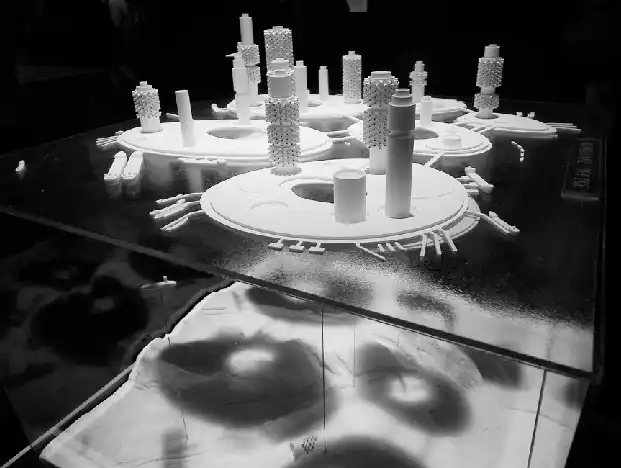
海洋城市,1963/1980s。The model is exposed on top of a translucent blue cube. Photograph: the author recorded in the exhibition Metabolism: the City of the Future at Mori Art Museum, Tokyo (September 2011).
The metabolist design seeks to expand not only on land by building a framework, but also into the water, allowing people to move in both areas of land and sea. Land and sea can be thought of as two different systems with different laws of nature, like Web2 and Web3, or one blockchain and another blockchain, which can be thought of as separate ecosystems with different understandings and protocols. Smart building design can communicate with land and sea, and great interoperability infrastructure must also communicate, allowing users' assets and information to flow more freely between systems.
Force Bridge is a cross-chain bridge between Ethereum/BSC and CKB, and it demonstrates the interoperability of Nervos with a concrete example - Ethereum users can transfer assets between Nervos and Ethereum without having to switch wallets. Nervos is now connected to the two largest ecosystems, Ethereum and BSC, so the marginal benefit of connecting more ecosystems is reduced. In the meantime, the 2022A series of chain bridge hacking incidentsRemind us again of the importance of decentralization.
Force Bridge runs smoothly and safely throughout 2022, and it's better to be decentralized now than later.SynapseThe team is working hard to make that happen. The first step is to create IBC-compatible relayers for CKB, this allows information to pass between CKB and all other blockchains such as Ethereum, Cosmos, and even Axon and GodWake. Then we can scale up some of the relays to create a more decentralized relay network, and on top of that network, we can build a more decentralized Force Bridge 2.0.
research
The Nervos research team has always emphasized quality over quantity, and in 2022, they presented three papers at the industry's international summit:
, NC-Max: The safety-performance tradeoff that breaks the Satoshi Consensus
In this paper, we identify and experimentally demonstrate that the crux of the problem lies in the extended block propagation delay of unpropagated trading platforms. Therefore, we propose a two-step mechanism that recognizes only fully propagated transactions, thus eliminating the limitation of NC's security requirements on its performance and realizing the untapped potential of NC. In order to implement this two-step mechanism, we propose NC-MAX, whose (1) security has been analyzed, proving that it can provide stronger ability to resist the transaction block attack than NC; (2) Performance was evaluated, showing that it consumed the full throughput supported by the network and reduced transaction confirmation latency by 3.0 to 6.6 times without compromising security.
This paper was presented at The Network and Distributed System Security Symposium (NDSS) in February 2022
, Polynomial IOPs for Linear Algebra Relations
This paper presents a new polynomial IOPs algorithm circuit. They rely on the basis of single coefficients to represent matrices and vectors generated by systems that satisfy arithmetic constraints, and are built on new protocols for establishing proper calculations of linear algebraic relations, such as matrix-vector products and Hadamard products.
Our protocol results in concrete proof systems with concise validation when compiled with a cryptographic compiler, the role of which is abstracted away in this article. Depending on the compiler, the SNARKs generated are either transparent or rely on a trusted setting.
The paper was presented at the International Conference on Practice and Theory of Public-Key Cryptography (PKC) in 2022, In March 2022
, Analysing and Improving Shard Allocation Protocols for Sharded Blockchains
As the first study of sharing Shard Allocation, a neglected core component of the unlicensed blockchain, this paper provides the first study of formalization of shard allocation protocols. We evaluate seven shard allocation protocols for unlicensed shard blockchains, including Ethereum. It is proved that it is impossible to achieve optimal self-balancing and maneuverability at the same time, and the memory dependency attribute required by the shard allocation protocol is identified and defined. The tradeoff between self-balancing and maneuverability can be parameterized, and a correct and efficient Wormhole for the shard allocation protocol is proposed.
The paper was published in4th ACM Conference on Advances in Financial Technologies (AFT '22)In September 2022
Driven by decentralized communities
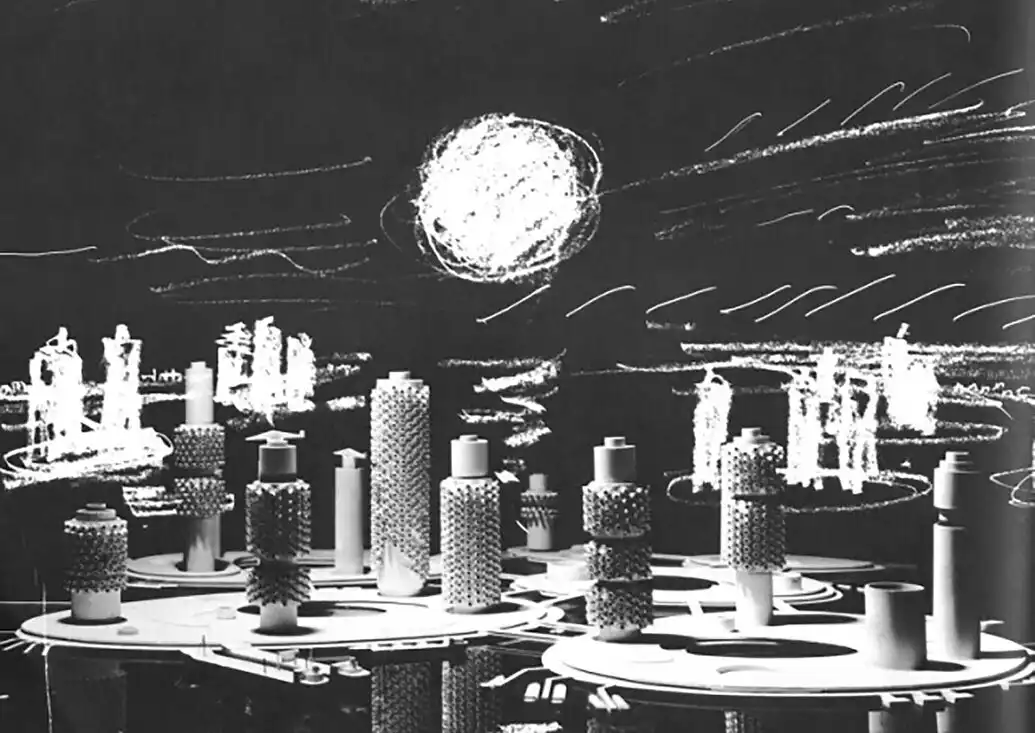
The "mother city" of the cityMarine City Project, 1963
Before writing this article, I didn't realize that all of these things were done in one year. It feels like we've been working on this for three years, starting in 2021 (it's no coincidence if you feel the same way, 2022 is special no matter what). I tried to recall everything we had done, but found it impossible to make a complete list. I apologize if I missed anything.
In my opinion, the most important progress we've made in 2022 is a more decentralized and vibrant developer community. On an infrastructure level, we worked closely with teams like Cryptape, MagickBase, Nervina, Godwoken, Axon and Synapse to expand the frontiers of the blockchain architecture. On the application level, teams like.bit, Unipass, Yokai, Hadouken, Nervape, JoyID, Tempest, etc., are sending us tons of feedback. Building on Nervos is challenging because it requires work at both the application and infrastructure levels. I want to thank all of you for taking on the challenge of creating with passion and building with love.
Original link
This article is from submission and does not represent the views of BlockBeats.
Welcome to join the official BlockBeats community:
Telegram Subscription Group: https://t.me/theblockbeats
Telegram Discussion Group: https://t.me/BlockBeats_App
Official Twitter Account: https://twitter.com/BlockBeatsAsia

 Related Articles