ConsenSys: Discuss in detail the competitive status and challenges of L2 Rollup
Original title: "ConsenSys: Discussing the current situation and challenges of L2 Rollup competition"
Original author: ConsenSys
Original compilation: Hedgehog on the Rock, SevenUp DAO
< /p>
L2 Rollup Overview
Over the past few years, with the increase in activity on the Ethereum network, the 2 layer protocol (L2) The Rollup solution has become an important solution. Non-Fungible Token (NFT) and Decentralized Finance (DeFi) activity and participation have caused a surge in 1 Layer 1 (L1) blockchain activity. In turn, the block space requirement, represented by the gas fee, increases. As the network load increases, the time it takes for transactions to complete also increases.
While the Ethereum merger laid the groundwork for future gas fee optimization; it did not directly reduce transaction fees.
The cost of gas on the Ethereum network (in terms of Gwei ) increased by 1300% . The need for fast, affordable transactions has driven two main forms of Rollup : Optimistic and Zero-Knowledge (ZK).
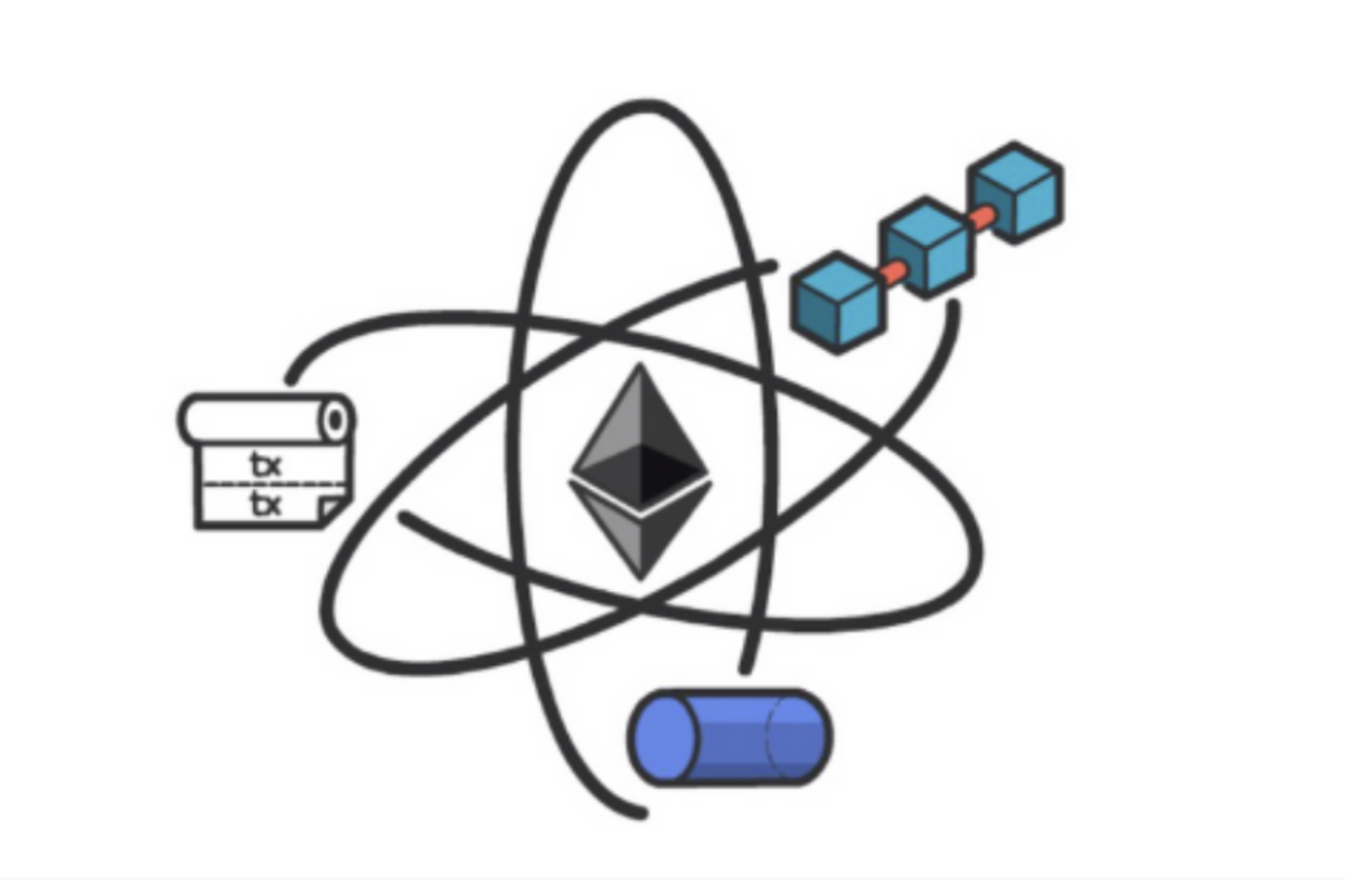
Rollup works by taking the Ethereum network's transactions off-chain, turning them into a single block of data, and then resubmitting them on Ethereum as a batch , reducing the associated cost and time, and easing the computational demands of the Ethereum network. The big difference between the two is that Optimistic Rollup utilizes fraud proofs, while ZK-rollup relies on zero-knowledge proofs to verify changes to the main chain.
Optimistic and ZK-Rollups: Fraud Proof VS Valid Proof
Fraud proofs bundle off-chain transactions together and resubmit them to L1. After being submitted to L1, there will be a challenge period, during which anyone can challenge the result of the rollup by calculating Fraud Proofs. Likewise, zero-knowledge proofs bundle offline transactions together and submit them as a single transaction. The difference between them is that instead of assuming that the transaction was initially correct, zero-knowledge proofs immediately prove that the transaction is valid using Validity Proofs. Once transactions are confirmed as valid, they are committed to L1.
This is how they each got their name:
Fraud proofs are checks that transactions have Proof of any fraudulent transactions, while valid proofs are done before the transaction is committed to L1.
Although both have well-known projects, they each have their own advantages and disadvantages. Optimistic Rollup has the advantage that proof of fraud is only required if something goes wrong. This means they require less computing resources and scale well. The disadvantage is the challenging period. A longer challenge period increases the likelihood that any fraudulent transactions will be detected, but also means users have to wait longer to withdraw their funds. For leading solutions such as Arbitrum and Optimism, this wait time can last up to a week. Additionally, ZK-rollup has the advantage of always reflecting the correct L2 state. Its disadvantage is that all state transitions need to be proved, not only when challenged, which limits scalability. This further complicates the nature and early stages of the technology.
Despite its own challenges, ZK-rollup is seen as the future of rollup . This is mainly because the automatic generation of valid proofs increases the security of the protocol, the withdrawal time is greatly reduced, because there is no challenge period, and ZK-rollup also has better data compression. For these reasons, we will focus on the current state of ZK-rollup Space , the latest innovations, and future developments.

data Source: Galaxy Digital
ZK -rollup field
As As we discussed, ZK-rollup main focus is on players like zkSync, Starknet, Polygon zkEVM , and Scroll all of whom have raised significant amounts of capital ($780M in total) to develop their own solutions, only StarkNet launched mainnet. Each project has its own angle, with the main differences being in data availability strategies and proof algorithms.
The data availability policy determines where the state data of Rollup is stored. block space, reducing transaction throughput.
The proof algorithm is a means to generate validity proof, which can be STARK or SNARK. Both algorithms can help developers move computation and storage off-chain, improving scalability. They are also able to verify that a user has sufficient funds and the correct private key without accessing the information itself, increasing security.
Compared with SNARK, STARK has the advantage of providing higher scalability, security and transparency. The disadvantage of STARKS is that the amount of proof data is larger, the verification time is longer, and SNARKs relatively only use 24% of the gas. For SNARKS and STARKS, we trade off speed and cost with scalability, security and transparency. While many different approaches are being explored, there is no clear answer on the best way to set up ZK-rollup. Each configuration brings its own benefits, and many developers are still exploring the best option or combination.
Obstacles to overcome< /h3>
As we discussed, ZK-rollups are still in development and various challenges need to be overcome before blockchain users can reap the full benefits. Language compatibility is one such challenge; translating an EVM-friendly programming language (such as Solidity) into a custom language optimized for ZKPs can help improve efficiency, but it also creates applicability challenges for developers. StarkNet, for example, is looking to solve this problem with Warp, a Solidity-to-Cairo (the language of StarkNet's ZKP) language compiler that automatically converts Solidity to Cairo. With Warp, developers don't need to rewrite code in Cairo, making the whole process smoother.
Other challenges include the confidential nature of projects, many of which work against the open-source ethos of encryption due to concerns about first-mover advantage and acquiring a sticky user base. Most ZK-rollups were first rolled out this year, highlighting the amount of undone work in the field.
Finally, while Rollup (Optimistic and zero-knowledge) can improve speed and cost, it often comes at the cost of decentralization. This is due to the inherent need for a sequencer, where participants package transactions and submit proofs to L1. Currently, all Rollups require a centralized sequencer and use upgradable smart contracts governed by a single entity. Because the field is still in its early stages, a centralized way to quickly fix bugs in code is often required. Also, these projects are not open source, creating another barrier for community members to act as sequencers. Many projects have stated that they plan to decentralize their sequencer functionality in the future, but this will undoubtedly require additional resources and time.
Decentralization
Start Token And open source code will be the next step for many projects looking for decentralization. carry out these services Token Centralization to generate activity and decentralize the product is another area where we expect to see a variety of different solutions emerge as projects attempt to create the most scalable, decentralized and active L2 on the market. Both StarkWare and zkSync plan to launch Token , Polygon may use MATIC to support Polygon's zkEVM initiative. on ZK-rollups Token Design is a newer field than optimistic rollup technology, and finding an efficient and sustainable model can differentiate and boost adoption.
Future
zkEVM is still in its infancy and competition remains Live on the mainnet. StarkNet has a first-mover advantage, but thanks to the use of Cairo, challenges remain in supporting Solidity features, leaving room for improvement for competitors. Projects that can amass a large number of users will attract DApp developers, which in turn will attract more DApps to their platforms, increasing their feature sets. Based on this consideration, ConsenSys 's zkEVM is currently being transferred to the test network and focused on DApp developers, utilizing tools such as MetaMask, Infura, and Truffle Deploy and manage applications like a workshop.
While we have discussed the current players in the zkEVM market, other major Rollup solutions like Polygon, Optimism and Arbitrum still have considerable market share. As the zkEVM solution matures, we may see these projects looking to move to proof-of-efficiency or hybrid solutions, leveraging their existing user base to attract DApp development and maintain their market advantage. Finally, many Rollup solutions (and the growing competition between them) will continue to improve the web3 user experience and introduce applications to the platform to attract the next generation of users.
Given these threats, we are not surprised by the secrecy of projects in this space, but we believe that the real winners will be able to take advantage of the ZK-rollup Efficiency and combine it with a seamless developer and user experience to win.
Original link
Welcome to join the official BlockBeats community:
Telegram Subscription Group: https://t.me/theblockbeats
Telegram Discussion Group: https://t.me/BlockBeats_App
Official Twitter Account: https://twitter.com/BlockBeatsAsia

 Related Articles