Pantera: What are the advantages of the decentralized social platform Comm?

Original author: Paul Veradittakit, Partner, Pantera Capital
Original compilation: Leo, BlockBeats
Comm is a decentralized social protocol designed to replace centralized platforms like Discord.
Comm: Web 3 Social Platform
Comm is working on solving the fragmentation problem in one of the biggest areas in encryption: collaboration. Because Web 3 communities are often dispersed across locations and do not interact in person, social technology will be critical in bringing individuals together in Web 3. In the crypto space, these social platforms are used to ideate, foster community, govern, and broadly drive projects forward.
Discord, while often used by crypto users, can still be tricky and noisy for both new and existing users. Existing users are members of many different servers, but often receive spam from bots, easily leaking their information. New users simply don't know how to navigate Discord's cryptic and complicated UI. Despite this, Discord is still very popular among top crypto projects, partly because there are no better alternatives (decentralized alternative platforms).
Comm combines the features of Discord and Slack and is designed for Web 3 community users. The app simplifies the messaging experience and cuts through noisy environments while maintaining a strong community identity.
Architecture: User-Controlled Experience
Currently, end-to-end (E2E) encryption is mainly used for basic chat applications such as Signal, because it is impossible to implement server on mobile layer. The Comm Architecture key server (keyserver) helps to solve the E2E encryption scaling problem. The business writes software for key servers (user-operated backends that allow cleartext access) and operates a number of cloud services that provide the framework for key servers to operate and communicate. Users operate their own key servers, giving them greater control over their data and digital identities. The company will initially allow individuals to deploy key servers on the cloud or on their laptops (although that's currently optional), requiring only the community to be hosted on the app. In the future, Comm plans to expand to provide users with dedicated hardware to deploy key servers to achieve a better user control experience.
So, why is the key server important, and why is this architecture different from the design used by chat apps today? Key servers can do a few things differently than traditional chat apps:
- They can automatically back up data and keep it encrypted in the process.
-Compared to traditional iOS apps, when dealing with Forward Secrecy (BlockBeats Note: Even if the long-term key of your previous session is leaked, the previous communication content will not be revealed. Simply put, when you lose the long-term key , the past session will not be parsed in the future, your previous behavior is guaranteed to be safe.) more flexible.
- The key server can process ranking content continuously and in a stronger way than a mobile phone.
- Because the key server is accessible in clear text, searches can be done in a traditional way without exposing data to application developers or service providers.
The current obvious shortcoming of Comm is that it cannot run on mobile phones, but the platform provides more than Strong security and autonomy. Comm's key server design is self-governing in a unique way - users can install local applications and the data stored in them won't leave their hosting environment. The data sandbox (the data on which it runs) contains your and your Comm friends' devices and key servers, and the data is not exploited the way Web 2 businesses handle user information. Users can verify this through Comm's open source technical documentation.
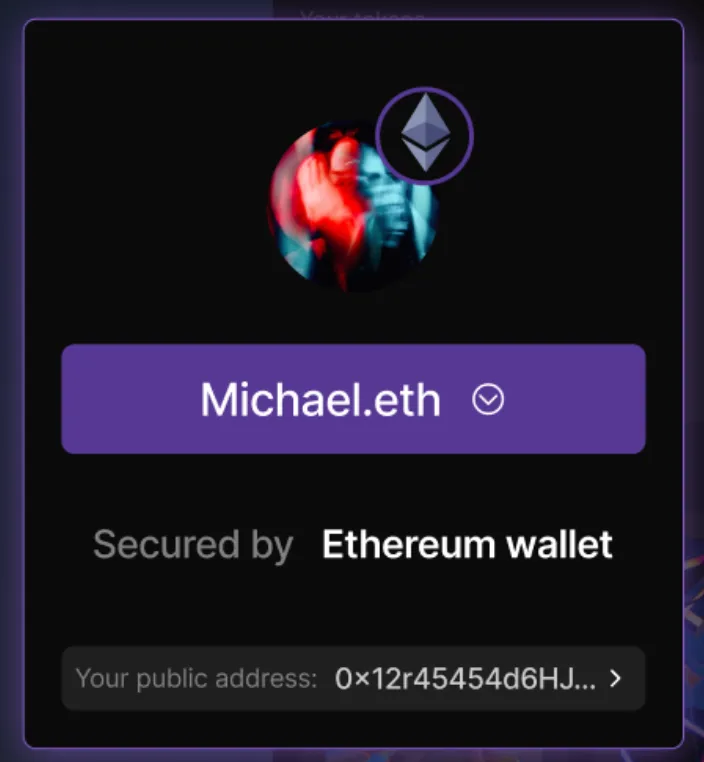
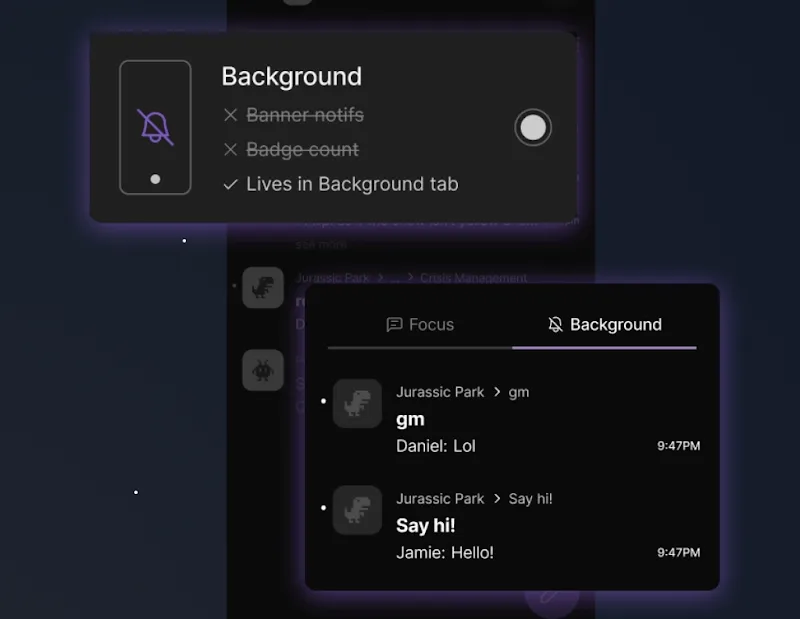
Comm's chat interface is divided into important messages and background messages, so users can quickly view important messages. The user's profile is also displayed, showing the tokens and NFTs they own, as well as their public address. The apps section offers useful tools like file sharing, calendar, governance platform, and community NFT wallet.

Team: Dedicated to Engineering Pioneers
Comm was founded by Ashoat Tevosyan, an engineer who dropped out of school at 20 to work at Facebook, first on the search team and more recently leading public conversations team. While at Facebook, he deeply cultivated the network effects of social applications and understood the complexities of traditional web 2 enterprises processing data. He founded Comm on his own, click to learn more about his research and passion for the field. The Comm team has 15 members (including 9 engineers) spread across New York and Poland. Click for details on each team member.
Product Expansion + Target
Comm believes that the key server is due to the support of user autonomy And privacy protection functions will replace centralized application services such as Dropbox, Gmail, and Facebook. Applications developed on top of key servers put users in direct control of their data, rather than handing it over to data management companies, which have an extremely powerful grip on society today. Currently, users can interact with applications through securely stored passwords that perform actions on their behalf. Going forward, end users will be able to log into the service directly with their Comm account.
Welcome to join the official BlockBeats community:
Telegram Subscription Group: https://t.me/theblockbeats
Telegram Discussion Group: https://t.me/BlockBeats_App
Official Twitter Account: https://twitter.com/BlockBeatsAsia
 Related Articles