One month after the merger of Ethereum, what is the computing power of each PoW public chain?
Original title: " One month after the merger of Ethereum, the calculation power comparison of each POW public chain "
Original author: wesely
A month ago, Ethereum’s The successful merger opened its new era, and Ethereum miners have also become a historical term, accompanied by the disappearance of its $5 billion mining machine market and 850TH/S huge computing power. Fortunately, the merger is a deterministic event, which allows Ethereum miners enough time to make their own choices. Some are actively looking for the next target, some are waiting and watching in the bear market, and some choose at the end of the ETH POW era. After a complete exit, one month after the merger, we can use the changes in the computing power of each public chain to see where the miners migrated, and see who is the largest Ethereum computing power. Which projects have the greatest impact? What changes has the computing power experienced after moving in?
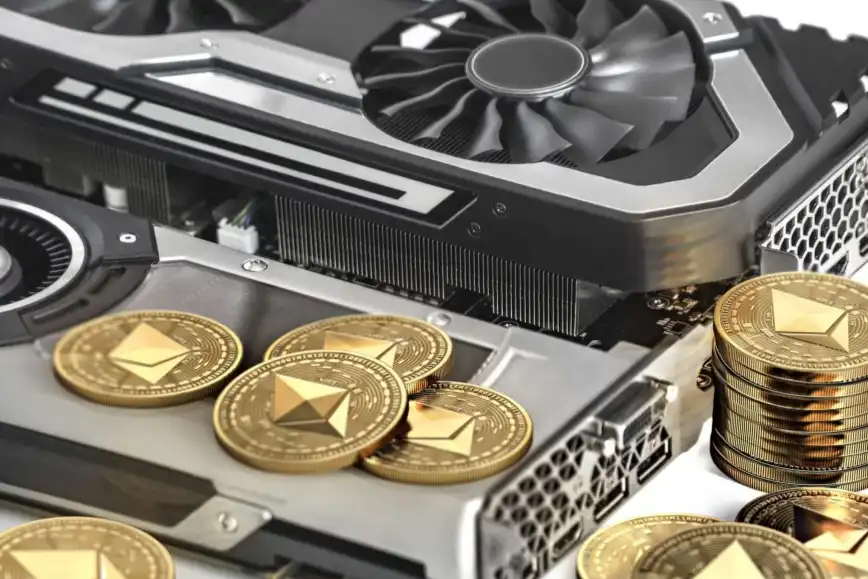
In the past, Ethereum mining used the Ethash algorithm, because Ethash has certain ASIC resistance , so the Ethereum mining machine does not form a large-scale professional ASIC mining machine like the Bitcoin mining machine. In terms of computing power, the Ethereum graphics card mining machine is also 2 orders of magnitude worse than the ASIC mining machine, and it is this difference , so that the Ethereum graphics card mining machine cannot compete with ASIC professional mining machines on BTC, BCH and other public chains.
So, at present, there are not many POW public chains that can undertake the computing power of Ethereum. Concentrate on some small and medium public chains such as ETC, ETHW, Ravencoin, and ERG.

The main POW public chains in the current market Data source: f2pool
Ethereum Classic
Introduction: Ethereum Classic, the public chain that was forked because of The DAO hacking incident, this is also the biggest split in the Ethereum community, although ETC inherits The original geek spirit of Ethereum has gradually fallen behind in the subsequent development, and the ecological development cannot compete with the current ETH and other L1s. As can be seen from the growth of computing power in the figure below, three days before the merger of Ethereum, a huge amount of computing power began to pour in, rising from the initial 55.67TH/S to 234.35TH/S, an increase of nearly four times, which is The main destination of Ethereum computing power migration.
Current computing power: 146.93TH/S computing power increase (decrease) growth situation: in and After the merger, the computing power increased by a maximum of 178.68TH/S (based on the computing power on September 1, the same below), an increase of 320.9%, and then the computing power gradually decreased and stabilized at around 150TH/S. The proportion of the original Ethereum computing power: about 21.0% (calculated according to the maximum increase in computing power, the same below), which accounts for the largest proportion among the following Ethereum computing power transfer targets.

ETC computing power change data source: 2miners
ETH POW
Introduction: As a fork chain of the original Ethereum, ETH POW inherits the consensus mechanism of POW and modifies the setting of the difficulty bomb so that the original Ethereum miners can directly As a public chain, ETH POW lacks stable coins such as USDT/USDC and the support of various DEX, lending and other project parties. Neither ecological development nor the number of developers can pose a threat to ETH POS, but It also undertakes part of the computing power (about 4.32%) of the original Ethereum.
Current computing power: 36.79TH/S computing power increase (decrease) growth: compared to The initial computing power is 68.17TH/S, and the current computing power of the entire network has decreased by 31.38TH/S, a drop of 46%. Undertaking the proportion of the original Ethereum computing power: about 4.32%

ETHW computing power change data source: 2miners
Ravencoin
Introduction: Ravencoin is a blockchain platform mainly for Token asset transactions, which forked Bitcoin in September 2017 come. Ravencoin’s price nearly tripled since the beginning of September to the Ethereum merger, followed by Token With the price drop, the computing power has also declined accordingly, and the current computing power is floating around 15TH/S.
Current computing power: 14.9TH/S computing power increase (decrease) growth situation: during the merger , the computing power has risen from 2.6TH/S in early September to the highest 20.16TH/S, with a maximum increase of 675.3%. Undertaking the proportion of the original Ethereum computing power: about 2.06%

Ravencoin computing power change data source: 2miners
Ergo
Introduction: Ergo is an Autolykos-based consensus mechanism (a type of POW) smart contract platform, with various scripting languages And zero-knowledge proof as the core, supporting various new financial interaction models.
Current computing power: 58.8TH/S
< /p>
Increase (decrease) of computing power: During the merger period, the computing power rose from the initial 15.23TH/S to 175.11TH/S, an increase of 10 times. In the next half month, the computing power moved out on a large scale, and once dropped to 20.23TH/S, which almost wiped out the previous increase. The current computing power is stable at around 50TH/S. The proportion of computing power that undertakes the original Ethereum: calculated according to the maximum value is about 18.8%.
 is a domestic public chain, which realizes further improvements in transaction throughput (TPS) and confirmation time of the public chain through the treemap structure consensus algorithm develop. As early as August 10, Conflux initiated a community proposal, hoping to change its PoW mining algorithm to Ethash, so that Ethereum miners can switch to Conflux more easily. </p><p><br></p><p></p><p></p><p>Current computing power: 2.97TH/S computing power increase (decrease) growth situation: from merger The previous 1.03TH/S increased to 3.29TH/S after the merger, an increase of 329%. The current computing power is stable at around 2.8TH/S, and there is no obvious phenomenon of computing power fleeing after the merger. This is also different from other projects place. Undertaking the proportion of the original Ethereum computing power: 0.26%</p><p><br></p><p></p><p></p><p><img src=)
Conflux computing power change data source: minerstat
Except for the above main computing power migration In addition to the project, there are also many small public chains whose network computing power has skyrocketed to varying degrees after the huge Ethereum computing power surged. For example, the computing power of Neoxa has increased by nearly 6 times, and the computing power of Flux (Zelcash) has the highest The computing power of Bitcoin Gode has increased by 4.3 times, Firo has increased by nearly 10 times, and the computing power of Bitcoin Gode has increased by 4.4 times. However, because the ecological and community effects of these public chains are weak, although the growth rate is large, the computing power of Ethereum undertaken is only accounted for a very small part, basically negligible.

Summary:
Through the changes in the above public chain computing power map, we can summarize the following conclusions:
1-3 days before the merger of Ethereum, the computing power on Ethereum fled on a large scale, and began to look for new targets that could be mined, and created the computing power of each of the above-mentioned public chains on the day of the merger. peak.
After the computing power moved in, the degree of retention of computing power was different. Basically, within 3-5 days after the merger, the computing power of the above-mentioned public chains began to resume This also shows that the mining sustainability of these small currencies is not friendly. Neither ETC nor ETHW can achieve the sustainable mining income of the original Ethereum.
Within 3-5 days after the merger, the market began to go down, and the currency prices of the above projects showed a trend similar to that of computing power, which further demonstrated the currency prices It will determine the change of computing power.
If the computing power added by the above-mentioned public chains from September 1st to October 15th is calculated, it can be roughly estimated that the outflow from Ethereum The computing power of Ethereum is about 250TH/S, accounting for 29% of the original computing power of Ethereum, that is to say, about 60% of the computing power of Ethereum has withdrawn from the mining market or is still in the wait-and-see stage, as a representative of graphics card mining , The withdrawal of such a large computing power of Ethereum will naturally affect the graphics card market. According to Northeast Securities estimates, in the past, 17 million 3060-level cards or 42 million 1060-level cards were used for mining (mainly used for Ethereum), that is to say, 60% of the withdrawal of Ethereum’s computing power brought about There are tens of millions of graphics card selling pressure, superimposed bear market and lower environmental demand, the downward cycle of this round of graphics card market may be very long.
Currently, with the large-scale application of POS, there are fewer and fewer mining targets that support physical mining machines, and with the increase of DAPP application scenarios, Due to insufficient performance, the public chain under the POW mechanism may be more difficult in the future ecological competition. If BTC is excluded, the future mining machine market may further shrink.
Original text link
Welcome to join the official BlockBeats community:
Telegram Subscription Group: https://t.me/theblockbeats
Telegram Discussion Group: https://t.me/BlockBeats_App
Official Twitter Account: https://twitter.com/BlockBeatsAsia
 Related Articles