What NFTS have a policy risk of being treated as securities?
Original title: What NFTS have a policy risk of being considered securities?
Original author: Grant Griffith, Medium
Katie Koo, Odaily Planet
Along with & have spent SEC Is investigating parts of Yuga Labs. NFT And the question of whether ApeCoin violated the rules and whether NFTS were securities came into focus (ApeCoin fell 10% on the news).
Investment & have spent One of the biggest risks of NFTS is the risk of being hacked and "zeroed out". If another significant risk is to be raised, it is regulation - some NFTS today may be at risk of being deemed unregistered securities by the SEC. If the SEC initiates an investigation and determines that various NFT programs were involved in the sale of unregistered securities, the consequences for these programs would be severe and would have ripple effects throughout the industry.
This paper hopes that both project parties and investors can have a clearer understanding of the potential policy risks of NFTS.
What does the SEC define as a security?
The SEC defined "securities" very broadly in the Securities Act of 1933 to include stocks, bonds, and other forms of profit-sharing agreements. It also includes "investment contracts," which for our purposes are also potential ways to acquire NFTS and other digital assets.
Whether NFT is a security ultimately depends on the facts and needs to analyze the characteristics and characteristics of each project. For example, some NFTS, like many of the NFTS sold by Beeple, are no different from physical paintings sold on the street by independent artists. The sale of pure art, whether in digital or physical form, is not a security if the relationship between the buyer and the seller ends after the sale. However, when we started to look at the roadmap and the NFT project, things started to get more complicated. As the NFT industry has grown, so have the expectations of those investing in new projects. This evolution is exciting, but it also carries risks.
If a program fails to register the security with the SEC, does it result in a loss? Not necessarily. "All persons who sell securities in the United States must register their offering with the SEC or obtain a registration exemption." The regulation provides various "safe harbors" for issuers. Issuers that meet any of these safe harbor requirements are deemed not to have made a public offering and therefore are not required to register with the SEC.
Case study - Moonbirds
In addition to the fact that some of Yuga Labs' NFTS are already under investigation by the SEC, a number of projects are approaching "transgression" and could be considered unregistered securities. Let's take the Moonbirds for example.
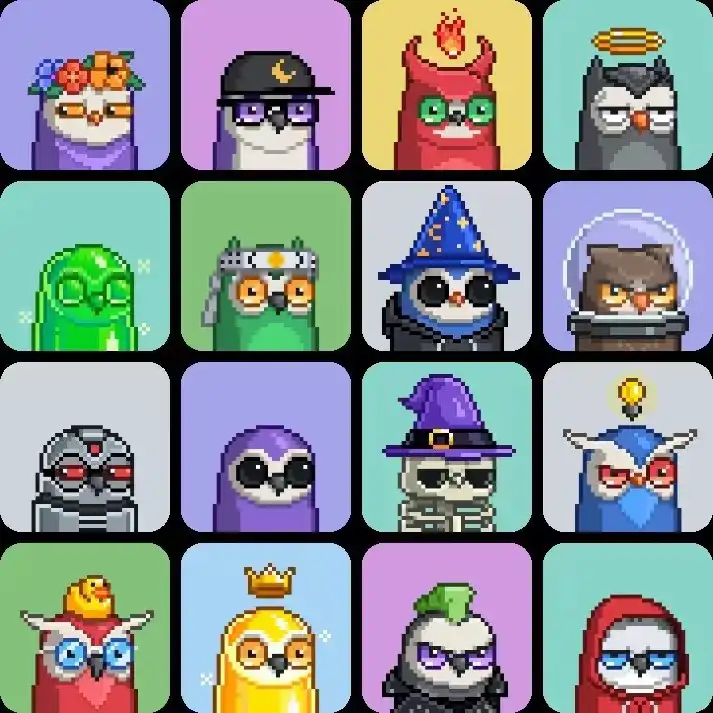
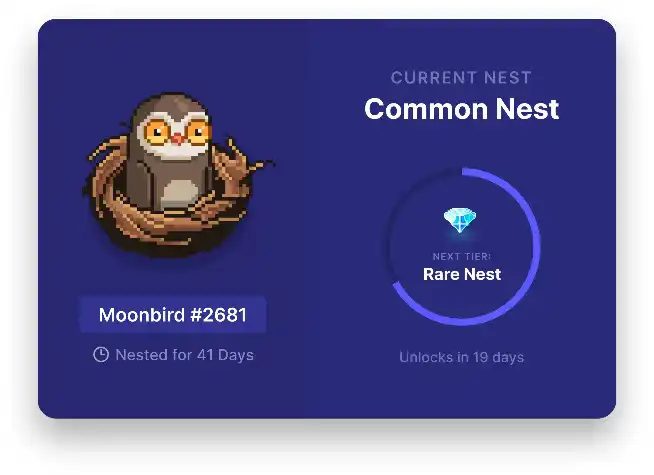
Moonbirds is a family of head shot (PFP) NFTS. It was released on April 16, 2022 with 2.5 ETH The mint. In just one week, the floor price of the project peaked at about 40 ETH, and hundreds of millions of dollars of sales occurred on the secondary market.
The $58 million raised by Moonbirds mint was confirmed as revenue for PROOF and will be used as working capital to make Moonbirds one of the top PFP collections in the world. Founder & have spent Kevin Rose acknowledges that mint is a funding round where money will be used to create a product and bring value to the Moonbirds community. nesting, for example, has launched a shareholding mechanism for Moonbirds called "nesting".
Howey The test summarizes the legal standards currently used in the United States to determine whether something is a security. According to & have spent Howey Test, if the thing meets all the following criteria, it is a security. When viewed strictly according to the Howey test definition, Moonbirds do seem to fit the definition of security.
It's an investment of money -- yes. Moonbirds mint raised nearly $60 million.
In an ordinary business -- probably. Thousands of investors are involved in mint, and the success of the project depends on the actions of the founders.
With an expectation of profit, and mainly from the efforts of others -- it's hard to disagree after listening to Kevin Rose's vision and structure of the project. He made it clear that the money raised from mint would be used to create a product and provide value to the Moonbirds community. The future direction of the project is clearly in the hands of the founders, and investors are promised a return. This is a dangerous relationship, one step short of meeting securities requirements.
This is a rough analysis of Moonbirds, and it is up to the SEC to determine whether the project's NFTS are unregistered securities under current law. Assessing risk from a regulatory perspective, however, it does raise all sorts of red flags.
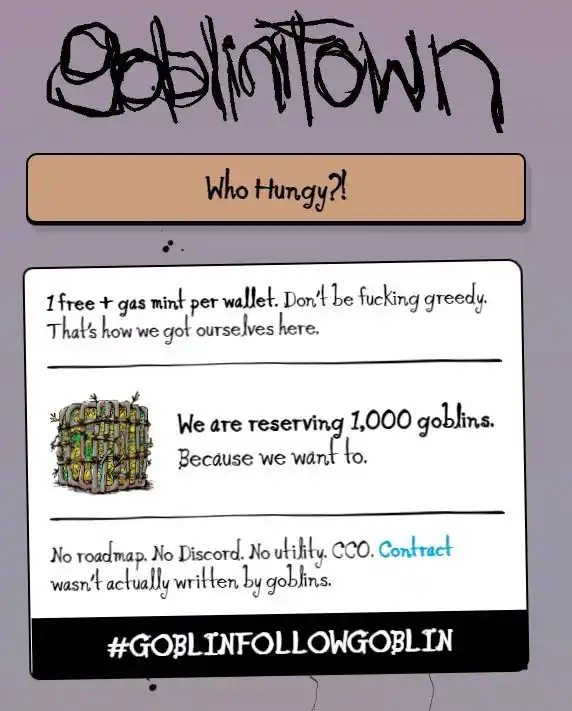
These factors need to be kept in mind for future founders looking to reduce regulatory risk. For example, if a project has a free mint, then no money is invested. If the same project does not provide a future roadmap or commitment, it is less clear that profit is expected from the efforts of others. We've seen a variety of projects such as goblintown.wtf Follow a similar pattern -- mint for free, no roadmap, no Discord, no utility.
If NFTS are considered securities, what does it mean for NFTS collectors?
If a project's NFTS are considered unregistered securities and otherwise do not qualify for the registration exemption, the consequences are severe.
The SEC can take enforcement action, and every investor who buys an NFTS can Sue for unregistered sales of securities. The founders who initially sold the NFTS will be held liable, and they will hold the investors fully accountable if any money is lost.
This will also have wider implications. For example, like OpenSea Such an NFT market would run the risk of being considered a "trading platform" under federal law if it allowed any NFTS to be traded as securities. If that happens, OpenSea will be forced to register with the SEC as a national securities trading platform. In 2018, the SEC issued a statement highlighting the risks of trading platforms in the context of ICOs. Therefore, if Moonbirds or any other project going live at OpenSea were declared securities, they would most likely be delisted immediately.
For a real example of the penalties that can be imposed on companies offering unregistered securities, see 2019. Block.one And 2022. BlockFi .
The future regulatory framework is uncertain
Although this article focuses on the Howey test, the way the SEC ultimately judges Moonbirds or any other NFT project could be quite different.
For clarity, a legal "safe harbor" was proposed last year that would give cryptocurrency projects three years to create a decentralized blockchain network before assessing whether it met securities laws or whether the tokens met the federal definition of "securities." This safe harbor will provide some breathing room for projects navigating uncertain legal terrain, and hopefully encourage innovation in the process. While the proposal is not directly applicable to most of today's NFT projects, it does demonstrate the rapid evolution of the regulatory framework governing digital assets. It remains to be seen, however, whether future changes will be more adaptive than the ones we have today.
Until the SEC provides specific review criteria for the current program, we can only guess which NFTS might be considered securities. Some types, such as the sale of fragmented NFTS (i.e., fractional/fundable interests in a single NFTS), are currently on the SEC's radar and carry some degree of risk.
The original link
Welcome to join the official BlockBeats community:
Telegram Subscription Group: https://t.me/theblockbeats
Telegram Discussion Group: https://t.me/BlockBeats_App
Official Twitter Account: https://twitter.com/BlockBeatsAsia