The full text of the White House report: Encryption mining challenges the US energy and climate issues
Original title: "CLIMATE AND ENERGY IMPLICATIONS OF CRYPTO-ASSETS IN THE UNITED STATES SEPTEMBER 2022"
Original compilation: TSE (急speed Energy) Kate Li
Statement of Purpose
On March 9, 2022, President Biden signed Executive Order 14067: "Ensuring Responsible Responsible Development of Digital Assets [1] to support the development of digital assets that are consistent with U.S. goals on climate change and that benefit U.S. residents. The President directed the White House Office of Science and Technology Policy (OSTP), the Executive Office of the President, and federal agencies to examine the link between distributed ledger technology (DLT) and the energy transition, and whether DLT could undercut or enhance domestic and foreign responses to climate change capacity potential and its impact on the environment. This report presents the findings of the review directed by Executive Order 14067.
Regarding Interagency Procedures
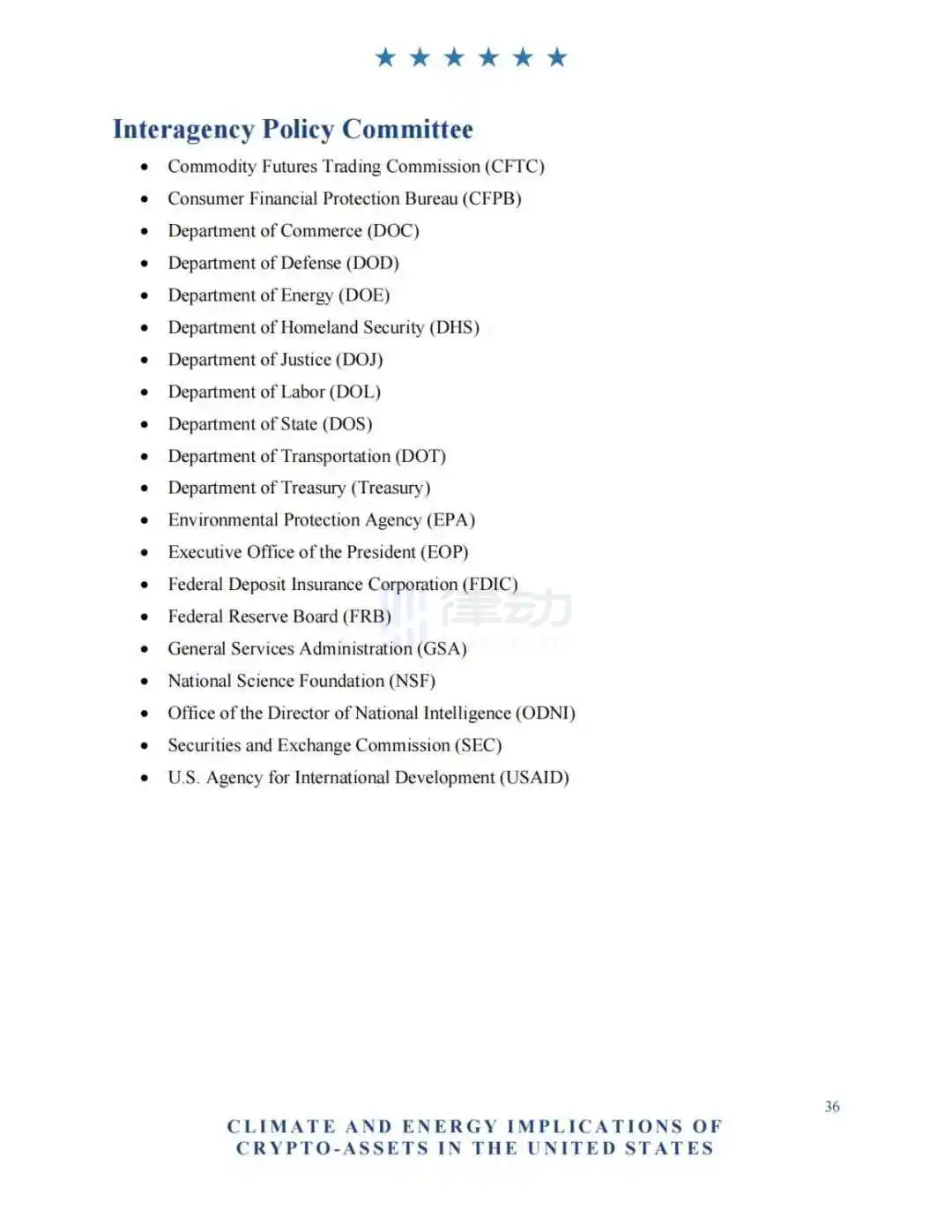
As stated in Section 3 of Executive Order 14067, The preparation of the report was coordinated through an interagency process led by the Assistant to the President for National Security Affairs and the Assistant to the President for Economic Policy. A list of the departments and agencies involved in this interagency process is contained in the Interagency Policy Committee section of the Appendix.
Suggested Citation Format
OSTP (2022). Impact of U.S. Crypto Assets on Climate and Energy Report. White House Office of Science and Technology Policy. Washington, DC, 2022-09-08
About the Office of Science and Technology Policy
The Office of Science and Technology Policy (OSTP) was established by the National Science and Technology Policy, Organization, and Priorities Act of 1976 to provide economic, national security, homeland security, health, diplomatic Advice on relationships, the environment, technology recycling and resource utilization. OSTP leads interagency science and technology policy coordination efforts, assists the Office of Management and Budget in its annual review and analysis of federal research and development in the budget, and provides science and technology analysis and judgment to the President on major policies, programs and programs of the federal government. More information is available at http://www.whitehouse.gov/ostp.
Summary and Recommendations
US National Climate Assessment and Intergovernmental Panel on Climate Change (IPCC ) said that if global anthropogenic greenhouse gas (GHG) emissions could be reduced to net zero by mid-century, serious harm to human health, ecosystems and infrastructure could be avoided. These climate-induced hazards include: heat waves; damage to forests, homes, and infrastructure from growing wildfires; flooding and extreme weather events; property damage; damage to roads, bridges, mass transit systems, and energy systems; coastal areas Inundation by rising sea levels and storm surges; drought; damage to crops; and other hazards to ecosystems that sustain humans. [2,3] The harms from climate change are not shared equally; underserved communities sometimes bear the worst harms from climate change. [4] Climate change is costly: climate disasters cost the US $145 billion in 2021. 【5】Climate change also poses risks to taxpayers, the federal budget, and federal facilities; if more action is not taken, climate change could reduce U.S. gross domestic product by 3% to 10% annually by the end of the century, Federal revenue is reduced by 7% per year. [6] The United States is committed to fighting the climate crisis, reducing greenhouse gas emissions by 50% to 52% from 2005 levels by 2030, achieving a carbon-free grid by 2035, and achieving net zero emissions by 2050 at the latest , while prioritizing environmental justice.
At the same time, the use of digital assets based on distributed ledger technology is expanding. A digital asset is a form of value represented in digital form. As an emerging and innovative technology, digital assets provide certain benefits and value to certain U.S. residents and businesses, and have the potential to benefit in the future through emerging uses. Encrypted assets are digital assets implemented using encryption technology, and the current global total market value is close to 1 trillion US dollars. However, some current crypto asset technologies require large amounts of electricity to produce, own, or exchange assets. Electricity consumption by digital assets increases greenhouse gas emissions, additional pollution, noise, and other local impacts, depending on markets, policies, and local sources of electricity. Depending on the energy intensity of the technologies used, cryptoassets could hinder other efforts to help achieve net-zero carbon pollution consistent with U.S. climate commitments and goals.
The U.S. government has a responsibility to ensure grid stability, enable a clean energy future, and protect communities from pollution and climate change. This report explores the challenges and opportunities for U.S. cryptoassets with regard to energy and climate change issues and answers the four main questions posed by Executive Order 14067:
2. How much impact do digital assets have on climate, energy, and the environment relative to other energy uses? What innovations and policies are needed for the underlying data to make a robust comparison ?
3. What is the potential role of blockchain technology in supporting climate monitoring or mitigation technologies?
4. What key policy decisions, key innovations, R&D and assessment tools are needed to minimize or mitigate the impact of digital assets on climate, energy and the environment?
Digital Assets How will energy use be affected, including grid management and reliability, energy efficiency incentives and standards, and sources of energy supply?
Crypto assets consume a lot of electricity.
Between 2018 and 2022, the annual electricity consumption of global crypto-assets is growing rapidly, with estimated electricity consumption tripling to four times. [7,8,9] As of August 2022, published estimates of total global electricity consumption by cryptoassets range from 120 billion to 240 billion kWh per year, a range that exceeds the annual power consumption of many countries such as Argentina or Australia. total power consumption. This is equivalent to 0.4% to 0.9% of global annual electricity consumption, [10, 11] comparable to the annual electricity consumption of all conventional (i.e., non-crypto asset) data centers in the world. [12] It is estimated that the U.S. hosts approximately one-third of the world’s crypto asset operations and currently accounts for 0.9% to 1.7% of total U.S. electricity consumption. This range is about the same as the total household computer or residential lighting in the United States. 【13】Crypto asset mining is also highly liquid. The U.S.’s share of Bitcoin mining, the world’s largest encrypted asset, has risen from 3.5% in 2020 to 38% today. It has tripled since January.
Despite the potential for rapid growth in crypto asset businesses, future electricity demand remains uncertain. Electricity usage can change as crypto asset miners start or pause mining in response to fluctuations in market capitalization, and as they adopt new equipment and technology. From July 2021 to January 2022, the annual electricity consumption of global crypto assets increased by more than 67%, before falling by 17% in August. The ability of crypto-assets to rapidly increase electricity consumption raises concerns about the rapid increase in electricity consumption and the subsequent impact on consumers and the grid. For example, Texas, which is becoming an increasingly attractive location for crypto asset mining, accounts for about 3% of local electricity demand during peak electricity consumption in the region. Over the next 10 years, Texas could see an additional 25 million kilowatts of new electricity demand from crypto asset mining — equivalent to a third of the state’s existing peak electricity demand. [14] Increased demand poses potential challenges to maintaining power reliability.
With the recent enactment of the Lower Inflation Act, federal tax credits and other incentives will spur a massive clean energy Partial electrification of the transport, building and industrial sectors. [15] Crucially, clean energy meets this demand through new electrification. In addition, the rapidly growing demand for new electricity must avoid uncontrollable impacts on the grid and be implemented using the most efficient technologies. It is also crucial that the electricity generated is sufficient to meet the needs of homes and businesses. This is especially critical at a time when bipartisan infrastructure laws support investments in grid modernization and expansion to ensure resilience in the face of climate-induced extreme weather and fires. 【16】
Different encryption asset technologies have different power consumption differences.
Almost all cryptoasset electricity usage is driven by a consensus mechanism: a distributed ledger for mining and validating cryptoassets account technology. The main consensus mechanism is called Proof of Work (PoW), which is used by Bitcoin and Ethereum. Bitcoin and Ethereum, their respective cryptoassets combined account for more than 60% of the total cryptoasset market capitalization. The PoW mechanism is designed to require more computing power as more and more entities attempt to validate transactions for monetary rewards, a feature that helps inhibit malicious actors from attacking the network. As of August 2022, it is estimated that Bitcoin accounts for 60% to 77% of the total global encrypted asset electricity consumption, and Ethereum accounts for 20% to 39%.
It is estimated that another energy-intensive consensus mechanism - proof of stake (PoS) - will consume up to 280 million kWh in 2021, less than 0.001% of electricity consumption. The current discussion on reducing the electricity usage of crypto assets is mainly focused on PoW blockchains, especially Bitcoin. [17,18] There are increasing calls for PoW blockchains to adopt consensus mechanisms with lower energy consumption. The most notable reaction was Ethereum's promise to launch "Ethereum 2.0", using a PoS consensus mechanism.
How much impact do digital assets have on climate, energy and the environment relative to other energy uses? What innovations and policies are needed for the underlying data to be robustly Comparison?
The world’s largest market capitalization encrypted asset power generation produces a total of 1.40 ± 30 million metric tons of carbon dioxide per year (Mt CO2/y), accounting for about 0.3% of global annual greenhouse gas emissions.
It is estimated that crypto asset activities in the United States will emit about 25 to 50 Mt CO2/y, accounting for all US greenhouse gases 0.4% to 0.8% of total emissions, equivalent to emissions from diesel fuel used by U.S. railroads. Greenhouse gas emissions from electricity use in the U.S. vary by region; some regions rely more on carbon-intensive fossil fuels, while others use more nuclear and renewable energy. In addition to purchasing grid electricity, cryptoasset mining creates local noise and water emission impacts from mining, e-waste, exhaust, and direct use of fossil fuel power generation, as well as additional emissions, wastewater, and waste associated with grid power generation Discharge pollution. These local impacts can exacerbate environmental justice issues in underserved communities. The wider use of cryptoassets, coupled with the potential introduction of new types of digital assets, requires federal government action to encourage and ensure responsible development. This includes minimizing its impact on local communities, drastically reducing energy intensity, and being powered with clean energy. And digital asset research with next-generation technological innovations can advance U.S. goals in terms of security, privacy, equity, resiliency, and climate goals.
What is the potential role of blockchain technology in supporting climate monitoring or mitigation technologies?
Blockchain technology has the potential to play a role in the environmental market, while DLT has the potential to enable distributed energy resource coordination and broader supply chain management. [19, 20]
DLT is a technology being explored by various markets. Other solutions may work just as well, or even better. To help the United States meet its climate change commitments, DLT must be deployed in a way that reduces greenhouse gas emissions. The potential benefits of DLTs, relative to the markets or mechanisms they are replacing, would need to outweigh the additional emissions and other environmental externalities of their operations in order to be more widely used in the carbon credit market ecosystem. The cases are still happening, and like all emerging technologies, the potential positive and negative cases are yet to be seen. The U.S. government should promote innovations that address market challenges, are consistent with environmental and equity goals, and achieve customer and investor protection and market integrity.
What are the key policy decisions, key innovations, R&D and assessment tools needed to minimize or mitigate the climate, energy and environmental impacts of digital assets?
To help the United States meet its climate goals of reducing GHG emissions by 50% to 52% by 2030 and achieving a carbon-free electricity system by 2035 , to achieve a net-zero emissions economy by 2050, cryptoasset policy during the transition to clean energy should focus on several goals: reduce GHG emissions, avoid operations that increase electricity costs for consumers, avoid operations that reduce grid reliability, and Avoid negative impacts on equity, communities and the local environment.
The following recommendations aim to: address data gaps, manage electricity demand, reduce GHG emissions, reduce e-waste and pollution, and support cleaning that equitably benefits communities across the country energy transition, and address long-standing issues in overburdened and underserved communities.
In order to ensure the responsible development of digital assets, the following behavioral recommendations are put forward for consideration:
Minimizing GHG emissions, environmental justice impacts, and other local impacts of crypto assets:Environmental Protection Agency (EPA), Department of Energy (DOE), and other federal agencies Technical assistance should be provided and a collaborative process initiated with states, communities, the cryptoasset industry, etc., to develop effective, evidence-based environmental performance standards for the responsible design, development, and use of environmentally responsible cryptoasset technologies. These criteria should include criteria for very low energy intensity, low water usage, low noise, clean energy use by operators, and, over time, enhanced carbon-free production to match or exceed the additional electrical loads of these facilities. If these measures prove ineffective in reducing impact, the administration should explore executive action, and Congress may consider legislation to limit or eliminate the use of energy-intensive consensus mechanisms for mining cryptoassets. The Department of Energy and the Environmental Protection Agency should provide technical assistance to state public utility commissions, environmental protection agencies, and the crypto asset industry to improve their ability to reduce the emissions, noise, water impacts, and negative economic impacts of crypto asset mining; reduce the burden on Environmental injustice effects of overweight communities.
Ensuring Energy Reliability: DOE, in coordination with FERC, NAEPRC, and their regional entities, shall Conduct a reliability assessment of the reliability and adequacy of the power system for current and projected crypto asset mining operations. If these reliability assessments find that encrypted asset mining poses current or anticipated risks to the power system, these entities should consider developing, updating, and implementing reliability standards and emergency operating procedures to ensure that under the conditions of increased cryptocurrency mining scale, The system can guarantee its reliability and adequacy.
Acquiring data to understand, monitor and mitigate impacts: The Energy Information Administration and other federal agencies should consider Collect and analyze information on cryptoasset miners and power companies while preserving privacy to make evidence-based decisions about the energy and climate impact of cryptoassets. Data should include mining energy use and fuel mix, power purchase agreements, environmental justice impacts and demand response participation. OSTP could establish a subcommittee of the National Science and Technology Council to coordinate with other relevant agencies to assess the energy usage of major crypto assets.
Enhancing Energy Efficiency Standards:The Administration should consider working with Congress to support the Department of Energy and encourage other federal regulatory agencies to enact and Regularly update energy efficiency standards for crypto asset mining equipment, blockchain and other operations.
Encourage transparency and improve environmental performance: Cryptoasset industry associations, including mining companies and equipment manufacturers, should be encouraged to publicly report on cryptoassets mining locations, annual electricity consumption, greenhouse gas emissions using existing protocols, and e-waste recycling performance.
Further research to enhance understanding and innovation: To improve analytical capabilities and improve the accuracy and sustainability of electricity consumption estimates, The National Science Foundation, the Department of Energy, the U.S. Environmental Protection Agency, and other relevant agencies can advance and support research and development priorities that improve the environmental sustainability of digital assets, including cryptoasset impact assessment models, environmental justice impact assessments, and understanding power grid management and Beneficial uses of environmental mitigation. Research and development should focus on innovations in next-generation digital asset technologies that advance U.S. goals in security, privacy, equity, and resiliency, and climate.
1. Motivation & Introduction
Solving the climate crisis is a top priority for the Biden Harris administration
Under Executive Order 14008, "Responding to the Climate Crisis at Home and Abroad," the President established a national goal to reduce greenhouse gas emissions to net zero by 2050. [21] According to the "Paris Agreement", the United States submitted the "National Determined Contribution" document on the commitment to reduce the United States' greenhouse gas emissions by 50% to 52% on the basis of 2005 by 2030, and determined to achieve greenhouse gas emissions by 2050. The goal of net zero emissions of gases. 【22】Executive Order 14008 argues that the United States faces a “climate crisis that threatens our people and communities, public health, and the economy, and even directly threatens our ability to survive on this planet.” The executive order seeks to address the crisis, including by "government-wide efforts to reduce climate pollution across all sectors of the economy ... [and] protect public health," and directs the Environmental Protection Agency, OSTP, Treasury, and other federal agencies to “Prioritize action on climate change” in decision-making processes and other actions. Executive Order 13990, "Protecting Public Health and the Environment, Restoring Science to Address the Climate Crisis," declared that the federal government must be guided by science to improve public health, protect the environment, reduce greenhouse gas emissions, and ensure access to clean air and water, Prioritize environmental justice and create well-paying union jobs. 【23】
On August 16, 2022, the President signed the Inflation Reduction Act (IRA),【24】This is the cleanest The single largest investment in energy, reducing greenhouse gas emissions and climate resilience. The bill provides $369 billion to combat climate change and strengthen U.S. energy security. The IRA plans to reduce carbon emissions by 40% by 2030 compared to 2005 levels. 【25】U.S. climate goals, executive orders, bipartisan infrastructure laws,【26】Chips and Science Act[27], and the Irish Republican Army jointly set the benchmark for federal government actions to address the climate crisis.
At the same time, the electricity consumption of digital assets is growing rapidly in the United States. For example, between January 2020 and January 2022, the U.S. share of global Bitcoin mining rose from 4.5% to 37.8%. [28] Given the United States’ commitment to reducing emissions, the federal government must ensure that the use of digital assets in the United States does not impede the ability to meet climate goals. This report's assessment and recommendations for the climate and energy impacts of digital assets are consistent with federal action to reduce greenhouse gas emissions to protect public health and welfare, and to improve environmental justice.
America must promote responsible digital asset development
President Biden's executive order on ensuring the responsible development of digital assets states that "responsible financial innovation is in the interest of the United States" and that the federal government "must take strong steps to reduce the risks to consumers, investors, and businesses of digital assets." risks to protection ... financial inclusion and equity; and climate change and pollution." To this end, the executive order's main policy goal recognizes that the federal government "must protect consumers, investors, and businesses," and that "the U.S. Tend to ensure that digital asset technologies and digital payment ecosystems are developed, designed and implemented in a responsible manner, which...reduces the negative climate impacts and environmental pollution that certain cryptocurrency mining may cause.”
A cryptoasset uses digital encryption to maintain financial records
A cryptoasset is a private Sector digital assets. While other assets may involve value-related digital representations, only assets that rely on cryptography and DLT, such as blockchains, are cryptoassets. A distributed ledger is a database where participants on a public network record transactions. The ledger provides a mechanism for all users to agree on ledger entries and transactions—called a consensus mechanism. Different consensus mechanisms enforce different rules for when participants commit ledger updates. For example, the PoW consensus mechanism [29] (currently used in Bitcoin, Ethereum, and other blockchains) requires a computationally intensive process before a set of transactions, or “blocks,” can be validated and added to the ledger. This ensures that participants are willing to spend significant computational and energy resources adding blocks to the ledger. This approach makes it more difficult for malicious actors to enforce an inaccurate ledger, as they would need to muster massive computing resources and expend large amounts of energy to reach consensus. Participants who submit blocks to the network are called miners. Because miners are compensated in the form of newly generated cryptoassets for adding a block to the blockchain, as well as receiving fees associated with transactions within the block, miners are incentivized to perform energy-intensive computations to add blocks to consensus in the ledger. [30] Participants confirm the validity of new blocks, add them to the blockchain ledger, and store an up-to-date copy of the ledger. Figure 1.1 shows an overview of PoW cryptoasset mining.
As crypto assets become more valuable, mining rewards also become more valuable. This attracts more miners and computing resources to solve cryptographic math problems. Mathematical problems will become more difficult as miners dedicate more computing resources to processing blockchain transactions. This makes the average time required to find a solution approximately constant. This PoW "economic model" means that as long as the distribution of crypto assets among miners remains constant, PoW networks use more electricity as the value of crypto assets (and the network) grows. The growth in the total value of cryptoassets has attracted thousands of miners using computers and custom hardware that collectively consume as much electricity as a medium-sized country or large urban area.
The most popular alternative to the energy-intensive PoW consensus mechanism is PoS, which is used in e.g. Solana, Cardano, the proposed Ethereum 2.0, etc. network of. In PoS, participants are called validators, and they typically "stake" a certain amount of crypto assets for the opportunity to add new transaction blocks to the ledger. The more crypto assets a validator holds, or the longer they hold it, the better their chances of being selected. Validators who post inaccurate data or make fraudulent transactions risk losing their stake. Dozens of variants exist in the PoS consensus mechanism; variants generally follow the principle that trust is inferred by participants' willingness to risk their valuable crypto assets. Because PoS validators rely on assets at stake rather than computing power to verify transactions, PoS cryptoassets use much less electricity than PoW cryptoassets, as shown in Appendix Table A.1.
In addition to PoW and PoS, there are many other types of consensus mechanisms, including but not limited to capacity proof and practical Byzantine fault tolerance, existing encrypted assets are Both mechanisms are used, as described in Appendix Table A.2. [31] Besides power usage, there are other issues affecting the adoption and market acceptance of cryptoassets, including scalability, security against tampering and counterfeiting, throughput, latency, and decentralization. [32] Each consensus mechanism has advantages and disadvantages. The cryptoasset community has not yet reached an agreement on what constitutes a "best practice" consensus mechanism, and other consensus mechanisms with different advantages and disadvantages may emerge from the community. Responsible digital asset development will encourage the establishment of consensus mechanisms that minimize energy use and negative environmental impacts while maximizing consumer benefits.

Figure 1.1: Understanding proof-of-work blockchains in cryptoasset mining. Adapted from Kilroy Blockchain [33]
2. Cryptoassets Affect Electricity Usage and Grid
The production, possession and exchange of digital assets, including encrypted assets, requires electricity. Cryptoasset networks use electricity to power four primary functions: data storage, computation, cooling, and data communication. Among them, computing consumes the vast majority of electricity in encrypted asset networks. [34] Consequently, most research has focused on estimating the power usage of computing devices, including the additional power required for cooling. [35] The electricity used for cooling increases the electricity consumed by the computing device itself by a factor ranging from a low percentage (in cold climates) to over 100%. 【36,37,38】
Electricity usage varies with different types of crypto assets
PoW blockchains also use general-purpose nodes to validate transactions, verify consensus protocols, and store a consensus copy of the blockchain. However, calculations for popular cryptoassets using PoW blockchains are also performed by specialized semiconductors, based on application-specific integrated circuits (ASICs) contained in "mining machines" that perform PoW calculations. [43, 44, 45] These mining rigs are typically located in “mining” facilities that purchase grid electricity, which is a large local electrical load. [46] These facilities typically purchase electricity at lower industrial rates than residential electricity, and sometimes receive special financial incentives, such as energy purchase tax credits. 【47,48,49】
In addition, PoW mining operations can build facilities to produce some or all of the electricity. Mining operations may build a dedicated solar farm with or without energy storage, or may use stranded natural gas to install generators on site. [50] Mining operations can also be contracted to individual electric utilities, connecting mining equipment directly to fossil fuel power plants, solar farms, wind farms, hydroelectric farms, etc.
Table A.3 in the Appendix summarizes estimates of the number of computing devices and their typical power requirements for specific PoS and PoW blockchain networks in 2021. [51, 52] These estimates suggest that each PoS computing device requires 10 to 500 times less electricity than a typical ASIC Bitcoin miner for PoW mining.
Electricity Consumption for Cryptoasset Activities
While thousands of cryptoassets have been issued globally, published research has focused on relatively few high market capitalization cryptoassets. Most published estimates of electricity usage for cryptoassets focus on Bitcoin, which is believed to consume the most electricity of all cryptoassets due to its high market cap, popularity with investors and miners, and energy-intensive PoW consensus mechanism. The researchers also estimated the electricity usage of other high-cap PoW and PoS cryptoassets, as shown in Appendix Table A.1.
Currently the total electricity usage of a cryptoasset network cannot be directly monitored as many computing or mining centers do not disclose their location nor report their electricity usage . However, electricity usage can be estimated analytically. Like all electricity usage, electricity usage by crypto assets is measured in kilowatt-hours (kWh): One kilowatt (kW) of electricity is used in one hour. The average American household uses 10,715 kWh per year, or 900 kWh per month. [53] For reference, all residential lighting in the United States consumes about 59 billion kWh per year, and the annual electricity consumption in the United States in 2021 is 3,930 billion kWh. 【54,55】
In 2022, the total global electricity consumption of the blockchain supporting encrypted assets is expected to be 120 billion to 240 billion kWh per year. [56] This is equivalent to 0.4% to 0.9% of annual global electricity consumption. [57, 58] This range is comparable to the annual electricity consumption of all conventional (i.e., non-crypto-asset) data centers in the world, which will use between 200 and 250 billion kWh in 2020. [59] However, the electricity usage of cryptoassets can change rapidly as miners start or stop mining in response to fluctuations in market capitalization, as well as deploy new mining machines. As a result, estimates of global cryptoasset electricity consumption through 2022 range from as low as 10.5 to 17.8 TWh per year to as high as 17.6 to 305 TWh per year, as shown in Appendix Table A.1. 【60, 61, 62, 63, 64, 65, 66, 67, 68】
As of August 2022, the usage of the two PoW blockchains Electricity accounts for the vast majority: Bitcoin accounts for 60% to 77% of the total electricity consumption of global crypto assets by some estimates, and Ethereum accounts for 20% to 39%. [69, 70, 71, 72, 73] The global annual electricity consumption of the Bitcoin blockchain is estimated at 90 billion to 145 billion kWh, with a theoretical range of 40 billion to 180 billion kWh. The electricity consumption of the Ethereum blockchain is estimated at 23 billion to 94 billion kWh, with a lower limit of 16 billion kWh. The global electricity consumption of the analyzed PoS encrypted assets is less than 280 million kWh per year, which is less than 0.001% of the global electricity consumption and about 0.25% of the lower limit of the global total PoW electricity consumption. Given the above estimates of electricity usage, most discussions about electricity usage by cryptoassets focus on PoW applications, especially Bitcoin. [74, 75] There are growing calls for PoW blockchains to adopt less energy-intensive consensus mechanisms. The most notable reaction was Ethereum’s promise to launch an “Ethereum 2.0” PoS blockchain.
The United States currently has the largest Bitcoin mining industry in the world, accounting for approximately 38% of the global Bitcoin network hash rate as of August 2022. [76] Hash rate is the total computing power used to mine and process PoW blockchains per second. As the number of miners on a PoW blockchain increases, it becomes more difficult to crack cryptographic math puzzles, ultimately increasing the hash rate. Assuming that Bitcoin electricity consumption is directly proportional to hash rate, [77] by August 15, 2022, the US share of global Bitcoin electricity consumption will drop to 33 billion to 55 billion kWh per year, or 0.9% to 1.4% of total US electricity consumption in 2021. [78] If the United States’ share in global Ethereum mining is also considered, the electricity consumption of PoW mining in the United States will rise to 36 billion to 66 billion kWh per year, or 0.9% to 1.7% of the total annual electricity consumption in the United States ( See Table A.1). This puts U.S. PoW mining electricity consumption on a par with all conventional (i.e. non-crypto asset) datacenters in the U.S., most recently estimated at 72 billion kWh per year. [79] Figure 2.1 shows that the electricity consumption of encrypted assets is similar to the electricity consumption of some countries, states or critical energy services.

Figure 2.1: Comparison of annual electricity consumption and best estimates of encrypted assets for multiple examples as of August 2022, the error bars represent the best range of values. 【80,81】
Given the methodological and date differences to which existing power estimates apply, power estimates must be interpreted with caution. As Bitcoin’s market value and network hash rate increase, the estimated electricity usage of the Bitcoin blockchain rises steadily — something that may also be true of other PoW blockchains that support cryptoassets. Additionally, the estimated difference between the upper and lower bounds has increased over time, reflecting uncertainty about the types of rigs miners deploy when cryptoassets have higher market values.
While the larger scales give policy makers an idea of how much electricity PoW might be using, they also show that cryptoasset firms need to report their actual electricity usage , to reduce uncertainty. In addition, due to fluctuations in the market value of crypto-assets, estimates of daily electricity usage are subject to change. [82] Any published estimates are subject to outdated changes in market dynamics.
Comparison with other financial transactions
Crypto-assets can be used for investment or speculative purposes, As a means of payment, or as a store of wealth. While a credit card transaction involves only a single payment between parties, multiple bitcoin transactions can be bundled together into an "on-chain" transaction, which can consolidate and record different types of financial activity onto a public blockchain. For example, when someone buys or sells bitcoins, or buys coffee with bitcoins, these are recorded as transfers of bitcoins from one address to another, and a record of this transfer is added to the next block along with other transactions . A block on the Bitcoin blockchain typically contains 1,000 – 2000 transactions, with the transaction volume of each block changing daily. [83] The average time to solve a PoW math problem and record a Bitcoin block to the ledger is about 10 minutes, so 52,560 blocks are added to the Bitcoin blockchain every year. Bitcoin's current global electricity consumption is between 90 billion and 140 billion kilowatt-hours per year. Each block requires approximately 1.7 to 2.7 million kWh, which can be further divided into an estimate of the kWh required for each on-chain transaction. This is just a rough estimate. With Bitcoin, as with other crypto-asset transactions, centralized crypto-asset trading platforms typically use off-chain transactions and use on-chain transactions for certain activities, for example, when sending crypto-assets to participants outside the platform. As a result, cryptoasset platforms only send partial transactions to the blockchain, and the electricity usage of off-chain activities is less likely to be estimated. These factors create challenges in estimating actual electricity usage per transaction compared to other financial services.
Compared with traditional financial services, the total number of encrypted asset transactions on the chain is currently very small. In 2020, Bitcoin and Ethereum together reported around 460 million on-chain transactions. [84,85] In the same year, Visa, MasterCard, and American Express together processed approximately 310 billion credit card payment transactions. [86] DLT, including the blockchains of Bitcoin and Ethereum, constitute a complete payment system and allow real-time gross settlement between parties. In contrast, credit card merchants require a formal banking relationship to settle transactions because transactions only authorize payments, not settle them. Therefore, there is a fundamental difference between digital asset transactions and credit card transactions.
Note that direct comparisons are complicated, with Visa, MasterCard and American Express reporting a combined electricity consumption of about 500 million kWh in 2020,【 87] Including all businesses except electronic payments, [88,89,90] In other words, although these three entities process many times as many on-chain transactions as Bitcoin and Ethereum, they also operate more businesses that consume less than 1% of the electricity used by Bitcoin and Ethereum in the same year. 【91】
Responsible digital asset development includes ensuring low energy-intensive operations when developing digital assets.
Encryption asset mining will affect electricity consumers and power grid
Electricity system is human health , critical infrastructure for the economy and U.S. national security. It is also the backbone of America's future clean energy economy, as electricity gradually replaces fossil fuels in cars, buildings and some industrial processes. The U.S. needs to accelerate end-use electrification to meet its climate goals. The 2020s will be a defining decade for climate action in the United States, with up to 100 gigawatts (GW) of clean electricity needed on the grid each year to meet newly electrified end-use demands. [92] At the same time, electricity infrastructure is under pressure from today's demands and climate-induced extreme weather, [93] and will require significant reinvestment.
With a six-year cycle, the number of power outages in the past six years is twice that of the previous six years. In order to adapt to the new power demand, the reliability of the grid must be improved . [94] Electricity infrastructure designed for the climate of the 20th century will now have to withstand higher temperatures, more violent storms, and other extreme conditions exacerbated by climate change than in the past, which will place even greater stress on the grid , and could lead to power shortages when consumers need it most. [95] The United States needs a reliable, affordable, clean, equitable, and climate-resilient electricity system. New requirements for the system must help, not hinder, the achievement of America's climate goals.
In most power grids, low fuel cost renewable energy and nuclear power plants are used first to meet the electrical load. Flexible resources with high fuel costs, such as natural gas or coal-fired power plants, are used to respond to daily fluctuations in electrical load. As the electricity demand for crypto asset mining increases, power system operators will dispatch more natural gas and coal power plants. Electricity from these plants is often more expensive and polluting than average grid electricity because of differences in average and marginal emissions. [96]
Crypto-asset mining operations typically have a high load factor: they use electricity almost continuously. When these facilities operate during periods of peak demand, they can stress the electrical infrastructure, impact equipment life, cause other customers to lose power, and present a fire hazard. [97] The utility district in Grant County, Washington, implemented a rate tier system for encrypted asset miners to recover the incremental costs caused by mining electricity needs. [98] The utility district in Benton County, Washington, has also adopted a policy for customers of encrypted assets, citing concerns about the security and reliability of the distribution system. 【99】
The increase in electricity demand brought about by encrypted asset mining will also push up electricity prices for local consumers. Cryptocurrency mining in upstate New York adds $82 to annual household electricity bills and $164 to small business annual electricity bills, with an estimated net total loss to local consumers and businesses of $179 million in 2016-2018. [100] In 2018, the New York Municipal Electricity Management Bureau formulated a new charging standard for the large-capacity data processing center of encrypted assets to increase mining costs. [101] Plattsburgh, New York, has issued an 18-month moratorium on mining operations after community residents and businesses complained about high energy bills and noise. If the mining business is transferred to a different place when the environment changes, the mining may also transfer the cost correspondingly to the local electricity users, allowing them to bear the risk. This could allow local customers to pay for infrastructure upgrades for mining operations.
Many crypto asset miners have moved operations to Texas. The Electric Reliability Council of Texas (ERCOT), the grid system operator for much of Texas, has peak summer electricity demand of around 76 gigawatts (GW) and currently has around 20 GW of crypto asset mining activity. Approximately 17 GW of crypto asset facilities are being connected to the grid operated by ERCOT, which is expected to generate 50-60 million new demand (equivalent to the electricity demand of the city of Houston) in the next 12-15 months. ERCOT could also add 25 GW over the next decade. [102] While many of these projects may not be completed, up to 25 GW of new electricity demand from crypto-asset mining—equivalent to a third of Texas’s existing Reliability presents potential challenges, especially as power demands and temperature extremes have risen in recent years.
Crypto asset mining operations can quickly reduce electricity usage by scaling back or shutting down mining rigs. Bitcoin miners can participate in programs by utilities and grid operators that pay large electricity consumers to shed load during periods of grid stress peaks, or to balance supply and demand — a process called demand response. On July 11, 2022, when high temperatures and high projected electricity demand led ERCOT to declare a grid emergency, Bitcoin miners using 1 GW of electricity reportedly responded to ERCOT's demand response request, reducing mining electricity usage. [103] In July 2022 a listed Bitcoin miner operating a facility in Texas earned $9.5 million in Texas Power Grid's demand response program, which is more than the That's more than the 318 bitcoins worth that the business produced in the same month. [104] Flexible electricity demand, fast demand response, and electricity ancillary services are fundamental attributes of a decarbonized grid composed of variable renewable electricity such as wind and solar. The flexibility that encrypted asset mining operations can be turned on or off at any time is conducive to the realization of the above-mentioned rapid response services. The increase in electricity demand brought about by crypto asset mining operations also increases the overall peak level of grid demand. While there is value in reducing peaks during grid emergencies, it is also necessary to create misaligned incentives between crypto miners and grid operators to meet increased peaks with demand response. It is critical to ensure full transparency in the participation and payment of cryptoasset miners and other demand response participants in demand response programs. Ensuring transparency can combat the enthusiasm for rent-seeking and gaming, protect local electricity consumers, and improve electricity reliability. 【105】
Internationally, legislation and regulation have addressed environmental issues regarding crypto asset activities. The European Commission’s upcoming crypto asset market legislation is likely to require increased disclosure of information on environmental and climate impacts and introduce mandatory minimum sustainability standards within two years to create a consensus mechanism. [106] In China, the inconsistency between large-scale Bitcoin mining and the country’s environmental goals is one of the reasons why the government banned the trading of encrypted assets in 2021. 【107】
Future power consumption forecast of encrypted assets is uncertain
Energy use forecast Estimates are based on an energy system model that demonstrates the relationship between service demand, technological efficiency, energy supply choices, and prices, as well as changes over time in macroeconomic factors such as population size and economic productivity. [108] However, existing energy system models are not fully appropriate for digital technologies such as data centers and telecommunications networks, let alone encrypted assets and blockchain networks. This is a well-known modeling gap that hinders robust energy predictions for digital systems. [109] Future forecasts determined by other estimation methods require predictions of network hash rate and miner efficiency, which in turn are interrelated and are both affected by the market value of cryptoassets and prevailing electricity prices.
There are also considerable uncertainties in the number, popularity and consensus mechanism of encrypted assets. These factors all affect electricity demand. The risks associated with the growth of PoS or other energy-intensive networks are much lower than those posed by the growth of PoW networks. Figure 2.2 plots the historical trend of Bitcoin network market capitalization and network hash rate from August 1, 2016 to August 24, 2022. [110] While the network hash rate declined during July-September 2021 due to the Bitcoin market cap crash, no similar correlation between market cap and network hash rate was observed during the market cap crash that began in late 2021 sex. Therefore, extrapolating future network hashrates from predicted currency market values is subject to significant uncertainty. Because of uncertainties, key system variables may change, so extrapolation to future conditions should be avoided. In the past, simple extrapolation has often led to unrealistic forecasts of energy demand for complex and evolving information technology systems such as those that make up a blockchain. 【111】

Figure 2.2: Bitcoin Market Value and Historical Trend of Network Hash Rate (EH/s)【112】
Estimated average energy intensity of deployed rigs between August 2016 and July 2022 due to improved computational efficiency reduced by about 85%. [113, 114] Over the same time period, the network hashrate increased by more than 14000%, resulting in a 2000% increase in network electricity usage. [115] This increase suggests that, historically, as mining competition intensifies, increases in miner efficiency are offset by increased hashrate. However, the relationship between the future network hash rate and the efficiency of deployed miners is uncertain. This is due to the fact that the future potential of mining machines to improve computational efficiency is unknown, and it is also unknown how mining incentives for certain cryptoassets, such as Bitcoin, will be affected by future reductions in block rewards, which may Limit the growth of Bitcoin's electricity usage. These uncertainties, along with the ability of cryptoassets to rapidly grow their electricity usage, suggest that better data is needed to understand and monitor cryptoasset electricity usage.
3. Encrypted assets will cause greenhouse gas emissions and other environmental impact
Encryption using grid power Asset mining generates greenhouse gas emissions - unless mining uses clean energy
Crypto asset mining generates greenhouse gas emissions and exacerbates climate change, mainly in the following scenarios Combustion of coal, natural gas or other fossil fuels resulting from: 1) on-site dedicated power plants, 2) purchase of electricity from the grid, and/or 3) production and processing of computer and mining infrastructure, and production of power plant fuel and construction of infrastructure. These three categories correspond to scopes 1, 2 and 3 of the GHG Protocol,[116] which is a voluntary industry standard.
It is currently estimated that the global carbon dioxide emissions of encrypted asset mining in 2022 are 1.1 to 1.7 million metric tons (or 1.4 million ± 30 million metric tons), and the United States is about 2,500 to 50 million metric tons. [117,118,119] This represents 0.2% to 0.3% of global emissions and 0.4% to 0.8% of US emissions, respectively. Assessing emissions from cryptoassets is complex; therefore, estimates are subject to uncertainty.
Because the electricity consumption of encrypted asset mining can fluctuate rapidly, and the national mining share will also fluctuate with the price and mining business activities, it is consistent with Greenhouse gas emissions related to electricity use also fluctuate. Using economic and geographic estimates based on mining activity, as well as country-level electricity GHG intensity data, the researchers estimated the range of GHG emissions associated with major cryptoassets. 【120,121】
The global emission of encrypted asset mining is 140 Mt CO2/y, which is higher than the emission of many countries, equivalent to barges, tankers and other Global emissions from ships navigating inland waterways. [122] Bitcoin alone generates about two-thirds of global crypto-asset greenhouse gas emissions. [123,124,125,126] Bitcoin emissions rapidly increase from 2 to 16 Mt CO2/y in 2017 [127,128,129] to 100±20 Mt CO2/y from 30 May to 16 June 2022, [130,131,132] in An increase of about 10 times in five years.
Crypto Estimates of the global energy mix used for asset mining also vary. Between September 2019 and August 2021, an average of 30% of the electricity used by Bitcoin will come from hydroelectric, solar, wind and other renewable energy sources. [133] During this period, hydropower in China provided most of the renewable electricity for Bitcoin mining. Since China banned crypto asset mining in September 2021, Bitcoin uses less renewable energy. Thus, between 2018 and 2021, the estimated average carbon intensity of electricity used for Bitcoin mining increases from 480 g/kWh to 570 g/kWh CO2. 【134】
Since 2005, the greenhouse gas emission intensity of electricity production in the United States has dropped by more than 33%, and the average electricity greenhouse gas emission in 2020 is 373 g /kWh. [135] This emission rate is lower than that of natural gas-fired power plants (412 g/kWh) and about 63% lower than that of U.S. coal-fired power plants (1,011 g/kWh ). [136] In 2021, approximately 61% of electricity generation in the United States will come from fossil fuels (natural gas 38%, coal 22%, other 1.3%). The remaining 39% of U.S. electricity comes from nuclear (18.9%) and renewables (9.2% wind, 6.3% hydro, 2.8% solar, 1.3% biomass, and 0.4% geothermal). [137] Electricity demand in the United States is met by generating plants, energy storage assets, and grid management tools that regulate the amount of electricity available in response to changes in customer demand.
Regional power system operators, often located across multiple states, typically balance power supply and demand and trade power with neighboring grid operators. [138,139] The Emissions and Generation Resource Integrated Database (eGRID) compiled by the US EPA is an authoritative and accessible source of regional electricity emissions information. [140] Greenhouse gas emissions from electricity generation vary by region. Due to relatively large reserves of coal power, the central region of the US Great Plains has a carbon intensity of about 700 g/kWh, which produces nearly three times as much CO2-equivalent emissions per off-baseload kWh (234 g/kWh) as California. times. These are average emission rates, and the new electricity demand of a crypto-asset affects electricity sources both in the short-term (often requiring the use of off-baseload emission factors) and in the long-term (as grid composition changes).

Figure 3.1. The GHG intensity of U.S. electricity varies by region, including off-baseload (left) and average power (right). 【141】
According to a published study, in 2021, the United States will have About 15 Mt CO2/y of greenhouse gases are produced during the power generation process. [142] At this rate, the annual greenhouse gas emissions of U.S. crypto assets are equivalent to the annual emissions of more than 3 million gasoline-powered vehicles traveling in the United States on average. [143] Since then, cryptoasset mining activity in the United States has increased, and the United States now hosts more than one-third of global bitcoin mining activity.
U.S. electricity consumption to mine Bitcoin has risen from 8 billion to 11 billion kWh in early 2021 to 33 billion to 55 billion kWh by mid-2022 billion kWh. 【144】According to the statistics of non-baseload greenhouse gas emissions in the United States in the EPA eGRID database, only 33-55 billion kWh of Bitcoin mining in the United States will produce 21-35 Mt CO2/y emissions. To explain the ins and outs of how US regional mix of electricity affects GHG emissions, if the emission rates of individual US eGRID sub-regions in 2022 are used to calculate the GHG emissions from the mining of the two largest crypto assets in the US (Bitcoin and Ethereum) , the average electricity consumption of 42 billion kWh/year will generate 17 Mt CO2/y in upstate New York and 38 Mt CO2/y of greenhouse gas emissions in the central Great Plains of the United States. When considering the U.S. share of global cryptoasset activity, emissions are estimated to be between 25 and 50 Mt CO2/y. If average emission rates were used instead of non-base emission rates, emissions would be cut by about half. The average emissions intensity of electricity will continue to decline as the grid decarbonises. Uncertainty about cryptoassets’ estimated greenhouse gas emissions, and potential for future growth, are reasons why stakeholders are being asked to provide better and timely data on electricity usage and emissions.
In Montana, [145,146] New York, [147] Pennsylvania, [148] Indiana, [149,150,151] and elsewhere, media reports Crypto asset companies have withdrawn plans to shut down fossil fuel power plants, or restarted previously closed power plants. [152,153] Restarting coal and other fossil fuel plants would go some way against the progress made by the United States in reducing greenhouse gas emissions. 【154,155】
In addition to emissions from electricity generation, scope 3 emissions from cryptoasset operations also include emissions from computers, buildings, motor vehicles, and other equipment throughout their life cycle Greenhouse gases emitted during the production, transportation, maintenance and disposal of the environment. Mining and the production of steel and other materials used to make computing equipment also emit greenhouse gases, but the main emissions associated with crypto assets come from the power generation process of crypto asset mining, which together accounts for about 79% to 99% of life cycle emissions . 【156,157】
Crypto-asset mining could be powered by stranded methane and renewable energy
Venting and flaring methane in oil and gas wells wastes 4% of global methane production. [160] In 2021, the greenhouse gas emissions from venting and burning methane are equivalent to 400 million tons of carbon dioxide, [161] accounting for about 0.7% of global greenhouse gas emissions. [162] This methane is emitted because of the construction of permanent pipelines, or because of the high cost of transmitting electricity from remote oil and gas facilities to end users, or because of the high cost of installing equipment at old landfill sites or burn. Crypto asset companies are currently exploring ways to generate electricity from methane vented and flared from oil and gas wells and landfills.
The U.S. Environmental Protection Agency and the Department of the Interior have proposed new regulations to reduce methane emissions from oil and gas operations, and crypto asset mining can capture methane emissions To generate electricity, the combustion process converts methane into carbon dioxide, thereby having a positive impact on the climate. Mining operations that replace existing methane flaring are unlikely to affect CO2 emissions, as this methane is flared and converted to CO2. Mining, though, may be more reliable and efficient at converting methane into carbon dioxide. While such an operation would reduce methane waste, another option is to use existing oil and gas capture technology to recover methane at low cost, which could reduce global methane emissions by 50% by 2030. 【163】
A climate policy consistent with achieving net-zero emissions would achieve zero methane emissions as well as zero methane flaring. A combination of regulation and technological innovation can help realize this vision. Crypto mining, which installs equipment to generate electricity using emitted methane, is more likely to help, not hinder, U.S. climate goals.
However, unless the carbon dioxide is captured and stored, the use of released methane in oil and gas wells still generates carbon dioxide emissions and contributes to climate change. The use of emitted or flared methane for crypto asset mining must also be assessed in conjunction with other uses of methane, such as producing hydrogen or transporting methane through pipelines to end users.
Crypto-asset mining using the power grid mainly achieves zero direct greenhouse gas emissions in two ways: 1) Building or contracting new clean electric energy to provide mining power, or 2) use existing renewable electricity that would otherwise be curtailed by the grid. When a crypto asset miner buys electricity from existing renewable energy sources, it displaces greenhouse gas emissions in the short term, but shifts users of renewable energy to fossil fuels. That's because for every additional unit of electricity demand in the U.S., additional coal and natural gas are needed to generate electricity. While the use of renewable energy remains constant, electricity demand is increasing, so additional use of fossil energy is expected. [164] Through a process known as leakage, this substitution does not result in a net change or increase in total global emissions. 【165, 166, 167, 168, 169, 170, 171】
If the encrypted asset operation establishes or contracts new zero-carbon If the configuration of electricity consumption and mining time matches the new zero-carbon generation capacity, then this direct mining activity is zero-emission, because mining will use all the new zero-carbon generation capacity it provides. To help the U.S. meet climate goals, industries can voluntarily or be required to build zero-carbon energy capacity, produce more electricity than is needed to mine cryptoassets, and sell excess clean energy back to the grid.
Some areas of the United States lack sufficient demand or transmission capacity to fully utilize peak levels of renewable energy generation, wind or solar generators are temporarily reduced or stopped Power generation, this process is called "blackout". This is a waste of renewable electricity. If there is sufficient demand or transmission capacity during this time, the generators can produce and sell renewable electricity. In 2019, 2.6% of U.S. wind power generation was curtailed, with the highest percentage in the Great Plains states. In Texas, 5% of solar power is curtailed each year, and in California, 2.4% of solar power is curtailed. [172] Using curtailed electricity can provide renewable energy developers with additional revenue and an incentive to build more renewable energy capacity. However, it would also reduce the financial incentive to invest in building electricity transmission facilities from renewable sources to existing customers, or to store excess renewable electricity for use when demand is higher. Furthermore, it is unlikely that crypto asset miners will only operate during brownouts, they will consume grid power at all other times as well.
Environmental impacts include air and water pollution, noise and electronic waste
Crypto-asset mining Mainly uses electricity purchased from the grid. Electricity generated by power plants for mining cryptoassets and for all purposes is detrimental to the environment and human health, including air pollution from burning fossil fuels, pollution of abstracted and hot water from power plant cooling, other water pollution, burning of fossil fuels Solid waste generated, land degradation from exploration and mining, and life-cycle impacts of fuel cycles and power plant construction.
Crypto-asset mining raises environmental justice concerns because of the disproportionate adverse public health and environmental burden. [173, 174] For example, in the ancestral homeland of the Onondaga Nation in upstate New York, a bitcoin mining venture restarted the previously closed Greenwich coal-fired power plant. With Onondaga's support, the New York State Department of Environmental Conservation rejected Greenwich's application to renew its Clean Air Act Title 5 operating permit on June 30, 2022 because it violated New York State's greenhouse gas reduction row method. [175] Restarting previously closed coal-fired power plants to mine new crypto assets partially undermines previously improved air quality. As underserved communities are already polluted, combined with the impact of underinvested infrastructure, the additional impact of crypto asset mining could create a cumulative burden.
The mining process of encrypted assets will produce noise pollution and water discharge impact. Direct use of fossil energy for power generation will cause air and other pollution, which will ultimately affect the environment. Similar to data centers, groups of computers for crypto asset mining operations also generate a lot of heat. Many crypto asset mining facilities must use air or liquid cooling to keep computers running within acceptable temperatures. In a standard computer data center, a typical 10 kW air-cooled rack server will require approximately 63,000 gallons of potable water per year [176]—equivalent to the annual indoor water consumption of an average US household. [177] When liquid cooling is employed—which involves immersing the computer in liquid or removing heat directly from the computer chip through a closed liquid loop—the device's water needs are greatly reduced. 【178】
The fossil fuel electricity that directly powers mining operations also affects local water resources. For thermal power plants with traditional single-use cooling systems, water is extracted from rivers or lakes, and the extraction process and release of warm water into the environment, including chemicals used to clean the cooling system, can harm fish and Wild animals also affect residents' recreational activities and water quality. Heated wastewater reduces the solubility of oxygen in the water and increases the metabolic rate of aquatic organisms, which further reduces oxygen solubility due to increased respiration. Rising water temperatures can also lead to blooms of organisms that form algal blooms, which can eventually lead to toxins in local waterways. Other water pollution is caused by fossil fuel electricity generation and the production of coal and natural gas for power plants.
Air-cooled mining computers contain high-speed fans that may create noise pollution. While scientifically published studies of fan noise are lacking, numerous media reports have described loud, annoying, and constant noise from fans in crypto asset mining centers. [179, 180, 181, 182] Noise pollution can cause physical and mental stress, causing hearing loss, sleep loss, and cardiovascular disease. [183] Noise also reduces real property values. 184 In general, noise pollution from industry, road traffic, and airports is higher in communities of color and other underserved populations. 【185】
Finally, discarded computers, circuit boards, cables, etc. generated by encrypted asset mining will form electronic waste. Without proper standards and enforcement for its disposal, e-waste can pollute air and water, expose workers to toxic substances, and harm public health. Lead and mercury are the most common toxic elements in e-waste. [186] In addition, valuable elements including cobalt, indium, and gold are also discarded, not recovered and entered into the economic cycle. E-waste generated by Bitcoin mining activities is estimated to be 31,000 tons per year in May 2021,[187] increasing to 35,000 tons per year by June 2022,[188] equivalent to the annual e-waste generated in the Netherlands. [189] The innovation rate of computer processing speed doubling every year and a half has driven the demand for recycling processing of ASIC mining machines (specialized computer units for PoW encrypted asset processing). [190] At present, ASIC mining machines cannot be used for other purposes, so usually after 1 year and 4 months of use, the older generation of ASIC mining machines will be scrapped, sold or used less frequently. [191] The lifespan of an ASIC miner is shorter than the lifespan of a standard data center server of 3 to 5 years. 【192】
Certified e-recycling stations can reduce e-waste. 【193】At present, there are two recognized certification standards: Recycling Standard for Electronic Product Recycler Responsibility and Electronic Stewardship Standard for Responsible Electronic Product Recycling and Reuse. Both certification programs promote best management practices, based on strict environmental standards, to maximize the reuse and recycling of e-waste, minimize its hazards to human health and the environment, and ensure the safety of materials for downstream handlers. Security management, while requiring the destruction of all data on waste electronic equipment. In addition to reducing greenhouse gas emissions and limiting disposal, recycling e-waste offers opportunities for the recovery of critical minerals. When it can no longer be reused or recycled, proper e-waste disposal procedures include accurately characterizing the waste and sending it to the appropriate licensed disposal site.
4. Emerging digital asset technologies can support climate monitoring or climate mitigation
No. 14067 The executive order calls for discussions on the potential use of blockchain to support technologies for monitoring or mitigating climate impacts. Responsible development of blockchain and DLT can foster innovation in applications while reducing energy intensity, minimizing overall environmental damage, improving environmental justice, and helping the United States meet its climate commitments. This section presents some potential applications in this field, as well as opportunities for further innovation.
Blockchain and Distributed Ledgers in Environmental Markets
In general, Environmental markets use a market-based approach to address negative externalities when consumption or production imposes harmful impacts or costs on third parties. Negative externalities include water and air pollution, biodiversity loss, climate change, ecosystem threats and economic impacts during the depletion or degradation of the environment and natural resources. These negative effects are uncertain in scope and timing, may last for many years, and are difficult to explain using traditional accounting. [194] One of the key priorities of this administration is to effectively address the negative externalities of climate and other environmental pollution that are already overburdened and currently underserved. 【195】
The carbon market aims to reduce greenhouse gas emissions by trading and using carbon allowances and/or carbon credits. Carbon credits are a tradable instrument that authorizes sources to emit a certain amount of greenhouse gases (eg, one tonne of carbon dioxide) under a regulatory scheme. A carbon credit is a tradable instrument that represents the reduction or elimination of one ton of greenhouse gases in the atmosphere. The regulated market, also known as the "compliance market", has always been a "cap trading" project. [196] The establishment of limits, together with progressively lower caps, provides a means of reducing emissions from regulated sources. Some compliant markets allow regulated entities to use carbon credits in limited quantities to supplement caps, but markets for carbon credits can also emerge outside of regulation. These are so-called voluntary carbon markets (VCMs). Among VCMs, the main drivers of current demand are businesses that are trying to meet voluntary climate neutrality pledges or other sustainability commitments.
Like other markets, environmental markets depend on a sound market infrastructure to enable market participants to trade with confidence. A robust market infrastructure should include trade execution mechanisms; payment, clearing and settlement; records; and security. The carbon market is designed to ensure that carbon credits and carbon credits are considered to achieve the promised emission reduction and climate goals.
Blockchain and DLT can play a role in strengthening the infrastructure of a range of markets, including environmental markets. The rationale for replacing existing market infrastructure technologies with DLT will depend on market-specific circumstances, including switching costs. Particularly in environmental markets, those proposing DLT adoption should ensure that its environmental benefits are clear relative to the environmental footprint of existing market infrastructure technologies. DLT adopters should also ensure that the environmental footprint of DLT does not negate the benefits of products in relevant environmental markets.
To date, regulators in the compliance market have not adopted blockchain or DLT. A central agency manages and controls the issuance and return of carbon allowances.
The entities covered have regulatory requirements to ensure the integrity of emissions reporting and to ensure that emission reductions are achieved. DLT aims to solve the problem of decentralization. Because the compliance market is centralized, DLT may not have a clear advantage in the compliance market.
Among VCMs, applications of DLT are being planned, although it is unclear whether they reflect improvements to existing market infrastructure. Crucially, some stakeholders are concerned that existing carbon credits may not represent additional, permanent reductions in greenhouse gas emissions. Institutions and market participants should ensure that projects generating credits reduce or eliminate emissions. Blockchain-based schemes could undermine efforts to improve credit quality, for example, if credit is tokenized and the underlying quality of credit becomes more difficult to identify. Furthermore, there is a growing view that carbon credits are a "complementary tool" that should not delay or replace viable emission reductions in companies' own activities. Ensuring the integrity of the risk management model therefore requires understanding the circumstances under which companies cancel carbon credits. Blockchain-based transactions, to the extent that they hide the identity of the end-users of carbon credits, would be at odds with high-integrity risk-management mechanisms and broader efforts to drive net-zero goals. Finally, while blockchain is often touted as enhancing trust, it is often the integrity of potential carbon reduction or emission reduction projects that is being questioned, rather than the likelihood that counterparties will complete the transaction. The trust problem in VCMs is not a trust problem solved by blockchains or distributed ledgers.
Ultimately, blockchain and DLT may have potential applications in ambient markets, as these technologies have in any other market, as long as they adhere to established market rules. The challenge for these markets is to verify that the standards ensure that the desired environmental goals are achieved for the particular market. This amounts to validating physical activity and results against these standards and enforcing them appropriately.
The elements of a successful ambient marketplace go beyond the functionality and trust-enhancing properties of blockchain or any other database or encryption technology. It can be seen that the real challenge lies in the verification of physical assets, not the transaction of asset ownership.
In terms of market and trading infrastructure, the potential application of blockchain in the carbon market will refer to existing market conditions, and whether they can be truly implemented will depend on on whether blockchain can outperform existing technologies in terms of cost, speed, and security without causing additional environmental hazards. The responsible introduction of DLT into carbon markets also assesses environmental justice to determine how conditions in affected communities have ultimately worsened or improved.
Blockchain as an enabling technology for distributed energy
Blockchain technology for Emerging applications for energy management include enabling California's flexible alert system. The system enables grid operators to launch energy conservation requests during grid emergencies, securely interact with customers, and understand engagement rates while maintaining customer anonymity. [197,198] Beyond information exchange, smart grid technologies [199] have the potential to harness the services of millions of distributed energy resources (DERs), such as electric vehicles, fuel cells, residential and commercial battery systems, and solar power systems, To improve the reliability of the power grid. DLT has the potential to be the digital ledger for the registration, authentication and participation of these DERs in the smart grid, making the operation of the grid more flexible as more variable renewable energy is adopted. As with any new, immature innovation, the end use of DLT in electricity remains unknown. Today, grids and markets are highly centralized systems, with a small number of suppliers selling electricity to a large number of consumers. And more and more electricity consumers are also becoming electricity suppliers, and this situation may change in the next decade. DLT-enabled innovations can help digitize, automate, and decentralize the grid. [200] A key feature of a mature DLT is the ability to automatically negotiate and enforce agreements, a process known as a smart contract. [201] As the number of DER assets increases, the automated and distributed nature of DLT makes it a candidate technology to support a developing clean electricity market.
By 2040, more than 100 million new storage devices will be connected to the grid. If coordinated, all devices could operate as electricity consumers and electricity suppliers at the same time.
Efficiently and safely participating in a market of 100 million DERs will require digital control of the grid, more autonomous distributed control than is currently possible with existing technologies. [202] Every DER has potential physical network security risks, which may maliciously damage physical grids, hardware systems, software systems, and data. Introducing DLT in any form into this system requires strong security guarantees.
Furthermore, DLT can improve reliability in a more diverse system of suppliers and consumers. DLT can enable verification by allowing grid operators and aggregators to audit the services provided by each DER in the pool in real time by analyzing the tamper-resistant distributed ledger. This is important because the grid operator will require verification that the aggregator provided the contracted service. Additionally, aggregators and grid operators will need evidence that DERs are not “double spending” by selling the same service to two different buyers. Using zero-knowledge proofs commonly used in the cryptoasset community, [203] DLT can provide these services while also protecting the identity and privacy of aggregators and DER owners, such as those related to DER type, capacity, location, ownership, and contractual arrangements. information.
As the number of DERs increases, they can also help the community create microgrids, where resources are shared peer-to-peer within the community. DLT may be helpful in managing P2P relationships on these microgrids. These microgrids are often "virtual grids," in which electricity is traded across networks owned by grid operators. In addition to meeting customer preferences for production and consumption within the community, localizing the production and consumption of electricity can reduce grid congestion, which benefits users both inside and outside the community. P2P energy trading requires some of the same enabling technologies as encrypted assets, namely encryption-based user authentication, market-making mechanisms and payment systems through smart contracts, tamper-proof transaction ledgers, and full auditability. P2P energy transactions on the network can use low-energy consensus mechanisms such as PoS.
Blockchain and DLT have the potential to facilitate the development of environmental and energy markets, including carbon markets, [204, 205] distributed energy resource coordination, and supply chains in general manage. Blockchain and DLT are enabling technologies being explored by various markets. However, other solutions may work just as well, or even better. The U.S. government should seek to foster innovation that addresses market challenges, consistent with environmental and fairness objectives, and appropriately ensures customer and investor protection and market integrity.




< br>
Original link
Welcome to join the official BlockBeats community:
Telegram Subscription Group: https://t.me/theblockbeats
Telegram Discussion Group: https://t.me/BlockBeats_App
Official Twitter Account: https://twitter.com/BlockBeatsAsia

 Related Articles