



Ethereum Watershed: Building a self-perpetuating ecosystem

Original title: Ethereum Watershed
By David Hoffman, co-founder of Bankless
Block unicoen
In the merged world, Ethereum transactions will flow through a very specific and orderly process. A powerful transactional supply chain is being constructed before our eyes, and massive power structures are about to emerge.
The current state of the Ethereum transaction supply chain is sluggish and immature. We all submit our trades to Mempool, arbitrage bots descend and fight for pennies of value, then miners sort through all those trades to build a block.
In the merged Ethereum, this process is codified into the protocol and defined. This fundamentally allows ETH subscribers to navigate value capture at each step, ensuring that value is delivered to them at the end of the supply chain.
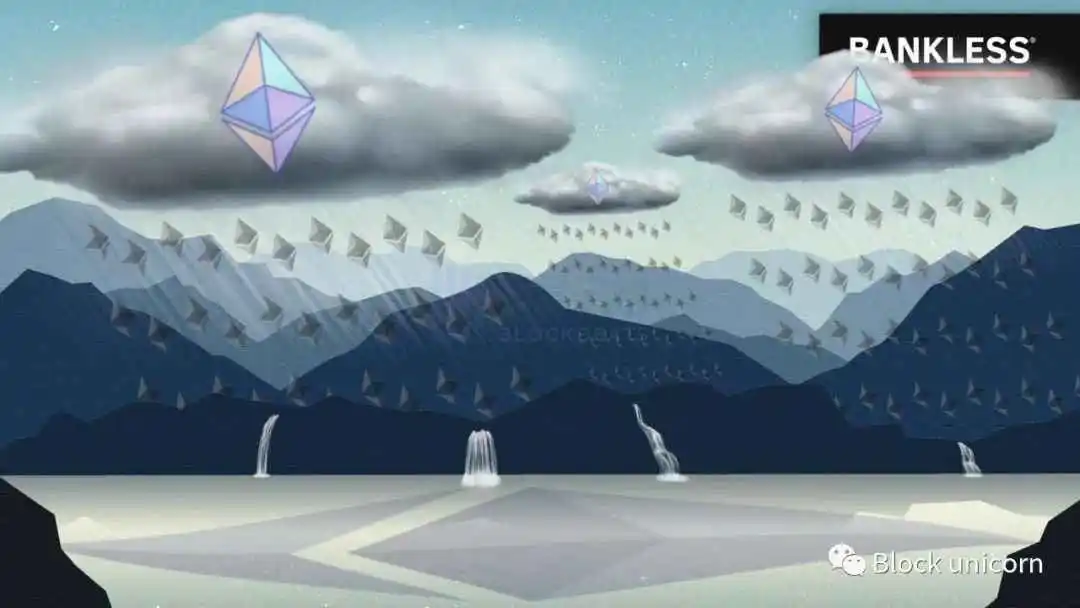
I've said this many times before, but I still can't say it enough. The best way to fully understand cryptocurrencies is through biology.
Crypto is an emerging organic system that imitates the laws of nature. Even though humans are building these structures, the "best structures" that have been found are those that mimic nature.
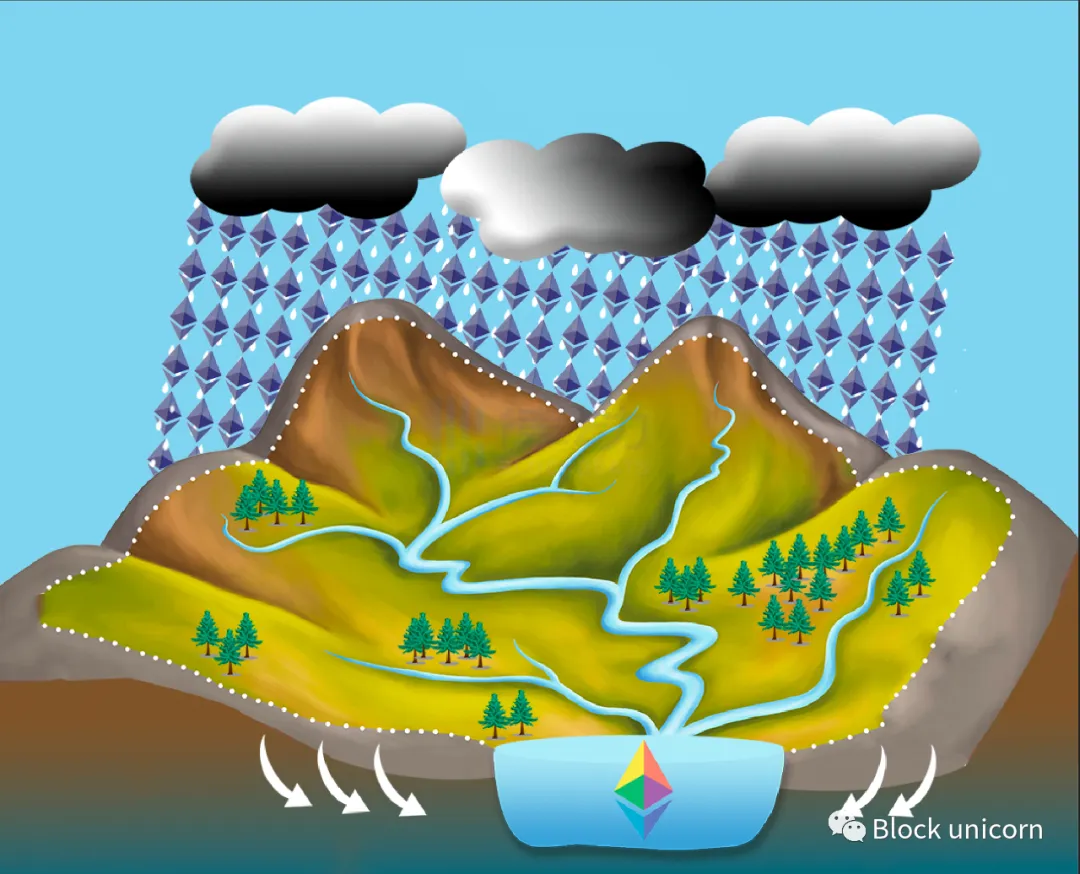
After years of research and development, Ethereum developers have built a transaction supply chain that looks a lot like a watershed. A watershed is an area of land that channels rainfall or snowmelt into streams, streams and rivers and eventually into outflow points such as reservoirs, lakes or oceans.
Transactions (raindrops) are falling all over Ethereum. Some went to Uniswap, some to Aave, some to OpenSea, NFT mines, DEX aggregators, Bridges, Token transfers, etc.
But it doesn't matter where the raindrops (transactions) fall on Ethereum; It always converges to the same place and goes through the same process to get there.
Each raindrop is its own, unique raindrop, falling in a unique location, but soon the laws of nature will take over. The water drops converge into a trickle, the trickle becomes a stream, the stream becomes a river, and the river ends up in the deepest part of the watershed.
The Ethereum pledge
I call this the Ethereum watershed.
Glossary of Encryption Terms
For those early crypto journeys, this vocabulary can help you prepare for the rest of this article.
Priority Fee: All transactions on Ethereum have a priority fee. From the user's point of view, this is basically synonymous with the cost of gasoline (commission /Gas). The higher the fee you pay, the faster your transactions will be incorporated into the blockchain, because you're increasing the fee, which is increasing the faster your transactions will be picked up by miners and then packaged quickly.
Memory pool. A mempool is a small database that contains unacknowledged or pending transactions held by each node. When a transaction is confirmed by being included in the block, it is removed from the Mempool. Mempool is not a canonical thing; Each blockchain node has its own version of MemPool. Sometimes, transactions are broadcast only to specific entities, making MemPool inconsistent with other entities.
MEV: Maximum Extractable Value (MEV) is the maximum value that can be extracted from block production beyond standard block incentives and gas fees by including, excluding, and changing the order of transactions in blocks. Whoever has the power to pre-empt trading in the block will be able to capture all available arbitrage opportunities by securing their trades in a way that works to their advantage.
MEV Searche: MEV Searche is an automated, highly optimized algorithm that scans blockchain and Mempool for potential arbitrage opportunities and, when it finds one, submits trades in an attempt to seize that opportunity.
Transaction Packs: MEV Searchers produce "transaction packs," which are complex sets of transactions, all bundled into one package. It is a transaction that contains many transactions. Just like a normal transaction, it also charges a priority fee, or a bribe, to gain access to the block.
Block Generator: The block generator can take all transaction packages, as well as the highest-priority Mempool transaction, and build a block that meets the inclusion criteria.
Block proposer: You may know block proposer by another name: ETH Staker (Ethereum Pledge), a verification node, a block proposer who proposes to incorporate blocks into the blockchain. This is part of the normal ETH investment process, which is the final step in the transaction supply chain.

MEV: How big is it?
Every transaction on Ethereum has some kind of value associated with it. If it doesn't, then the sender won't pay for the gas. There are people willing to pay something to change the state of Ethereum. People pay to change the price of Uniswap, they pay to raise or lower the clearing level of Aave, or engage in some kind of financial transaction that changes the price and value of Ethereum.
Every transaction on Ethereum creates a cascade of arbitrage. When someone buys ETH on Uniswap, they confuse its price with the price in other markets and create a small opportunity for arbitrageurs to rebalance, and all financial transactions leave plenty of small opportunities for arbitrageurs.
When you disturb the balance of the Uniswap pool, arbitrage bots will descend, consume arbitrage, and export a more balanced and healthy ecosystem. The higher the usage of Ethereum, the greater the total amount of arbitrage that exists. Arbitrage robots are similar to the high-frequency traders of TradFi(traditional finance); There are millions of algorithms looking for the tiniest difference, all competing to capture this microscopic opportunity.
Let's take a look at the size of MEV. The total market value is $670 million. Look at the chart below:
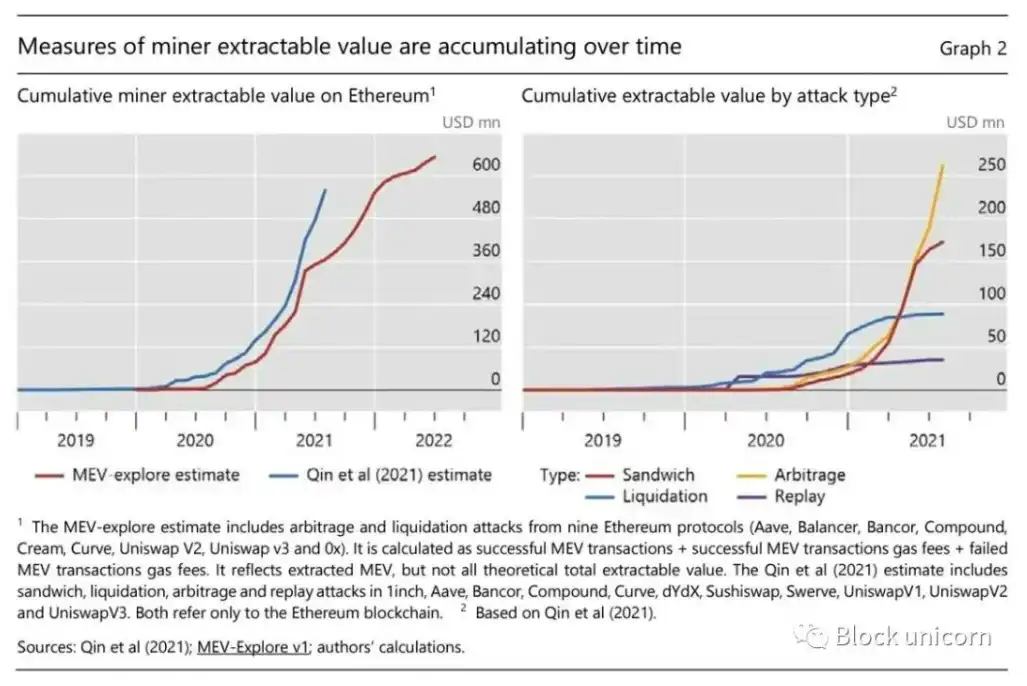
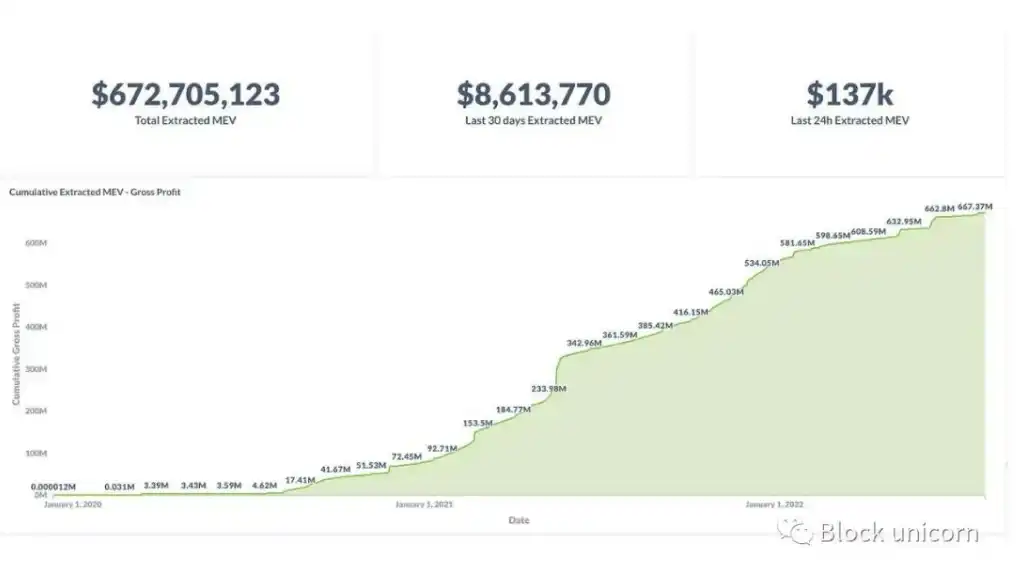
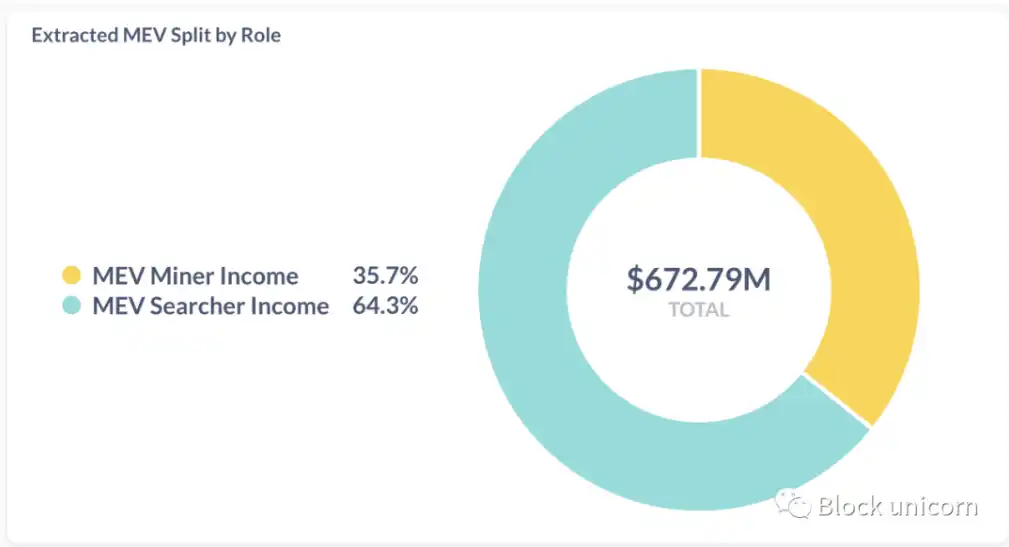
And this is just the early stages of MEV. Value capture in MEV is such a lucrative industry that it is bound to increase rapidly by orders of magnitude. No one is suggesting that it won't, especially when MEV is widely believed not to be a "solvable problem".
In the best case, it can be used; In the worst case, it turns your blockchain into an oligarchic hellscape.
But don't worry! Ethereum's developers are already on the move. They have crafted a system to harness the MEV and make it flow downstream, where it can be distributed to the widest range of market participants. ETH Stakers.
Ethereum transaction supply chain
Step 0 | trade sources: The Mempool (memory pool)
Before transactions are embedded in the Ethereum blockchain, they exist in this "unborn" state, known as a "Mempool". Mempool stands for 'memory pool', which is basically all broadcast user transactions that have not yet been incorporated into the blockchain.
When you make a transaction on Metamask, you broadcast it to Ethereum's network of nodes. These nodes download this data and save it in their computer memory.
The transaction that pays the highest fee is preferentially selected from the vast ocean (because there will be many, many transactions that need to be packaged in the blockchain, which pay a high fee and have the right to be packaged by miners preferentially), and added to a block and incorporated into the blockchain. I describe how to choose a deal for inclusion in the remaining steps below, because there are more variables to consider than "which deal pays the highest priority fee".
All deals have two potential sources of value:
1. Priority Fee: Users can choose to pay explicit bribes (outrageous fees) for the right to be selected first in a package.
2. MEV : A second-order effect that creates arbitrage opportunities on the state of Ethereum.
How the transaction eventually becomes part of the Ethereum blockchain is not only the size of the priority fee, but also the function of the trading platform with the relevant MEV.
For example, one could create a transaction with a $0 fee associated with it, essentially requiring the miner to include the transaction for free, and the miner or verifier would typically ignore the transaction. Instead there are transactions that actually give them money, but if the transaction is to buy 100,000 DAI and pay 1ETH as a processing fee, or to sell Cryptopunk #1118 and pay 1ETH as a processing fee, both transactions are immediately spotted by MEV bots and packaged for them.
Simply put, all transactions come with a bonus that includes it, either an explicit priority fee or an implied MEV value. The value of each transaction is picked up by the next player in the supply chain: MEV searchers (usually algorithmic robots searching automatically).
Step 1 | MEV searcher: "micro arbitrageurs"
MEV searchers are highly optimized arbitrage robots.
Each MEV Searcher robot is optimized for a specific type of MEV, and its creator spends a lot of time and labor improving the robot so that it can generate better arbitrage and earn more profit.
For example, there will be highly optimized searchers in various AMMs (automated market maker; A "decentralized trading platform"). If ETH is priced at $1,998 on Uniswap and $2,002 on Sushiswap, a MEV robot optimized for DEX arbitrage will create a trade that captures this spread and pockets some GWEI revenue.
This competition also occurs within borrowing/lending applications like Aave, Maker, or Compound. A large amount of value is being paid to the clearing bots, which are all competing with each other to clear DeFi loans. Over time, we see these DeFi clearing robots compete on smaller spreads, ensuring that loans are cleared at the most favorable rate allowed by the market, maximizing the value of loan retention.
There are thousands of MEV searcher robots, searching in memory, competing with other MEV searcher robots for minuscule arbitrage of value.
As these MEV searchers become better and more cost-efficient, they will be able to compete for smaller and smaller arbitrage amounts, organically ensuring that DeFi is an efficient market.
Bundle deal
These MEV searcher bots create 'bundled' transactions; Because it is usually a set of trades, you need to fully capture the available arbitrage. The robots need to include all these transactions together in a particular order for their actions to work, so they bundle them in a neat little package, tie it with a bow, and ship it to the next player in the game: the Block Builders.
Just like normal traders, each MEV searcher bot submits a "bid" in each trading bundle they create. That's what the robots are willing to pay Block Builders, including their bundle deals. Since this MEV arbitrage game is highly competitive, profit margins become razor-thin.
Because these MEV bots are in a rapid bidding escalation game, competing for inclusion, the bids MEV searchers are paying Block Builders are quickly approaching the full value of the arbitrage they extracted, This means that the amount of value captured by Block Builders is naturally close to what MEV searchers can extract. 99.99%.
Step 2 | block builders: "macro arbitrageurs"
The role of the block builder is simple. The block builder builds the most valuable block possible, then bids to block proposers and accepts their block.
It sounds simple, but in order to make as much money as possible, builders have to be highly competitive.
There are two aspects to the block builder competition:
1. Hardware and network
2. Order process
Hardware and Network
Block builders must go through a computationally intensive transaction simulation process.
Block builders can't blindly bundle every transaction package without considering anything else. Many bundles submitted by searchers are for the same arbitrage opportunity, and if a lazy block builder includes conflicting bundles, the second deal bundle will be rejected and the block builder will drop its associated bid.
Block space is precious, and builders have to super-optimize transactions in blocks to make sure they don't leave money on the table.
As a result, the block builder goes through an intensive transaction simulation process in which it simulates every transaction to check for conflicts. They would run all possible combinations of trades to find the most profitable, then fill the remaining block with basic mempool trades, tie it in a bow, and bid to block proposers to be included (all within 12 seconds).
Order process
Going back to what I said above about the Ethereum memory pool...
Mempool is not a canonical thing, the only source of truth "is the Ethereum blockchain. Not being packaged in a transaction. It was in a state of disorder "before it entered the blockchain".
Each Ethereum node has its own version of the memory pool. When you make a transaction through Metamask(or any wallet), you will broadcast your transaction to every Ethereum node; After all, you just want to include your trade, and you don't really care how the trade flows.
This is not true for every user, and broadcasting deals are about "showing your cards". Tell the world what you're doing. What you're doing is equivalent to: I have a bunch of alpha returns that no one knows about. If you broadcast the deal to everyone, you will surely lose every ounce of alpha you want.
You see a bunch of alphas...... on Ethereum But if you broadcast your deal, you'll expose these alphas to some MEV bots, who will surely beat you...... Because these robots specialize in MEV arbitrage.
Private order flow
You can enter into an off-chain agreement with a mining pool that agrees to process your transactions without disclosing them to others.
Flashbots, God bless them, have made Flashbots to democratize access to this kind of opportunity.
Block Unicorn Note: Flashbots is a research and development organization that aims to mitigate the negative externalities and risks of Maximum Extractable Value (MEV) on smart contract blockchains.
The lesson to be learned here: Not all mempools are created equal. Entities with a better Mempool view and access to private trading order flow will be able to take advantage of arbitrage opportunities in other parts of the market.
These are vehicles for blockbuilder competition: who can best see Mempool, either in terms of improving hardware and networks, or in terms of order flow for private off-chain protocols.
Bidding on the blockchain
Block builders make money by collecting all bids from all transaction bundles from MEV searchers, as well as all priority fees from individual transactions. This will turn into a block that will bring them 2.2 ETH. For example, they will bid 1.9ETH for the block proposed by the block proposer, trying to pocket the difference of 0.3ETH.
Like MEV searchers, block builders will be highly competitive. A really good block builder could build a block with 3 ETH values and bid 2.2 ETH...... But another block builder can build a block with only 2.4 ETH value and bid 2.3 ETH to join.
Of course, the rational block proposer would accept the bid block of 2.3ETH, while the block builder with the smaller bid would pocket the cash.
Profits have fallen sharply.
Step 3 | block proposal: the ETH Stakers (Ethernet fang pledge)
The final step is to actually add the block to the blockchain!
ETH Stakers, those who are running verification nodes, simply select the block with the highest bid associated with it.
They don't even have to do any work, they just choose the most profitable block header and sign a message saying they approve the block with their 32 ETH bonds, full faith and credit.
Finally, we come to the part of the article that has always been the focus.
Conclusion: Equality can be achieved through mechanism design
Ethereum developers spent a lot of time on R&D to make Ethereum pledge as easy and democratic as possible. There have been a number of efforts to make it possible to pledge Ethereum using basic hardware consumption to minimize ETH pledge. (Read this article, pledging 32 ETH, why it is currently the theoretical lowest number).
These are Ethereum's values: to make it as democratic and convenient as possible for families to verify and participate in consensus. It shouldn't matter what your background is, you just need the basic hardware consumption and some ETH to participate in the Ethereum node pledge. Application layer innovations like Rocket Pool and Lido help lower the threshold for 32 ETH, and in the future, 32 ETH could potentially be lowered to 16, or even 8, for a single user.
We have discovered that MEV is a huge problem for Ethereum, and it has the potential to concentrate the supply of ETH to a few privileged parties who can extract MEV better than others, a reality that threatens all efforts to keep Ethereum decentralized and democratized.
So what did the developers do? They use mechanism design to harness MEV and put it in the hands of ETH holders.
As an ETH pledge, ask yourself...... Do you know how to run a MEV searcher robot? Do you know how to build the ideal block? With the above process, you don't. The entire supply chain is responsible for the most dispersed and accessible part of the stack: ETH holders.
The profit margin of the MEV searcher robot is maximally compressed by the block builder's fight for inclusion, and the block builder's profit is maximally compressed by the block proposer's fight for inclusion.
Block proposers are ETH Stakers.
All potential centralization threats from the best MEV search robots are passed downstream to the block builder, who in turn is passed downstream to ETH stakeholders.
This is very, very good for ETH.
Will it really end with ETH Stakers? Not necessarily.
Matt Culter of Blocknative thinks this competition will actually go back to the point where transactions are initiated: the wallet.
Since every transaction has an associated value, the wallet becomes a very powerful place for consumer interaction. Wallets become the source of proprietary transaction flows; Transactions are something blockchain builders can leverage.
So block builders are likely to pay for the transactions in their wallets. For example, a dedicated block builder could pay Metamask a lot of money to route transactions only to them without broadcasting them to the world.
That sounds bad! Metamask users will be tricked into trading just like Citadel and Robinhood.
I don't think that's the case. Instead, I think it will generate something like credit card points or air miles, rather than actual monetary rewards like ETH or DAI.
Wallets will pay you to use them. All the profits extracted through this process could logically end up in the hands of the originator (that is, you!). Rebates or rebates end up being offered by your wallet service provider.
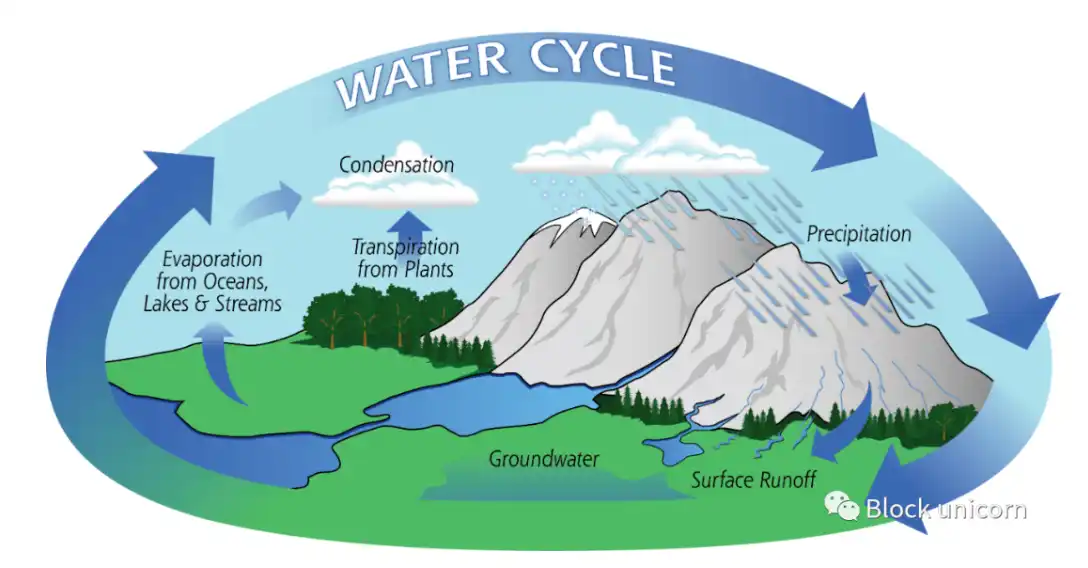
Naturally, this ends the watershed cycle for Ethereum transactions.
After the value of the transaction converges into a central pool, it evaporates into the air, condenses into a cloud, and falls again into a mountain rain, returning to the top of the funnel to provide a constant supply of nutrients for the Ethereum ecosystem to enjoy.
Congratulations, we've built a self-perpetuating ecosystem that allows a thousand Dapps to bloom.
The original link
Welcome to join the official BlockBeats community:
Telegram Subscription Group: https://t.me/theblockbeats
Telegram Discussion Group: https://t.me/BlockBeats_App
Official Twitter Account: https://twitter.com/BlockBeatsAsia






