Web2.5: The Glorious Compromise of Web3
Original title: Rambling on Web2.5: The Glorious Compromise of Web3
Original author: Kiro & Amp; 0xRan, Deep Tide TechFlow
Remember at the height of the bull market, the "All in Web3" wave? Whether it was dropping out of school to "soha" or leaving a big Internet company to start a Web3 job, it seemed like a natural thing to migrate from WEB2 to Web3.
However, there are exceptions. A 2017 into the circle, a Crypto Fund partner, this year reverse operation, jumped from WEB3 to a big Internet factory.
Asked why, he thinks that WEB3 is still too niche, ultimately driven by transaction and wealth utility, and lacks real adoption.
When the whole Crypto market has once exceeded $2 trillion market size, we all face a problem, where to find growth?
Crypto Native is a sexy label, but it can also be confusing.
A primary market investor said that he has not seen DeFi project for more than a year, although admit DeFi is the future, but how high valuation, few people use, hackers frequently steal...
Compared with high threshold DeFi, NFTS & NBSP; And GameFi, and even Meme are significantly more likely to capture new users, so investing in WEB3 consumer apps that can get out of the loop and generate new traffic has become a hot investment theme.
How does WEB3 scale out and get real users?
In a small talk, we accidentally mentioned a concept, WEB2.5.
We see WEB2.5 as a halfway house or even a gateway to WEB3, and there are investment opportunities.
What is WEB2.5?
For example, if DEX is WEB3, CEX is WEB2.5.
On Coinbase, people can trade WEB3 assets using Web2 infrastructure such as credit cards and tie-in apps. This combination of using WEB3 assets and Web2 infrastructure simply defines WEB2.5.
Centralized trading platforms rely on elements of Web2 to build and grow, and their development, products, and marketing growth strategies can have nothing to do with WEB3 at all. However, these companies have contributed to the global popularity and adoption of Crypto, and ordinary people need an easy access to WEB3 assets.
This entry point is Web2.5, which is a way forward in the shipping lane, but not the final destination.
If Web3 is divided into assets and infrastructure, then the two are different growth and adoption curves. Both Crypto and NFT have been recognized and used in a considerable proportion globally. One data is that, by the end of 2021, 16% of Americans own or use Crypto in some form.
However, the Web3 infrastructure is still underused, or to put it more directly, it is still high threshold and difficult to use. In this case, wrapping Web3 assets with experience-friendly and low threshold WEB2 application front-end becomes a compromise. Centralized trading platform, hosted wallet, etc., bridge the gap between infrastructure and assets. This brings us to WEB2.5.
For brands with a strong WEB2 presence, it is unlikely that they will be able to upend their WEB2 architecture and fully adopt the WEB3 stack, so they will prefer to combine the assets (NFTS, etc.) and benefits (digital IP and composibility) of WEB3 with a mature WEB2 development, product, growth and distribution model.
WEB2.5 has become a common mode for many traditional brands to transform and explore WEB3.
In art, in 2021, the two traditional auction houses Christie's and Sotheby's sold a combined $250 million in NFTS, including $69.3 million from Beeple's Everydays: The First 5000 Days, and it was this auction that put NFTS in The news.
Later, Sotheby's also accepted Crypto payments, albeit from Coinbase, Gemini, Fidelity or Paxos through KYC wallets. And ETH, still very WEB2.5.
In social media, twitter is the poster child for WEB2.5.
On June 30, 2021, twitter announced "The 140 Collection" to kick off its entry into WEB2.5.
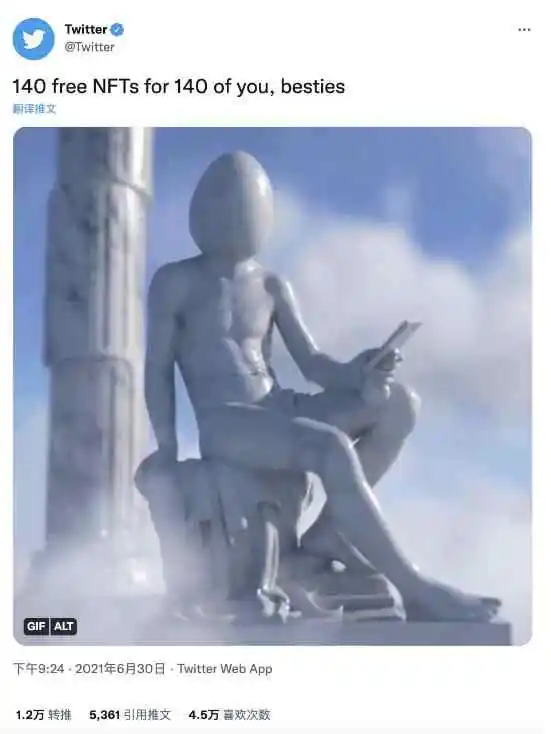
In January 2022, Twitter announced that users would be able to set their NFTS as profile pictures for their accounts, as long as they were members of Twitter Blue.
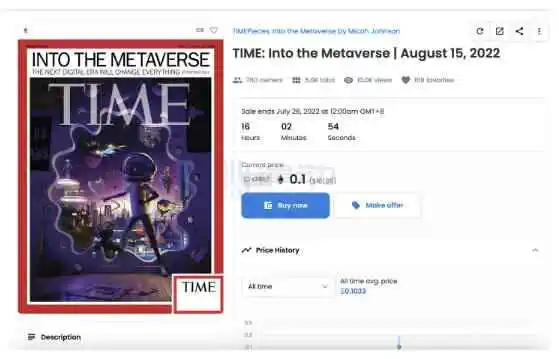
In traditional media, the most WEB2.5 is Time Magazine. In September 2021, Time announced the release of TIMEPiece NFT, a collection of 4,676 works from 40 artists, a quarter of whom have produced magazine covers for Time.
Collectors who own TIMEPiece have unlimited access to all TIME.COM content, with exclusive privileges such as invitations to physical and online events.
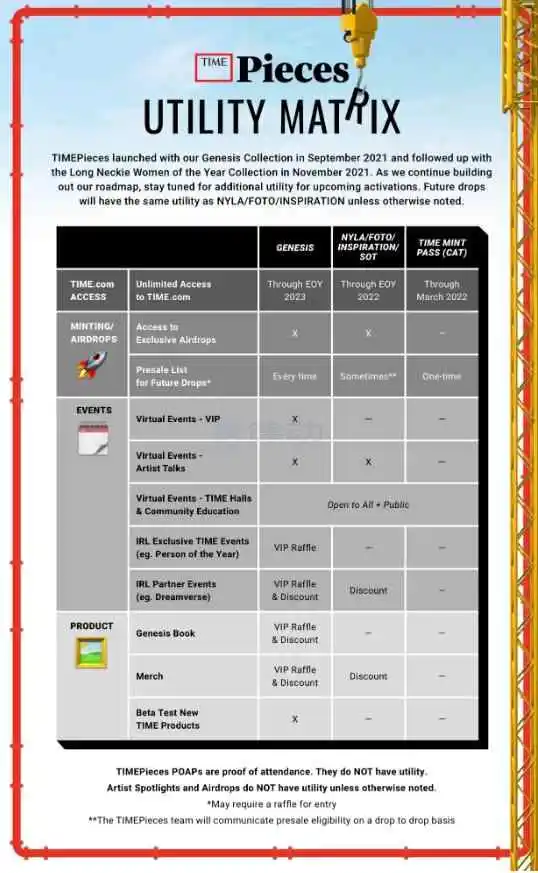
In March 2022, TIME went a step further, releasing the first-ever fully decentralized magazine NFTS.
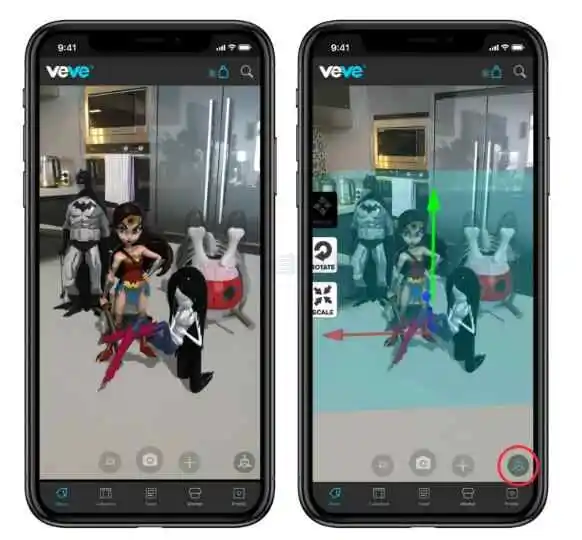
Traditional IP companies are also using WEB2.5 to enter WEB3. For example, they are partnering with VEVE, a digital collection platform, to release the Marvel series NFT.
On VEVE, you enter your date of birth, gender, and email; Need KYC; Payment can be made simultaneously with fiat \Crypto; Self-built secondary trading market; Can do AR display... While not WEB3 at all, it greatly simplifies the threshold for user engagement and becomes an NFT ecosystem in its own right.
In the gaming space, the WEB2.5 project is represented by Legend IV (Mir4), which is still the same as the legend of the game, but with the addition of blockchain, Crypto and NFTS to establish a set of P2E mechanism, which is equivalent to the WEB2 games plus the WEB3 asset class.
Despite the controversy surrounding Legend IV, it has exploded in the market since its launch. It has become the most popular app store in the four major app stores in South Korea on the first day of its launch, sending the share price of parent company WeMade WeMade soaring threefold, and making founder Park Guanho one of the seven game billionaires in South Korea.
The form of WEB3 games has always been a hot topic in the industry. There is an essential conflict between Play and Fi, and there must be a trade-off between more games and more finance. One school thinks that the truly successful WEB3 games can only be Crypto Native. WEB3 games made by WEB2 game manufacturers can only be bilateral ingratiation, the block chain AAA masterpiece will be proved false, WEB3 games should find an independent road;
The other group insists that the primary importance of games is "fun", both NFT and Crypto are tools and means, rather than the final goal. A truly fun game still needs a professional accumulated game team to complete, and it needs to look for real "players", rather than investors.
In view of this topic, my friend simply imagined WEB2.5 games.
WEB2.5 game conjecture
At present, GameFi's Fi (finance) attribute is too heavy, far more than that of Game. The essential reason is that Web3 games have a different business model to make money. They need to sell NFT/FT in the early stage to achieve financing and obtain funds for subsequent product development, but once they make hundreds of millions of dollars from selling NFT, The team is likely to lose the incentive to make a really good game.
Play to Earn brings marketing expenses forward, essentially increasing the liabilities of the network. From the perspective of sustainable development of the economic system, the network needs to be continuously transfused.
In Web3, Gamefi players have a dominant demand for making money, which is a blood sucking group for the economic system.
Traditional Web2 game players are Play users, the game demand is dominant, and they are the blood supply group for the economic system.
There is only blood feeding user group without blood supply, which makes Gamefi's life cycle only 2-3 months on average, and it lasts less than a week after the Token price peaks. It is pure Ponzi model.
The reason why GameFi is now a pure Ponzi: the superficial reason is the lack of Web2 users, the deeper reason is the lack of quality product supply, that is, the lack of quality game product supply with self-feeding ability, do not need to rely on the Token market for development funds.
Studios that can afford to develop quality games now have to choose between the "traditional game business path" and the "GameFi coin path" in order to achieve their original game revenue goals and 100% compliance.
At present, tail studios cannot survive under the traditional path and are more willing to use Gamefi to survive. For mid-to-high level studios that have survived well under the original path, there is not enough incentive to develop WEB3 games, because of the compliance risk and huge opportunity cost.
So, can traditional games and GameFi forms coexist in a single game, rather than either or, without the studio having to abandon its original monetization path?
For example, in an inclusive Game, let the Play/Game roll, Earn/Fi greed, and NFT-Kton users coexist to form a healthy blood supply system, and then give the X2E users a portion of the 100% of the profits from the normalized company plus the NFT Kton users' consumption. Distribution channels integrate old ways and new ways, constantly breaking circles, and at the same time sustainable.
According to Folius Ventures' graph, game users can be divided into Crypto users and traditional game users. Crypto users can be divided into gold mining users and investment users according to the degree of value outflow, while traditional game users can be divided into casual players and heavy kR players according to the degree of value investment.
Here, we simply divide players into "Play/Game volume, X2E/Fi corruption, and NFT krypton" :
NFT Krypton players, the number is small, the function is to consume/krypton gold, blood transfusion to the system, with the help of Ponzi model to complete the cold start, forming high value NFT consensus assets, technical perspective to achieve all NFT assets on the chain
Play volume has a large number of players, the function is to spend time, enter consensus on consensus assets, and technically achieve identity chain. Volume King can obtain NFT as a status symbol through high skills, and can communicate with each other in multiple Gamefi scenarios. The product is basically consistent with traditional games in terms of business model, distribution channel and quality.
X2E 贪玩家,数量中等,Earn 的是 20 标准的 Token ,可选择租赁氪金玩家的 NFT 来玩,门槛低,技术角度做到奖励货币上链,产品角度模仿 Stepn 拥有内置账户体系和链上钱包地址。
Assets can also be divided into "gold asset FT" and "consensus asset NFT", which are very different in value and operation mode:
The advantage of Opensea is that it has clear asset positioning and consensus asset products such as blue-chip NFTS. For example, the avatar NFTS on ETH such as Yuga LABS can gather high value as consensus assets, but the products and application scenarios that can carry IP are temporarily few, and the users are temporarily few but all have high value.
The problem of Stepn is that it has not formed the "consensus asset" NFT that can gather value, and the shoes have not become BayC-like assets with long-term collection value. However, the "gold mining asset +X2E model" is of great reference significance for how to use the growth engine to engage "gold mining users", which is easy for ordinary users outside the circle to learn.
As one of Web2's game industry friends says, "By far, traditional game developers are looking forward to: The first layer is transparency in asset generation and transaction, which means users have ownership of assets and achieve decentralization, and the second layer is NFT value and scarcity, where the value of decentralization is that the business model of the future is user-centered and NFT-centered."
If the above business model and user stratification can be realized, the traditional game purchase volume/release means can be integrated in the distribution channel. Theoretically, the "NFT Krypton and Play volume" users can be acquired through the traditional advertising means, and they are highly overlaps with collectors/game props and game players. Web3 projects can gain "X2E greedy" users by air drop and other means.
Of course, these are only a few superficial and half-baked ideas.
In summary, WEB2.5 is a halfway house between WEB2 and WEB3, a compromise and an improvement.
As for the B side, they need a fast and low-cost channel to WEB3 and leverage their product and IP advantages accumulated in WEB2.
For the c-side, they need a friendlier, lower-barrier front end to quickly gain access to WEB3 assets or related experiences.
The root of all this is the mismatch between WEB3 assets and infrastructure development stage. When the WEB3 infrastructure is sufficient to support large-scale consumer applications, perhaps WEB2.5 will be consign to the dustbin of history.
But for the time being, WEB2.5 is still worth paying attention to.
The original link
Welcome to join the official BlockBeats community:
Telegram Subscription Group: https://t.me/theblockbeats
Telegram Discussion Group: https://t.me/BlockBeats_App
Official Twitter Account: https://twitter.com/BlockBeatsAsia
 Related Articles