Dialogue with Guo Yu and the founder of Astar: There is no better opportunity than a bear market, and the future of Web3 can be expected
Original title: "Dialogue with Web3 Entrepreneurs Sota Watanabe and Guo Yu"
Original source: Natsume Hideo East Ventures, Li Lucheng Z Venture Capital
"I firmly believe that the advent of the Web3 era will promote the growth of the Japanese economy." This is a speech on Japan's economic growth strategy delivered by the Japanese head of state, Prime Minister Fumio Kishida, at a meeting of the House of Representatives on May 26.
"Web3" may be the hottest new buzzword in the world at the moment, it refers to services that do not rely on specific Internet services, platforms or companies. Web3, which bears the idea of decentralization, is grasping the dividend of the times, and it is unstoppable to completely subvert the dominance of GAFAM in the era of platformization. Countries such as the United States, Singapore, the United Kingdom, Portugal, and Dubai have also successively issued laws related to encrypted assets, all of which are promoting a new era that is about to emerge.
After entering 2022, compared with other countries in the world, Japan has launched a series of countries related to Web3 strategy. The speech of Prime Minister Kishida mentioned in the preface and the "Digital Japan 2022" promoted by the Liberal Democratic Party's Digital Society Promotion Headquarters also indicate that the trend of Web3 in Japan is unstoppable. However, taxation issues and the control of licenses for encrypted asset trading platforms have led to the flow of talents to countries with more friendly regulations outside of Japan, which has become an urgent issue to be resolved.
At the same time, China, once known as a virtual currency powerhouse, also recognized companies operating blockchain business in 2017 to raise funds through Token issuance (IC0) Funding is illegal and issues a ban to individuals and businesses. Since then, although the blockchain technology itself has been officially affirmed, mining and virtual currency transactions have been banned, and the brain drain of the blockchain has also occurred in Japan.
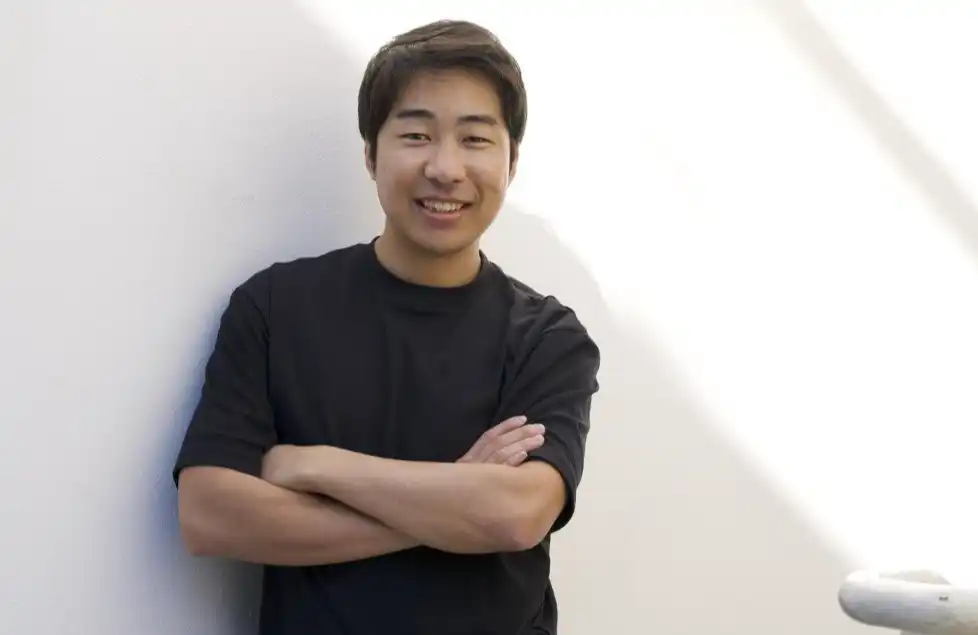
In it, we interview top Web3 entrepreneurs from China and Japan. One is Sota Watanabe, who is only 26 years old, the maker of the Japanese Web3 standard and the founder of the Japanese public chain Astar Network ($ASTR); the other is 28 years old, from the world’s largest unicorn company, Byte Jump announced FIRE (Financial Independence, Retire Early=Financial Freedom), and Guo Yu who explored in the Web3 field. They choose to dance in shackles under the rules, trying to explore the forefront of Web3. We interviewed them for their views on the future of Web3 and the future potential of the blockchain industry in Japan.

Image: Xinchaoshe Foresight
< br>
*This interview is hosted by Hideo Natsume of EastVentures, an early investor of AstarNetwork, and Li Lucheng of Z Venture Capital is the translator.
Natsume: Can you share the opportunity for the two of you to enter the Web3 industry?
Guo:Maybe everyone will be surprised, but in fact I said six months ago, that is, in 2021 November is just getting started with Web3. At that time, I was chatting with a friend in Beijing, and he accidentally said that he had transferred most of his assets to DeFi (decentralized finance). At that time, I was very interested in these fresh concepts, so I asked him a lot of DeFi knowledge. After he introduced various projects to me, I had a basic concept of Web3, so I started Do your own research on other interesting new words such as NFT (non-homogeneous token) and DAO (decentralized organization). After I continued to develop a deeper understanding, I spent a few months thinking more deeply about what changes and meanings Web3 may bring to the world in essence. Then I wrote an article titled "About Web3: The latest technology trend I missed in two years of FIRE" on "Mirror" (author's note: a decentralized blogging platform) summarizing my thinking.
Natsume: This is really surprising. Because you are already quite well-known in China's Web3 community, I didn't expect to only contact you for half a year.
Guo:Yes. After spending half a year deeply researching Web3, I started two projects, Checks Finance and CodeforDAO, by myself in March this year. After I started writing that article on Mirror, I spent about a month or so conceptualizing the project. At the same time, I found out that the Federal Reserve (FRB) decided to raise interest rates at the beginning of this year, which made me also think about what kind of projects can survive this bear market cycle and bear fruit when the market recovers. So in the end, I took Checks Finance and CodeforDAO, which I think can cross the cycle the most, as my entrepreneurial direction. This excitement brought me back to the front line even after I had "retired" and rekindled my passion as a developer.
Sota: The first time I went abroad was India when I was a freshman. It was there that I first felt the seriousness of poverty and environmental problems firsthand, and a desire to solve them arose. So, I started to look for technologies that can solve social problems, and in the process of searching, I met the blockchain by accident. After learning about the blockchain, I joined a blockchain technology company in Silicon Valley, USA and began to conduct in-depth research. Working there made me feel that people are not only concerned about the problems within their own country, but also about the value they can provide outside their own country. So inspired, I decided to start my own business. After returning to Japan, I became a blockchain researcher at the University of Tokyo, and started to develop public chain projects with friends I met at the University of Tokyo.
Natsume: When you started your business, it was actually a cryptocurrency bear market, and it changed after a period of dormancy. I believe it was not easy for you at the time. So from your experience, although the current environment is still not optimistic, I want to know what kind of countermeasures entrepreneurs who are about to start a business in the Web3 field should take under such circumstances, and where should they choose to start a business?
Sota:Web3 is very different from Web2 in that it is not limited by geographical environment. As long as you can connect to the Internet, you can participate in Web3 work whether you are in the North Pole or the South Pole. At the same time, since Web3 is a brand-new field, the laws and regulations in many countries are not yet clear, but strict regulations may be introduced in the future, causing entrepreneurs to suffer losses. So it is very important to go to a country with clear regulations on Web3 than geographical location. So far, there are still many unclear points in Japan's laws and regulations, not to mention the very high tax points caused by the tax system, so more and more Japanese entrepreneurs are moving to countries such as Singapore, Dubai and Switzerland. However, like Guo Yu who chose to come to Japan from China, I think Japan is a country with superior tourism resources and living environment. Regarding the tax system, I believe that the entrepreneurial talents who once regretted giving up Japan will eventually return to Japan, and by that time Japan will start the first spring of Web3.
Guo:As Sota said, the legal And the state of the tax system is the most important point. I heard from a friend who works in venture capital in the UK that many Web3-based startups are now moving their companies to Dubai, Portugal and Eastern Europe. What these countries have in common is that they have stable policies, are very friendly to the cryptocurrency industry and actively attract capital and talents. In contrast, China's current policy on Web3 is still unclear, so that many talents have left.
Natsume: What is the specific migration method? Are these Chinese entrepreneurs moving not only their headquarters but also their development teams overseas?
Guo: Not so. In some of the countries I mentioned earlier, in the Web2 field, the so-called traditional Internet industry, the density of talent is not as high as in countries where cities such as Beijing and Silicon Valley are located. From the perspective of common sense, the development headquarters itself should be in a city with a high concentration of talents. Therefore, in the long run, Chinese Web3 startups will be more inclined to move their headquarters to countries with better legislation, while the development team will remain in China and use the VIE structure that our Chinese entrepreneurs are familiar with. There is an example around me. Their development team is in Shanghai and their headquarters is in Singapore.
Author's Note: "VIE Program".
VIE refers to a variable interest entity, that is, a company established in a tax haven such as the Cayman Islands or the Virgin Islands for the purpose of raising funds and listing, while foreign Investors set up Wholly Foreign Owned Enterprises (WFOE) in China. The plan involves setting up a wholly foreign-owned enterprise (WFOE) in a tax haven jurisdiction like the Virgin Islands, where foreign investors set up a largely funded and listed company in China, effectively controlling a domestic Chinese commercial company, and then siphoning off the profits. This structure is often used by Chinese companies engaged in Internet business to receive foreign investment and list overseas in the United States and other countries.
Guo: As for Japan at first glance, people often have the impression that Japan is not a Immigration countries must have strict immigration policies. But in fact, it is a country with a very friendly policy towards foreign talents. For example, in terms of highly skilled visas, many Chinese (developed with reference to Web3) can enter Japan relatively easily in the form of highly talented visas. However, the lack of awareness of these policies, not only among developers in China, but even in Western countries, has led many Web3 entrepreneurs to exclude Japan from their plans. From a business point of view, I think Japan is a place where culture and business coexist well. A market where culture and commerce co-exist is driven by creators. This market where a large number of creators exist is a perfect match for Web3, which emphasizes private ownership. Japan's budding Web3 market could one day be bigger than any other country, as long as the tax system and low density of development talent can be addressed.
Natsume: According to Guo Yu’s answer, I would like to ask Sota, from a global perspective, what is Japan’s position in the Web3 market? What? At the same time, in your opinion, what are the advantages of Japan?
Sota: Globally, I think Japan has been catching up at an alarming pace lately. For example, officially, Prime Minister Kishida and other members of the Liberal Democratic Party, especially the young people in the party, have been releasing positive signals about Web3. It is rare in the world for a political party to work so hard and promote it on Web3. In addition, the Youth Bureau of the Liberal Democratic Party has also recently issued NFT and Token. These positive experiments have brought many positive effects. On the other hand, native Web3 services require a Token system, and due to regulatory restrictions, it is still very difficult to issue Tokens in Japan today. For example, like us (Astar Network), under the current tax system, it is almost impossible to create a Layer 1 blockchain or DeFi. So the more feasible field at present is NFT.
Natsume: So at present, is NFT the only one in Japan that can compete with other regions in your opinion? direction?
Sota:Yes. There is a lot of content-related IP (intellectual property) in Japan that can be converted into obvious opportunities. But it is a pity that the Japanese's ability to communicate in English has to a certain extent affected their ability to operate globally, limiting their speed of overseas development. It is true that apart from the hope that NFT can say, I think the island effect in Japan is still developing, that is, many Japanese projects still only play in their own small circles. But it's a chicken-and-egg problem, and policy won't change if projects like ours don't deliver impressive results around the world. If the policy does not change, there will be no more benign results, as if it is a knot that cannot be untied. Therefore, as entrepreneurs, we need to make achievements worldwide as much as possible, and use the results to provide various feedbacks and influences on the tax system and national policies, and then promote the progress of the industry.
Guo:Since the beginning of the year, I have been paying attention to the Web3 national strategy promoted by the Liberal Democratic Party. Many very positive initiatives have been put forward, such as the legalization of DAO, the relaxation of visa requirements for overseas talents, the revision of the fund settlement method, and the improvement of the tax system, etc. However, these moves are only revisions of the framework and it will still take at least a 6-month cycle for the details to be fully hammered out. On the other hand, I also think Sota is right about NFTs. In fact, it is almost impossible to make products involving Token in China due to regulations, so in this case, Chinese entrepreneurs will also give priority to NFT. Of course, Chinese start-ups are usually more flexible and will start to try various solutions when legislation is not yet clear, so the VIE plan I mentioned earlier will be the first choice for Chinese Web3 entrepreneurs. And the last thing I want to talk about is Japan's potential. Due to the natural moat formed by the language barrier, the Japanese market itself is a difficult market for foreign entrepreneurs to enter. Many Chinese products have tried to enter the Japanese market, but the only one that succeeded was TikTok. The reason is that the attributes of its video platform allow it to overcome language barriers, and people from all countries can easily understand the service. But in the upcoming Web3 revolution around the world, if start-ups from Japan can attract foreign development talents, take advantage of their domestic content industry to gain share in the Japanese market first and eventually expand globally, I think we can see a global Competitive Japanese start-ups across the board.
Sota: Strongly agree. I think we each have a role to play, so I'm not in a position to dictate official policy matters, and the best option is to leave that to the politicians. And what I need to do most as an entrepreneur is to raise the horizons of young people. For example, in China, the birth of the world's top unicorn companies like ByteDance has naturally inspired the entrepreneurial spirit of entrepreneurs of the same generation and raised everyone's horizons. But it is a pity that there are very few such examples in the web3 field in Japan, and we still have a long way to go in Japan to complete our vision. So our mission is to make AstarNetwork a first-class Layer1Protocol, and we urgently hope that it can become a good template for young people and encourage more people to enter this field.
Guo:Yes, Web3 is a very special field, its development and trend are almost Start globally at the same time. In this sense, Web3 has a strong ripple effect. What Sota has done can affect a large cultural circle, that is, not only the Japanese in Japan, but also the Japanese scattered around the world. Influenced by Astar's achievement. This is extremely meaningful to more Japanese who may join Web3 in the future.

Image: Xinchaoshe Foresight
< br>
Natsume: Both opinions are very interesting. The questions so far are all from a macro perspective, but I would like to change the angle, please talk about it from the perspective of entrepreneurs, especially Sota, you have met many top investors in the United States and China, then Web3 How is it different from a Web2 investor, and what should be your strategy as an entrepreneur when raising money?
Sota:I personally raised money twice from Web2 investors and from Web3 investors Twice, I will roughly talk about the similarities and differences between the two types of investors. First of all, Web3 investors observe global projects by default, so when I communicate with Chinese Web3 investors, I find that they almost never look at projects that only circulate in the Japanese market. Such judgment criteria can be attributed to the fact that Web3 is currently most concerned about how big a project can be on a global scale. In addition, Web2 and Web3 are fundamentally different in terms of financing logic, such as whether to invest in equity or Token, Token allocation and related locking, etc. Therefore, it is often not feasible to directly import Web2 investment decision-making methods into Web3 investment . Personally, in Web2 investment, market share determines sales, and sales determine market value. In contrast, in Web3 services, decentralization is the real value. Therefore, create community-driven services and use the community to drive total value. Quantity to complete the value measurement is very important. In this sense, the sources of value of the two are completely opposite. Entrepreneurs should carefully consider their own project valuation logic when financing.
Guo: I also have the same opinion. The Web2 investors I contacted in Beijing are all investing in the TMT field. After many communications, I feel that they are still in the wait-and-see period for Web3 investment. They still use the traditional Web2 valuation model to evaluate Web3 startups, but in fact, Layer1 protocols, DeFi or NFT, etc. cannot be evaluated simply by key valuation indicators such as DAU (Daily Active Users). Taking DeFi as an example, we usually look at indicators such as TVL (total value locked, amount of assets under custody) and so on. And Web3 investors have a better understanding of Web3 products and can make Token investments. But at the same time they tend to focus on short-term gains and are more susceptible to market trends.
Sota:Yes, after all there are not as many established valuations in Web3 as in Web2 Model cases, so there are many opportunities (for entrepreneurs) in the modeling of value sources in Web3. For example, we can define what the most important indicators of our project are, such as TVL, active users in the community, monthly Active wallet etc. If entrepreneurs can give unique judgment criteria and explain the logic clearly when talking about their projects with investors who do not have a clear methodology, this will be a great bonus for entrepreneurs.
Guo:Yes, I think this is also directly related to the reason why Web3 projects are easy to finance relationship, because investors who are still investing in the primary market have not established specific evaluation indicators. If entrepreneurs can tell their own stories well and at the same time give some quantitative evidence when financing, this can greatly improve the project. persuasiveness in itself. However, even after preparing a complete financing logic, there will be times when it does not go well. As an entrepreneur, the best way to obtain financing still needs to be explored. So Web3 is still in its early unknowns, and there is so much to research and learn that makes it fascinating. When Web3 products cross the popular gap and have hundreds of millions of users, its valuation logic will be completely different and more mature. The current stage is a necessary process of exploring the unknown. It’s a journey that not only illuminates future Web3 VCs, but also the path ahead for Web2 VCs investing in TMT.
Sota: I feel like there might be quite a few failure cases from now on, but no failures There is no success. Both officials and entrepreneurs should see the positive side. Especially in a bear market like this it is especially important to stay positive.
Natsume: So what do you think about the current bear market?
Sota: Regarding this cryptocurrency bear market, I personally think it will last for a long time time. There have been countless bear market events in the past, such as China’s cryptocurrency regulations, etc., but they were mostly one-time and short-term. This time, however, the macroeconomically driven bear market will be relatively longer. It's not that I'm pessimistic about it because of that, but on the contrary I'm actually quite optimistic about the future. Recently, a16z, a well-known venture capital in Silicon Valley, commented that the current cryptocurrency shock may have many similarities with the dotcom bubble. The reasons to exit and flee in a bear market are endless, lose momentum, run out of cash, the list goes on. However, entrepreneurs who exited the dot-com bubble early ended up missing out on the most innovative decade in human history. a16z said, "If Web3 becomes the next mainstream, it is very likely that various inventions such as the mobile Internet will appear like the previous generation of the Internet. From this, we can imagine that we are actually at the entrance of the golden age of cryptocurrency." I Agree with what they said, looking forward to the next ten years, innovations will be born one after another, and the future is infinite. Even at this point in time, there are still endless opportunities to enter the Web3 field.
Guo:I personally think that the cold winter of the cryptocurrency industry, as Sota mentioned, is due to due to macroeconomic reasons. Stock indexes, including the US Nasdaq, are in the biggest down cycle in a decade, which was almost impossible before. The reason behind it is due to the Federal Reserve (Federal Reserve) raising interest rates, global supply chain issues and other issues that are not particularly relevant to Web3. This bear market has already led to the collapse of projects that had operational problems, such as Luna UST. But it can also be seen as the biggest opportunity to improve the health of the Web3 industry. Personally, now that we are at the bottom of a down cycle, I am ready to convert most of my personal assets into Ethereum. I believe that future services will be built on Ethereum and other blockchains in the web3 world. I myself will overcome this cycle, believe in long-term development, and prepare for All in Web3.
Natsume: The enthusiasm for Web3 and the determination of All in Web3 are really great. Finally, can you give some opinions and suggestions to young people who want to enter the Web3 field in the future?

Image: Xinchaoshe Foresight
< br>
Guo:I want to tell them that this bear market is the biggest opportunity ever. For young people, there is no better opportunity than a bear market. When the economy is bad, many start-ups want to hire people but don't have enough cash, so when they need to replenish people, they are likely to hire young people without mature skills and comprehensive knowledge. If you work hard in this situation and hone your personal abilities and knowledge, then I believe you will be great. In fact, when I started learning programming in 2008, people around me asked me a little teasingly why it was too late to learn programming, but then the mobile Internet era came, and I was completely on board to witness China The rapid development of the Internet industry. So if I had given up programming then, I wouldn't be where I am today. So if you want to learn programming, learn Solidity and other software, and get active in projects. If you can't code, please join DAO and become a core user of your favorite Web3 products. I believe that if you do this, you will eventually go through the cycle and win the next bull market.
Sota: In fact, facing a bear market is very difficult for every entrepreneur Difficult and easily frustrated. Even so, I still recommend everyone to keep your nerves tight and keep fighting. Under the economic recession, many entrepreneurs will choose to retreat, but only by maintaining output and growth for a long time is the meaning for an entrepreneur to maintain a competitive advantage in a certain field. For example, in the Web2 era, it was during the economic recession and bear market cycle that companies and products that changed the world, such as Amazon and Google, were born. Therefore, these economic changes can be regarded as a kind of noise, and we should focus and insist on developing products.
Natsume: Thank you for the interview, the amount of information is really great. In these harsh winter times, I hope that my readers and I will continue to maintain an optimistic attitude and do our best to prepare for the Web3 era that will one day come. Thanks again for your participation.
This article is from a contribution and does not represent the views of BlockBeats
Welcome to join the official BlockBeats community:
Telegram Subscription Group: https://t.me/theblockbeats
Telegram Discussion Group: https://t.me/BlockBeats_App
Official Twitter Account: https://twitter.com/BlockBeatsAsia
 Related Articles