a16z Advisor: How to invest wisely after the crisis?

Original title: "a16z consultant Packy McCormick: Do things harder than hard!" "
Original source: notboring
Original compilation: RR
This article comes from WeChat public account: Old Yuppie
In a 2015 blog post "The Carlota Perez Framework", USV's Fred Wilson wrote:
< /p>
Carlota Perez's corollary is "nothing important happens without a crash". The lesson I've learned throughout my career is to invest in post-crash cycles. When you do this, and do it smart, you will be greatly rewarded.
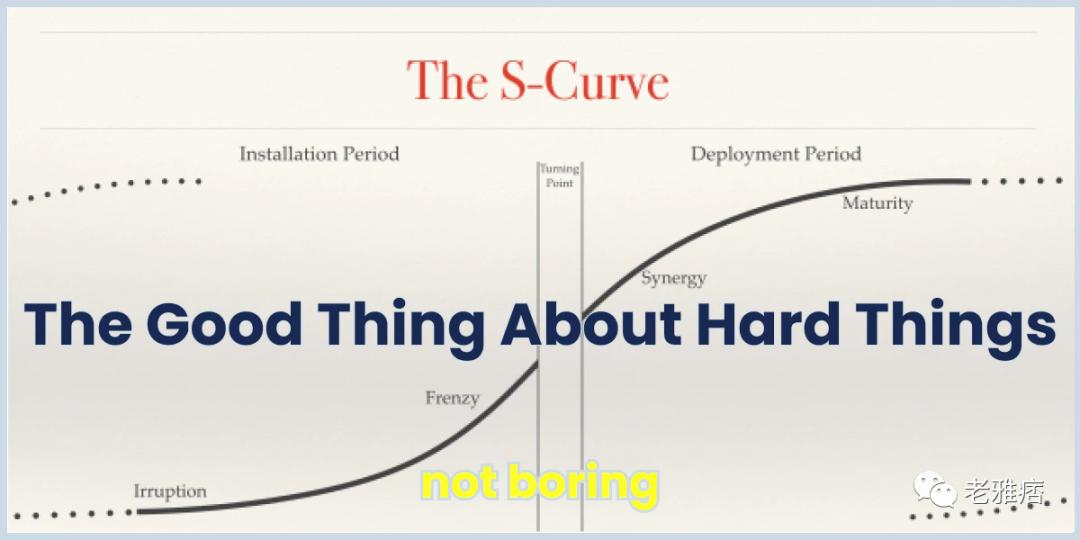
Now that the market has crashed, talk about the fact that companies like Uber and Airbnb were born in the midst of the global financial crisis become very popular. Of course, there were plenty of scams in the dot-com bubble, but there were also Amazon, Google, Facebook, and Tesla.
History has proven Wilson's experience. Investing in the post-crash cycle makes sense. Weaker companies are eliminated, leaving stronger companies with less competition for customers and employees. Historically, the Nasdaq has bounced back after each slump and surpassed its previous high.

How to invest wisely after the crisis?
The answer has several parts: when and what to invest in.
When is the right time to invest is a tricky question that no one knows the answer to. Historically, if you invest after a crash, you'll have a positive ROI, but timing does affect the IRR. I have neither a crystal ball nor the wits enough to know the timing.
What is more important is what investors should invest in. In other words, what should we be investing in to get out of this crisis, and what should we not be investing in? Typically, the companies and categories that led the previous rally don't generate the highest returns after a stock market crash.
In Not Boring Capital's last LP update, I shared our increasing focus: we will remain generalists, but will have a "very strong emphasis on bits and atoms leading edge - web3, AI, ML and security on one side, climate, energy, space, defense, healthcare and biology on the other.”
Putting web3 Seems odd to put it together with defense. What do these categories have in common?
They are all difficult. They don't have a playbook. They need "speculative financial capital".
As Ben Thompson writes in The Birth and Death of the Tech Revolution in October:
< /p>
At the same time, venture capital, that is, speculative "financial capital" in theory, has benefited to a certain extent from the rise of cloud platforms such as AWS, and its increasing degree of specialization and standardization; It certainly takes hard work for a new SaaS company to challenge another old world vertical, but the rules of the game are well known.
In my opinion, investing wisely in post-crisis venture capital means investing in businesses that are unknown. I'm trying to apply two filters more consistently:
1. So what?
2. How difficult is it?
I've written about "so what?" filters before. Essentially, I like to frame the question as "What would the world look like in ten years if this company was successful?" Personally, this is important: I want to support influential company. I think it's also important for rewards: the brightest, most motivated people want to work on the biggest problems, and there are so many left unsolved right now.
I focus on the usual things: great founders, large market (or potential for a large market), reasonably sized business model, strong customers understanding and product capabilities.
Then I would ask, "How hard is this?"
Investing in difficult Businesses may seem counterintuitive, but during this cycle, I think investing in difficult businesses is the best way to get big returns.

Easy things are hard
Back in August 2020, one of the first Not Boring titles to do well was Shopify and the Hard Thing About Easy Things. Borrowing the title from Ben Horowitz's book, the article addresses the fact that as e-commerce grows, with very few exceptions, DTC brands are largely forced to compete on branding and paid acquisition. It's a tough situation. I wrote:
The difficulty of doing simple things is this: If everyone can do one thing, it is no good to do it, But you still have to do it in order to keep up.
When everyone has the same tools out of the box, profits flow from the rebels to the arms dealers, forcing the rebels to design new Guerrilla tactics to recapture profits.
To explain why this is true, I use two of Michael Porter's concepts to explain why building venture-sized DTC companies is so difficult.
In the early days of DTC, it's not obvious that DTC brands rarely produce huge, risk-scale results. Good VCs invest in a lot of DTC brands. But the success of early movers like Harry’s and Warby Parker’s, along with Shopify’s ever-improving product, attracted a bunch of other DTC companies, which in turn attracted a bunch of software and services companies to fuel the new wave of DTCs. Company Services. As I wrote, "With so many high-quality, modular inputs, a person with just a computer can start a company and start shipping products in a week."

Suddenly, Porter's five forces paint a dire picture for the DTC brand. The threat of new entry is high, the threat of substitution is high, and both suppliers and buyers have a bunch of customers and products to choose from, all of which creates a situation where competition in the space is intense.
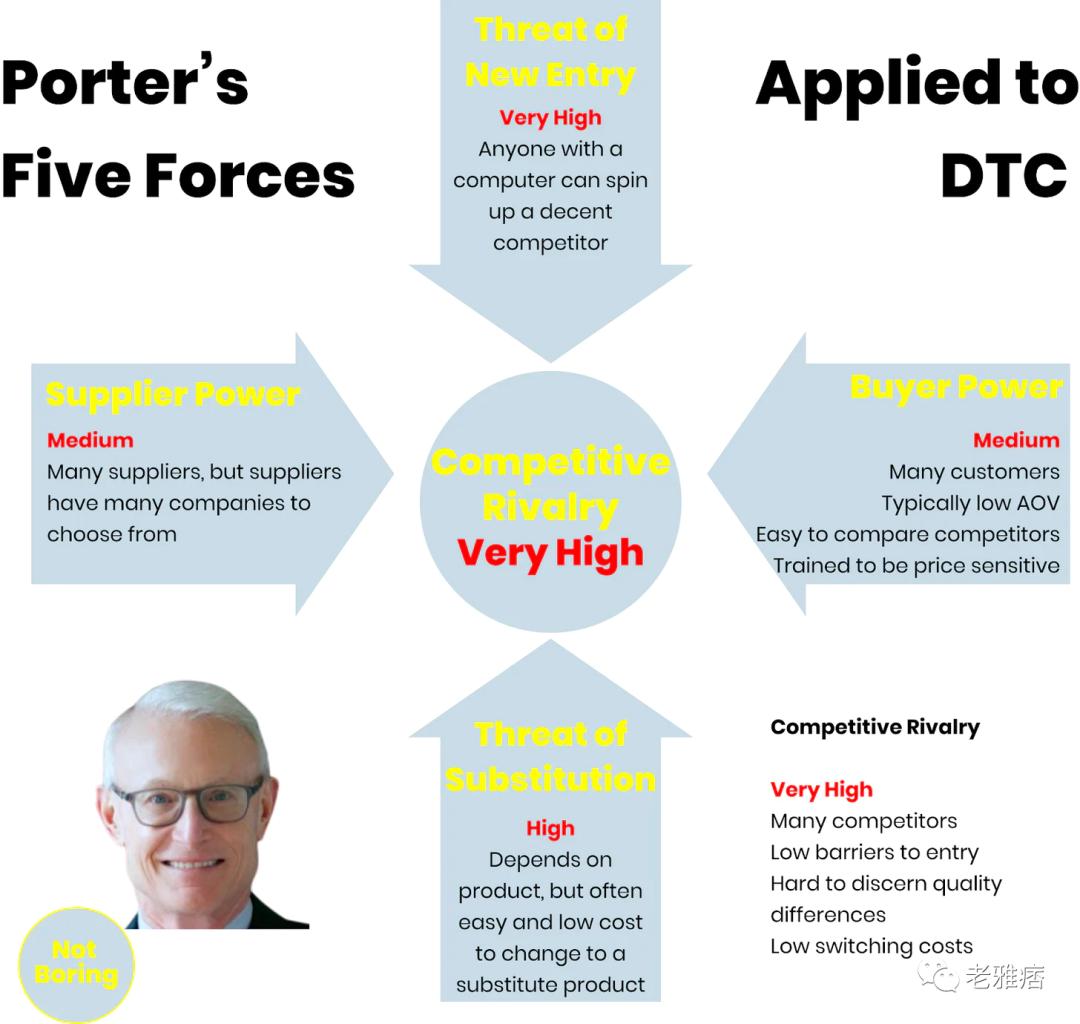
The battleground has shifted to brands, which has worked well for some category leaders, while paid acquisitions have Expensive competition from which you don't actually gain a long-term competitive advantage. This has gotten worse as Google and Facebook, and even Amazon, have become more expensive and difficult. The worst part is that even if you have a better product than your competitors or alternatives, you still have to compete with them for the same ad space, and you have to spend money to educate consumers about your product's superiority.
This should be obvious to everyone reading this. Building a $1M revenue DTC brand is fairly easy. It's fairly easy to build a DTC brand into a $50-$100 million product, and if you don't raise a ton of money, it's an unbelievable result. Creating a venture-scale, multi-billion dollar outcome in DTC is next to impossible. Those companies that have the best opportunity to use DTC as a channel, but they also do have some differentiation and the hard way to create a significantly better product. I thought of Cometeer, a frozen coffee company that happened to use DTC as its first channel.
In short, we do not invest in DTC or CPG companies at Not Boring Capital, so why am I writing about them?
I don't think I went deep enough in my original post. This article is about DTC companies (or any cpg-style e-commerce retail business), but the hard part of the easy stuff is more and more about software companies.
The Difficulty of Simple Things in Software
Ben Thompson once said, to the effect Yes: “The new model will hit media businesses first, because those businesses are simpler, and then hit other industries.” This applies to e-commerce as well. Maybe it's something like this:
Media e-commerce software is a more difficult, more complex business
The pure software business has generated huge returns for decades, and I think that trade is waning. Software has spent a decade eating the world, first gobbling down the low-hanging fruit, and now it's had its fill.
On August 20, 2011, nearly 11 years ago, Mark Anderson published a famous article in the Wall Street Journal predicting:
Over the next 10 years, I expect more industries to be disrupted by software, increasingly disrupted by new global leading Silicon Valley companies.
Of course, he is right. From Aug. 11, 2011, to Aug. 11, 2021, the tech-heavy Nasdaq rose 514.6%, compared with 291.9% for the S&P 500 and 291.9% for the Dow Jones Industrial Average. up 230.89%. This is a rough representation and it doesn't reflect the transformative impact software has had on many industries and our everyday lives, but you get the point. It's been a great decade for software.
Oddly enough, almost a full decade later, three months after the anniversary of this article, the Nasdaq index in 2021 peak in November. Since then, the index has fallen 28%. The BVP Nasdaq Emerging Cloud Index (BVP Nasdaq Emerging Cloud Index), "designed to track the performance of emerging public companies that primarily provide cloud software to customers," has risen more than 1,300 percent since its inception in 2014. It is down 52.1% from its high. It was once trading below pre-pandemic levels, and today, it is trading slightly above its pre-pandemic highs.

The software is not dead. There are other reasons why tech stocks have struggled alongside (or worse than) the rest of the economy in recent months. During the epidemic, a lot of software spending was pulled ahead of schedule; they earned excess income. Discount rates are higher, and tech companies are hit harder because their projected cash flows are out of reach. John Luttig of the Founders Fund explores many factors in an excellent article, Reversion to the mean: the real long COVID.
But it's not just a matter of the market. In April 2020, Luttig wrote a more prescient article two years in advance: "When Tailwinds Vanish", which I highly recommend you read. Now is a better time than ever to read it.
In other words, Luttig talks about the same challenges I wrote about in The Hard Thing About Easy Things. Specifically, he writes that the competition among Internet startups is becoming more and more zero-sum, as all the easiest opportunities are seized:
We're creating an exponentially growing number of Internet companies vying for the shrinking pockets of consumer attention and business spending increasingly locked in by incumbents.
It's easier than ever to start a normal software company now - tap into AWS, add a bunch of APIs, follow the established rules of the game - and instead Making it bigger is also harder than ever. Modular inputs and rules of the game lead to more competition, smaller opportunities, and lower profits.
But that's not the case for brilliant, ambitious software companies. Luttig wrote an article called "Rippling and the return of ambition," subtitled "In the Era of Software Incrementalism, Rippling Is Bringing Ambition Back." Rippling is ostensibly a SaaS company, but it fits my profile. standard. Ramp and Replit are two examples of ambitious software companies in this portfolio. I would love to invest in these companies. What I avoid is software incrementalism.
It's not easy for mediocre, or even very good software startups, to grow as big as they have been in the last decade. The competition is too fierce. To make matters worse, competitors have many of the same weapons. The incumbents facing the new entrants will themselves be relatively new start-ups. They are able to adapt more quickly to the attack of a new entrant, and if the new entrant succeeds, another newer entrant tries to steal the winnings.
The same is happening with DTC as Shopify, Alibaba and others rise, Luttig noted , Internet companies are shifting spending from R&D to SG&A, and from product to sales and marketing. Hiring salespeople would generate predictable additional revenue, and businesses would be able to generate substantial revenue this way, but as both he and Alex Danco point out, drawing on Carlota Perez's research, at this stage of the technological revolution, venture capital may Not the best source of funding for a software business, something akin to debt might be.
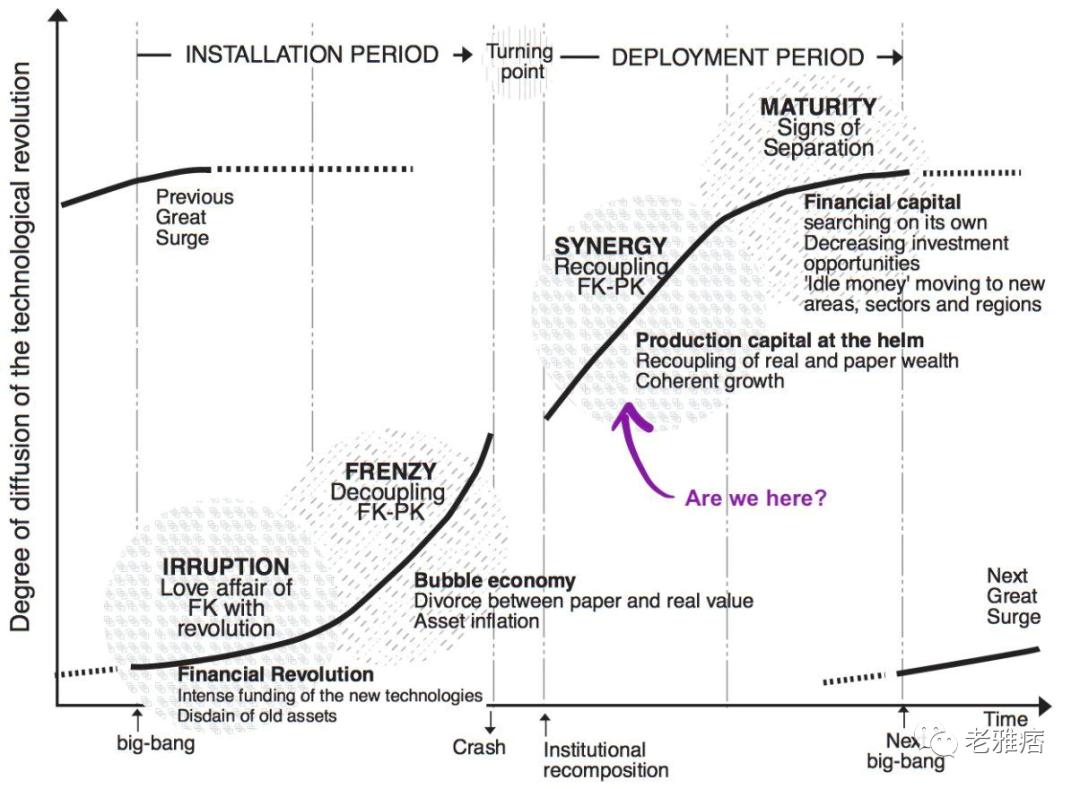
All of this means that while pure software and SaaS businesses have better theoretical profit margins than hardcore startups Bigger and more predictable, but they can be a mirage for new startups in the current cycle. In other words, gross margins can be high and businesses can get cash from each sale, but net margins (including overhead and sales & marketing) can come under pressure as competition intensifies.
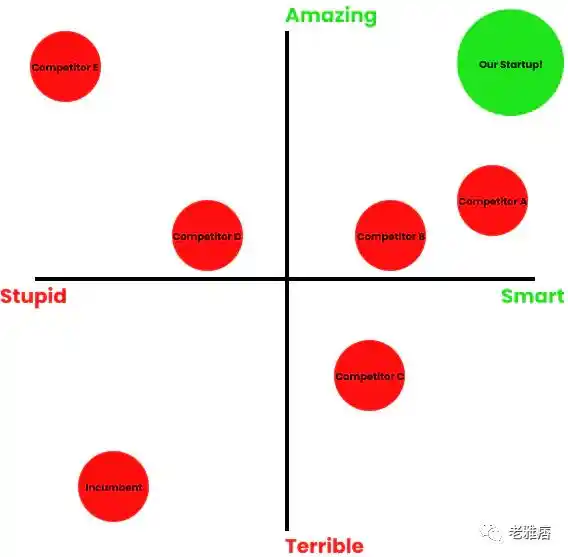
Again, even if you have the best product, you still need to convince customers that it costs money. Whenever I see a slide like this in a file, I cry:
< /p>
First, regardless of what customers really care about, startups are likely to choose the weapon that makes them look their best. Second, and just as important, even if the slides are honest, they still have to spend money to fight all the competition and sell to so many companies. All of their competitors will have sales slides showing different quadrants or checkmarks to highlight where their strengths lie.
And oftentimes, even if a startup has a better product, even if they can convince customers that it's better, it may not be what customers really need or want to spend money on The product. Many software companies have made a lot of money selling to other startups and tech companies, especially during the pandemic, when companies made a lot of money and were willing to pay to make sure remote work actually works, but these companies are now looking to rein in The waistband method. Emotionally, it's easier to fire software than it is to fire people.
I am referring here in general, of course there are exceptions. For example, selling SaaS to a nascent industry like synthetic biology or many of the atom-based industries I listed above creates less competition and more nuanced needs, and I still like the api and infrastructure business. But in many cases, venture capital may no longer be the best option or the only source of funding for a SaaS company. It is going to a mature stage.
Personally, there is no advantage for me to invest in these companies. Because there are rules of the game and standard metrics, and there are funds and investors who have spent decades inside and on the boards of the most successful SaaS companies with a precise understanding of how things work that I will never be able to match.
But just as venture capital doesn't die when semiconductors or networking equipment enter the deployment phase, the decline of SaaS as a surefire venture does not mean that Venture investors have nothing to invest in. Luttig writes that "VCs will continue to take some risk in their unique position":
R&D risk – can this technology be built?
Founder Risk - Can this team make it happen?
VISION RISK - Can the idea become huge?
Macro Risks - Can this Startup Succeed in the Political, Economic and Competitive Environment of 2030?
We are looking for the next meta. Time to invest in tough startups.
Tough start-ups
Tough start-ups are those with no experience, R&D, etc. risky company. If they bring a great product to market, these risks keep them away from the competition and give them a clear path to short-term sales and long-term defense.
I divide them into two categories: bits and atoms.
On the bit side, software is still eating the world, but its palate is ripe. He will eat oysters, foie gras and snails, things he didn't want to eat as a child. I mean, in the bit space, tough startups are solving difficult technical challenges, creating new business models, or touching industries that didn't make sense before.
In this category I include the following companies:
Web3: Web3 in progress The debate shows that successful business models and rules of the game for web3 are yet to be written. I've written a lot on this topic, so I won't go into depth here, but I think the opportunity and potential impact of the eventual winner will be huge.
AI/ML: At this point, AI/ML will touch more and more of the digital economy and give people crazy new capabilities - OpenAI's GPT-3 and DALLe2 are early examples -- but the infrastructure and application domain is still wide open. We've invested in infrastructure companies like Chroma and Scale, and applications like ScienceIO and Diagram.
API/Infrastructure: While many of the biggest opportunities in this space have already been captured and many already exist in portfolios, there will always be An opportunity to abstract the latest complex technologies and deliver them through APIs. In addition, these companies are often a hundred times harder under the surface than on the surface.
VR/AR: We've invested in several companies at the intersection of web3 and AR/VR - Anima and Cyber - although at the moment we may not There will be more investment in this area, but we will focus on the new types of infrastructure and products that can be built as this new computing platform develops and expands.
Software to Support Tough Atomic Startups: With New Categories Come New Software Requirements. For example, a founder-led biotech company needs different software than an e-commerce or SaaS business, and every business desperately needs to reduce its carbon footprint, which will require new software to track and offset emissions. The line between bits and atoms is blurry.
The atomic field is full of what Rahul Rana called moonshot companies in his article last week. This analogy is intuitive to understand how difficult it is to build these companies.
In this category I include biotech, climate, space, defense, healthcare, transportation, manufacturing, real estate, logistics and supply chain and similar industry startups.
In these industries, the hardest part is often creating something that generates strong unit economics at scale. Often, this group has a clear need for products that have not been possible to manufacture before, requiring cutting-edge science and excellent hardware and software.
Tough start-ups in the atom space often have to build everything from scratch. They often need to figure out how to sell to buyers who don't traditionally buy from startups, as Palantir and Anduril have done in government and defense. They need to compete for some of the same talent as deep-pocketed tech companies, hiring people with skills that Silicon Valley doesn’t typically need. They need to be innovative in electrical and mechanical engineering. Sometimes, they even need to convince local, state and national governments to let them work. In order to do this and meet security requirements, they often require rigorous testing in operation. They need to deal with all the mess, complexity and delay that comes with building physical things in the real world.
Furthermore, if all goes well, they often need to raise significant capital to scale, which can dilute early investors. As these companies start to generate steady cash flow and have earlier access to credit, the pressure to raise dilutive venture capital should ease. Several struggling start-ups in our portfolio have secured substantial lines of credit to fund their capital-intensive operations.
Tough start-ups are hard to build. There are no rules of the game here. They are also often expensive to build. They have very high demands on their employees. But when successful, they have the potential to create long-lasting, solid businesses that generate huge results and actually improve people's lives.
The upside of hard things
Another way to think about "hard startups" is, They exist in industries that are still in the installation phase, and are likely to be early in the deployment phase, but have not yet reached maturity.

When success is guaranteed, technology is ubiquitous or existing There's something exciting about tough start-ups in the early stages before businesses are already popular.
The main reason tough startups become great businesses is because they are tough and if they succeed, they face less competition. All of the things that make it hard for them to succeed in the first place also make it hard for others to replicate them. This is doubly true, because by being first, they often attract the best talent, lock in the most willing buyers, build a strong brand, and achieve economies of scale.
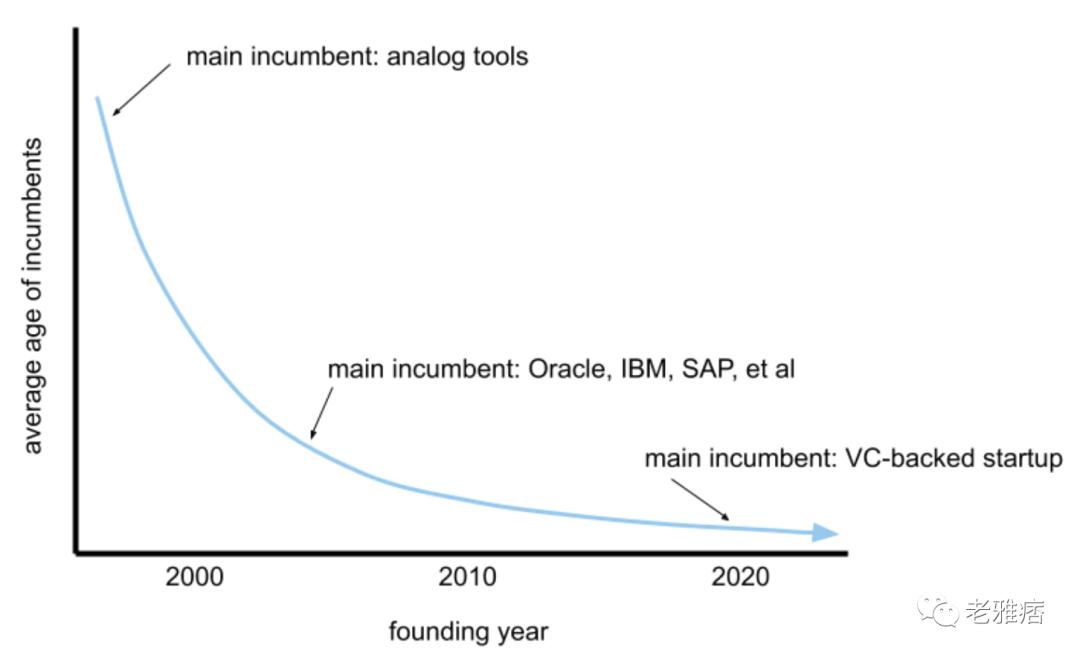
The largest DTC companies today were all founded before 2014, and the largest social media companies were all founded before 2011 (except TikTok), according to It's no coincidence that the four largest SaaS companies by market capitalization (Microsoft, Adobe, Salesforce, and Intuit) were all founded in the last century, although later companies have gotten much easier to start. At the time, these were tough startups; in large part because of their success, getting started in these categories has become easier.
So, the key is to figure out what's next: Which of today's tough startups will create tomorrow's big companies and categories?
The categories we're talking about operate at different parts of this curve and have very different business models, so it's impossible for us to go too far between them Comparison. But there are some key factors that I would like to pay attention to.
First, they all need to answer four questions that Luttig thinks VCs are well suited to answer:
Founder Risk - Can this team make it happen?
VISION RISK - Can the idea become huge?
Macro Risks - Can this Startup Succeed in the Political, Economic and Competitive Environment of 2030?
Secondly, if you can build the product you want to build, those struggling startups can often tap a large number of unserved or underserved needs.

If Hadrian could be faster and more Deliver parts cheap, and with $30 billion in existing spending to leverage, they should be able to expand that pie by making it easier for other companies to make space and defense products.
If Varda can make things in the vacuum of space that cannot be made on Earth, they will have billions of dollars of existing demand to tap.
If Pipedream could create a network of underground pipelines in cities across the country to move goods faster and cheaper than humans, it would be among the food and delivery companies Find interested customers.
If Wander can continue to create homes and experiences that combine the uniqueness and privacy of an Airbnb with the consistency and quality of a hotel, they will eat Billions of dollars in revenue generated by both.
If Vibe Bio can find and fund a cure for a rare disease, pharmaceutical companies, patients, insurers and more will scramble to pay for the treatment it provides.
If these companies do the hard thing they want to do, demand is often waiting.
Fourth, struggling start-ups face less competition to serve this need. Difficult businesses may be easier to defend against. Remember the competitor chart from earlier? For many struggling start-ups, the diagram might look more like this:
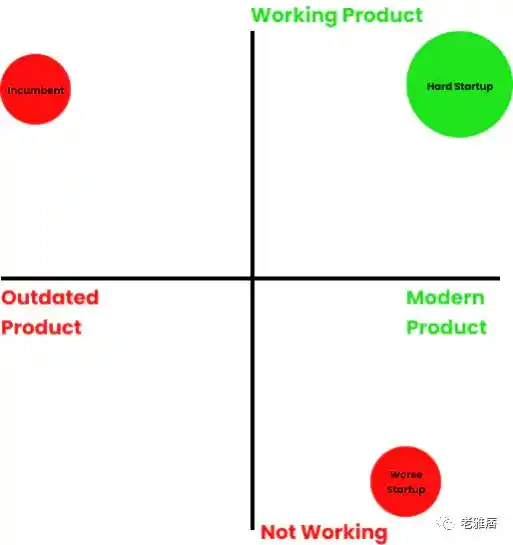
< /p>
Worst case, early on, they might be faced with an outdated and expensive product that doesn't meet modern customer needs, and there might be a startup or two claiming they can create something new , but there is no evidence that they really can.
They've attracted more competitors over time, but they've dug around the business in the process of solving and building the tough stuff moat.
Let's go back to Michael Porter's point that tough startups usually operate in less competitive environments.
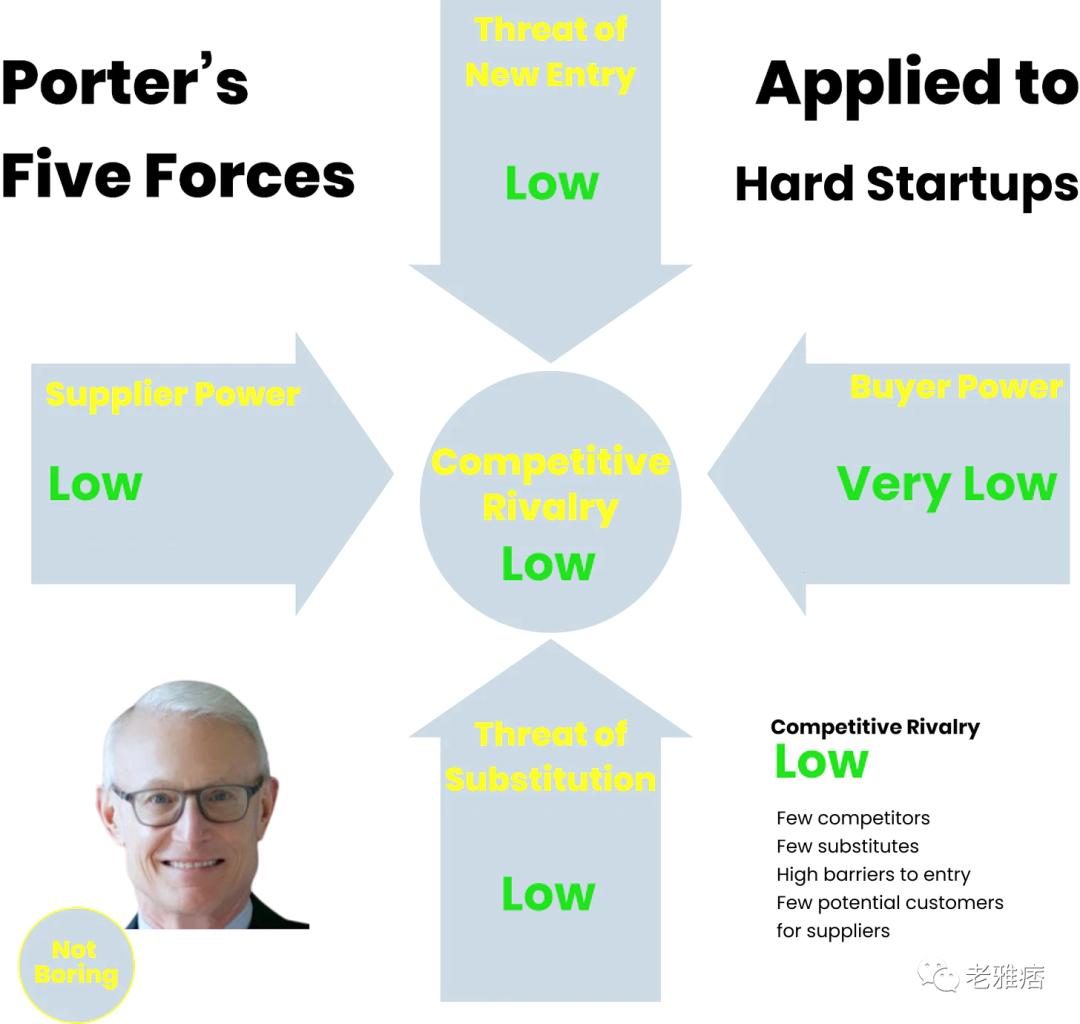
New entrants are difficult to enter, there are often no substitutes, buyers have no other options, and suppliers Compete for business. A current example of this vendor dynamic is that many DAO tool companies are competing to serve the few DAOs that have reached meaningful scale.
While every struggling startup is different, I tried to do a quick scan of Hamilton Helmer's 7 Powers to figure out which moats are likely to remain potentially protecting the startup's profits over time. For example, when I wrote about Hadrian, I found that "Hadrian is amassing (at least) three forces to build a unique moat: monopoly resource process capability economies of scale." When we invested, these moats had not yet been established - The product may not even be created yet - but it's useful to consider how this dynamic might play out in a successful case.
Fifth, by pursuing something that hasn't been done before and probably won't work, tough start-ups are differentiated from the start. That's important from a defensive standpoint, but it's also important from a more benign standpoint.
I need to write an entire article on this some day, but I believe that differentiation is a good thing in itself. It helps attract and retain talent and helps rally employees around the mission. If they don't succeed, probably no one else will. It also attracts a certain type of employee who is passionate about solving the problem at hand, even if success is not obvious, even if the path may be uncomfortable to walk.
I recently spoke with a company called Traba, one of the company's two values is the "Olympic Work Ethic." The company works in the office six days a week, from 9 a.m. to 9 p.m., and makes it clear in advance with potential employees that the work will be hard. Founder Mike Shebat, the company's founder, told me that through cultural differentiation, Traba actually has an easier time recruiting good employees than other companies.
In the end, I think that struggling startups actually have a clearer path to future funding, provided they can solve the difficult problems they need to solve. One of my LPs has been in finance for a long time and I have a lot of respect for his perspective. He asked my opinion on "VC's supply chain (like capital) and how long it lasts before rebalancing". In other words, if you invest in early-stage companies, how sure are you that you will still have investors when they are ready to raise Series A, B, C, D, etc.?
Assuming venture capital and growth capital don't disappear entirely -- all of which is moot in this case -- is a partial answer to this question It's about figuring out what other investors will be interested in a few years from now or beyond.
The best VC funds, and the ones with the deepest pockets, learned the value of funding tough startups long before I did. "We invest in smart people who solve hard problems," says the Founders Fund's website. Lux Capital's Josh Wolfe often talks about "turning science fiction into science fact." “a16z has been investing in cryptocurrencies since 2013, when it was a very weird, hard bet. The company had just started an American Dynamism practice, and it’s a huge challenge for a company like Hadrian who built something so difficult and necessary. Invest. Even in this market, the startups that have proven they can solve the hardest problems are raising the most money at the best valuations.
Every tough startup is different - and that's the point - but these are some of the reasons I think it's worth the work to unearth gems.
Original link
Welcome to join the official BlockBeats community:
Telegram Subscription Group: https://t.me/theblockbeats
Telegram Discussion Group: https://t.me/BlockBeats_App
Official Twitter Account: https://twitter.com/BlockBeatsAsia