Unity of knowledge and action, resumption of funds short LUNA idea of the whole process
原文标题:《 Galois Capital 如何做空 Luna-UST? 》
Original author: Colin Garlin's Blockchain Notes
This time, Galois Capital paid early attention to Luna's problems and seized the big opportunity.
To get as much insight as possible into how Galois Capital works in the process, I combined interviews with Founder Kevin Zhou since April and Galois Capital's tweets, Try to piece together a picture of Galois Capital's operations before, during and after Luna.
Galois Capital took a closer look at the algorithmstablecoin circuit last year after a slew of algorithmstablecoin projects, and concluded that the basic model of stablecoin is much the same: adjusting supply and demand to keep the price of an algorithmstablecoin anchored at $1, as is the basic model of Luna-UST. Kevin is not very optimistic about the algorithm-based stablecoin track, because these projects are trying to be central banks in the traditional world, but they don't have the power (tax revenue, etc.) to maintain such power.
At the beginning of this year, Galois Capital noticed that Luna and UST were already very large in market capitalization, and then went back to Luna and confirmed that Luna-UST could not be maintained in the long term. During this time, Kevin had a lot of conversations with people in Terra's community and found out that many of them were Terra's biggest fans, which made him think that maybe there was still enough liquidity to escape in time before Luna crashed.
On April 8, Kevin Zhou mentions a Luna in his Unchained Podcast, Here "s Why USDN De-Pegged From the Dollar -- And Why UST Might Too The long logic of thunderstorms:
(1) The high yield provided by Anchor is a strategy to attract users to use UST more. But yields of 20% are unsustainable and will need to be brought down gradually. He thinks the equilibrium rate is between 7% and 12%;
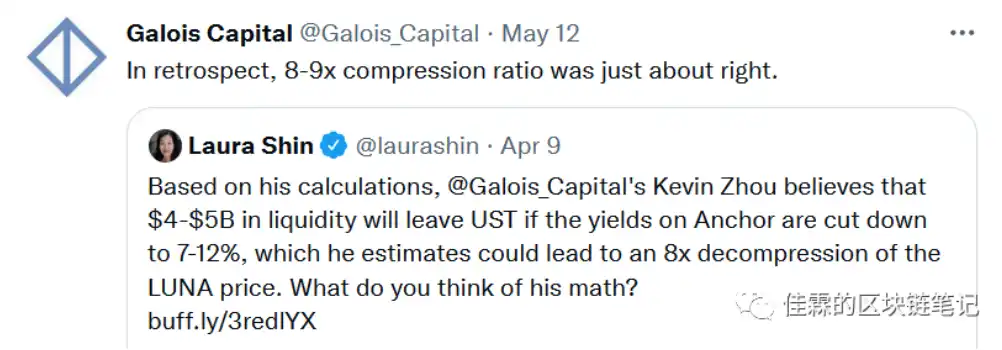
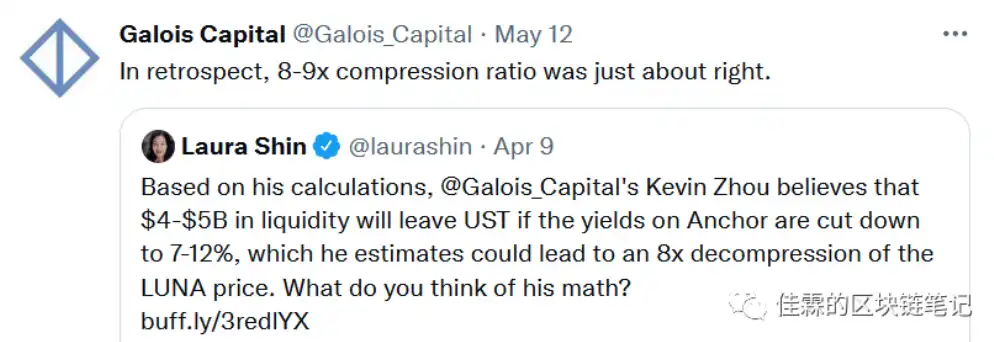
(2) When the interest rate drops from about 20% to 7%-12%, there will be capital outflow. Kevin believes that there will be Luna worth about $9 billion leaving, but the liquidity of Luna/UST is not good enough. So he estimates that about $5 billion of UST's are in "exit distress." In a traditional stock market, spending $1 on a stock typically adds $3 to $8 to its value. (This is the "real real value" concept That Manuel Manuel refers to. Check out his article "The Underlying math of Luna's Crash, from Real Money Changing hands." Galois Capital later retweeted that it was 8-9 times in this case). In crypto, the multiple could be even higher. To convert a $5 billion UST into Luna and safely leave the market, it would take $40 billion of Luna's market cap, which was only $40 billion at its maximum before April 8. Therefore, once anchor interest rate decreases and part of UST exits through Luna, it may have a very serious impact on the market value of Luna. This presents Terra with a dilemma:
1) Limit the amount of DAILY CONVERSION of UST to Luna, so investors will sell UST in the market, which may lead to UST breaking anchor (the total market value of UST was $18 billion when the program was broadcast);
2) If there is no limit on how much UST can convert to Luna, then Luna's total market value could plummet. If all the funds to exit are released into Terra's ecology through releveraging, Terra may not only face the dilemma of choosing between the two above, but may also suffer from Luna and UST at the same time.
source
If Anchor gradually reduces yield, this strategy is effective, but the overall effect is not much better than one-time reduction of interest rate to a reasonable level.
(3) Kevin believes that if the above scenario happens, Luna's market cap will be almost zero in the best-case scenario and both Luna and UST will be zero in the worst-case scenario.
(4) Currently, most of the funds attracted by Terra through the subsidy strategy are actually gained from Anchor, while the real UST is not used in other aspects. Kevin believes that the capital scale of Terra cannot keep up with UST and break away from anchor as the core.
Kevin mentioned that an important window for Galois Capital to observe whether Luna is still sustainable is the UST Pool on Curve. Once imbalance occurs, Galois Capital's funds in Anchor will be withdrawn in time.

source
Prior to 6th May, Galois Capital had funds deposited in Anchor Protocol for interest.
On May 6, when UST was trading at $0.997 and uST-3 pool liquidity was dwindling, Galois Capital paid an extra 0.3% to get its money out as soon as possible and started shorting Luna.
However, Galois Capital was not entirely short and was long in some small increments until the event actually happened. But the smaller deals did not contribute much to the profits. Throughout the shorting process, Galois Capital shorted three types of assets:
(1) UST;
(2) Luna;
(3) Other assets.
Kevin Zhou thought it was unreasonable to short Luna when the luna-UST system just appeared. After all, LFG has reserve assets that can be used to maintain the stability of UST. You can only short a UST if two conditions are true:
(1) Terra has exhausted its reserves and cannot afford to stabilize UST, or has given up on stabilizing UST;
(2) Pay attention to the redemption-mint mechanism, how much space can be used to deal with stability. If this space is large enough, it is possible to maintain the stability of UST. So when that space runs out, there's more certainty.
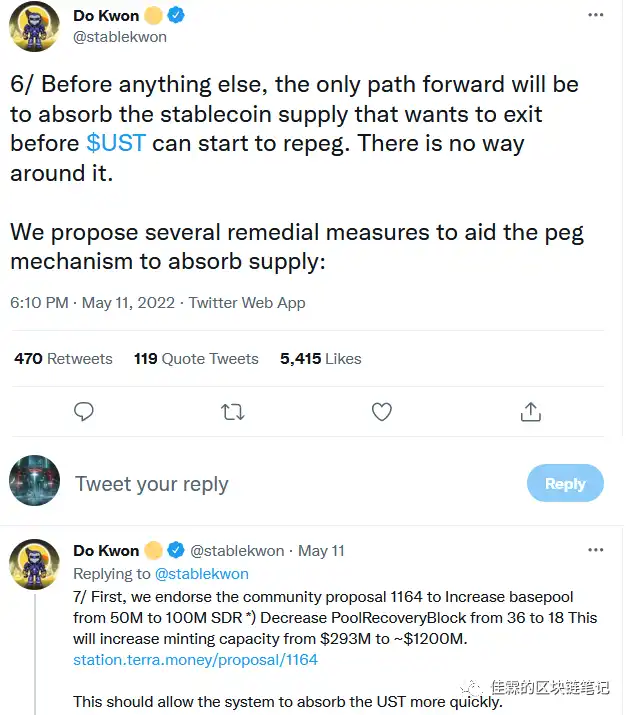
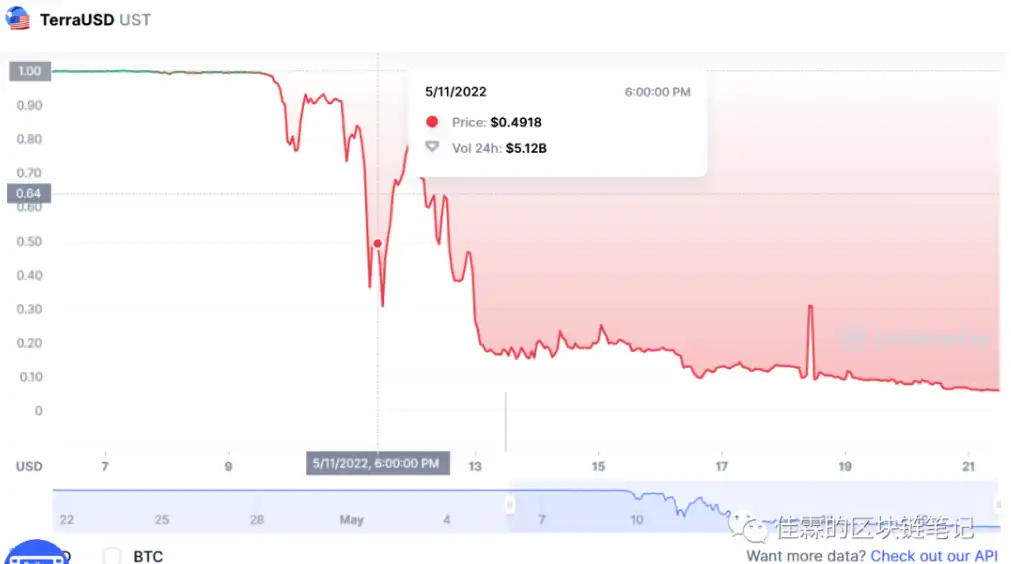
I think this corresponds to the afternoon of May 11th when Do Kwon announced "We are together to overcome difficulties". At this time, the price of UST was $0.49:
source
source
But judging from Kevin's q&A on the podcast, shorting UST probably started when UST was just starting to unanchor:
Shorting a UST under these conditions is a one-way trade: it is hard for a UST to rise much more than $1. Therefore, UST can make money when it goes down, but it will not make any loss when it stays up. But the deal is safer when the UST is actually unanchored. (Check out my previous article on the Asymmetry of Algorithmic Stable Coins in Bear Market investing.)
I'm starting to short it, but... Capital thinks it may still not be time for the opportunity to present itself, as in a May 8 tweet, Galois. Capital notes that if Luna is less than $30, then Luna has a market cap of $22 billion and a price of around $65 per coin.

source
When it became clear that there was less liquidity in the market, Galois Capital decided to go big short. From the data, MY guess is that Galois Capital increased its short position on May 9.

source
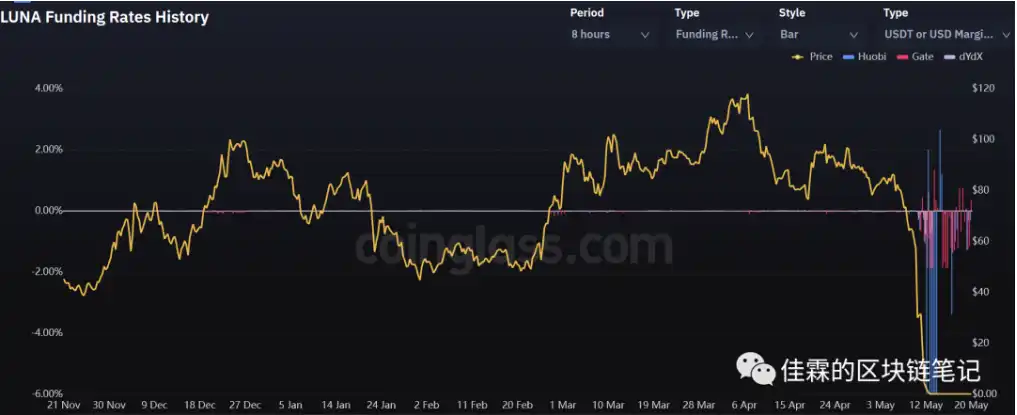
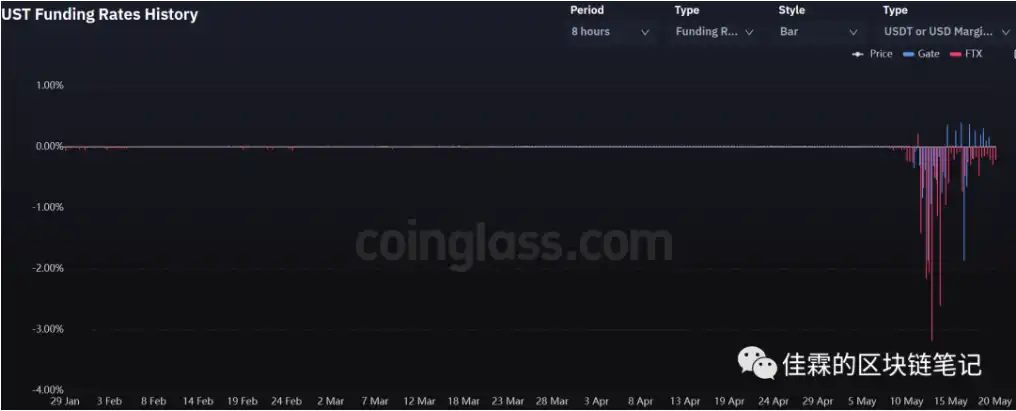
In the subsequent shorting process, Galois Capital also considered the cost of shorting to adjust the center of position: mainly funding fees of perpetual contracts. The funding fee of UST is not high, but the funding rate of Luna is very high at a certain point in time. It can also be seen from the data that when Luna started to fall sharply, funding rate soared, reaching a peak of more than 6%, but FUNDING fee of UST is generally cheaper.
source
source
Kevin thinks there are three things to think about in this short move:
(1) what to choose to short;
(2) what is the cost of shorting?
(3) Understanding and timely tracking of uST-Luna "casting/redemption" mechanism.
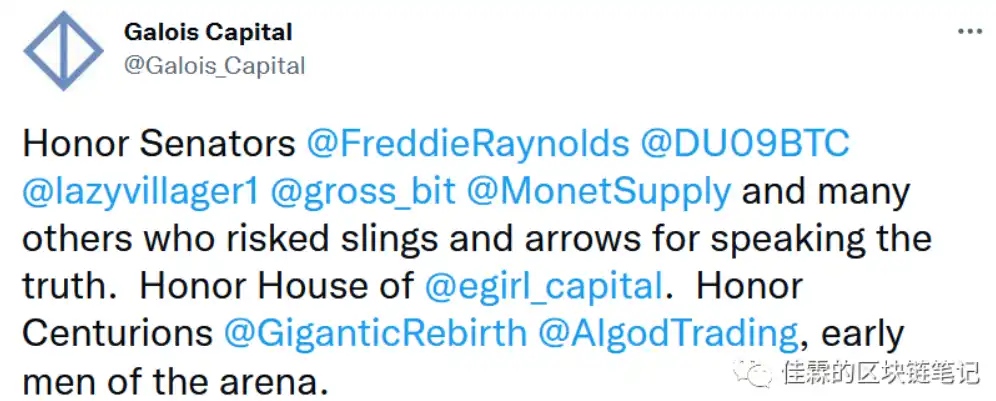
Others/institutions involved in shorting this time.
source
The following materials are prepared for the above contents:
Kevin Zhou, co-founder of Galois Capital, In his April 8 Podcast "Unchained Podcast" (Here "s Why USDN De-Pegged From the Dollar -- And Why UST Might Too-ep.339), Mentions a long logic behind Luna's possible thunderstorms:
1. The use of Bitcoin, USDC-type stablecoins and other public linked coins such as AVAX is conducive to the long-term stability of UST. Kevin's biggest concern is the size of UST. He doesn't think $3 billion in Bitcoin is enough to make UST secure.
2. Terra teamed up with Frax to create a 4 pool on Curve to gradually edge out dai-USDC-Sudt's 3 pool, a solution Kevin believes is valuable. (Check out the previous podcast Notes (Issue 4) : Talking with Yang Mindao is safe);
3. Kevin believes that the high yield provided by Anchor is a strategy to attract users to use UST more. But yields of 20% are unsustainable and will need to be brought down gradually. He thinks the equilibrium rate is between 7% and 12%;
4. When the interest rate drops from around 20% to between 7%-12%, there will be capital outflow. Kevin believes that there will be about $9 billion worth of Luna leaving, but the liquidity of Luna/UST is not good enough. So he estimates that about $5 billion of UST's are in "exit distress." In a traditional stock market, spending $1 on a stock typically adds $3 to $8 to its value. (This is the "real real value" concept That Manuel Manuel refers to. Check out his article "The Underlying math of Luna's Crash, from Real Money Changing hands." Galois Capital later retweeted that it was 8-9 times in this case). In crypto, the growth rate could be even higher.
So to convert a $5 billion UST into Luna and safely leave the market, it would take $40 billion of Luna's market cap, which was only $40 billion at its maximum before April 8. Therefore, once the anchor interest rate decreases, part of UST can only exit through Luna, which may have a very serious impact on the market value of Luna. This puts Terra in a two-year situation :(1) by limiting the number of daily converters of UST to Luna, investors will dump UST in the market, potentially causing UST to unanchor (UST was worth $18 billion at the time of the broadcast); (2) If the conversion of UST into Luna is not limited, then the total market value of Luna could fall significantly. If all the funds to exit are released through releveraging, Terra may not only face the dilemma of the above two choices, but may also suffer from Luna and UST at the same time.
source
5.Kevin believes that in the best-case scenario, Luna's market cap would be almost zero, while in the worst-case scenario, both Luna and UST would go to zero.
6. Currently, most of the funds attracted by Terra through the subsidy strategy are actually gained from Anchor, while the real UST is not used in other aspects. Kevin believes that the fund scale of Terra cannot adhere to UST and break away from anchor as the core.
7. If Anchor gradually reduces yield, this strategy is effective, but the overall effect is not much better than one-time reduction of interest rate to a reasonable level;
And The Chopping Block, May 19, of "Unchained Podcast" Kevin Zhou on Why He Knew Terra Would Crash-EP.353
Prior to 6 May, Galois Capital had funds in Anchor Protocol. On May 6, when UST was trading at $0.997, Galois Capital overpaid 0.3% to get its money out as soon as possible and started shorting Luna. However, Galois Capital was not entirely short and was long in some small increments until the event actually happened. But the smaller deals did not contribute much to the profits. Throughout the shorting process, Galois Capital shorted three categories of assets :(1) UST; (2) Luna; (3) Other assets;
Kevin believes that it is unreasonable to short UST at the beginning, because LFG has reserve assets that can be used to maintain the stability of UST. You can only short a UST if two conditions are true:
(1) Terra has exhausted its reserves and cannot afford to stabilize UST, or has given up on stabilizing UST;
(2) Pay attention to the redemption-mint mechanism, how much space can be used to deal with stability. If this space is large enough, it is possible to maintain the stability of UST. So when you run out of space, you have greater certainty;
However, Kevin mentioned that when these two decisions were just made, only insiders knew about them, so external investors faced a big information asymmetry.
The Crypto Big Short, Blockcrunch, 17 May: How I Predicted the $50B Luna Collapse - Kevin Zhou, Galois Capital, Ep. 197.
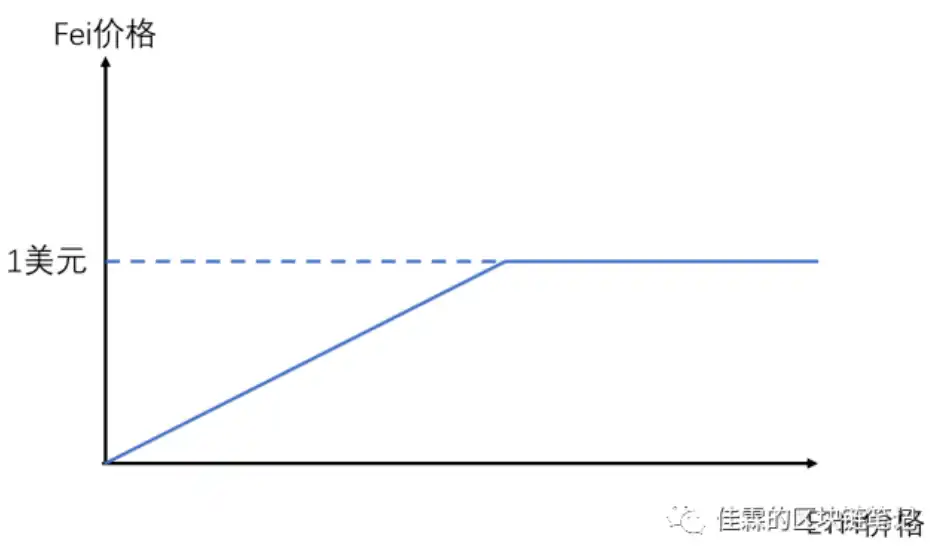
1. Before shorting Luna this time, Kevin and his team conducted an in-depth analysis after the introduction of Fei Protocol, Fei & AMP; Tribe gave the team a closer look at how to trade algorithmic stablecoins. They see Fei as a put option on ETH: ETH collateral casting Fei. If the ETH goes up a lot, the Fei does not benefit because the PRICE of the Fei is anchored at $1. If ETH goes down a lot, Fei goes down too. When Fei was initially unanchored, they bought a lot of Fei and formed a delta Hedge position through ETH futures (I guess). This allows ETH futures to make money even if Fei goes to zero. (For Fei Protocol, you can check the "Algorithm Stable Currency (VI) -- The mortgage mode of" Not legal currency but Digital currency of other projects "after penetration, which also mentions the Fei anchor breaking event in the creation stage)
2. Kevin is not very optimistic about algorithm-based stablecoin racetracks, because these projects want to be central banks in the traditional world, but they don't have the power (tax revenue, etc.) to maintain such power.
3. The idea of incorporating other external assets as collateral is right, but the volume is not large enough. And the correlation of collateral assets is too high. Kevin mentioned that inverse BTC could have been used as collateral.
4. Shorting a UST is a one-way trade: it is hard for a UST to rise much more than $1. Therefore, UST can make money when it goes down, but it will not make any loss when it stays up. However, this trade is safer when the UST is actually unanchored (this is the asymmetry mentioned earlier in algorithmic Stablecoin Asymmetry in Bear Market Investing).
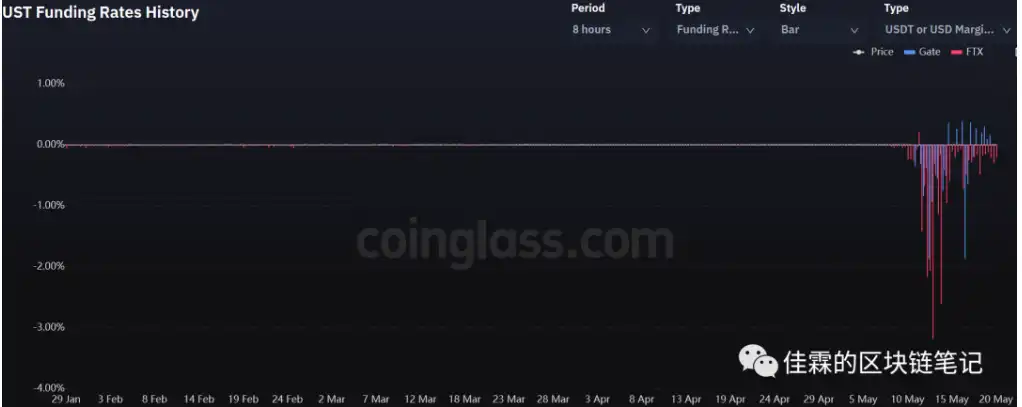
5. The cost of shorting is mainly funding fees of perpetual contracts. The Funding fee of UST is not high, but the funding rate of Luna was very high at a certain point (as can be seen from the data, when Luna began to fall sharply, Funding rates have soared, peaking at over 6%, but UST's Funding fee is generally cheaper);

source
source
6. In the whole short selling plan, Kevin thinks there are three questions to consider :(1) what target to choose to short; (2) what is the cost of shorting? (3) Understanding and timely tracking of uST-Luna "casting/redemption" mechanism;
7. Having had a lot of conversations with people in Terra's community, it turns out that many of them are Terra's loyal fans, which makes Kevin think that there might still be enough liquidity to escape in time before Luna crashes.
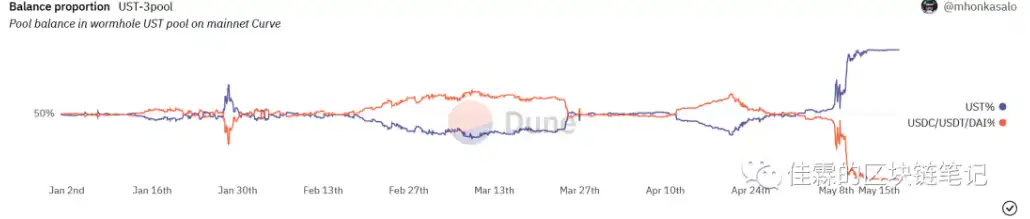
8. An important window for Kevin to observe whether Luna is still sustainable is the UST Pool on Curve. Once imbalance occurs, funds of Galois Capital in Anchor will be withdrawn in time.
3 Pool information of UST
source
9. Galois Capital decided to start shorting when there was significantly less liquidity in the market. On May 9, Galois Capital increased its short position

source
10. Galois Capital likes to make anti-consensus trades, but there aren't many of them: At the end of 2018, Galois Was long bitcoin at an average price of $3,750 per coin; Bought FTT in 2019; 2020 as an early orca investment YFI
The original link
Welcome to join the official BlockBeats community:
Telegram Subscription Group: https://t.me/theblockbeats
Telegram Discussion Group: https://t.me/BlockBeats_App
Official Twitter Account: https://twitter.com/BlockBeatsAsia

 Related Articles