Dialogue with Bitcoin "big banker" Michael Saylor: Treat Bitcoin as real estate

Original Title: "Dialogue with the Largest Bitcoin Holder"
Original Author: JACOB RAYIM, Washingtonian
This article comes from the WeChat public account: Old Yuppie
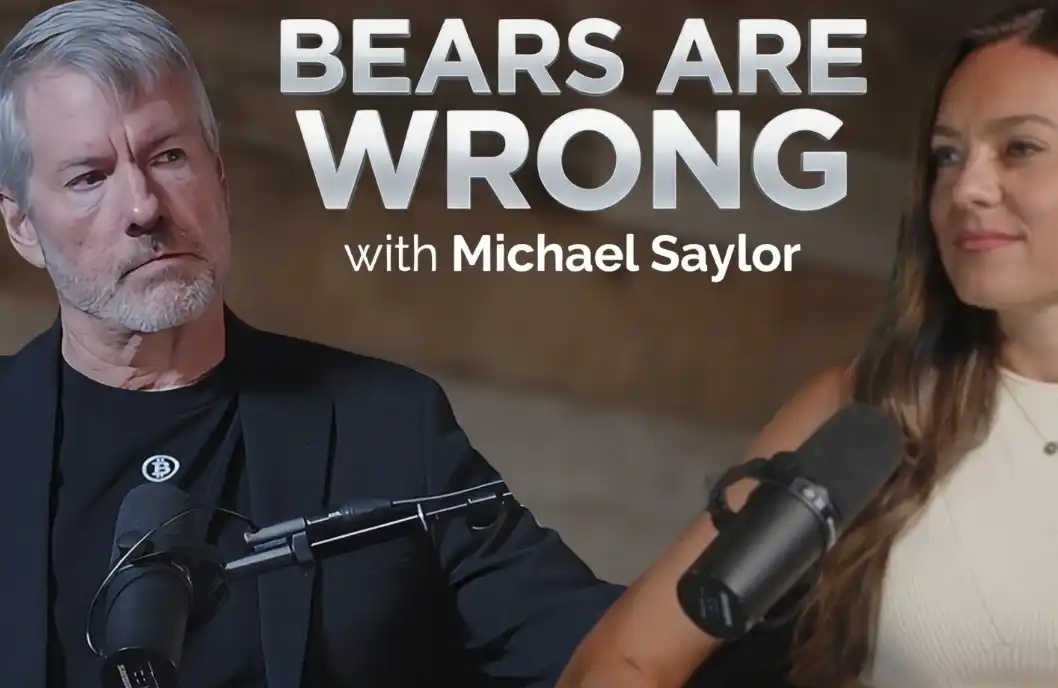
Cathy Merrill : I'm Cathy Merrill, CEO of The Washingtonian. Joining me today is Michael Saylor. He's the founder and CEO of MicroStrategy, a really good company right here in Washington DC that focuses on enterprise analytics and software that helps many other companies. He grew up in a military family. Live at Air Force bases across the country. He attended the Massachusetts Institute of Technology with a double major in Aeronautics and Astronautics and Science Technology and Society. He graduated with highest honors while completing flight officer school and enlisted in the Air Force after college. At the age of 24, he founded MicroStrategy, which went public in 1998. He holds more than 40 patents and is a bestselling author.

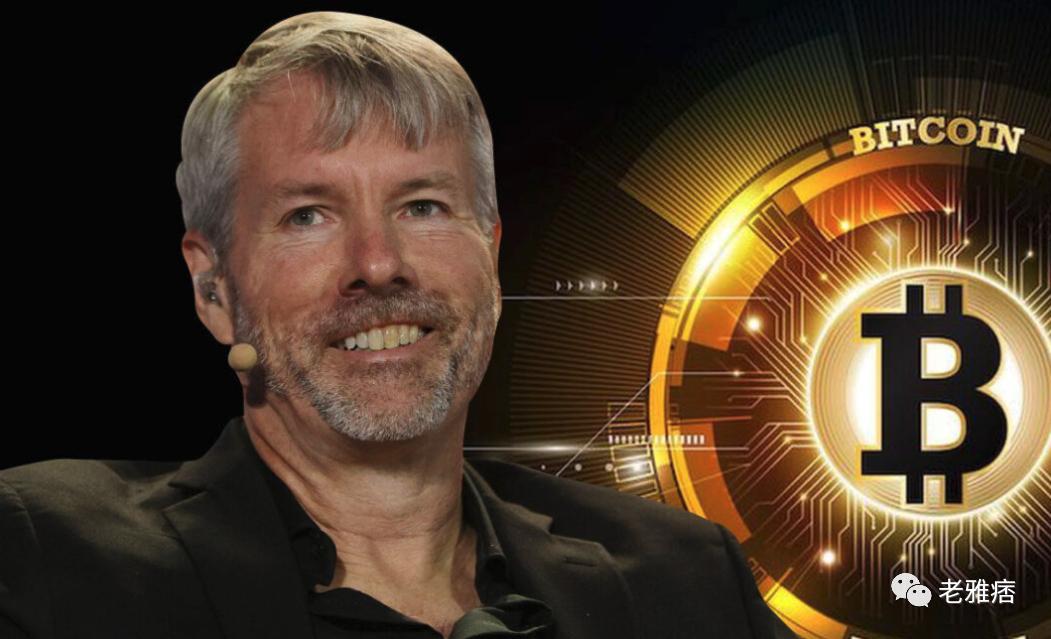
Michael Saylor:Thank you for having me.
Cathy Merrill: Today we are going to talk to you about cryptocurrencies. 20% of U.S. adults currently own cryptocurrencies. The cryptocurrency market is valued at about $1.75 trillion, roughly the size of Google. The biggest player in this market is Bitcoin, which I think is the 11th largest currency in the world by itself. You own 125,000 bitcoins, worth about $5.5 billion, so you're the largest bitcoin holder in the world.
Michael Saylor: As of yesterday, we had 129,000. We announced that we bought another 4000.
Cathy Merrill:I'm a bit behind on information.
Michael Saylor: You can't stop buying bitcoin, Cathy.
Cathy Merrill: Cannot stop the purchase. This is what everyone wants to discuss. Let me start with a basic question. Sometime in January 2009, someone took some code, broke it down into 21 million bits, and called it Bitcoin. There will never be more than 21 million of them. They are now worth about $44,000 each. Is it a currency or a commodity? How do you think about it?
Michael Saylor:: I think the best way is Think of it as digital property. Plus, you can think of it as the world's first digital commodity. The idea behind Bitcoin is to create perfect money, or another way of thinking about it is to create perfect gold. If I could reduce the entire gold supply to 21 million gold coins, then if I could dematerialize them so they have no weight, and magically I could move them at the speed of light, compose and disassemble them. If I can break them down into 100 million little elements, let's call them Satoshi, then I can store them in cyberspace. If I can find a reliable software program to track who owns those 21 million virtual coins, then you have Bitcoin. The concept of bitcoin is that we put money in cyberspace, we put the computer in charge, we put the software program in charge, and then we distribute the software program so it runs on thousands of different computers, each with the same program and the same ledger, so that no one can cheat anyone, and any compromised nodes will be removed from the network. So it is a creature distributed in cyberspace. The purpose is to create a shared, immutable ledger of who owns what.
Cathy Merrill:It's like a giant google drive spreadsheet, but every time someone touches it, you know who it is touched it. Everyone can see who touched it, right?
Michael Saylor: Exactly. So you can't mine gold anymore, it's capped at 21 million, and you don't have to worry about some central bank or custodian selling your gold to someone else and without you knowing, nobody can take it. Ownership of Bitcoin is achieved through possession of a private key. In theory you can hold any number of bitcoins. If you transfer your private key to someone else on the network, ownership is transferred from you to them. Thus, for the first time, we have immortal money that can travel at the speed of light and be programmed on a computer. It's a great idea.
Cathy Merrill: So let’s talk about the difference between Bitcoin and other cryptocurrencies. There are more than 10,000 cryptocurrencies in existence, and some of them could be flooded like a potential gold market because we might find new veins of gold tomorrow. Are other cryptocurrencies fundamentally different from Bitcoin in this regard? Are they the same?
Michael Saylor: Bitcoin is the world's first designed currency system. The protocol is designed to do a really nice thing of keeping track of who owns everything forever without breaking it in a secure way. Other cryptocurrencies, some pursuing similar things, but many pursuing other goals. They want to be a cryptocurrency platform for building smart contracts or issuing NFTs, or they want to run decentralized exchanges. These are different tasks, and they usually have a lot of complex code and different types of code.
So Bitcoin is designed to be the base layer of the entire economy, the currency network. It is unique in that it has been replicated hundreds of times. There are currently 20,000 different cryptocurrencies launched. The question is which one is best suited to be the basic technical and ethical base layer of the networked economy. You didn't know it for 12 years. You don't know they all failed, or are different, until you've attacked 25,000 times and replicated 25,000 times. If I put rabbits into Australia, they would fill this niche in the ecosystem, which is small furry mammals. Is it feasible? You don't know, but a hundred years from now, if rabbits dominate the niche, then they own the niche, they're in that part of the food chain. Therefore, Bitcoin today is the winner in this global struggle that will see the world's dominant digital currency asset. It is unique in that it is the most powerful, it has the most power, it is the most powerful network, it has the most capital, it has the most support, it is the strongest protocol, it is the most Unbreakable, it's the longest tested, most unbreakable, and certainly the best known. It's like the Coca-Cola of digital currency, so you have the strongest brand possible.
Cathy Merrill: So someone wrote and asked, do you own any other cryptocurrencies. Sounds like there aren't, but is it true?
Michael Saylor:No, I don't have any other. I think Bitcoin is unique. I mean, Bitcoin is a property. It's like buying a Manhattan block on the Internet. There are a million people who want to build other cities. But it's not Manhattan. So the risk of holding something else is orders of magnitude higher. Returns are orders of magnitude lower. I think other cryptocurrencies are like investing in small startups, right? Like my cousin has an idea for a mobile app to compete with Instagram. About 100,000 mobile apps are launched and 99.9% of them fail, one of which will be WhatsApp or Instagram and Snapchat. So you might get a Snapchat, but you might also get a loser.
And, it's not like investing in Apple stock, which is like owning a composite index that covers all mobile features. So Bitcoin is a safe-haven asset in this space. The others are risky assets with more security risks. You have to analyze it, there's more competition here, there's more complexity, there's more regulatory risk. If you are an expert like a venture capitalist and want to spend all your time analyzing this space, maybe you can invest in this space. But if a normal person says, "I'm 60 years old, I want to retire. How do I distribute my assets?" If you want to own digital property, and Bitcoin is a tool to avoid the risk of digital property, then own some. And I'm not going to tell you to invest in small startups.
Cathy Merrill:Yes. For those who have a decent 401k, they may have saved money, they own a home, they may have some stocks outside of the 401k, maybe they own some gold. In your world, where does bitcoin and cryptocurrencies fall into? Is this a small fraction of gold or do you convert most of your 401k into it?
Michael Saylor: Bitcoin is real estate.
Cathy Merrill: About $5 billion.
Michael Saylor:Let's discuss why you want to own real estate. If the money supply is growing at 7% a year, and you own real estate, and it's scarce and desirable, your real estate is likely to grow in value at 7% a year. That's the history of real estate for the past 100 years. So when it comes time to invest, if you have money that you want to save for your grandchildren, the least risky thing to do is to put it in a rare piece of desirable real estate that some rich smart guy will have in 30 years or 100 I want to buy it from you next year. So bitcoin fits that bill, it's the same thing as owning a building or owning... If you wanted to own a second rental home, you'd buy a second home and use it as an Airbnb or rent it out.
The advantage of this is that if you have invested in real estate, you can mortgage it so you can take advantage of it. The downside is that you have to maintain the house and a storm can hit it. And Bitcoin, I call it a digital virtual apartment. You don't need to repaint it, you can teleport it anywhere in the world where anyone needs it, and find the highest bidder. And then when they don't need it anymore, you bring it back and teleport it to New York, Paris or London.
So, think of it as your digital apartment, you can take out a mortgage, you can rent it out for top dollar, and you can keep it in In your hand, on your Android or iPhone. Now ask yourself a question, how much of your portfolio do you want to invest in this kind of real estate? You might want to invest in Facebook or Apple, or you might want to invest in stocks because you like it, or you want to speculate or gamble. Then you put some money into your checking account because you have bills to pay for the next 90 days. So you allocate your money that way. Checking accounts are the least risky. Real estate is a bit risky, but not as risky as investing in stocks.
Of course speculation, meme coins, meme stocks or betting on horses is very dangerous. One more caveat, of course, is that the problem with holding $1 million in cash in the bank is that for 100 years it lost 7% of its value every year, and now it's losing 14% to 21% of its value. So, in an inflationary environment, you're guaranteed to lose 90% of your bank balance in ten years. So it's an inherent risk, a ticking time bomb. That drives you to say, "Well, I've got to put it in real estate, or I've got to put it in investments, or I've got to gamble."
Cathy Merrill:Thank you. You're saying that currencies, especially with inflation, are losing value. Dollars are worth less than they were 100 years ago.
Michael Saylor:Yes. Let's talk about inflation. This is very important. The house I live in now is 305 times more expensive than it was in 1930. This means that the dollar has lost 99.7% of its value in 90 years. If you do the reverse, this means that the real inflation rate of the currency over 100 years is about 6.5-7% per year. If you calculate how quickly the prices of the things you want to buy increase, then the real inflation rate over 100 years is 7%. The inflation rate announced by the government is 2%. The difference is that the government is tracking a basket of consumer goods, and they have adjusted for value preservation. So they tell you that you should happily live in your 800 square foot drywall apartment and watch Netflix. But 30 years ago, they would actually calculate the price or purchase price of a larger apartment, but they don't do that now.
And they didn't calculate the cost of buying the property. If you're looking to buy a beach home, prices are up 19.2% year-over-year, according to the Case-Shiller index. However, the government said the CPI rose only 7.9%. So if you already own a house, or if you don't want to buy a house and live in your parents' basement, the inflation rate is 7.9%. But if you are buying a home for the first time, the inflation rate is 19.2%. So if you look at the rate at which currencies are devaluing, you get the answer that the dollar has lost 99.7% of its value. It will lose 99.9% of its value in 100 years, while other currencies will lose 100% of their value in 100 years. Your only hope of preserving your wealth is to convert currency into real estate.
If you converted it into a house, you'd get 305x back, right? So buy a house. But the problem is that Florida has a 2% annual tax on housing and real estate. So if I exchange $1 million in cash for a $1 million house, I have to come up with $20,000 a year and after 50 years I lose the house. And that's assuming they don't reappraise the house, which of course they will. So in fact, if you traded $1 million in cash for a house in Florida, you would lose all your money in about 30 years. That means I'm going to bet a million dollars on a company, or I have to bet a million dollars. Why? Because there is no perfect currency that I can convert cash into directly.
Bitcoin is the first asset to simply convert 1 million in currency into 1 million dollars in bitcoin. And then because you can't make more bitcoins, the price of bitcoins will appreciate with the rate of inflation, it will appreciate with adoption, it will appreciate with technological progress. So people who buy bitcoin say, “I don’t want to gamble on the market, I don’t want to gamble on meme coins. I’m fed up with my property being taxed to death. The government has confiscated all my property through taxes and sanctions. So what I want is property in cyberspace and no one is going to take it from me. I'm going to hold it for life."
Cathy Merrill: What would you say to people who are terrified of upcoming regulation but don't understand the tax implications? Most banks won't touch it.
Michael Saylor: The upcoming regulation will be very beneficial for Bitcoin and digital property adoption as it will create a clear path boundaries, causing institutional money to flood into the space and buy this asset. So regulation is good. The tax treatment was set by the IRS in 2014, it's just property, if you sell it for a capital gain, you owe the capital gain, long term or short term. So it's not really misunderstood. What you do is buy it and hold it for as long as possible. If you need money, you can borrow against the asset so you don't pay capital gains taxes. However, if you sell it or transfer it, you will be subject to capital gains tax.
As for the big banks, 24 months ago, Bank of America, Goldman Sachs, JP Morgan, Citigroup, they wouldn't touch Bitcoin, they wouldn't even talk about it . Every single one of those banks has started reporting it in the past 24 months. They have weekly analyst articles and they've embraced Bitcoin. The head of JPMorgan said four years ago, "I don't like it. If you use it, you'll be fired." But this year said, "Well, I don't quite understand it, but my clients want it, and we Just sell them." Goldman Sachs president David Solomon said the same thing.
Cathy Merrill: Janet Yellen said last week that she thinks this is the future.
Michael Saylor: But perhaps more important is Biden's opinion, because the White House issued an executive order a few weeks ago. The executive order states, “40 million Americans own crypto assets and they see it as the future, and I hear from all government agencies how to responsibly regulate crypto assets and incorporate them into our government.” So essentially, when When Biden was elected, Biden brought in a group of progressive regulators, Janet Yellen and Gary Gensler, and they kept Jerome Powell. All three of them said publicly: "It's a digital asset. It might be speculative, but it's not going away. We understand why people want it. It doesn't compete with the dollar. We don't intend to ban it. We will embrace it. You have to pay taxes for it. If you secretly transferred $1 billion, you would have to disclose it.
They're going to apply all the standard AML, CFT, tax laws to it because that's how grown-ups approach new technologies. But there is no political interest in banning bitcoin or restricting it to the executive level. Both the Senate and Congress supported it with great enthusiasm. In fact, I think regulators and governments have embraced that very enthusiastically as well. Because Cathy, when in the past 100 years has the White House issued an executive order legalizing a new asset class and telling everyone to figure it out?
Cathy Merrill: Yeah, it's a big deal.
Michael Saylor: This is certainly the first of the century. The last time we invented a new asset class, maybe it was a commodity index.
Cathy Merrill: I think they also know that almost all ransomware is now paid in Bitcoin. That's what they want, because it can spread without anyone seeing.
Michael Saylor: In fact, there are currently 17,000 cryptocurrencies, but some Under the transfer of funds, these cryptocurrencies have received more attention from law enforcement. Bitcoin is a public ledger. So if I send you $100, the whole world knows it went from my wallet to yours. I mean, it's completely transparent. Not only can you check a bitcoin transaction every 10 minutes, you can download the entire software onto a $400 device and you'll have a record of every bitcoin transaction, right? This is completely transparent. In the big cryptocurrency case that happened a few weeks ago, the FBI tracked down $3 billion worth of bitcoins, which are often stolen because of their transparency. So you might receive some bitcoins, but you can never spend it because you can't liquidate it on an exchange and they know it's a criminal's wallet. In this case, you'd rather use gold or cash.
Cathy Merrill:When you look at the blockchain of transactions, do you see it grow in the US or abroad, do you Do you see it moving in Ukraine and that part of the world?
Michael Saylor: For example, if I have $1 billion, I Knowing that the private key is in my head, I can go anywhere in the world. So the point is that the money is not somewhere, the money is in cyberspace. But perhaps the more interesting question is, why is the world adopting Bitcoin now? The answer is because it solves a problem that people face. If you look at the key things that have happened, the banking system has failed in developing countries like in Lebanon and Turkey, in Afghanistan and Iraq, a lot of parts of Africa, a lot of parts of South America.
When the bank freezes, it basically freezes all your assets and then converts them into local currency and devalues it. So the first driver is that people don't trust their banks and they don't trust their currencies. The second driver is that the Canadian trucker protests traumatized hundreds of millions of people because the message was that if you are an American citizen, if the leader of another country disagrees with your politics, he can simply seize your car. Money, taking it without a court order, no due process. This leads a group of people to think, I can't trust a politician. If I'm not politically correct, they're going to take my money, right?
Cathy Merrill: Exactly. People don't trust politicians? When did that happen?
Michael Saylor: It's been a while. The third thing is the war in Ukraine. All the banks in Ukraine are frozen, people want to leave the country, or they want to move, but they can’t get their money, right? All Russian banks are frozen, and the Russian market is also frozen. There are 300 million people facing a banking crisis, a currency crisis. When that happened, the Russian currency plummeted 30%, then Ukraine, Poland, Hungary and Turkey all weakened. So everyone in the area lost between 3% and 30% of their wealth. It was a huge scare. Then what happened was the Russian sanctions, the West basically seized 300 billion in gold and currency derivatives from Russia, and then they started seizing all the property of all the Russian oligarchs.
And the point of view in the mainstream media is, yes, we should do this, right? They are the destroyers of war. But the US never declared war on Russia. So this is in the absence of war, citizens of one country having all their property confiscated by other countries without due process. This means that people who own assets anywhere in the world feel very insecure about their property rights if they think they could be the opposite of any politician in the rest of the world. So who worries? China first, they have $3 trillion worth of currency derivatives. So if they invaded Taiwan, they would lose $3 trillion, or maybe they just had a diplomatic spat over the South China Sea. Then there's the Emiratis, all the Middle Easterners, Africans, all Asians and Kazakhs and all South Americans, everyone feels insecure about their assets.
So, if you feel insecure, who can you trust? If you don't trust your local currency, if you don't trust your local bank, if Your buildings, boats, and company stock are going to be seized. If so, what do you think I should do? The answer is, first I will take the money out of the bank and buy cryptocurrency, such as Tether or other stable currencies. Then I'm going to keep it, I want to hold it in my wallet.
Cathy Merrill:Most people in the world now have cell phones, but they haven't really hit the market. So this is something Africans can buy on their phones, right?
Michael Saylor: This brings us to human rights issues. If I give someone $10,000 in Africa and they have to convert it into their local currency, that $10,000 will be worth $500 in a few years. The bank won't even open an account for you. Three billion people cannot have a bank account even if they have money. But Africans are less likely to buy a diversified portfolio if they have access to a bank account. So if you had money, what would you like to have in Africa that you would consider a higher quality house than a house in Maryland or Virginia?
What would you like to have? Nothing, right? So you can’t buy anything. If I'm one of 3 or 4 billion people in these countries and I can't trust the currency, I can't trust the government, I can't trust my neighbors and my banks, how do I actually preserve my economic wealth? The answer is, I download it on my Android phone An app that puts some digital dollars like stablecoins, some bitcoins, some digital property on it and doesn't tell anyone that I own it. I can take it with me if I need to escape the country. If they were to confiscate my phone, I could just memorize 12 words and walk out of the country to keep my wealth.
If I live in the US and my partner is in Nigeria and I want to send them money the traditional way it will take a few weeks and charge 10% fee, when they go to the bank to withdraw money, they get robbed. On the other hand, I can put money into Lightning Wallet on a Sunday afternoon and send it to them in 30 seconds with no friction. I ruled out banks, I ruled out robbers, bad money and money changers. If you live anywhere in the developing world, you can lose 10% of your money on remittances. Then you lose 20% to 30% a year to inflation. So this is a human rights issue. People who like Bitcoin believe that it is a tool for the economic empowerment of billions of people, without which their lives are hopeless.
Cathy Merrill:Now there are two questions, one question is about, because you are an evangelist in this area, do you think the purchase What's the easiest way to get Bitcoin? Wallets are how people buy currency. Do you have a wallet you like? And how do you advise people who don't have any bitcoins to buy?
Michael Saylor: OK The answer to the first question is that you should go to a regulated, licensed exchange in your jurisdiction. If you're in the US, there are some thoughtful exchanges. Fidelity has a Digital Assets Group. Coinbase is probably the most well-known, and there are other exchanges. You should do your research and decide which one you trust. You should educate yourself to be a sophisticated consumer, then do your research and find an agency you trust.
Cathy Merrill: When it comes to mining, there are a lot of questions about energy. As you know, China banned cryptocurrency mining, so now about 35% is done in the US. For those who are not familiar with this, mining is when these transactions are added to the block, there are many computers tracking it, and these computers use a lot of energy. Do you mind this?
Michael Saylor:No, in fact that's what makes it immortal and indestructible. The Bitcoin mining process is the process of taking raw electricity and encrypting it with the SHA-256 algorithm. So it is encrypted energy. You are digitizing energy with a semiconductor chip, which we call a bitcoin miner. And traditionally the biggest hardware manufacturers are Chinese companies like Bitmain. But Intel just announced last week that they will produce bitcoin mining machines and a new bitcoin mining chip. The way this network works is, I buy bitcoin mining rigs, put it in a data center, and power it up. It builds a wall of cryptographic energy that protects your assets from malicious attacks by hackers, nation-states, or malicious elements. If you don't, then someone could come up with a piece of code, hack into the system, and steal all those hundreds of billions of dollars. If they did this once, it would be the end of the world.
Cathy Merrill:Do you think mining will be carbon neutral?
Michael Saylor: The most important thing about mining is that it is the cleanest and most efficient use of energy in the world. I mean, it's the cleanest industry in the world. Many people don't realize this. If you think about it, you realize... Bitcoin mining uses 14 basis points of the world's energy. So one-tenth of 1% of the world's energy is Bitcoin mining. It's really trivial. Second, it will fall. It's heading towards one hundredth of one percent because semiconductor technology has advanced by orders of magnitude.
It's like Moore's Law. We continue to speed up the production of chips. Companies like Intel, they just announced a 21 joule/terahash chip. Previously we used 1250 joules/terahash. So mining energy used to be 100 times higher than it is now. Therefore, the industry itself is a technology industry with exponentially more efficient. If you look at electricity, 58% of the electricity used is already sustainable, which means this is cleaner than your Tesla electricity, than what is used in planes, trains, cars, buildings, food, hospitals, defense, banks All energy is cleaner. Everything else in the world uses dirtier, more energy. So if you're a real environmentalist, 99.95% of carbon emissions come from things other than Bitcoin, and Bitcoin's energy efficiency improves by 36% every year.
So it is neither a problem nor a solution to any environmental problem. It is an industry that uses crypto energy to create open, permissionless crypto assets that are technically ethical.
If you want to create a non-secure, if you want to create a property, it must be open without permission. In the history of the world, the only way we can solve this problem is proof of work mining, which is the Bitcoin mining network. So it's not a carbon issue, it's not even a big energy consumer, it's just a very efficient way of using energy because you're putting about $2 billion worth of electricity into a network, creating 800 billion dollar value. If you compare this energy efficiency to the $2 billion that goes into the airplane business, you realize that flying an airplane around and extracting value from it costs 1,000 times as much as tracking or securing digital assets.
Cathy Merrill:Okay. Let me ask you something outside of cryptocurrencies, or part of the new wave of cryptocurrencies I guess. You have 40 patents. Are you buying NFTs?
Michael Saylor:No. Bitcoin is scarce and desirable. It's basically one block of cyber Manhattan, and there's only going to be one, and there's no reason to think it won't be worth something in 1,000 years. When you buy it, you buy 1/21 million of all the economic energy in the network, maybe all the economic energy in the world, right? This is a very deep, influential network. NFT stands for Crypto Art. They compete with physical art, sculpture, and other art forms, which is still a fairly early budding industry, but they're not special. You can create a million, a billion, a hundred billion different NFTs. I can write an algorithm to create them. So their art is valuable primarily because of the marketing of that art and other techniques related to the leverage that these crypto networks use to monetize.
If I were to buy art, I would buy all the Picasso works. Even so, assuming you bought all the Picasso or da Vinci, you're betting that humans will still value 19th-century impressionist paintings in 1,000 years, right? If that's your bet, it's risky. But I think that 1000 years from now, humans will be more likely to value pure energy or money than a 19th century Impressionist painter. They will have their place, but there are other arts that can be created that will dilute these arts and cultures. So you're taking a risk, you're expressing an emotion.
Cathy Merrill:Let me ask you one more question. This comes from the audience. What applications do you think blockchain has outside of cryptocurrencies? Blockchain is very exciting. How do you see it changing other industries or other parts of society?
Michael Saylor:I don't think there are other low-risk, Compelling, obvious blockchain applications. I think it's heavily marketed and overhyped by those in the industry. The really compelling application of blockchain is a decentralized global crypto-asset that could replace gold as a non-sovereign bear market instrument store of value. And that's the nature of Bitcoin. As the trend spreads, its value could reach hundreds of trillions of dollars. It's a big idea. All other ideas are questionable because any application you want to build, you can build as a company with a website or a mobile phone, and then you can run it with Bitcoin. So if you really want to move money at the speed of light, sell money, offer flash loans and mortgages, you can simply set up a site like Coinbase, plug bitcoin into it, and give it to the world.
The reason they don't do it is, it's illegal. The reason you don't get a flash loan from Apple or Google is that it's illegal. Because you have to get regulatory approval from the SCC. So companies don't do these things because they don't comply with existing regulations. If the regulations allow you to offer flash loans and do DeFi, then Citadel or JPMorgan or Coinbase or Apple, they can create a website to transact with 8 billion people in Singapore, China and elsewhere, and they can use simple non-decentralized code to complete. In the crypto world, people have doubled down on things, they're chasing smart contracts, art, and NFTs, which I admit is exciting, but it's all in a regulatory gray area.
For example, DeFi. DeFi is running a stock exchange without KYC. So why in the US, companies without KYC can’t run a stock exchange on a website? The answer is, because it’s illegal, right? It’s not compliant, and you get shut down by regulators. So I would say, when you look at the safe harbors, it is legal to own property in the US. Owning property in North Korea or Cuba may not be legal. If you're in a communist regime, bitcoin might be banned. But if you're in Western Europe or the US and you want to own Bitcoin instead of a house, you're in a very safe area, and it's a business worth promoting. But on the other hand, if your idea is you want to run a bank but you don't want to be compliant, if you want to do a lot of other things and you want to run an insurance company but not compliant, then yes, you need a decentralized decentralized, but is it really decentralized?
Most of them are not really decentralized. That means regulators are starting to crack down, they're starting to take enforcement action. That's why I would say, no, they are not all equal. It's not like having 10 ideas is all equally good, you should have variety. There's a trillion-dollar idea that solves half of humanity's problems. There are 100 more ideas that are 1000 times more risky than the competition. And all the other things, which now exist only to the delight of the regulators. Out of 17,000 cryptocurrencies, maybe 6 you can discuss or own, meaning a commodity. There's one commodity we can all agree on is Bitcoin, and there are half a dozen more you can argue about. The rest are securities. If they are both securities, they are all unregistered securities. If they're all unregistered securities, that means you have to be a venture capitalist, and you have to analyze competition, safety risks, regulatory risks, and all the other responsibilities. You're just dabbling in a very nebulous area of speculation. So keep that in mind when you're thinking about what you want to promote, what you want to dabble in.
Cathy Merrill:You are promoting Bitcoin. My problem is that Bitcoin was created by Satoshi Nakamoto in January 2009 and no one knows who he is. One of my questions is, is that you? Because you seem to be. Second being the biggest owner of something they created, has this person ever contacted you? Have they backed you up in some way?
Michael Saylor:It's not me. Satoshi Nakamoto left, never came back, has disappeared. And that does allow me to make a point about the destiny of the web. The reason why people are so enthusiastic about Bitcoin is that the concept of Bitcoin is perfect, it is morally sound, and it is fair. What you have is an anonymous programmer who ends up launching a successful crypto network that has no value for 15 months. It was like ignition, they tried 50 times and failed, and on the 51st fire, it absorbed a little bit of energy and it started to burn. Satoshi Nakamoto operates around 1 million coins known as Satoshi, which were mined in the early days. They never moved. Satoshi disappeared after about 18 months and was never heard from again. He knew that if this had a founder, or if this had a controlling entity, or if there was a company or group of people behind it, then it would start to look more like a security, and there would be a question, is this fair?
Some early players get tokens for free, is that fair? Bitcoin was never pre-mine, therefore. Satoshi's Token has never moved. It never had an ICO. There was never an IPO. No insiders have invested. Decentralization is very important. Therefore, there has never been a big corporate backer, like Facebook, Apple, Google, Microsoft. There was never a nation-state behind it. Totally human. About 15 months later, we had Pizza Day. On Pizza Day, bitcoins were used to pay for two pizzas, 10,000 bitcoins. So for the first time Bitcoin has a value of 2 cents. So no one thought it would have economic value.
Cathy Merrill: Now that guy bought two slices of pizza worth $400 million in bitcoin, right?
Michael Saylor:Yes. $500 million to $450 million. But the key is the people involved, who are amateurs and idealists. What they're trying to do is create an ideal form of organic life in cyberspace, and it's fair. We’d say, wouldn’t it be great if we could resolve our differences in a fair and reasonable way? That’s why there was so much resistance when Facebook was getting ready to release Libra. Do we want a powerful company creating their own currency and pushing it into their network? Doesn’t seem fair, right? But Satoshi gave the world a gift, a fair one. The fact that Satoshi disappeared, the coins never moved, and the stuff never had value, means everyone who joins the movement joins on an equal footing, right?
No one has an advantage. Everyone either takes exponential risk or pays exponential money, but no one controls it. This means that no one can destroy it. What really matters in bitcoin is its monetary policy, 21 million bitcoins, and people's expectations, its block size, a megabyte block size, is the same today as it is a penny worth of pizza day of. This is very important because if you were to ask me, would I be willing to risk a billion dollars in my lifetime? Well, if you're going to bet a billion dollars over the next 100 years, you don't want a piece of software that was just released last month, or that they're going to fix next year, or that they're changing or patching, right? You really want to know that this thing won't change, that it will pass the test of time, that it has an idealistic community who will fight to protect it from corruption.
Cathy Merrill:You bet billions. Let me ask you some personal questions, please?
Michael Saylor: Of course.
Cathy Merrill:First of all, do you tweet yourself or do you have a team that tweets?
Michael Saylor:I send it myself.
Cathy Merrill:You have a goal in mind, how many bitcoins do you want to accumulate?
Michael Saylor: Another way I look at bitcoin is when we generate cash flow, when we encounter cash, if I hold it, it loses 10% a year % to 20% of its value, so I converted it into a stronger asset, namely Bitcoin. So we will always be pumping our cash flow into Bitcoin.
Cathy Merrill:Tell me about a book that had a big influence on you.
Michael Saylor: The Bitcoin Standard, which made me buy billions of dollars in bitcoin.
Cathy Merrill:You are a pilot. Elon Musk has a spaceship. I know you know him. Will we see you in space?
Michael Saylor:Maybe one day, we'll see.
Cathy Merrill:What was the last thing you bought with cryptocurrency?
< /p>
Michael Saylor: I don't think you should buy things with cryptocurrency. I think you should buy cryptocurrencies with real money. So the best idea is that if you have cryptocurrency, in this case bitcoin, if you have bitcoin and you want to buy something, you better use it to take out a loan, set up an account in dollars or pesos, and You should sell currency in exchange for something, or exchange currency for something you want to buy. You should accumulate property and hold it forever.
Cathy Merrill:Finally, if the government asks for your services, if they say, "We need a
Michael Saylor: I'm just a normal citizen, I think I'll let career regulators and career politicians handle regulation and politics, I'm just educating and advocating.
Cathy Merrill:Thank you for sharing with us.
Original link
Welcome to join the official BlockBeats community:
Telegram Subscription Group: https://t.me/theblockbeats
Telegram Discussion Group: https://t.me/BlockBeats_App
Official Twitter Account: https://twitter.com/BlockBeatsAsia
 Related Articles