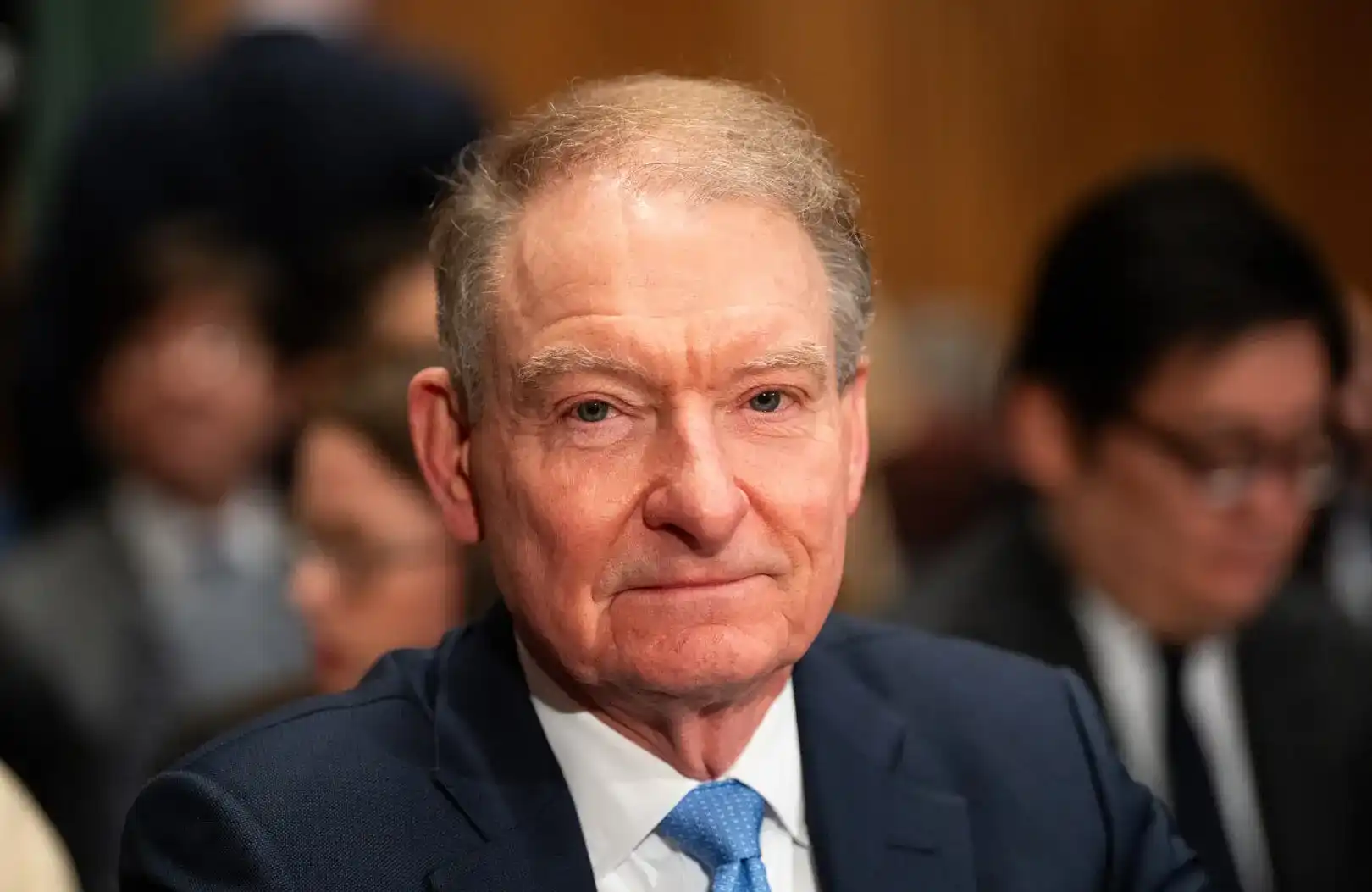
Us Treasury Secretary Janet Yellen's speech: The us Dollar as the core of digital asset regulation
Remarks from Secretary of the Treasury Janet L. Yellen on Digital Assets
Source: us Treasury website
0x9F, BlockBeats
2022 Years & have spent 4 Month & have spent 7 Treasury Secretary Janet L. Yellen delivered a speech on digital asset policy, innovation, and regulation at the University's Goldschool of Business Innovation Center on Monday. BlockBeats Translation:
Thank you, President Burwell, for that kind introduction -- it's great to be with you again. I'm so happy to be here at an American university, where the change-makers are changing the world.
Groundbreaking leaders in politics, academia and business have walked these halls, and I am delighted to be here to discuss official attitudes to digital assets.
A few weeks ago, President Biden signed an executive order calling for a coordinated and comprehensive official approach to digital asset policy. Digital assets exploded last year. 11 From five years ago. 140 $100 million increased to $100 million. 3 Trillion dollars.
Digital assets may be relatively new, butThey are part of a larger trend of "digitisation of finance" that has been taking shape for decades. 1990 In 2000, there were not enough Internet users. 300 Wan. Now, there are about. 45 We take it for granted that many aspects of our financial lives can be managed from small internet-connected devices in the palm of our hands.
This growth in digital services has opened up a world of possibilities and risks that seemed magical just a few decades ago. Financial services, and most industries, have grown with exponential advances in computing power and connectivity.
More recently, new technologies have raised the possibility of reducing reliance on centralization. 2008 In 1995, a person (or group of people) using the pseudonym Satoshi Nakamoto proposed a decentralized peer-to-peer system for making and processing payments. A key challenge in digital payments is how to prevent the same asset from being reused. The Bitcoin white paper proposes a new way to verify transactions using cryptography, solving the so-called "double flower" problem.This, along with other distributed ledger technology-related innovations, forms the basis for blockchain-based digital assets.
The price of Bitcoin and other cryptocurrencies has fluctuated widely over time, hindering their widespread use in payments. High fees and slower processing times compared to other payment methods may further inhibit the use of cryptocurrencies in payments. In fact, it's hard to buy a sandwich or a gallon of milk with cryptocurrencies. Other digital assets -- such as &NBsp; Stablecoin Or potential central bank digital money -- could be used more widely as a means of exchange, raising potential benefits and risks.
Supporters argue that distributed ledger technology will transform other aspects of financial services, such as trading and lending. They propose features such as smart contracts, which use computer code to automatically enforce protocols if certain pre-specified conditions are met. As long as it is easier to set up and the cost is competitive with traditional financial services, digital assets are likely to be used more widely.
President Biden's executive order directs official experts to conduct in-depth analysis to balance the responsible development of digital assets and the risks they pose. These tasks will be guided by six policy objectives:First, to protect consumers, investors, and businesses; Second, to maintain financial stability and avoid systemic risks; Third, reduce national security risks; Fourth, promote American leadership and economic competitiveness; Fifth, promote universal access to safe and affordable financial services; Finally, support responsible technological progress that takes into account important factors related to privacy, human rights and climate change.Over the next six months or so, Treasury will work with colleagues in the White House and other agencies to produce basic reports and recommendations related to these goals. In many cases, the work of executive orders builds on the ongoing efforts of the Treasury Department.
I won't predict where this work will take us, but that doesn't mean we're sailing without a compass.Digital assets may be new, but many of the problems they pose are not.In the past, we have enjoyed the benefits of innovation, but also faced some unintended consequences.
Today, I want to share five lessons that apply to addressing the opportunities and challenges posed by these emerging technologies. These lessons relate to the nature of responsible innovation, the appropriate regulatory structure, the fundamentals of the financial system, our role in the global economy and the value of co-operation.
1. Our financial system benefits from responsible innovation
New technologies build on old ones, and a series of innovations have transformed financial services over time. Seventy years ago, most Americans used coins, cash and checks to manage most aspects of their financial lives. Then, at 1960 S, IBM By attaching magnetic strips to plastic cards, one of the engineers created a new class of payment products: credit and debit cards. These innovations have led to the development of other technologies, for example. ATM Machine, can be 24/7& NBSP; Use cash 24/7. More recently, computers, the Internet and mobile phones have fueled an explosion in electronic payments and online commerce.
While new technology has made our financial system more efficient for most Americans, many transactions still take a long time to clear. The combination of technology and business incentives has produced a common frustration experienced by tens of millions of Americans each week: their employer sends out their paycheck, but the check can take up to two days to reach their bank account. Delays lead to the use of high-cost check-cashing institutions or "payday" loans to get money on time to pay bills.
Some were forced to draw from already low balances and were charged overdraft fees. It is estimated that Americans spend on such fees and services every year. 150 $100 million or more -- roughly the cost for every working American. 100 The dollar,It all comes down to inefficiency, and people on lower incomes bear more of the burden.
When you look internationally, the system is even more expensive and frustrating.
If you live in G7 Country/territory you may need to pay less than & NBSP; 2% Transaction and exchange fees for cross-border remittances. If you live in a developing country, you may have to pay as much. 10% Of the cost. These high costs are a huge drag on the world. 2.5 & have spent More than 100 million immigrants have had a disproportionate impact, sending remittances to their families on average each month. 200 To & have spent 300 The dollar. Proponents of digital assets envision a more efficient payment system, enabling instant transactions and lower fees no matter where you live.
Will the technology deliver on that promise? I think it's too early to say, there are issues of processing time, cost and access barriers that need to be overcome. The United States is actively involved. G20 Addressing the challenges and frictions of cross-border capital transfer. And,The Federal Reserve plans to launch a new 2023 Launched in & have spent FedNow is an instant payment service that enables real-time payments throughout the year on U.S. payment systems.
Some have also suggested that the introduction of central bank digital currencies, or "CBDCS", could help make the payment system more efficient. As a liability of the central bank. Could become a credible currency comparable to physical cash, while providing some of the expected benefits of digital assets.
According to the executive order, an official report will be issued on the future of currency and payments. The report will be analyzed with potential. CBDC Related design choices and implications for payment systems, economic growth, financial stability, financial inclusion and national security.
Innovations that improve our lives should be embraced while appropriately managing risks. But we also have to be careful,Past "financial innovation" often failed to benefit working families, sometimes exacerbating inequality, triggering illicit financial risks and increasing systemic financial risks.
2. When regulation fails to keep pace with innovation, the disadvantaged often suffer the most
We learned this hard lesson during the global financial crisis. The explosive growth of financial institutions and new financial products known as "shadow banking" allowed dangerous levels of risk to build up. From & have spent 2007 Since last year, investors have become increasingly wary of these risks, and some big institutions have wobbled. Soon, people who had never heard of "shadow banking" or subprime mortgage-backed securities ended up losing their jobs and their life savings. Standard & Poor's & NBSP; 500 The index fell by more than half, and household net worth fell sharply. The resulting economic hardship has been most severe and persistent for black Americans and other people of color.We need to ensure that the growth of digital assets does not allow similar dangers to emerge or disproportionately affect vulnerable populations.
The Treasury has worked with the President's Working Group on Financial Markets, the Federal Deposit Insurance Corporation, and the U.S. Central Bank. Stablecoin, which is a cryptocurrency tied to a stable source of value, usually the DOLLAR. Stablecoin It raises policy concerns about illicit finance, user protection and systemic risk. Moreover, they are currently subject to inconsistent and patchy regulation.
In order to get their Stablecoin Pegged to the dollar, most issuers say they are backed by safe and liquid traditional assets. That way, when you want to put the Stablecoin When it converts back into dollars, the company has funds to convert.But there is no guarantee that this will happen. In times of stress, this uncertainty can lead to a run.
This is not a hypothesis. 2021 Years & have spent 6 It happened once a month. Stablecoin A run was used as a prop. Stablecoin A sharp fall in asset prices triggered by Stablecoin A negative feedback loop of redemptions and further price declines.
PWG About & have spent Stablecoin The report assesses these risks and proposes specific solutions. And we're working with Congress right now to advance legislation to help ensure that Stablecoin Can withstand risks that could endanger consumers or the broader financial system. We are also working closely with our international partners to promote consistent regulation across jurisdictions.
Of course, Stablecoin Just part of a larger ecosystem of digital assets. Our regulatory framework should be designed to support responsible innovation while managing risks -- particularly those that could disrupt the financial system and the economy.As banks and other traditional financial firms become more involved in digital asset markets, regulatory frameworks will need to take proper account of the risks of these new activities. Moreover, new intermediaries, such as digital asset trading platforms and other digital native intermediaries, should be subject to appropriate forms of regulation.
We must also prepare for possible changes in the structure of financial markets. For example, some argue that distributed ledger technology can reduce concentration in financial markets. While this may make the market less vulnerable to the failure of any particular firm, it is critical to ensure that we maintain visibility into the potential build-up of systemic risk and have effective tools to contain extreme behaviour when it arises.
President Biden's executive order directs the Financial Stability Oversight Council to identify specific financial stability risks and regulatory gaps posed by various types of digital assets and make recommendations to address them. While I do not know what the FSB will find or conclude, the following basic lesson should apply.
3. Regulation should be based on risk and activity, not specific technology
Financial regulation needs to be adjusted when new technologies give rise to new activities, products and services. However, this process should be directed at the risks associated with providing services to households and businesses, rather than the underlying technology.
Where possible, regulation should be "technology neutral". For example, consumers, investors and businesses should be protected from fraud and misleading statements, whether assets are stored on balance sheets or distributed ledgers. Similarly, companies holding customers' assets should be required to ensure that they are not lost, stolen or used without their permission. And taxpayers should receive the same type of tax reports on digital asset transactions as they do on stock and bond transactions, so they have the information they need to report income to the IRS. Under the executive order, we will work to ensure that consumers, investors, and businesses are adequately protected from fraud and theft, privacy and data breaches, and unfair and abusive practices. Great care must also be taken to ensure that innovation does not disproportionately harm vulnerable groups or exacerbate social, racial and economic inequalities.
In many cases, regulators have powers that can be used to further these goals, and the Treasury supports these efforts. If someone breaks the law and exploits others, they should be held accountable. If legislative oversight fails, we will make policy recommendations, including assessing potential regulatory actions and legislative changes. Continuing to update and improve our regulatory architecture will support America's economic competitiveness and strengthen America's leadership in the global financial system.
The principle of technology neutrality also applies to issues related to tax evasion, illicit finance and national security -- topics that are particularly relevant in today's world. Tax evasion, money laundering, or evading sanctions are illegal, whether you use checks, wire transfers, or cryptocurrencies. For nearly a decade, Treasury has been monitoring innovation in digital assets and updating our rules and guidance to clarify the application of our anti-money laundering and countering the financing of terrorism frameworks to the digital asset ecosystem. We have also been working with our international counterparts to strengthen aml/COUNTER-TERRORISM programs abroad to better protect against exploitation by illegal actors. And we will continue to act when appropriate.Just this week, the Treasury Department's Office of Foreign Assets Control launched an investigation into the world's largest and most famous dark Web marketplace. Hydra And virtual currency exchange platform supporting ransomware & NBSP; Garantex Strong action was taken.In accordance with the President's executive order, Treasury and other department colleagues will identify key illicit financing risks associated with digital assets based on recently released national risk assessments. We will also work with our Allies and partners to help ensure that international frameworks, capabilities, standards and partnerships are aligned and adequately address risks.
While innovations in computing have accelerated the pace of change, even the most basic components of our economy -- including our money itself -- have changed dramatically over time.
4. Sovereign currencies are at the heart of a well-functioning financial system, and the United States benefits from the dollar and the central role played by American financial institutions in global finance
The United States took a long time to establish a single national currency.
1790 Secretary of State Alexander Hamilton; (Alexander Hamilton) Bemoaned what he called "serious disarray" in the US monetary system. At the time, Americans depended on multiple domestic and international currencies circulating simultaneously. The proliferation of different forms of "money" makes it difficult for the economy to function. To help solve these problems, Bank of America 1791 It was established and issued banknotes, providing a relatively stable national currency. 1792 The Passage of the Minting Act created the United States Mint and opened the centuries-old debate over whether the dollar should be linked to silver or gold.
Although these important innovations regulated the deposit function of the dollar, there was no lasting political support for the Bank of the United States. To the & have spent 19 In the mid-century, the country relied on a decentralized system of paper money issued by private banks. New Jersey bank notes are not the same as New Hampshire or New York state notes. And because different banks are perceived to have different risks, paper money is valued differently. This system of private money did work up to a point, but it made transactions expensive and inefficient and led to decades of bank runs.
It was a crisis that led to reform. Embroiled in the Civil War, President Lincoln and Treasury Secretary Salmon Chase needed to bring more stability to our financial system. Congress passed the National Banking Act. It allowed banks to issue central bank money, but the banks had to be fully supervised and the money had to be backed by U.S. Treasury bonds. This requirement ensures that a New Jersey dollar is always as good as a New Hampshire dollar. Later, the Federal Reserve Act further institutionalized the national goal of a common currency.
The e development of our money into its present form was a dynamic process spanning centuries. Today, monetary sovereignty and a single currency have brought clear benefits to economic growth and stability. Our attitude to digital assets must be guided by an understanding of these benefits.
Some people think that. CBDC Could be the next evolution of our currency. A recent report from the Federal Reserve has opened a new chapter in the debate. CBDC And distribution in the United States. Open dialogue about potential benefits and risks. The president's executive order requires us to consider this issue from multiple angles. For example,The United States and have spent CBDC What are the implications for the implementation of macroeconomic stabilization policies and the creation of private credit? Will it make the financial system fairer, more accessible and more inclusive? How is it designed to manage risks related to national security and financial crime, while also including privacy protection? The United States and have spent CBDC How to compare with existing domestic currency, foreign & NBSP; CBDC Or private & have spent Stablecoin Interactive?
We need to consider these important issues in the context of the central role the dollar plays in the world economy.
The dollar is the most widely used currency in global trade and finance. It is by far the most traded currency, accounting for almost all foreign exchange trading. 90% One way, accounted for more than half of trade invoices. Dollar-denominated assets account for about half of cross-border bank claims and international debt securities outstanding. 40% The above. Because of the dollar's strong trade and financial links -- and America's strong macroeconomic and monetary credibility -- central banks choose to hold their currencies in dollars. 60% Foreign exchange reserves.
The international status of the DOLLAR is strongly supported by U.S. institutions and policies, U.S. economic performance, open, deep and liquid financial markets, the rule of law, and a commitment to a freely floating currency. As citizens of this country, we derive enormous economic and national security benefits from the dollar and the unique role that American financial institutions play in the global financial system.The president's executive order requires us to consider a public issue. CBDC Whether and how to support this role of the dollar and U.S. financial institutions in the global financial system.
I don't know yet what conclusions we'll come to, but we have to be clear. CBDC Can present significant design and engineering challenges, requiring years rather than months of development. So I share the president's eagerness to move forward with research to understand. CBDC Potential challenges and opportunities for U.S. interests.
As we consider these big choices, we must also remember that technology-driven financial innovation is cross-border in nature and requires international co-operation. We have a strong interest in ensuring that innovation does not lead to fragmentation of international payment architectures and that digital asset technology evolves in line with our values and laws.
5. We need to work together to ensure responsible innovation
Many of the most groundbreaking innovations in our history involve all of us: policymakers and businessmen, advocates, academics, inventors and citizens. Think of the development of the national highway system, the space race, the creation of the Internet or the ongoing biotechnology revolution. All of these innovations have changed the way we live.
When it comes to digital assets, there are a variety of opinions. On the one hand, some proponents argue that the technology is such a radical and beneficial change that officials should step back completely and let innovation take its course. Skeptics, on the other hand, see limited value in the technology and related products and advocate a more stringent official approach. Such differences in opinion are often associated with new and transformative technologies.
In my view, the official role should be to ensure responsible innovation -- innovation that works for all Americans, protects our national security interests and the planet, and contributes to our economic competitiveness and growth. Such responsible innovation should reflect thoughtful public-private dialogue and take into account the many lessons we have learned throughout our financial history.
That pragmatism has served us well in the past, and I believe it is the right approach today.
Thank you again for inviting me, and for the important role that American universities play in the civic and academic life of our nation.
The original link
Welcome to join the official BlockBeats community:
Telegram Subscription Group: https://t.me/theblockbeats
Telegram Discussion Group: https://t.me/BlockBeats_App
Official Twitter Account: https://twitter.com/BlockBeatsAsia

 Related Articles