NVIDIA GTC Symposium: How to Build an Industrial Metaverse

Original title: "NVIDIA GTC Symposium: How to Build an Industrial Metaverse"
Original author: Dean Takahashi, VentureBeat
This article comes from the WeChat public account: Old Yuppie
Nvidia's Omniverse is a forerunner of open metaverses, interconnected universes of virtual worlds like those found in novels like Avalanche and Ready Player One. And it's rapidly moving beyond science fiction and into industrial applications.
This is because the Metaverse will no longer be about fun and games. Businesses are using Omniverse's open platform to run simulations of the digital world before building something in the real world. Creating "digital twins" like climate models of BMW factories, or even the entire planet, will give the Metaverse real meaning in enterprise and other non-gaming applications.

Omniverse Replicator for driving< p>
This is my third time attending Nvidia's GTC event where I moderated a panel on the Omniverse, discussing how companies are building 3D assets, simulating engineering, and cross-company Progress made in product line sharing. Our group assesses how much progress we've made and what kind of progress they expect to make in 1, 5 or 10 years.
The panel included Rev Lebaredian, Head of Omniverse and Simulation Technologies at NVIDIA; Virginie Maillard, Global Research Leader for Simulation and Digital Twin Products at Siemens; Amy Bunszel, executive vice president of design solutions, Timoni West, vice president of augmented and virtual reality at Unity, and Lori Hufford, vice president of engineering collaboration at Bentley Systems.
The following is an edited transcript of the interview.

VentureBeat: Let's start with your short take on the Metaverse and your company position in it. Virginie, can you open for us?
Maillard: For Siemens, the industrial metaverse has existed for a while in the form of digital twins and digital threads time. We've applied it to factories, transportation, buildings, smart cities. It runs through the whole life cycle of design, production and operation. Our industrial engineering software already provides key building blocks for the industrial metaverse, including immersive user experiences with AR and VR capabilities. We can already provide this functionality in Simcenter or Process simulation, for example.
In the future, we believe that the industrial metaverse will expand, because there are multiple technical means and combined to provide a more realistic sense of immersion, Real-time feedback, and more openness and interoperability between tools. We believe that these new capabilities will allow our customers to expand their experience, improve interaction with the digital world, enable collaboration between different people in the digital world, and also combine the physical and digital to test reality more easily and quickly Different scenes in the world. For Siemens, Industrial Metaspace will be an evolution of what we already offer to enable better digital twins and digital threads.

Bunszel: One of the things that excites me is how it will remove barriers between collaborations, promoting Innovate while also helping us operate all of our assets more efficiently. This includes all renovations and demolition, which is important for sustainability.
I feel that on the one hand, the industrial metaverse is capable of creating digital twins of places, processes and real world objects, but I also want to talk about our metaverse to create new Design practices that provide rich context. If you think about it, our customers can create a metaverse that helps them visualize, simulate and analyze physical and functional performance before building anything - which is good for architecture and infrastructure and will allow them to Before anything was able to engage with stakeholders all over the world, helping them explore more ideas from the wild to the practical.
Another advantage of Metaverse is that it will enable our customers to acquire data from any provider. The Metaverse is open in nature, enabling our customers to pool data from anywhere. I think we all know that people use tools from multiple vendors. Pulling it all together can be a challenge at times.
As for AutoDesk's role, we're not building the Metaverse. Our solution really helps the metaverse. We're looking for ways to help our customers unlock the value of the data they create in our solutions, making it easy for them to bring that data to the Metaverse and explore all the possibilities there.
West:I see it a little differently. I tend to think of the metaverse as a metaphor, like we talked about the information superhighway in the 90s. Rather than saying it's something that will exist in the future, it's a way of describing what I think is a more fundamental and interesting shift, which is how computers have changed over the past decade. They went from being networked and portable, which was a huge change we saw in 2010, to now having a lot of miniaturization and high-fidelity sensors and machine learning. This gives us the ability to have computers actually understand things like scanning space, recognizing objects, recognizing faces, being able to recognize voices, being able to recognize the input part of the system.
When we talk about the metaverse, we talk about applications of contextual computation. Computers now have context through things like sensors and machine learning. The metaverse refers to what people will do in the new wave of technology. That's how I tend to think about it. Having realistic, real-world data—whether live or recorded that can be simulated and virtualized—allows us to have highly realistic simulations with real-time updates. Such as real-time 3D mirroring of the world. This leads us to some very interesting industry use cases.
As for Unity's place in it, we like to get all this data from all of our partners, from the real world itself, directly from the device, so that our Developers and our community can make apps that make sense of this data. That's where we are in the ecosystem.
Hufford:Everyone has some good insights into the Metaverse. Bentley is an infrastructure engineering software company. So, what does the metaverse mean for infrastructure? Why do we need it?
How to balance our relationship with the natural world is a pressing question. Infrastructure plays a key role in this. We believe the intersection of digital twins, the metaverse, and the real world is the perfect place to invest so teams can work better together and leverage talent from anywhere to solve these problems.
A digital twin of infrastructure is a digital representation of the physical world that is continuously updated with information from the physical world. It must contain a wealth of engineering data and must be open so that it can be obtained from any source. It must also be able to track and visualize changes in real-world conditions, such as sensors and IoT devices such as drones.
But one key difference with entertainment is that while in entertainment engineering precision and the laws of physics don't necessarily apply because that's what makes it fun one, but in the field of infrastructure, they must apply. Digital twins must provide millimeter-level accuracy, geospatial alignment, and support for complex engineering models.
Where did the metaverse come from? In designing, building and operating the world's infrastructure, the metaverse allows people to teleport or immerse themselves in these digital twins, or Augment the real world with information provided by digital twins.
Lebaredian: We got some really interesting responses. I agree with everything I've heard. It's funny because it's such a big deal. It is now amorphous. There are many opinions on what the Metaverse is. It's a bit like when the first web browser, Mosaic, came out in 1993. People ask, “What is the Internet?” What is the web?” When it first came out, it was difficult to answer that question.

Omniverse Showroom is a new feature for viewing digital assets.
I look at it from our perspective, whatever the Metaverse ends up being called, whatever it is, it's clear that the virtual world and us in digital form A world where computers are a key part of it — how humans will interact with these virtual worlds, and our interface with them, will be more like the natural human experience before computers. We use computers through these two-dimensional and abstract interfaces all the time. All this 3D space technology overlays all of our information, and we can now experience it the way we've always experienced the world around us.
Many opportunities open up here. For the most part, discussions about the Metaverse have focused on entertainment, social, media, and especially VR, which is just one mode of experiencing it. But it's actually much bigger than that. The panel discussion we have here is interesting because it's a very different perspective, which seems to me to be a more immediate and significant use of the metaverse and all of these technologies in humans.
As for Nvidia's position in this, we think that the metaverse is like the Internet, bigger and greater than any company. In order to achieve our goals, we must all contribute to it and build it together. What NVIDIA can do is leverage our core competencies, our skills and our passions, which is computing and the computing stack, to power this simulation of the virtual world.
For this, the first thing we need to do is describe these virtual worlds in a way that everyone can agree on, describe how they work, so that we can These worlds can be swapped between tools and simulators. The best tools and the best simulators, the best toolsets for each job work together in harmony. That's our focus.
VentureBeat:The first thing we want to discuss is how to get to the Metaverse. Where have we started already? The first wave of Metaverse development came from game developers and content creators like Roblox. Rev, I was wondering if you could tell us how we've got off to a start from that perspective.
Lebaredian: I think if you want to know where the technology is headed in the future, you should keep an eye on the game. What our kids and teens are doing today is what adults will be doing 10 or 15 years from now. In the last few decades, everything interesting in the world of technology has happened first in the world of games. Voice over IP, social media, digital currency, all of these were concepts in the gaming world before they became mainstream. Simulations of 3D worlds have existed in video games for over 20 years. Now, we're using it for a lot of non-gaming purposes.
But we can first look at how these players interact with each other, how they use these tools. They're the canary in the coal mine for what's to come. Then we can apply it for non-gaming, non-entertainment purposes.
West: This is interesting. It turns out that every game needs a gaming system. Some game designers create game systems. I once read a great article that explained the different roles of different people in a game studio. Game designers say, "When we walk up to a door, does it open? Do I have to press the button? Does it magically disappear? Can I pull it? Can I just walk through it?"< /p>
Every game engine needs to be able to let you describe in real time anything the user does in the system. Weirdly, it turns out that when you want to do a real world simulation, or if you want to input a bunch of simulations that simply mirror real world situations, you basically need what we used to call game design, but now we're starting to call it Something designed for the world. We want to reflect the fact that it incorporates real-world data.
This is by chance. I don't think there's a very long-term plan around this, although there have always been very interesting futurists in the game design world. I'm sure someone predicted this a long time ago. But the reality is that everything you need to design a very complex game world, realistic or not, can be used to reflect real-world information, or to simulate and predict real-world information. We've got this really interesting moment where the tools are here, just as the computers come online to be able to give it to us.

This GTC will have a lot of content about robots.
VentureBeat: Timoni, can you talk about how game technology is leading the industry to the Metaverse? I recently happened to Talked to Meta's Jason Rubin, and he said he didn't think the Metaverse could be built without a game engine. This seems like a basic tool. Do you have an opinion on how we get into the industrial metaverse?
West:I think he's right . We'll see an evolution in how these tools are used. For example, back in the '70s, the killer app for the first commercial microcomputers was spreadsheets. But the way they are used is very specific. They are used for finance and inventory. Now you can see that spreadsheets are used a lot. Airtable is a great example of how spreadsheets are becoming more of a data manipulator for those who understand what they want to do with their data.
Similarly, game engines are made for games, but they are already starting to be used in education, scientific visualization, self-driving cars for AI data simulations Data set training. Lori talks about this as the fidelity of sensor data gets higher and higher. The truth is, to embody industrial quality, you have to have a level of precision that video games don't need. You need to be able to enter and react to information faster. You need to have better visuals, extremely high fidelity.
Our computers are fast enough and our technology is advanced enough that we can start thinking about game engines. We are at a stage where we are actively developing tools to support these types of use cases.
VentureBeat:Now, let’s talk about the industrial side of the Metaverse. The metaverse is often showcased in consumer experiences of VR, but the industrial opportunity appears to be broader. Virginie, can you give us a head start?
Maillard:We are involved in all phases of the product lifecycle, from design engineering, through testing and validation, to production , operation, and even training, define the different fields of application of the Industrial Metaverse. Let me give you an example in each area.
First, the Industrial Metaverse will allow for more collaboration between stakeholders during the design and engineering phase, with more Possibilities to involve non-technical stakeholders in the process. From this perspective, the Industrial Metaverse drives the democratization of simulation, enabling experts to communicate more effectively with non-experts. In this role, it will be possible to explore more design and manufacturing options in more interactive ways, involving more perspectives, resulting in better products and faster time-to-market. This is our first concrete vision for the Metaverse.
Second, in the testing and verification stage, combining realistic environments with multidisciplinary and multiphysics simulations provides us with virtual exploration of more operational scenarios possibility. For example, we can use machine learning to generate synthetic data to train and test self-driving systems, such as AGVs in factories, robots, or self-driving cars. Since everything is virtual, we can investigate a large number of critical situations, such as accidents, and perform tests on a scale we cannot afford in real life. Intensive virtual training and system testing ensures more safety and a shorter time to market.
The third example I gave you is in production. The main use case for the Industrial Metaverse is virtual restoration. This means you can install and test new equipment and software without disrupting the production line. For example, you can use augmented reality to visualize new equipment in a factory, or you can simulate interactions with existing manufacturing assets. This already exists, but the assumption is that the Industrial Metaverse will bring an enhanced user experience to the field.
The last example I have for you is on the operational side. Here, the main use cases of the Industrial Metaverse are already well known. It is a visualization of workflow and data around physical assets. For example, in augmented reality, a machine's operating data can be displayed on a tablet screen. We think the next step will be to get that information out to the shop floor, to the operators, through new interfaces, so they can make faster and better decisions. We call these executable digital twins. This is a simplified model that is self-contained and can run on edge devices. This will be a compilation of the full range of information we can have on the shop floor. As you can see, the Metaverse has a wide range of industrial applications.

Nvidia's Earth-2 will be a digital twin of the Earth.
VentureBeat: Amy, what opportunities are you eyeing at metaverse events?
Bunszel:First and foremost, there is a lot of overlap with what Virginie talked about. Overall, the theme of collaboration and innovation, bringing all this data and all the stakeholders together is going to be revolutionary for all the industries we work in. Especially the AEC field - architecture, engineering and construction.
We design, build and operate. One of the great things about looking at the entire lifecycle is that you can also start to focus on sustainability, bringing the decisions you make in the construction phase to the design phase, where you can leverage all that you have in the metaverse or digital twin Context, to really understand the downstream impact of a decision you might make about materials or construction methods. For infrastructure and buildings, we are excited about the opportunity that Metaverse will enable our clients to make high-impact decisions early in the design cycle, when they can have the greatest long-term impact.
VentureBeat: Lori, where is your development focus for the Industrial Metaverse?
Hufford: I agree with Virginie and Amy are talking about many of the same themes. For us, it's the convergence of the digital-physical world to create better outcomes for infrastructure. That's where our focus lies. For example, during the design process, humans are interacting with digital twins to conduct interdisciplinary design reviews of supply chains globally. In the world we live in today, it's important to be able to leverage talent anywhere, ultimately resulting in the best design possible.
With the digital twin, the digital twin of the infrastructure, we are able to bring in the model, the context of reality and the map. We can spot issues and visualize changes during the design process, communicate with markup, and use Metaverse's digital tools to ensure design validity. In construction, we are also considering the use of augmented reality to visualize and evaluate construction sequences, minimizing risks and leading to better outcomes. I could also repeat some of the things that Virginie talked about about operations, using augmented reality and infrastructure digital twins to improve safety, doing simulation training, things like that. There are so many opportunities to bring the world together for better outcomes.
VentureBeat: How important is it for people to be able to take assets from one virtual world to another? How do you overcome the exchange problems that are prevalent here and move data from one industrial world to another?
Lebaredian: If you go back to 1993, when the first web browsers appeared, it's hard to imagine what the web and everything we know about the Internet today would be if we didn't have a common way of describing web pages Everything will exist. HTML - Having a format that can be exchanged between browsers isn't just a good thing. It is essential. If every web browser had a different way of describing content, we wouldn't be where we are today.
If we regard the Metaverse as the evolution and extension of the Internet, and the spatial coverage of a network, then the content in this Metaverse must be a kind of A form of exchange in which everyone can contribute, understand and participate. But we are still early. Like HTML 1.0 in 1993, it can't do much yet. You can put some text together with pictures and hyperlinks. It took us about 20 years to add all the features we love today, including video, interactive content and programs, and more. It will take us a long time to get to the goal of the metaverse, but there is still a lot we can do today.
We decided to start with a generic scene description. We haven't seen anything better, and frankly, we think it's pretty good. But there is still a lot of work to be done. We need to develop more standards of how to describe everything we could possibly want in a world and how to do that in a very physically accurate way, a way that matches the real world. And not just something that looks good. We are making a significant contribution to the dollar, and we invite all of our partners and others to do the same. Over the next few years, we will sort out what the specific form is, how we describe specific patterns of different aspects of these worlds for different industries, layered on top of a common plan.

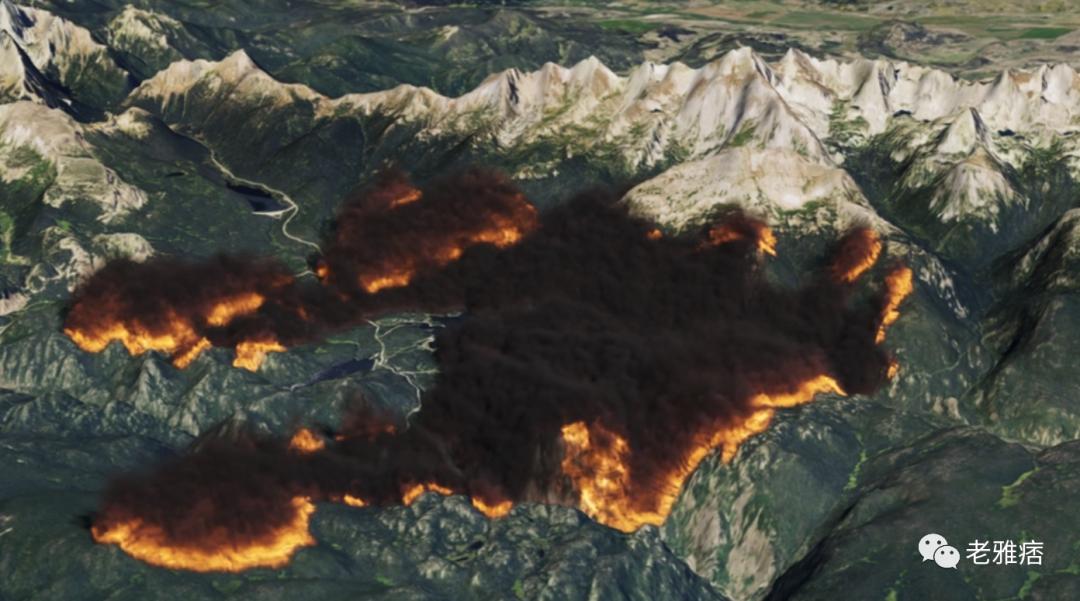
Nvidia unveiled its Earth 2 digital twin goals at its 2021 GTC conference.
VentureBeat: Timoni, do you want to try it too? How important is portability and swapping, and how are we going to do it?
West:Rev provides a nice background. I'm very curious -- I like the way Rev talks about the web in the early days. There has always been a question of what kind of interoperability do we really need. The reason I'm not exactly "Happy for interoperability" is - I'm interested in web standards. I still do to this day. The only problem is that being able to describe how an object behaves in one space versus another is very, very tricky - I'm back to the game designer way of thinking here.
Maybe it's easier for the industry because they've been ahead of the curve and created an amazing level of standards and interoperability that makes They are able to handle large amounts of data. But a classic example we see all the time is I want to take a sword from one game and use it in another. Or another space, I should say, a virtual world. What does it do? What if it's a game without swords? What if it's a peaceful world? We may have file format aspects that we can work around, but later interoperability and interactivity behavior is what separates the metaverse from what we know today and I really don't have an answer for a key aspect of the internet I love. I'm guessing this will be a must. As people demand it, as they discover the need for it, we'll see self-made efforts to implement the type of behavior users are asking for.
But in terms of standards and file formats and interoperability, I think we're making tremendous progress. We've had great conversations, we've done great work, we've been actively discussing these things. We've had multiple conversations with Nvidia and AutoDesk on this.
Lebaredian: I totally agree. It's hard. There are no easy answers to these questions. Having said that, I don't think that means we shouldn't try. There are a lot of smart people in the world, a lot of engineers who can solve these problems. If there's a will, I think we'll figure it out.
If you go back to the early days of the web, we said the same thing about how to make applications behave and interact. We have had many false starts. We have things like Flash and ActiveX. Things sorted themselves out. Oddly enough, we ended up with JavaScript as the way to describe everything.
If you told me 20 years ago that JavaScript would not only power the internet and the web, but that we would compile c++ into JavaScript for web assembly, I would would say you're crazy. it's out of the question. this will not work. But engineers can work miracles when needed. I think we'll work it out if necessary. We just have to be willing to try. We will have many experiments, many will fail, but some will succeed.
West: I don't want to sound negative. I think, I feel like we're saying the same thing. I know people are going to want this. I was very curious to see what would be squeezed out. Like you said, it's impossible to predict that JavaScript will become the de facto lingua franca of the dynamic internet. But it will be very interesting. I'm glad I'm in this exploratory phase right now.
VentureBeat: I'm curious, can you come up with a portable scenario for the rest of our panel? Why you might want to use someone else's stuff in your Metaverse app? Gamers buy tons of digital items and create avatars. They want to take these things from one place to another. But what about the Industrial Metaverse? Can you think of a reason you'd want this kind of portability right now?
Maillard: Of course. What we call openness or interoperability is part of the future of this industrial metaverse as an enabler for the simple reason that it is a way of connecting tools together, providing proper interfaces and consistent data management. The second aspect is the easy transfer of virtual assets to different virtual environments. For example, a model of a car can gain more maturity at each stage, from design and validation to production, testing, and operation, thereby serving as a complete connected system to feed back and improve the design for the next iteration. To do that, we need interoperability because we need different tools talking together.
VentureBeat: I think in the digital factory, someone might be building cars, but all the parts of those cars might Commonly used in different factories and different digital twins. In this case, it becomes useful if it is not necessary to create the same part for two different digital twin factories.
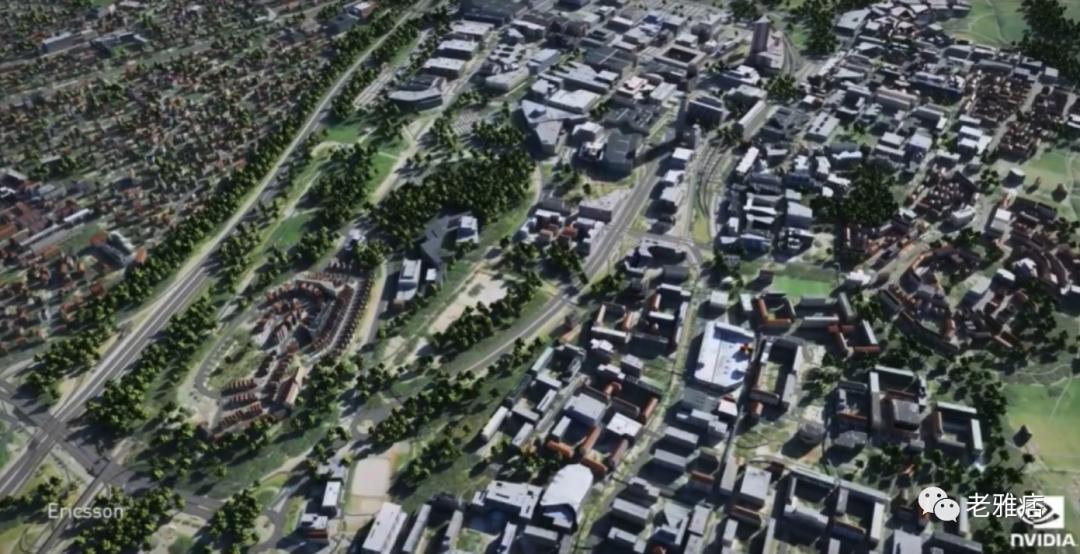
I'm curious about what's going on with the metaverse here and now. What is tangible to you? What are some concrete examples of Metaverse workflows?
West:This is interesting. Again, it depends on how you view the metaverse. In terms of tangibility, I think the most solid and concrete application of contextual computing is a combination of devices. The Metaverse started out as an idea about virtual reality. Since then, when I got into VR, I was thinking, "This is it! It's going to replace all of our screens with AR glasses! No hands!" Over the past seven years, I've grown to realize that screens and The keyboards are all great. Every computing device we own has its pros and cons. Virtual reality is great for rendering. But it's terrible for writing code. If you want to write the great American novel, or do transcription, you need a keyboard. All of these devices are just tools to help you achieve your goals.
So a good example of what I call a futuristic use case is when you have multiple different The way the workflow works using these different devices. For example, someone is wearing holographic glasses and they are looking at a detailed report on the engine. Some held iPads, while others joined them in virtual reality. This interoperability between devices, this real-time interactivity, and the ability to display information through a device in a way that best suits each individual's needs, to me, that's what excites me most about this new type of computing. Good and truest expression.
Hufford:I very much agree with what Timoni said - we have to be able to meet people's needs. We had to be able to integrate this technology into their existing processes and workflows. This is very important to us. It has to be accessible, and it has to be open so that users can imagine their own applications, and develop their own Metaverse applications—in our case, for the design, operation, and construction of infrastructure.
I can give a concrete example of how a leading organization is using infrastructure digital twins in the Metaverse today. France's ITER project is a collaboration of 35 countries to build the world's largest tokamak, a magnetic fusion device designed to demonstrate the viability of nuclear fusion as a large-scale, carbon-free energy source. It works on the same principle as the sun and stars—nuclear fusion, not fission. It was a huge design and construction project with many complex engineering models and millions of parts. It had to be constructed off-site and hoisted into place.
ITER hopes to allow humans to enter the digital twin and experience it. The container model was brought into Bentley Synchro, which is powered by the iTwin platform for 4D architectural modeling and sequencing. Then, leveraging Unreal and Omniverse, and using Cloud XR, it all came together to create an amazing experience that immerses the team.
Fidelity is important here. We must be able to do this without reducing the complexity of the model so that it can provide engineering value. It is the first time that customers can enter the interior of the model. Realistic lighting enhances the experience, while a digital twin of the infrastructure that includes all the engineering data needed enables clients and users to take full advantage of the experience.
Another example in use today is remote bridge inspection. There is so much existing infrastructure in the world. Conducting bridge inspections to ensure safety and determine repairs can be dangerous and time-consuming. The Metaverse can help with this. Again, there has to be a high level of detail to see things like cracks and rust. Drones were used to capture a realistic model of the bridge, and inspectors then used HoloLens to inspect the resulting model. Inspectors can perform more inspections with fewer trips and work remotely, while also improving their safety.
VentureBeat: I'm curious what the next direction for the Metaverse is. What do you think will become a reality in, say, a year or five years? Which ones could take as long as 10 years?
Maillard:As I said at the beginning, for Siemens, the Industrial Metaverse is something we have already Provides an evolution of the implementation of digital twins and digital threads. In the future, we see realistic immersion, real-time feedback, and openness allowing our customers to expand their experience of the Industrial Metaverse.
We've already talked about interoperability, so let me talk about immersion and real-time. By immersion, I mean the lifelike quality of a virtual 3D world. It will certainly bring human cognition and human interaction with the digital world into greater alignment. The second benefit is training autonomous systems, as I mentioned earlier, using synthetic data. This is why immersion is important as an evolution. That won't necessarily involve VR and AR devices, though. A laptop or tablet will suffice as they already provide immersion. The same is true of games today.
Another important aspect is real-time collaboration. In the future, users should get instant feedback from their actions and interactions with others. They will experience a synchronized experience. The challenge here is not to sacrifice the accuracy of the simulations and forecasts. Ultimately, the purpose of this real-time simulation is to quickly test various possible scenarios and troubleshoot problems during the early stages of design and production. That’s why at Siemens, we already offer a suite of multiphysics high-fidelity tools, and we continue to work on next-generation technologies that speed up simulations while maintaining the required accuracy. Even though we already have a good foundation, the cornerstone of the Industrial Metaverse, we still have an exciting time ahead.
Hufford: A lot of people here are talking about communication. Our perception of communication will evolve and refine over time. Of course it is between people. We talk about it all the time. But people to assets, assets to people, and assets to assets. Various modes, including XR and others, will touch on this.
As a few examples, these assets can alert them that they are experiencing an operating condition and require maintenance, or can guide maintenance personnel through a repair process. A virtual lobby where people and assets can interact. This will allow us to use talent more effectively to design, build and operate infrastructure. For example, using holograms to bring remote experts to the field for consultations expands our ability to leverage talent globally.
As I mentioned before, we need to take care of our relationship with the natural world. As time goes on and the metaverse continues to evolve, we people at Bentley -- we want to be good stewards of this planet. The volume and complexity of infrastructure data will power the Metaverse. We need to find architectures and software designs that minimize computation and reduce the carbon footprint of the journey.
VentureBeat: What are the technical obstacles in achieving these goals?
< br>
Bunszel:First of all, I want to reiterate that I think all of our customers today are able to experiment with existing technology. Digital twins have been around for many years. They provide a great environment for people to jump out and do more. But when I think of blockages, I have three that come to mind.
First, in many cases, if we use existing design data, we try to use it for a new purpose. We need to automate how to get the correct amount of information into the Metaverse. When it comes to computing and the carbon footprint of everything we run in the metaverse, there are a few things we need to do to prepare the data so it's most efficient for our purposes.
Another topic that we haven't really discussed yet is trust. In many cases, our clients put their intellectual property into the Metaverse. Figure out how we can leverage all the technology we have in security, privacy, compliance, reputation, fraud and other areas - there's a lot of potential to do amazing things, but we also need to make sure that all the IP coming into these environments gets Protect.
The third part for me is the concept of dynamics, which I think Virginie mentioned. The metaverse is not static. Things change in the metaverse. They may need to be reflected on the original data and vice versa. Having this real-time, interactive, always up-to-date environment will unlock even more capabilities for collaboration as we figure out how to transfer all that data back and forth seamlessly.

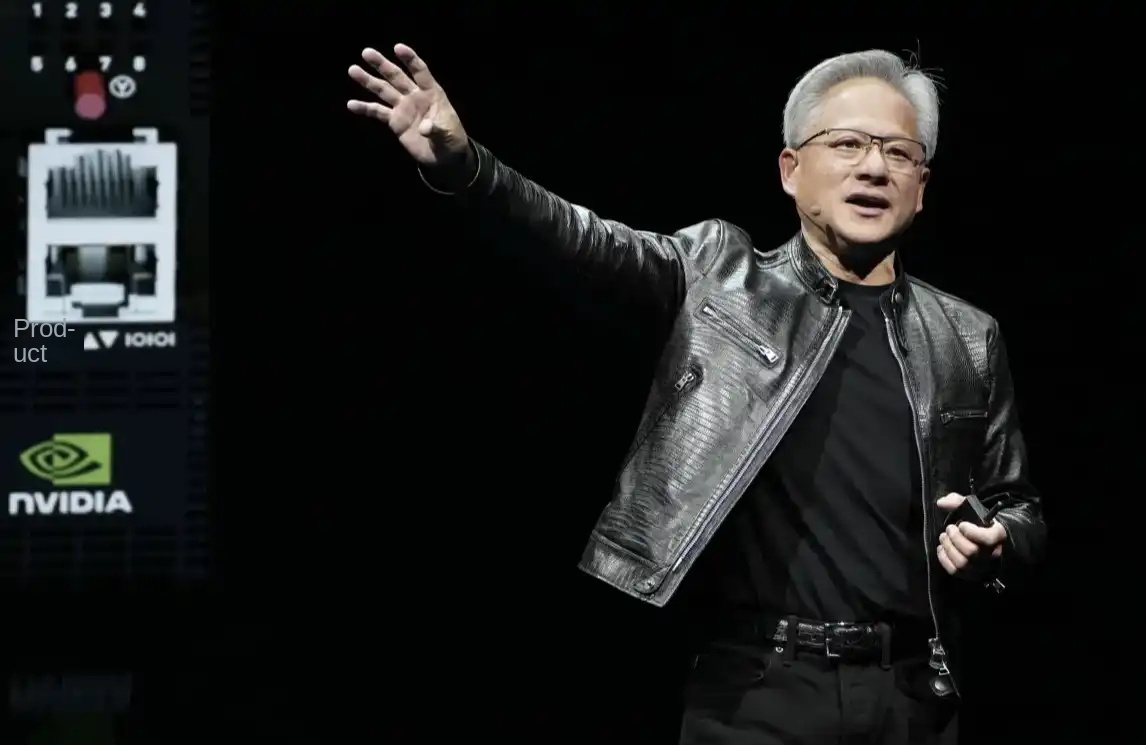
Jensen Huang of Nvidia.
VentureBeat: What are the next major technological leaps needed to reach the next level of the Metaverse?
Lebaredian: Everything we've discussed here today about the Metaverse implicitly assumes that we have the ability to model these worlds accurately, And make it match the real world we live in. As of today, the world simulators we have are designed primarily for entertainment. They are designed for games. We need to find ways to extend these world simulators so that they are physically correct and take the computing power we have and push it to the limit so we can get these superpowers.
Once you can simulate a world and do it accurately, you can gain some content. If we simulate the interaction of light and matter, we can see these worlds. We can see what they look like. If you can take a world from the real world and recreate it in the virtual world, simulate it, we can virtually teleport anywhere in the world. If you can run a physics simulation and see how the state of the world changes, and have confidence in how it goes, you've basically got a time machine. We can go into the future and see what the world will be like, what it will be like at some point in the future. This allows us to explore many possible futures. We can change the initial state, explore all possibilities, and choose the best future that we think will be the most efficient, most sustainable, safest, or whatever future you're optimizing for.
The challenge here is to get physically accurate, which will require a lot of calculations, but it also requires all the tools and all the simulators and Lots of collaboration between everything that exists, so we can combine all elements of these worlds into a simizable form. If you think about it, every man-made object around us exists somewhere in some 3D digital form. Someone has used a CAD tool for every product you're using, every building you're in. Unfortunately, at a certain point they strayed from what was actually built, which is what was in reality. The better we make these tools in a collaborative framework, and allow real-world and digital-world versions of things to synchronize, the sooner we will be able to achieve those superpowers of teleportation and time travel.
VentureBeat: Timoni, any final thoughts?
West: I would like to add. We do have CAD files that provide references for a lot of things that exist today. But for things that are handmade, things that existed before CAD, we don't have that kind of material. I love that we're delving into things like photogrammetry and object reconstruction in the sense that we need to be able to bring the real world online and start merging the digital and the physical to a point where we can have these types of surreal simulation. This will help us all make better decisions, and more importantly, help computers respond to us in a truly democratized way, allowing all people to use computers in a way that makes sense for them.
Original link< /a>
Welcome to join the official BlockBeats community:
Telegram Subscription Group: https://t.me/theblockbeats
Telegram Discussion Group: https://t.me/BlockBeats_App
Official Twitter Account: https://twitter.com/BlockBeatsAsia
 Related Articles