Azuki: Japanese animation and post-Web 3.0 national identity
Original title: "Azuki: Japanese Animation and National Identity after Web 3.0"
Original author: Mingzin
Original editor: Skylar Jiang
In Web 3.0 and Metaverse, the PFP (profile picture) project based on the NFT (non-fungible token) Token mechanism has caused With widespread attention from collectors and investors, we can't help but wonder - what kind of NFT PFP project will be successful?
Many artists have also handed in their answers one after another, many of them come from the entertainment industry Designers of giants, such as Disney and Blizzard. After wave after wave of screening by the market and investors, the "blue chips" that have survived have proved their intrinsic value and potential for future development, among which the most attention-grabbing One of the projects is Azuki.
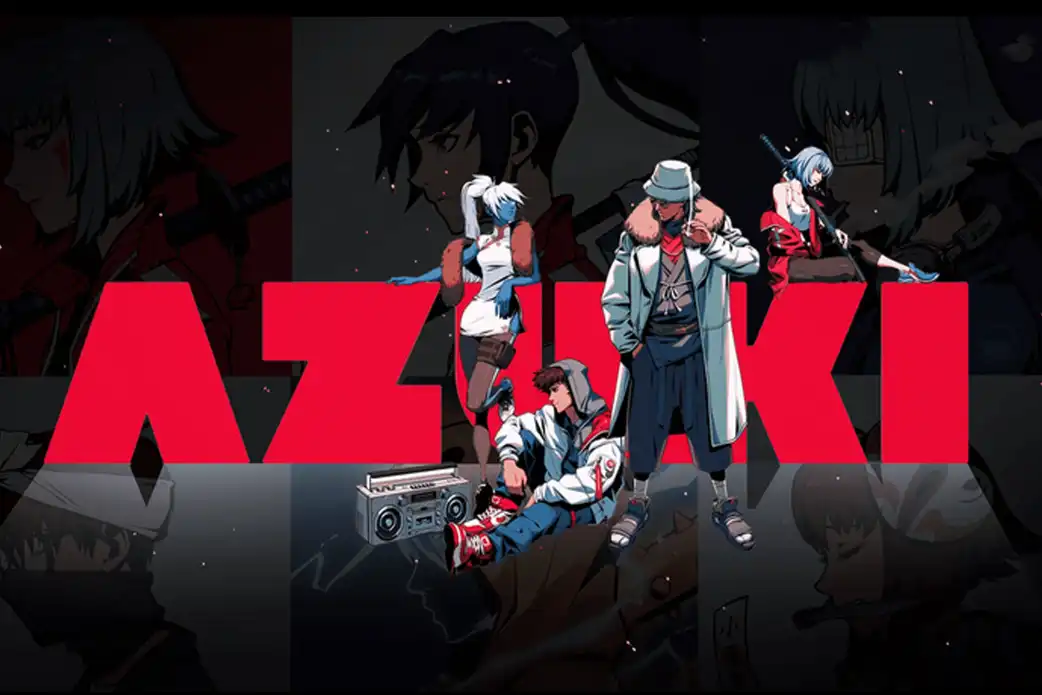
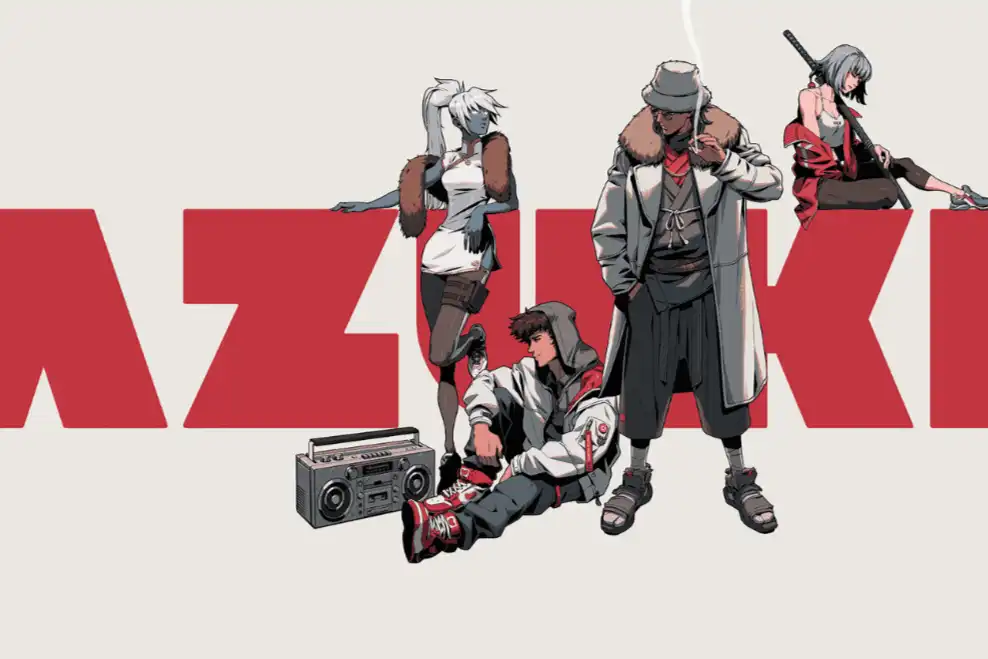
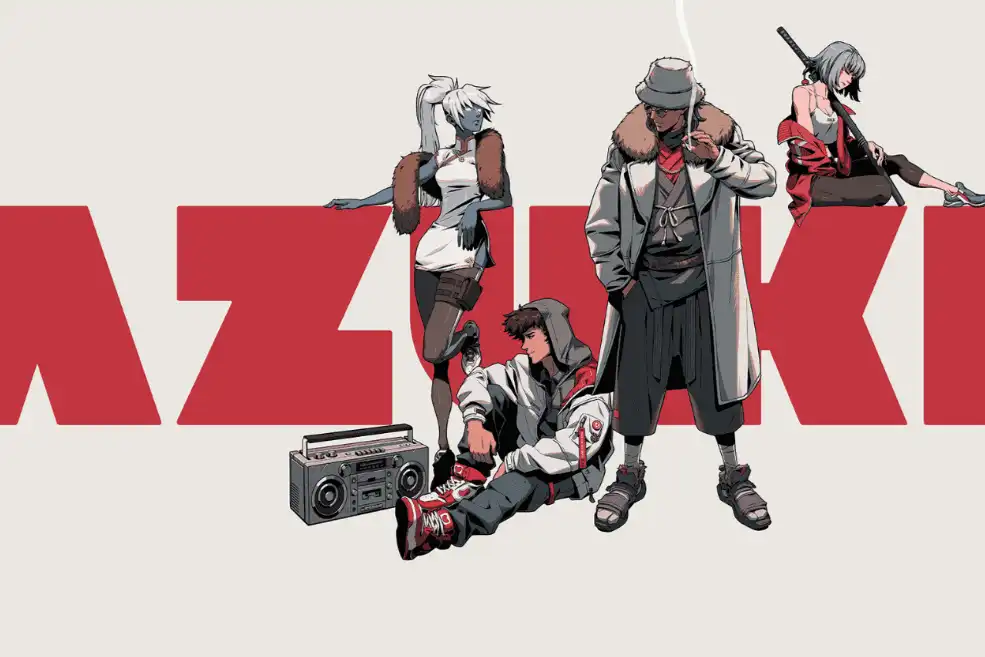
Azuki's official introduction is "committed to being a community-built, owned The largest decentralized brand." At present, Azuki has provided community members with as many as 10,000 character images. In addition to selling online in the form of NFT, Azuki also plans to develop offline streetwear brand stores in the future, and hold live events such as meetups and music festivals. The Azuki brand is operated by a real-name team. The social accounts of the team members are disclosed on the official website, and many of them have backgrounds in large technology companies such as Facebook, Google, YC and Blizzard, such as Arnold Tsang and members of Chiru Labs.

Azuki's great success is inseparable from the concept advocated by the project - to build the largest decentralized brand in the original universe, created by the community, and also belongs to the community. Azuki It also openly recruits new members who have the same spirit of breaking the centralized macro-narrative as TA. When Azuki’s blind box has not yet been unveiled, the fanaticism of the community and the large-scale topic flow around it seem to have determined its decision The heroic narrative of ideology. Not long after the blind box was opened, community members showed off their unique style of Azuki NFT on Twitter, and its floor price also skyrocketed. On February 15, 2022, the price hit a new high New high: 14ETH ($43,600). Azuki's "blue chip" value as the first type of Japanese animation style is also reflected in the unanimous recognition of its benefits and style inside and outside the NFT industry, which just reflects the public's appreciation of Azuki's artistic creation Acceptance; cause and effect, Azuki’s success also needs to be attributed to the influence of Japanese animation on the world. This huge cultural force has shaped Azuki’s mobility and super high floor price pricing. This article will analyze The NFT PFP series collects the cultural characteristics of Azuki, its advantages in Web 3.0, and the relevance of the spirit of Web 3.0 to the post-national identity presented by Japanese animation.
How to attract people who don't understand blockchain and Web 3.0 to join this revolutionary movement? The most organic and creative publicity method is naturally to use NFT PFP. NFT PFP can not only bring a sense of group belonging, but also show unique individuality in Web 3.0 and Metaverse; these two characteristics naturally make NFT PFP It has become an entry ticket to the encrypted world. It is not only the embodiment and expression of identity, but also the invisible empowerment. Japanese cultural studies scholar Susan Napier pointed out in the book Akira to Princess Mononoke that in the late 1990s, Japanese animation Industrial development and Western cultural products complement each other. Young Japanese artists have been influenced by Western culture since childhood, from mainstream TV dramas in the 1970s in the United States to the French New Wave in the 1960s. In this continuous cross-cultural "pollination" (cross -pollination), the relationship between Japan and the United States has become very ambiguous. Japanese animation in this historical period is in a state of non-localization and not completely Westernized. In 2022, Web 3.0 will gradually occupy the public discussion area In one year, we also saw the cultural hybridity scene of "I am in you, and you in me" from Azuki; and the success of Azuki in 2022 also let us see the cultural hybridity that began at the end of the last century. , Cultural representation between East and West.

Azuki #8215
Azuki #8215 is a good example of Western cultural elements grafted into the Japanese cultural system. Let's assume that clothes represent identity characteristics, and face shape and hair represent gender. Although this character is wearing a traditional Japanese kimono, it also shows a lot of signs from the mainstream culture of the West: the alpha male behavior of carrying a guitar, the playful breath of blowing bubble gum, the fluffy hair with prominent colors and the knife on the eye Scar; These are in great contrast to the traditional East Asian female images that were oppressed and unawakened by the patriarchal society on the early Japanese screens.

Azuki #7558< p>
Azuki #7558 Wearing a Perfecto motorcycle leather jacket with American rebellion, the bright red color and the rivet decoration on the clothes are not difficult to let us feel the characters Self-contained rebellious personality. Pay attention to the spiked earrings and the reversed baseball cap. These matching details further reveal his personality. Although 7558’s dress is full of characteristics of Western cultural products, he is surrounded by Eastern The image depicted by philosophy is thunder, earth, and fire among the five elements of nature.
Film studies scholar Susan Pointon pointed out that in terms of culture, the creative field of contemporary media art is Western The chemical reaction zone (zones) and intersections (intersections) of cultural collision and fusion with Japan. Azuki's success in the NFT market is not limited to the East Asian community, and NFT players in European and American countries are also very fond of it. In Azuki: Can it become the BAYC of the East? In the article, MemeMio, a community builder from SeeDao, explained: "From the composition of the art, Azuki obviously has a strong Japanese style, represented by HOSHIBOY (a member of the Azuki team) The members directly embrace the two-dimensional attitude, and what they present to the market is an art style consistent with mainstream Japanese anime, coupled with American-style thick outlines, which very neatly mixes the two-dimensional route and the classic European and American styles of the NFT market.” It can be seen that the global market is willing to pay for the mixed animation aesthetic style with Eastern and Western cultures; at the same time, it also shows that the influence of Japanese animation in the global perspective has long become a nexus point of global culture. ), and Azuki's excellent gene spread across countries and nations is also due to this.
From the petroglyphs of group hunting 30,000 years ago, to people dictating stories and From history to the idea of decentralization conveyed by web 3.0 today, human beings seem to have been looking for common ground in narratives. As science reporter David Robson said, human preoccupation has been shaping the story mode we like , Although we have entered a larger and more complex society, our values are consistent; for example, cooperation with others, integration into the community, opposition to dominant ruling powers that threaten the interests of community members, etc. From this point of view, can we say that the decentralized narrative of web 3.0 and DAO (decentralized autonomous organization) break the centralized structure and disperse power, which is exactly what human beings have been admiring since ancient times? Azuki The Japanese animation behind it resists the hegemony of Western culture and at the same time spontaneously embraces Western culture. Is the cross-border hybrid it creates exactly what web 3.0 expects? Japanese animation achieved global success in the 1990s The breakthrough point is that it makes use of science fiction (science fiction) themes to make an overhead pavement for the unreal world. In that world, everyone is in a stateless (stateless) state; because science fiction animation has an overhead Setting, works of these themes can often more directly describe the shared experiences of all human beings, such as family and friendship, and can also explore philosophical issues through narrative, such as consciousness and prosthetics.

Ghost in the Shell. Dir. Mamoru Oshii
The close relationship between Azuki and Web 3.0 is like the connection between the characters and the world in Japanese science fiction animations. Azuki’s own narrative purpose-to break the centralized structure and establish a Doesn’t the idea of a denationalized community managed by community members echo the Japanese sci-fi animations that have achieved this goal? Once they enter the realm of the metaverse, people, like the characters in the animation, will lose One's own nationality and ethnic characteristics have become virtual characters that no one knows (on the Web 3.0 social platform, people are also hidden behind their avatars); and in Web 3.0, people participate in community activities and think about philosophical issues. It is closely related to decentralization and DAO. In contrast to the real world, people are still arguing about issues such as race, ethnicity, and gender that should have been concluded long ago. (I personally think that these issues and institutional oppression will not exist in the future, Their disappearance is only a matter of time. The birth of Web 3.0 and the metaverse will also accelerate this speed.) Therefore, the metaverse and the virtual world in Japanese sci-fi animation have similarities in the same way; NFTs as successful as Azuki The PFP project will also be a necessary bridge between the real world and Web 3.0, the Metaverse.
In 1909, American animated films were imported into the Japanese market. In 1915, the animators started the process of establishing a local animation aesthetic style. In the subsequent stages, animators adopted different means (such as revisiting Japanese paintings in the early 19th century for inspiration) to get rid of the shadow of Western animation aesthetics, but all The results presented feel more or less westernized. Napier pointed out that these Japanese animations are not so much Westernized as they are more specifically a presentation of Japan's own "anime" style.

Cowboy Bebop. Dir. Shinichir Watanabe
Japanese animation was influenced by the West in the early days, and the animators intentionally expressed "de-Japaneseization", which entrusted their imagination of the "non-Japanese world" in the animation world (cold knowledge : Hayao Miyazaki himself pointed out that the Japanese hate their own faces); so it is natural and reasonable to see the vision of animators to the United States, which is dominated by global culture, but at the same time it is not in a subaltern position. "This deliberate de- Japanizing of the characters is in keeping with their view of anime as offering an alternative world to its Japanese audience.” The most common model structure of Japanese animation often presents the following characteristics: slender body, big eyes, flowing hair , even skin tones range from blond to light to dark, and hair colors vary (like the character in Cowboy Bebop above), and we can witness a similar aesthetic presentation in Azuki.

Azuki#7614
Azuki#1016
Azuki#3775
Azuki#9584
Azuki contains four models: Human, Blue (blue), red (red) and elves (spirit). In The Racial Contract, philosopher Charles Mills pointed out that in the racial contract theory, non-white ethnic groups exist in the state of nature referred to by Hobbes (the state of nature), in this state, they exist in a "war of all against all", so they are savages and more subhuman. On the contrary, white people are born to prove themselves because of their skin color It is a human with citizenship rights. In Azuki, although only one model is called "human" in the traditional sense, the other three attributes are the same as the human model. When the blind box is opened Before, all characters were in the same initial stage of "red beans"; thus, the four models had essentially the same subjectivity. As Napier said, immersion in Japanese animation can be felt by both Japanese and non-Japanese to the fantasy of statelessness; and this fantasy also gave them a "post-ethnic identity". This also confirms that Azuki has inherited the characteristics of diversity in Japanese animation, not only deconstructing the traditional concept of "human "Single definition, and also directly refute the central narrative of racism related to white supremacy. It can be seen that in the metaverse carrying the post-national spirit, the identity characteristics of community members can not only transcend racial restrictions, but also provide the possibility of presenting a new human form.

Azuki Red Bean
Like Japanese animation lovers, the future Metaverse Members in the web are not just stateless individuals, they also share post-ethnic identities, and this also benefits from the diverse and scalable social space created by the decentralized manifesto of Web 3.0 itself. In In the construction of decentralized communities in the future, I think Azuki will be superior to most projects, even some existing "blue chips", because its own visual features echo the Japanese animation culture and the spirit of decentralization. Some projects Success is often closely related to new concepts such as blockchain, NFT, Web 3.0 and Metaverse; similarly, the concepts of Azuki, Japanese animation, and Web 3.0 are also closely intertwined. Azuki It is a project that captures the universality and post-national identity characteristics brought by Japanese animation. This characteristic also promotes its community members to resonate with the virtual world in Japanese animation culture. Web3.0 and Metaverse will also welcome The arrival of the Azuki community.

< /p>
Azuki #2174
Finally, I hope everyone stay hydrated and stay fluid like Azuki #2174 in Web 3.0 and metaverse.
Sources:
Mememio. Azuki: Can it become the BAYC of the East?
Mills, Charles. The Racial Contract. Cornell University Press, 1999.
Napier, Susan. Anime from Akira to Princess Mononoke: Experiencing Contemporary Japanese Animation. Palgrave, 2001.
Robson, David. Our Fiction Addiction: Why Humans Need Stories. BBC Culture, BBC
Spivak, Gayatri Chakravorty. Can the Subaltern Speak? postkolonialitat Und Subalterne Artikulation. Verlag Turia + Kant, 2020.
opensea.azuki
azuki
wgmi
Original text link
< /p>
Welcome to join the official BlockBeats community:
Telegram Subscription Group: https://t.me/theblockbeats
Telegram Discussion Group: https://t.me/BlockBeats_App
Official Twitter Account: https://twitter.com/BlockBeatsAsia
 Related Articles