Dialogue with SBF, founder of FTX: Create a market and then predict the future
Circle founders talk to SBF: How crypto Infrastructure is Reshaping global market Structure
原文来源: Circle
Deep Tide TechFlow
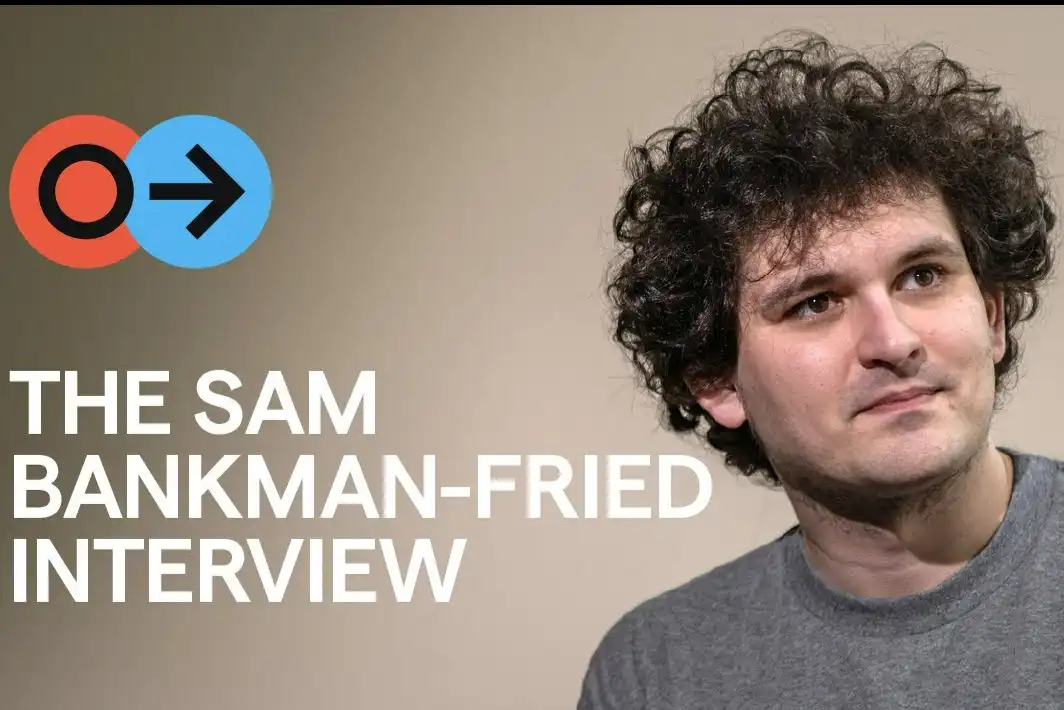
This is a conversation between Circle founder Jeremy and SBF, founder of FTX, in the currency Movement podcast, which explores the structure of blockchain-based markets and the impact of policies and regulations on the development of cryptocurrency economic infrastructure.
Jeremy : Welcome Sam, I have a lot of different things I want to talk to you about today, starting with the broader question about the impact of cryptocurrencies on the world, and the bigger question, as I like to say, why? I remember there was a professor in college who always asked, "Why are you doing this? Why are you doing what you're doing? What's really important, and so on."
I think people have a superficial understanding of cryptocurrencies. In the past you've talked a lot about effective altruism and the impact of these long-term games on the world from a value creation perspective. Now the question is why do you do what you do?
Sam:There are many ways to address this, and maybe I'll start with the market structure part of it, which I think is underrated, and everyone should have equal access. In a stock market structure, you need 10 different intermediaries and tens of millions of dollars a year to not even see the order in which they trade.
While the direct and fair access environment for the crypto industry helps inform and guide other financial products, I am excited to be part of the changing market structure and hope to help bring about what I believe is a more appropriate market structure for consumers.
Of course, doing this was an accident in a sense, like cryptocurrencies, a new earth that made people think again. For example, when it comes to trusteeship and liquidation, the process can be very confusing. I don't know who is who. Do you have the right of arbitration? A lot of infrastructure has to be created to answer that question.
But you can actually answer the question of who owns the bitcoin and who owns the USDC, which means you don't have to own this particular clearing and custodian company outright, which removes some of the confusion and helps to some extent on the blockchain. And you don't need a lot of intermediaries to facilitate the transfer of assets from one location to another, you can do it yourself directly.
Jeremy : yes. So dig a little deeper. Why is this important? Why is direct access to capital markets important? Why is there so much enthusiasm for fixing market structures, and what is it good for improving society and the world?
Sam:I want to answer this question in terms of forecasting markets. What are prediction markets? If you want to know if something is going to happen in the world, you can create a market for it. If you want to figure out what the temperature is going to be five years from now, you create a market for it and people can trade in that market, which is cool.
From market forces conclusions can be drawn about what the market price of temperature will be five years from now. If you go from studying global warming and trying to understand its impact on your model, and you work in a temperature-dependent business, like the energy sector or agriculture sector, then you come up with an answer.
If you want to buy oil, first of all, you have a lot of liquidity at your disposal, or if you're buying corn and you don't want to pay five times more than the average price, but who knows what the average price is? The market. In addition, any entity or business undertaking financial planning should consider how to price it and how this will affect our finances.
Now companies, why is the stock market important to them? Investors must know how much money to pay and how much it makes sense to invest in the business to help it grow. It's a pretty big waste of money for the world to have a business that isn't very creative but gets a lot of money from investors.
Jeremy : So we want to avoid that. Part of what you mentioned is that markets and information are kind of two sides of the same coin. At the end of the day, if the market produces information, investors will seek to get the best information because it is valuable.
My understanding of what you are saying is that cryptocurrencies and blockchains have the potential to bring more valuable information in a sense, and can incentivize better consultation, so that we can get the best information possible. Participants in the real world and the real economy will be able to use this information with greater security and to more beneficial effect. This infrastructure could improve the speed of information and economy on earth.
Sam:Exactly. We can talk about the other side of the coin, why is money useful? Because bartering is bad.
Jeremy : Information system. Money is a system of record, it's just an information organizing system, and it has a social contract that's very useful for the participants and the world we live in -- because it minimizes trust, it's global, and the cost of interacting with it is extremely low.
Sam:When you start thinking about money as a record-keeping system, it starts to make sense. Why distributed accounting...... Why is blockchain so useful for money? A blockchain is a globally decentralized distributed ledger, which is exactly what you need when you're trying to keep records.
Jeremy : An interesting story that I've shared several times, I met the CIO of the Federal Reserve some time ago and I pressed him, "What's the real DOLLAR?" He said, "What do you mean?" I was thinking, "Is it a database? What kind of database," and it turns out that dollar is a cluster of predictor databases, running on clusters like Sun Microsystem, Sun Microsystems, which is interesting.
There is a view that "the cryptocurrency industry is a speculative asset or something like that." Another view builds on what we just discussed: "This is the next generation of global economic infrastructure, providing a new foundation for the organization of economic activity," which gives us a new way to think about it: "We're not just talking about whether we should regulate people whether they can trade the currency, a stable currency or other counterfeit currency, and should be aware of is developing a strategic infrastructure, all over the world to work together. For example," what is this? What effect it produces? "I would like to hear you talk about the whole industry, encryption infrastructure, how to change the market structure?
Sam:Let's talk about remittances or social media messages. For example, you're trying to send money from someone in the United States to someone in Brazil, which goes back to your question to the Federal Reserve, what is a dollar? You're trying to send $1 from one account to another. What exactly are you sending? What does a dollar mean, or Brazilian currency? It gets worse because they are not a system.
The current system is that if you want two different people to talk to each other and transfer information or assets, you go through some private company that stores ledgers."
Jeremy : yes. Like PayPal and so on.
Sam:Yes, it definitely makes sense, but we've also seen the problems this creates in the world. When we look at people's reactions to Facebook's attempt to make a decision about whether to censor election content, we can see the flaws. Its services may not be what we see, the answers we trust are only the results of choice, the real question is who is in control of these two systems? How do two systems communicate with each other? This kind of small example makes a lot of sense, so we can make efficient services and innovate quickly.
Jeremy : Who has read/write access to the regulated database?
Sam:You can say it's the government, but really you're going to immediately think of something like, "Well, the government? Which government?" Again, this is a transfer between Brazilians and Americans, and which government controls this transfer. This is a question to which the right answer is not obvious.
When you talk about systems that provide feedback to the government, sometimes it's negative. Today we see some countries operating in this way. I think it has some features that a lot of people don't like. And blockchain technology is basically a reasonable third option, which is neither a company nor a government, but transmits and records information.
Jeremy In some ways, this is basically the next big thing on the Internet. It's like the next logical infrastructure layer, the next logical protocol layer of the Internet, playing a bigger role in society. Just like in the early days of the Internet, if you wanted to have a voice call with someone, in fact most of the voice calls were actually routed through most places through government-controlled infrastructure, essentially operated by these government monopolies, and the government had back doors to listen in on everything. But you can have free Internet with anyone through open source software and protocols on the Internet.
Sam:That's basically it.
Jeremy · Going back to policy, if you are the government, suppose you represent the interests of the people of the country, such as Congress. You need to try to figure out, "If this is the new economic infrastructure, what does this mean for the future development of our economy, and what opportunities does this create for families and businesses?"
Sam:The world has yet to answer many questions. We need to look to development for answers.
When you talk about open infrastructure, it's a combination of crisis and risk, it's not secure, it gives people access and choice. People can choose which protocol they want to access. That means choice matters. What we choose now may have a long-term impact on the decisions people make in practice.
Stablecoin is probably the most obvious example right now. Stablecoin means dollar stablecoin. There's basically no other stablecoin right now, and that's not what the world needs. If I were the Fed, I'd be thinking, "I hope the answer is dollars, not some other currency." When you think about what kind of stablecoin policy you should have, there are options that people can use. I think it's in a lot of people's interest to think about what they want those options to be. Then I think you should ask yourself the tough question, does that really mean you should try to get rid of stablecoins, or does that mean you should consider which stablecoins go mainstream? .
Jeremy : Obviously, it's the overlap of national competitiveness, the competitiveness of the dollar, this new global economic infrastructure that's going to achieve Internet scale in the coming years, that's going to have an important and huge impact. If you were the U.S. government, what would you want the currency of the Internet to be?
The point you made earlier is the importance of making sure that people can choose the protocols that they interact with, and openness is Paramount, and that's the air we breathe. It's just not historically the case, because it's these regulated database operators that control it. And we said, "No, it's the open Internet."
Sam:Yes.
Jeremy : The other part is technical potential. In fact, one of the underlying aspirations is to be able to deliver on-demand, coordinate work and delivery and all that, from anywhere, through seamless handheld devices. When the iPhone came out in 2007, no one said, "I want an on-demand driver that works seamlessly." The idea of underlying technological capability is that when you have these converged technologies and you have the ability to build it, no one can really predict what people are going to do with it. The same goes for cryptocurrencies, public links and smart contracts.
Programmable money has only been around for three years, there are hardly any programmable dollars on the Internet or programmable other currencies on the Internet, this is a brand new thing, like the infrastructure being built, and we don't yet know what people will do with it. We need to be selective to use these protocols because all the potential is there. I'd love to hear your thoughts on people using programmable money, what are we going to invent with programmable mobile money? What problems can people solve?
Sam:It's interesting, and I don't know some of the answers either, but I think interoperability is one thing I keep coming back to. We have so many systems today, but they don't talk to each other, and people seem to forget that. But this is a very important situation.
For example, if I'm on Facebook and you're on Twitter, you can't talk to each other, which breaks down communication. I think it's a real problem that's being ignored. Second, I don't think people realize how hard it is to send money.
Jeremy : This is really just a large database with a secure FTP server and CSV files.
Sam:Yes, but that's not how systems are built today, so the cryptocurrency industry will have a real impact on people. Especially for people who don't have a bank account or are underbanked, I think it's really fun to listen to their frustration.
Jeremy: We're seeing a lot of startups building applications using USDCS in Africa and markets, and just trying to make it faster and cheaper. I want to come back to the theme of what people can do with economic infrastructure that we haven't thought of yet.
Obviously, DeFi itself is a good example of a programmable currency, building protocols that allow people to interact with capital in different ways. The other fascinating thing is daOs, which are basically companies that exist on a chain. This is also an example of programmable currency and programmable governance. When we use this framework, it's like using a new Internet economy infrastructure layer, people can build things that were previously impossible, essentially new multinational companies. There's a lot of experimentation in this area, and a lot of tools and stuff are being built, but when are these going to become producers of goods and services? When will the entity representing the true new economic forum compete with the traditional economic forum?
Sam:Very good question. My guess is to wait for the regulatory results, let's say you have a DAO, a new economic unit, and nobody really knows exactly what the law is governing DAO, contract law? So personally I think it's hard for it to play a big role in society until we start going through this process.
Take the DAO example, the Aetherium Classic Board. Its question is: "What happened there? What determines whether these deals are withdrawn or not?" Would you go to court and ask them to cancel the blockchain transaction? If so, do you vote for one of the networks? What is the real web? If you don't know what the right answer is, THEN I think there's a lot of work to be done so that people can invest a trillion dollars in DAOs and understand why they're doing it.
Jeremy It feels like we're going to see more DAOs experiment, and it's one of those Spaces with potential economic and technical potential that nobody really knows what people are going to invent with. Maybe there will be some innovative protocols in the future that will be the new building blocks for commerce and things like that on the Internet. I would like to ask you about tokens and equity in a different way. Just like stocks, you are considering trading on FTX US and there are some tokenized equity products. How do you see the difference between native tokens and tokenized equity? For the user, how to choose?
Sam:I don't know how this is going to end, but I can tell you what I think right now, and I think we're in the early stages of this situation, at least for a while, where tokenized equity is stablecoin equity against the dollar. What is tokenized equity? It is a tokenized package of underlying financial assets, one of which has the same advantages and disadvantages as stablecurrencies and the US dollar. And I think tokenized stock can be a lot easier to interact with and get a lot of advantages, but at least for a while it's probably not going to be an actual equity, it's just a proxy for equity, and sometimes you need to switch back and forth between an ecosystem based on the tokenized version and an ecosystem based on the underlying version.
But I think over time there's going to be more and more tokenized versions, or more systems moving there. Again, you can ask questions such as who owns the asset and get answers in a clear, concise and unambiguous manner. Anyone can challenge that, and I think there's a lot of power in that.
Jeremy : Another related issue is the tokens that exist in the project. From a broader market perspective, how do you see the difference between native crypto tokens and stocks and so on?
Sam:That remains to be determined. There are a lot of interesting things that will depend on how their protocol tokens evolve. The question that this is going to revolve around is what is the style of protocol token? Are they collectors in the chain, or are they in the core governance mechanism? Traditionally, equity has been both.
On distinction, on one hand original focus on management respect. Governance is clearer and easier to enforce on the chain than through current corporate governance mechanisms, especially for people or others other than the five members of the board. When talking about random stakeholders, where is the coordination between 10,000 stakeholders? The answer is that blockchains provide a way to do this and, if you will, hand governance to stakeholders on the chain. On the other hand, you can have multiple governance tokens for different purposes, and technically you can have multiple classes of equity, but not as diverse as tokens.
Jeremy : It is very difficult to coordinate social parties in traditional industries. But here, I want to talk about identity. A long time ago, I felt that there were a few layers missing from the Internet. The natural missing layer was money and the other layer was identity. There are a lot of reasons why interconnected assets and identities don't really exist on the Internet in any protocolized way, but cryptographic primitives are actually starting to make it possible to solve both of these problems. When you look at the use of cryptocurrencies, cryptofinance, DeFi, DAO, and NFT today, what do you think about identity, whether it's real identity expressed on the chain, or identity tokenization used in the form of NFT? What does an identity need to do to unlock all of its infrastructure?
Sam:What we don't have is on-chain identity. The reason is that when you think about identity, what you're thinking about only exists in a centralized pool. There is a centralized exchange identity on FTX that can collect KYC information, there is no identity elsewhere, the user owns the blockchain address, and the user can always create a new blockchain address. I think it unlocks a lot of things when identities are chained, and it's not that hard, like we collect people's FTX accounts, and we can create a button that you click and enter your blockchain address. We output some comments to the blockchain that say, "We verify that this blockchain address is associated with KYC in order to account on FTX." It can then be read by any on-chain protocol.
The second thing is the other side of identity, like social identity. You see it in people's Twitter feeds, you see it in their Facebook profiles, you see it in their game achievements in video games. They are all scattered at the moment, with no coherent sense of someone's identity, with their LinkedIn, with their Facebook. Combine on-chain identity with NFT and other things, and you can suddenly have a blockchain address that starts to accumulate various forms of identity from many different sources, and everyone can read all of that. Suddenly, identity is like "Who's Jim?" You send them an address, Jim pops up, and you learn a lot about Jim."
Jeremy : We will need many different encrypted addresses to help us deal with these privacy, preferences, etc. As you know, we are optimistic about the field, and there are still a lot of things that haven't been discovered yet. Thank you for joining us and look forward to seeing you again.
Sam:good I am very happy and excited about the prospects of the industry.
Welcome to join the official BlockBeats community:
Telegram Subscription Group: https://t.me/theblockbeats
Telegram Discussion Group: https://t.me/BlockBeats_App
Official Twitter Account: https://twitter.com/BlockBeatsAsia

 Related Articles