



a16z Partner: Market Entry Strategies in the Web3 Era
Original author: Maggie Hsu, a16z partner
Original title: "Go-to-Market in Web3: New Mindsets, Tactics, Metrics"
Original translation: Web3er Liu, Chain Catcher
All companies face different types of "cold start problems": How to start from scratch? How to acquire users? How to create network effects (when more people use a product or service, the product or service becomes more valuable to users, thereby stimulating more users to pursue it)? In short, how should a company "enter the market" and make potential users spend their money, time and attention on the company's products or services?
In the Web2 era, large centralized products and services launched by giants such as Amazon, eBay, Facebook and Twitter defined the Internet era, in which most of the value was attributed to the platform rather than the user. Most companies or organizations in the Web2 era invested heavily in their marketing teams as part of the traditional Go-to-Market (GTM) strategy. GTM focuses on creating potential users, acquiring and retaining existing users.
But in recent years, a new organizational model has emerged that uses decentralized technology to make users owners of the organization through digital primitives called tokens. At the same time, this new organizational model is not controlled by the enterprise, and product decisions are not made by centralized leaders, even when using consumer data and user-generated content.
This new model, called Web3, has completely changed the GTM concept of emerging companies. While some traditional user acquisition frameworks are still relevant, the introduction of tokens and new organizational structures such as DAOs require a variety of go-to-market methods. Web3 is still new to many people, but there is huge room for development in this field. In this post, I will share some new frameworks for thinking about GTM in the context of Web3, and the different types of organizations that may exist in the Web3 ecosystem. I will also provide advice for builders who are looking to create a GTM strategy as Web3 evolves.
A New Catalyst for GTM: Tokens
The concept called the "User Acquisition Funnel" is at the core of GTM, and most companies are familiar with this concept: from "awareness and lead generation" at the top of the funnel to "user conversion and retention" at the bottom of the funnel. The traditional Web2 "Go-to-Market" solves the cold start problem through this linear user acquisition perspective, covering aspects such as pricing, marketing, partnerships, sales channel maps, and sales force optimization. Generally speaking, the indicators for measuring the success of GTM include time to complete a lead, website click-through rate, revenue from each user, etc.
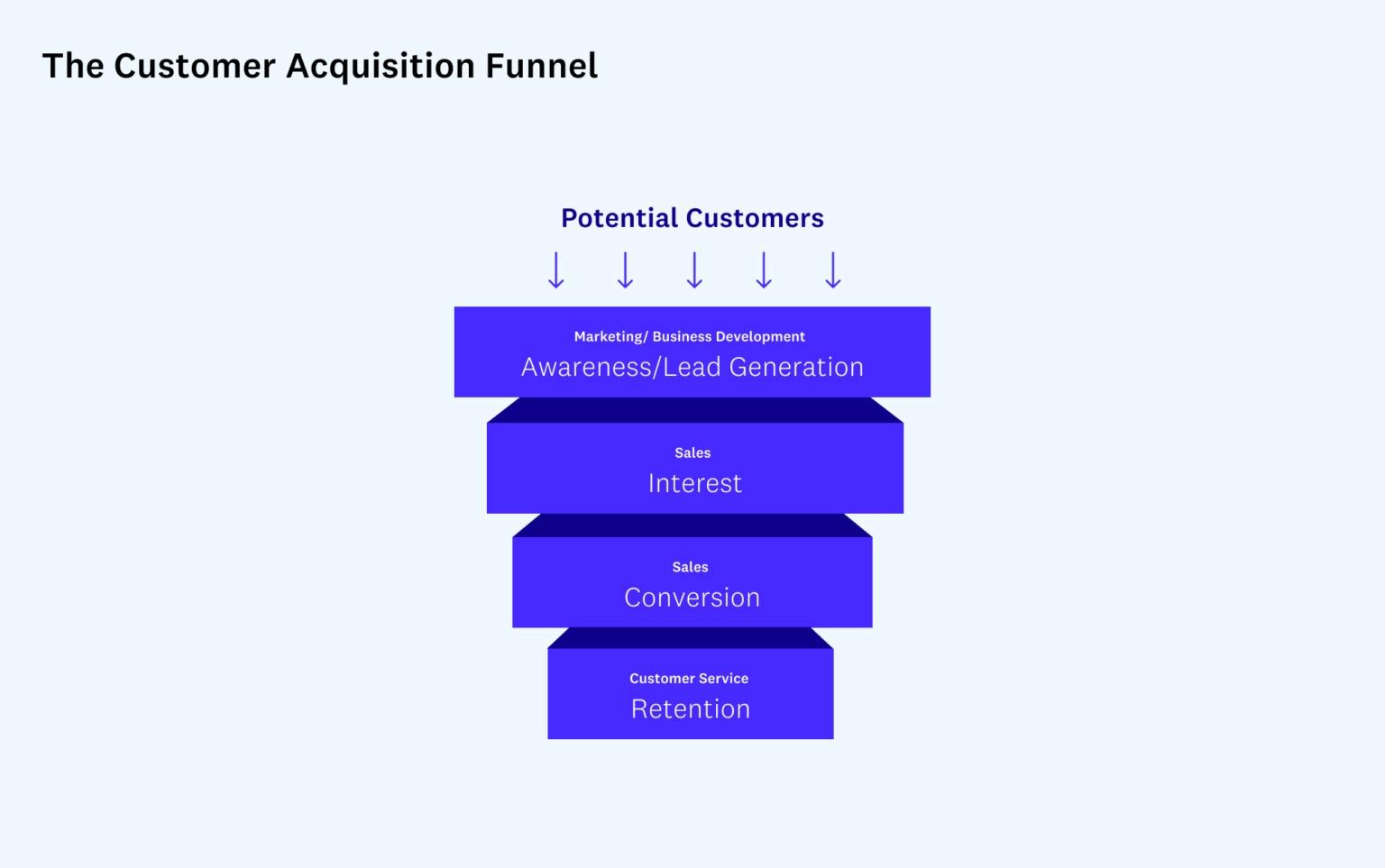
Web3 changes the entire paradigm of onboarding new networks because Tokens provide a disruptive approach to solving the cold start problem. Instead of spending money on traditional marketing channels, the core development team of a project can attract early users through Tokens . These early users can be rewarded for their early contributions when network effects are not yet apparent or have not yet occurred. In essence, these early users are evangelists who bring more people into the onboarding network (they also want to be rewarded for their efforts) and are more powerful than marketers or traditional business developers in Web2.
For example, the lending protocol Compound uses Tokens to incentivize early lenders and borrowers, providing additional rewards in the form of COMP tokens for participating in, or "bootstrapping liquidity " liquidity mining programs. Any user of Compound, whether a borrower or lender, will receive COMP Tokens . After the incentive program was launched in 2020, Compound's total locked value (TVL) jumped from $100 million to $600 million.
It is worth noting that while Token incentives attract users, this alone is not enough to generate "user stickiness ". Although traditional corporate organizations often incentivize employees through equity, they rarely reward users with long-term economic incentives (except for shopping discounts or rewards for attracting new users).
To summarize: In Web2, the main stakeholders of GTM are users, usually obtained through marketing. In the Web3 ecosystem, the GTM stakeholders of a project or organization include not only users, but also developers, investors, and partners. Therefore, many Web3 companies find that the role of the community is more important than marketing.
Web3 GTM Matrix
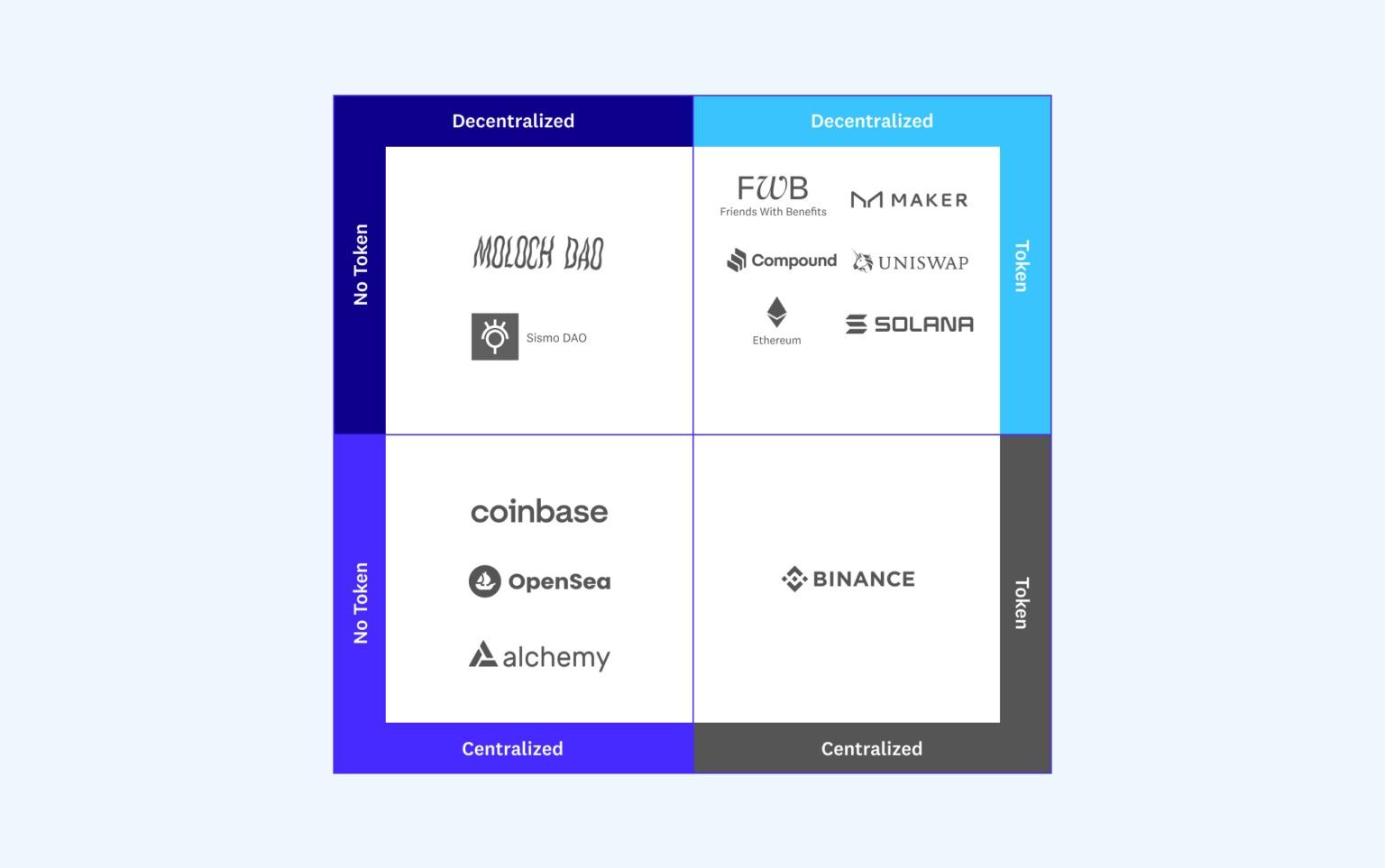
For Web3 organizations, the GTM strategy depends on where the organization is in the following matrix. The matrix is based on organizational structure (centralized/decentralized) and economic incentives (no Token /with Token ).
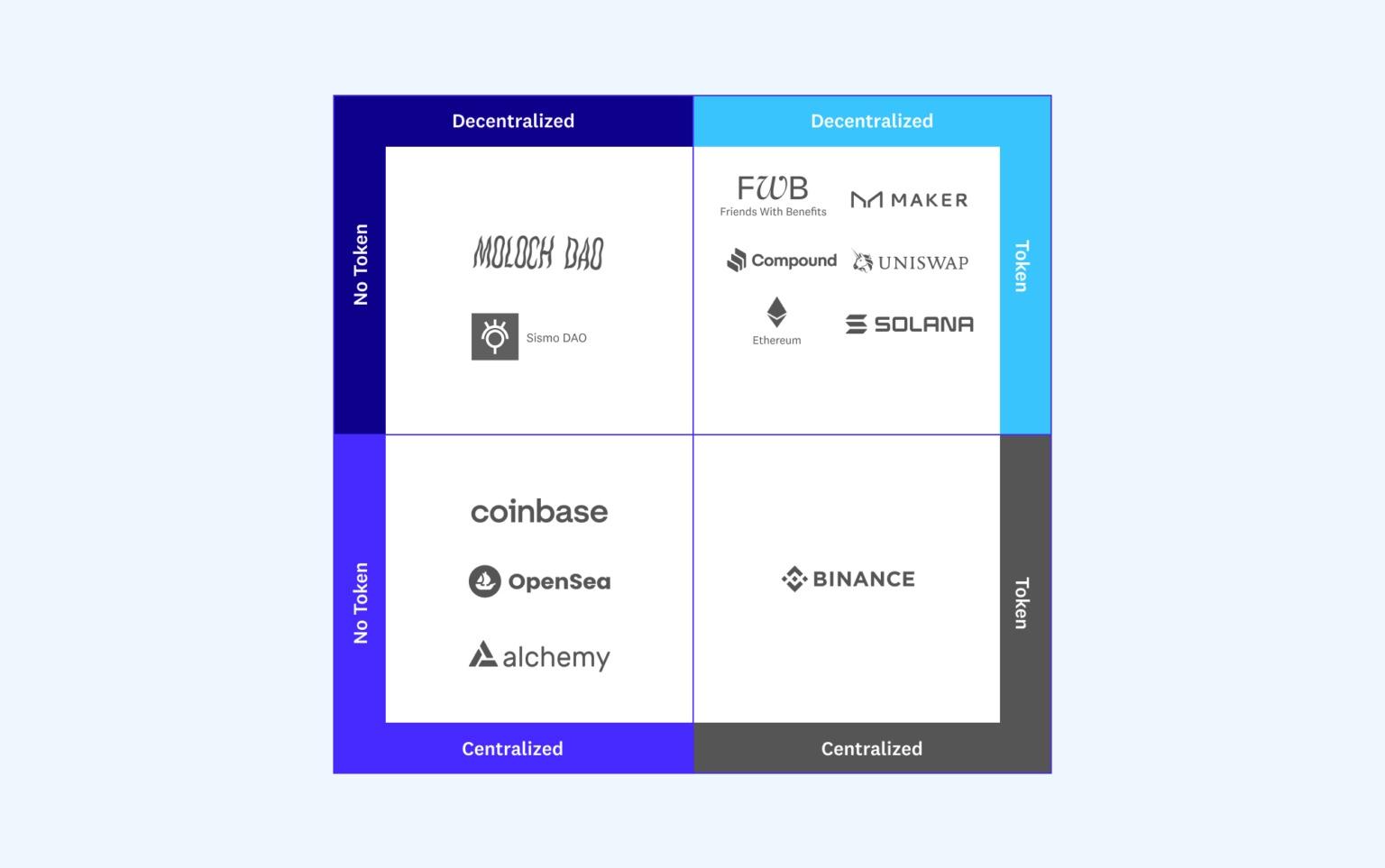
Each quadrant has a different “Go-to-Market” direction, ranging from traditional Web2-style strategies to emerging and experimental strategies. I will focus on the top right quadrant (decentralized teams with
Token
) and contrast it with the bottom left quadrant (centralized teams without
Token
) to illustrate the differences in Web3 and Web2 GTM methodologies.
Decentralized Teams with Tokens
First, let’s look at the upper right quadrant. This includes organizations, projects, and networks with unique Web3 operating models that require novel GTM strategies.
Organizations in this quadrant follow a decentralized model (although projects often start with a core development team or operations staff) and use a token economy to attract new members, reward contributors, and align incentives between participants. The fundamental difference between Web3 organizations in this quadrant and those using a traditional GTM approach lies in a core question: what is the product? While Web2 companies and those in the lower left quadrant must start by building a product that attracts customers (“born for tools, live for the network”), Web3 companies enter the market through a dual lens of purpose and community.
Having a solid technical foundation and product is always important, but it doesn’t have to come first.
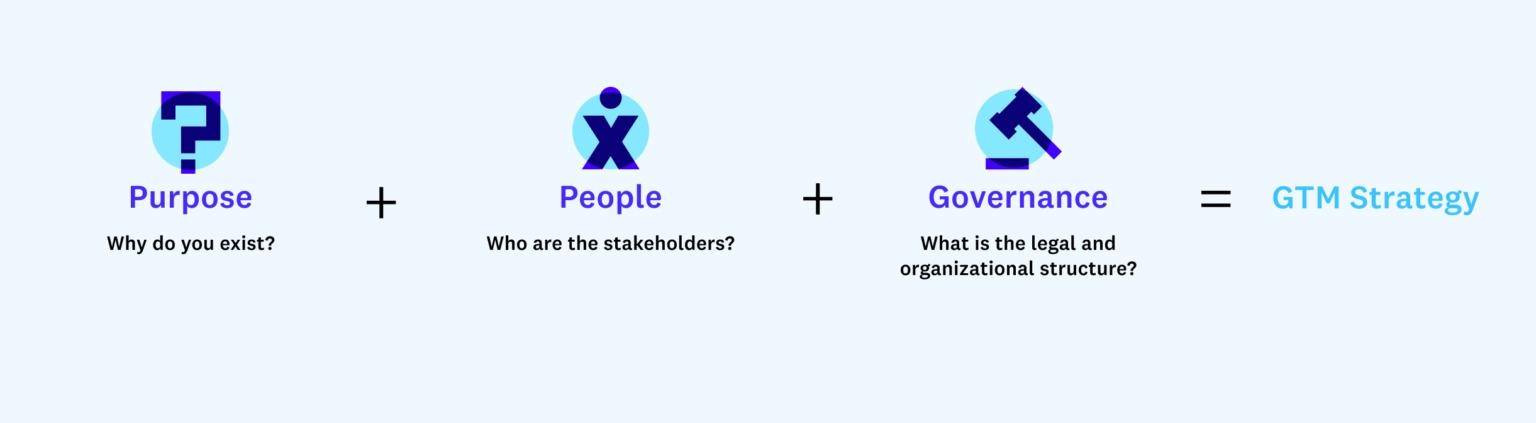
What these Web3 organizations need is a clear purpose that defines their reason for existence. What is the problem they are solving? This also means that projects need to do more than just rely on white papers and founding teams to raise funds, but also have a strong community - not just "community-led" or "community-first", but community-owned - blurring the distinction between owners, shareholders, and users. Having an engaged and high-quality community, and matching the right organizational governance goals with the community, will be the clear goal to ensure the long-term success of the project in the Web3 space.
Now, let's dive into the GTM motivations of the two major categories of Web3 organizations in the upper right quadrant. (1) Decentralized applications (2) Layer1 blockchains, Layer2 solutions, and other protocols.
GTM Motivations of Decentralized Applications
“Decentralized applications” covers use cases such as DeFi, NFTs, social networks, and games.
DeFi DAOs
A major category of decentralized applications is decentralized finance (DeFi) applications, such as decentralized exchanges (such as Uniswap or dYdX) or stablecoins (such as MakerDAO’s Dai). While they may have similar GTM motivations to centralized applications, the value creation methods of both parties are different due to differences in organizational structure and Token economic models.
Many DeFi projects follow a path where the protocol is first developed by a centralized team, and after the protocol is released, the team attempts to decentralize the protocol to improve its security and distribute management rights over the protocol's operations to a group of Token holders. This decentralization is usually accomplished by simultaneously issuing a governance Token , launching a decentralized governance protocol (usually a decentralized autonomous organization, or DAO), and granting control of the protocol to the DAO.
This decentralization process can involve many different entities. For example, many DAO organizations have no associated legal entity and operate solely in the digital world, while others use multi-signature wallets and act under the guidance of the DAO community. In some cases, a non-profit foundation is established to oversee the future development of the project under the guidance of the DAO. In almost all cases, the original development team will continue to operate as a contributor to the ecosystem created by the project and develop complementary or ancillary products and services. (The whitepaper contains more details on the legal framework of a DAO, ranging from factors like taxation and entity formation to operational issues).
Here are two common examples of DeFi:
MakerDAO started as a DAO in March 2015, established a foundation in June 2018, and retired in July 2021. MakerDAO has a stablecoin, Dai, which aims to allow users to make fast, low-cost, borderless, and transparent transactions in a stable unit of value. This can be done by purchasing goods and services or participating in other DeFi applications. It also has a governance token, MKR. The DAO approves various governance changes and certain parameters of the protocol's operations, including the collateralization rate that the protocol uses to mint DAI.
Uniswap was launched by a centralized company, Uniswap Labs, but is now owned and governed by the Uniswap DAO, which is controlled by UNI Token holders. Now, Uniswap Labs controls an interface to the Uniswap protocol and is one of many developers contributing to the ecosystem.
So, what does "Go-to-Market" look like here? Taking DAI, the algorithmic stablecoin issued and managed by MakerDAO, as an example, one of the goals of most algorithmic stablecoin issuers (such as MakerDAO) is to spawn more stablecoin use cases in the financial ecosystem. Therefore, MakerDAO's motivation for entering the market is to: 1) list DAI on cryptocurrency trading platforms for retail and institutional-level transactions; 2) enable DAI to be integrated into wallets and applications; 3) enable DAI to be accepted as a payment tool. Today, there are more than 400 markets supporting DAI, it has been integrated into hundreds of projects, and has been selected as a payment method through mainstream business solutions such as Coinbase commerce.
How did they do it? MakerDAO initially did this through a traditional business team that drove many of the early partnerships and integrations. However, as MakerDAO became more decentralized, its business development functions were more borne by the "Growth Core Units" section of the SubDAO, a community of token holders.
In addition, because MakerDAO is decentralized, its protocol operates trustlessly and permissionlessly, and anyone can use the protocol to mint or buy DAI. Because DAI's code is open source, developers can integrate DAI into their own applications in a self-service manner. Over time, the self-service nature of DAI will become stronger, with better developer documentation and more integration examples, allowing other projects to build on it at scale.
GTM Metrics for DeFi DAOs
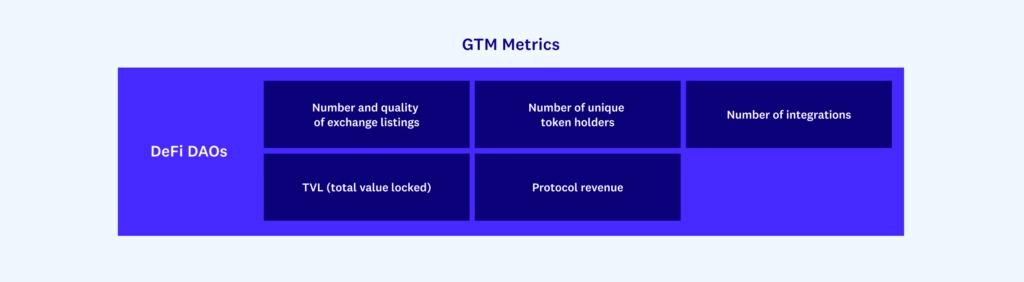
With the introduction of new marketing strategies in the Web3 era, new GTM metrics have naturally emerged. For DeFi applications, the standard metric is the total value locked (TVL). It measures all assets traded, staked, and borrowed in the protocol or network class.
However, TVL is not an ideal long-term metric for measuring the health and success of an organization. Although new DeFi protocols can copy open source code, provide high returns to users, and attract a large amount of capital inflows to increase TVL, this is not necessarily sticky - traders usually withdraw funds when the next new project comes along.
Therefore, more critical metrics to track can be the number of independent Token holding addresses, community engagement and sentiment, developer activity, etc. In addition, since projects are composable and can be programmed to interact and build on each other, integration becomes another key metric (the number and type of integrated projects, how the projects are used in other applications such as wallets and trading platforms).
Social, Cultural and Art DAOs
For social, cultural and art DAOs, GTM means building a community with a specific purpose - sometimes even starting with text chats between friends, and organically growing the community by finding other people with the same purpose. But how is this different from "a chat group" or traditional Kickstarter crowdfunding?
There is still a difference between the two. Although organizers of traditional Web2 crowdfunding projects also have a clear purpose, they must clarify the methods to achieve this purpose from top to bottom. Project initiators usually list the purpose of the funds raised in detail, a clear product roadmap and a comprehensive timeline. In the Web3 model, the purpose is the most important, and the method is often determined later, including how to use funds, product roadmaps and timelines.
For example, for ConstitutionDAO, the purpose was to buy a copy of the U.S. Constitution; for Krause House, the purpose was to acquire management rights to an NBA team and pioneer fan-managed teams; for LinksDAO, the purpose was to create a virtual country club with a community of golf enthusiasts; and for PleasrDAO, the purpose was to collect, display, and creatively add or share NFTs for the community to represent culturally valuable ideologies and movements.
In the case of ConstitutionDAO, it raised $47 million from a community of strangers who came together for this purpose, the whole process was completed in a few weeks, with a clear purpose at the beginning, and raised funds only for this specific purpose. Beyond that, ConstitutionDAO had nothing else - no clear roadmap, execution plan, or even a Token when participating in the auction (PEOPLE Token was created after the bid failed). The individuals who provided funds were aligned with the purpose and incentivized by the community, and they just wanted to contribute and spread the word. At that time, Twitter was full of related emojis, and even became an emoji package.
Friends with Benefits is a social DAO with "Token Gate", which was originally a Discord server with a Token threshold for Web3 developers. In addition to purchasing a minimum number of FWB Tokens (representing membership in the DAO), potential members must apply in writing to join FWB. The FWB community continued to grow, connecting in various Discord channels, hosting IRL events, and eventually realized that one of the products they could create was a " Token gated" application. FWB allows creative developers to gain real benefits in the community, and the DAO framework enables this decentralized social group to coordinate at scale, allocate budgets, and complete projects from publishing content to producing events.
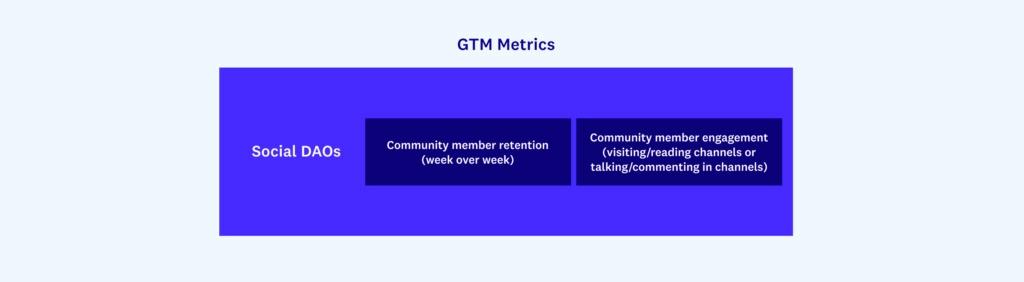
Market indicators for social DAOs: One of the key indicators of the health of a DAO is the quality of community participation, which can be measured by the main communication and governance platform it uses. For example, a DAO could track channel activity on Discord, member activation and retention numbers, community meeting attendance, governance vote participation (including voting frequency), and actual work being done (number of paying contributors).
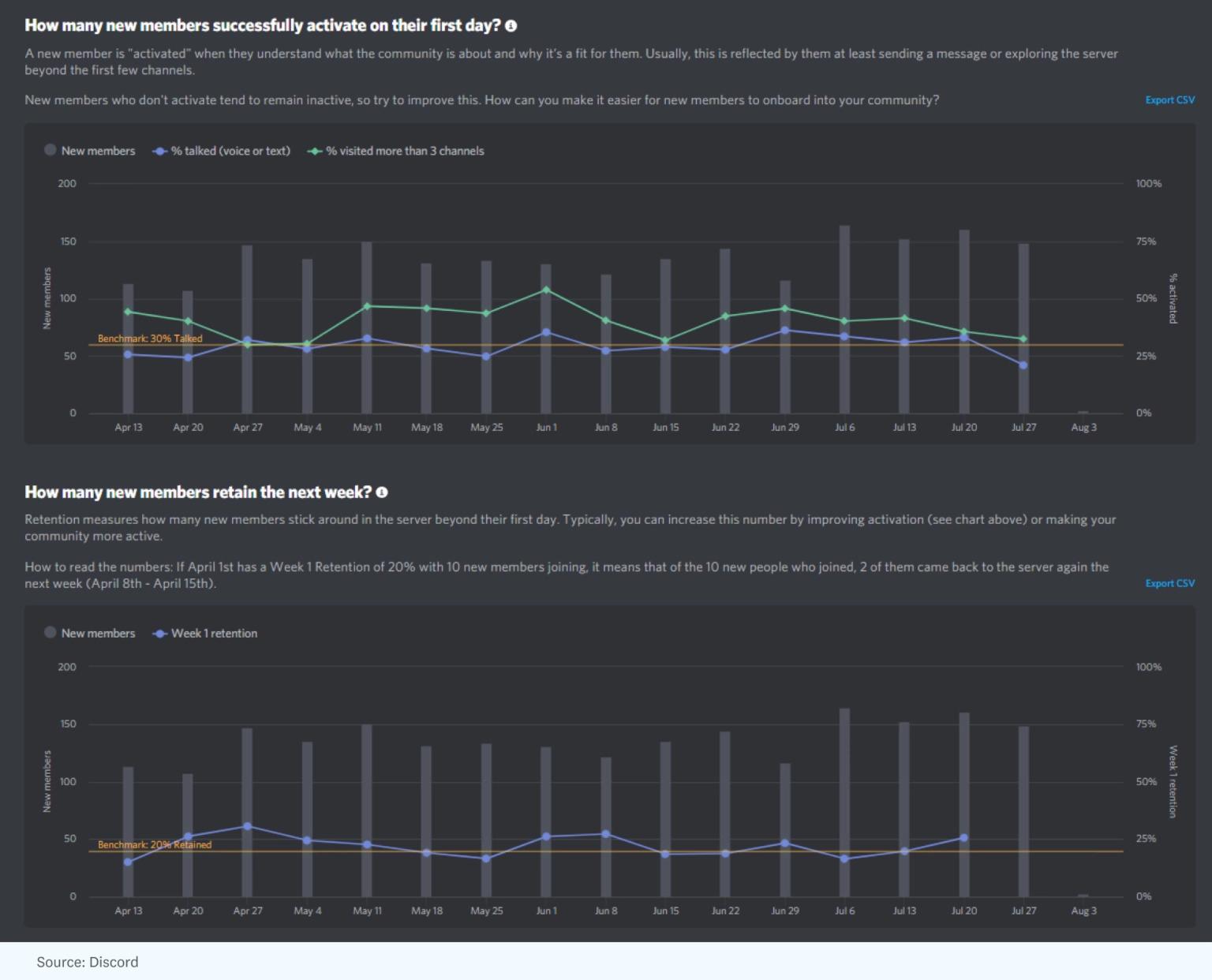
Other metrics could be new connections made within the network, or trust established between members of the DAO community. While some tools and frameworks do exist here, metrics for social DAOs is still an emerging area, and we’ll see more tools emerge as the field progresses.
Game DAOs
Today, most Web3 games, whether play-to-earn, play-to-mint, move-to-earn, or other types, are very similar to popular Web2 games, but with two key differences: Web3 games use game assets on an open public blockchain platform, unlike the closed economic system of traditional pay-to-play and free-to-play games. At the same time, Web3 game players are able to become real stakeholders and have a say in the governance of the game itself.
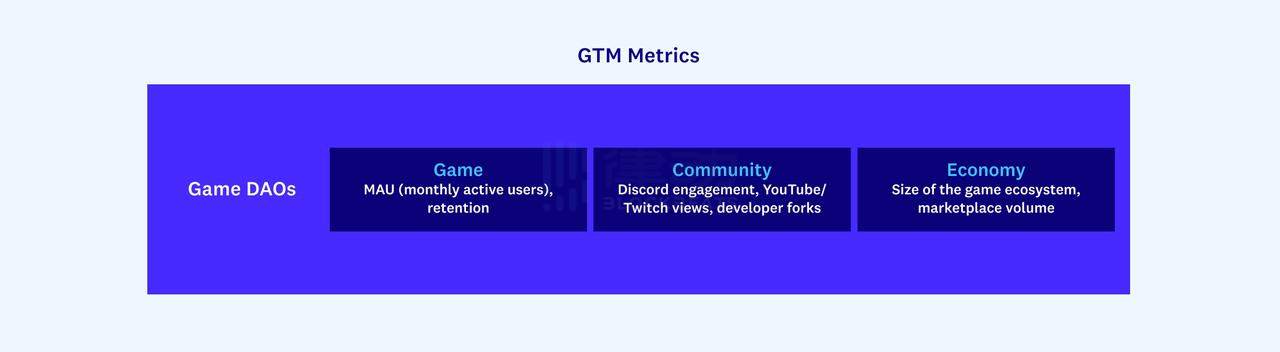
In Web3 games, marketing strategies are built through player referrals and guild partnerships. Guilds like Yield Guild Games (YGG) allow new players to rent game assets to start playing. Guilds choose which games to support based on three factors: game quality, community strength, and robustness and fairness of the game economy. Game, community, and economic health must go hand in hand.
While developers of blockchain games may have a lower ownership share or commission, by incentivizing players to become game owners, developers are helping to grow the game economy for everyone.
But unlike Web2, Web3 is purpose and community driven. For example, Loot is a game based on content rather than gameplay, and it drives GTM based on purpose and community rather than product. Loot is a collection of NFTs, each of which is called a Loot bag, representing a unique set of adventure gear (e.g. Dragonhide Belt, Wrath Silk Gloves, Enlightenment Amulet). Loot essentially provides a hint, or a building block-like primitive. Games or other projects can be built on top of it. The Loot community has been inspired by the Loot bag to create a variety of game projects, from analysis tools to derivative art and music collections.
The key idea here is that Loot has grown not because of existing products that attract users to flock to it, but because of the idea and narrative it represents - an open, composable network that embraces a variety of ideas and incentivizes users through Token . Loot's community creates the product, not the network itself. Therefore, a key metric here is the number of derivatives, for example, which can be considered more valuable than traditional metrics.
GTM for Layer1 Blockchains and Other Protocols
In Web3, Layer 1 refers to the underlying blockchains, such as Avalanche, Celo, Ethereum, and Solana. These blockchains are open source, and any developer can build on them, copy or change them, and integrate with them. The development of these blockchains depends on whether more applications are built on them.
Layer2 refers to technical solutions that run on existing Layer1 to solve the scalability problem of the Layer1 network. One type of Layer2 solution is rollup. Layer2 rollups do this - they "aggregate" transactions from the Layer2 network and then transmit the data to the Layer1 network through a bridge. There are two main types of Layer2 rollup solutions. The first is Optimistic rollup, and "Optimistic" assumes that transactions are honest and there is no fraud. The second is ZK rollup, which uses "zero-knowledge proofs" to determine the legitimacy of transactions. Most of these Layer2 solutions are currently serving the Ethereum network and do not yet have their own Tokens , but we will discuss them here because their GTM metrics are similar to other Layer2 networks that have issued tokens.
The growth of Layer1 blockchains, Layer2 solutions, and other protocols can come from forks, that is, the code and architecture of a network is copied and then slightly modified. For example, Celo was forked from Ethereum, Nahmii and Metis were forked from Optimism, and Uniswap was forked to become SushiSwap. While being forked may seem negative, the number of forks of a network is actually an indicator of its success - it shows that others want to copy it.
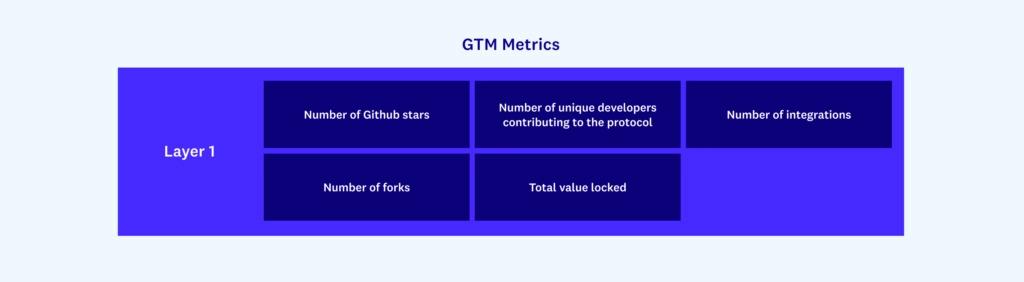
All of the above examples and ways of thinking are concentrated in the upper right quadrant, that is, decentralized projects with Token , which are broadly speaking the most advanced Web3 examples. However, depending on the type of organization, there is still a considerable mix of Web2 GTM strategies and emerging Web3 strategies. When builders are developing market strategies, they should understand the boundaries of various approaches, so now let's take a look at the hybrid model that combines Web2 GTM and Web3 GTM strategies.
Centralized and Tokenless: A Hybrid of Web2 and Web3
Many companies in this lower left quadrant (centralized teams without tokens) provide users with access to Web3 infrastructure and protocols through portals or APIs. In this quadrant, Web2 and Web3 have a lot of overlap in GTM strategies - especially in the SaaS and marketplace sectors.
Software as a Service
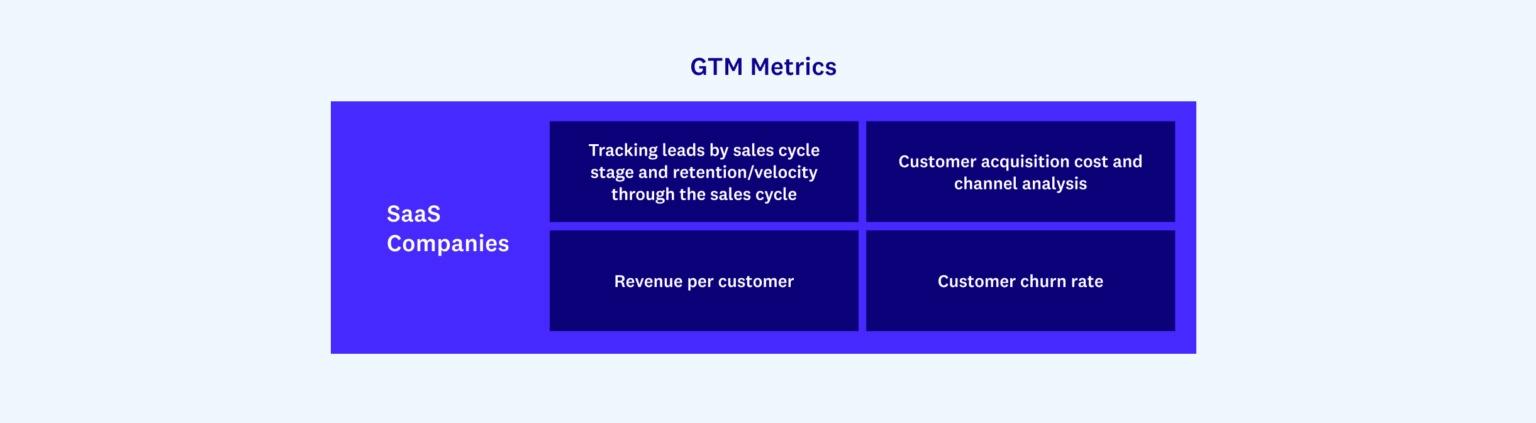
Some companies in the lower left quadrant follow the traditional Software as a Service (SaaS) business model, such as Alchemy, which provides "node as a service". These companies provide on-demand infrastructure through different tiers of subscription fees, which are determined by factors such as the storage capacity required, whether the node is shared or dedicated, and the number of requests per month.
SaaS business models typically require traditional Web2 go-to-market incentives, and customer acquisition is through a combination of product- and channel-led strategies:
Product-led user acquisition is all about getting users to experience the product itself. For example, one of Alchemy’s products is Supernode, an Ethereum API for all organizations that want to build infrastructure on Ethereum but don’t want to manage it themselves. In this case, users experience Supernode through a free tier or free model, and these users recommend the product to other potential users.
In contrast, channel-led user acquisition is all about differentiating between different customer types (e.g., public vs. private sector users) and aligning the marketing team with those customers. In this case, a company might have a marketing team focused solely on public sector users, such as government and education, and gain a deep understanding of the needs of this customer group.
In this article, I provided an overview to help explain the difference between Web2 and Web3 GTM strategies, but it’s important to note that developer-centric outreach and developer relations — including developer documentation, events, and education — are also very important here.
Exchanges
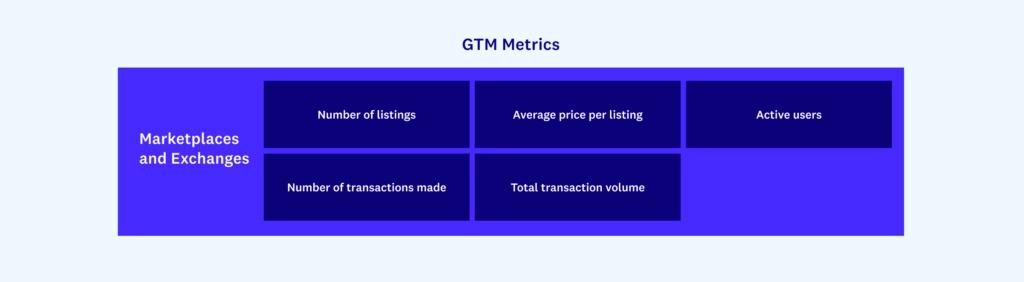
Other companies in the lower left quadrant rely on marketplace and exchange models that are relatively familiar to consumers, such as peer-to-peer NFT marketplace OpenSea and crypto exchange platform Coinbase. These businesses generate revenue based on fees from transactions (usually a percentage of the transaction), which is similar to classic Web2 business models like eBay and Amazon.
For such companies, revenue growth comes from the number of products listed, the average dollar value of each product listed, and the increase in the number of platform users, which together lead to increased trading volume while benefiting users in terms of diversification, market liquidity, etc.
Here, a key move into the market is to partner with other platforms to increase distribution channels and showcase featured products. This is similar to Amazon's affiliate program, in which bloggers can link to products they like, and any purchases made through these links will give the blogger a commission. But a key difference between Web2 and Web3 is that in addition to affiliate fees, Web3 also allows royalties to be distributed to creators. For example, OpenSea, through their white label program, provides a traditional reseller sales channel, and purchases made through referral links will give the reseller a percentage of sales, but it also allows for royalties to be collected, and creators can continue to receive a percentage of profits from any secondary sales.
Since creators now have the opportunity to continue to monetize their work through secondary markets, which are not seen in the Web2 system at all, let alone capture value - they are incentivized to continue to promote this market. Creators will also become evangelists.
GTM Strategies
Now that I have shared an overview of key mindset and specific use cases, let’s look at specific GTM strategies often seen in Web3 organizations. These are core ingredients, not a complete playbook, but can still help builders entering and exploring the Web3 space to understand strategies and make choices.
Airdrops
Airdrops are when a project distributes tokens to users to reward specific behaviors that the project wants to incentivize, including testing network or platform performance. These Tokens can be distributed to all existing addresses on a particular blockchain network, or distributed in a targeted manner (such as to specific key influencers); Often, they are used to solve the cold start problem - attracting traffic, rewarding or incentivizing early users, etc..
In 2020, Uniswap airdropped 400 UNI to anyone who used the platform. In September 2021, dYdX airdropped DYDX Tokens to users. More recently, ENS airdropped to anyone who owned an ENS domain (a decentralized .eth domain); the airdrop took place in November 2021, but anyone who owned an ENS domain before October 31, 2021 is eligible to receive (until May 2022) the ENS airdrop, which provides Token holders with governance rights related to the ENS protocol.
In the non-fungible Token sphere, airdrops for NFT projects are also becoming increasingly popular. The most recent notable airdrop came from the Bored Ape Yacht Club, a collection of 10,000 unique NFTs; on August 28, 2021, BAYC created the corresponding Mutant Ape Yacht Club. Each BAYC NFT holder was given a mutant serum, allowing them to mint 10,000 "mutated" apes. In addition, new participants can also participate in obtaining 10,000 new mutant apes. Because there are different types of serum, and they can only be used once, different Bored Apes cannot use multiple serums of the same level, and the serum adds a new scarcity feature.
The rationale for creating MAYC was to "reward Ape NFT holders with a new NFT" - a "mutated" version of the Ape NFT - while also allowing newcomers to enter the BAYC ecosystem as lower-level members. This maintains broader community accessibility without diluting the exclusivity of the original set or making those original owners feel like their contributions are being downgraded. (Another way to address accessibility is NFT fragmentation, where one NFT has multiple owners). The MAYC floor price, or the minimum order price for MAYC, has always been lower than the BAYC floor price, but owners have essentially the same interests.
These airdrops are done retroactively to reward NFT holders or protocol users (just like the ENS airdrop), but airdrops can also be used as proactive GTM activities designed to generate awareness for a specific project and encourage people to try it. Since information on the blockchain is public, a new project can airdrop to all wallet addresses that use a specific wallet or all wallet addresses that hold a specific Token .
In any case, projects should clearly articulate their overall Token distribution and categorization plans before conducting an airdrop. There are many cases of airdrops being used for nefarious purposes or airdrops going wrong. Additionally, in the United States, airdrops of tokens may be considered securities offerings, so projects should consult legal counsel before engaging in any such activities.
Developer Grants
Developer grants are grants from the protocol treasury to individuals or teams who have contributed to the protocol in some way. This can serve as an effective GTM strategy for DAOs, as developer activity is an important component of the success of a protocol. Examples of projects and protocols with developer grants include Celo, Chainlink, Compound, Ethereum, and Uniswap.
But grants can be used for everything from protocol development to bug bounties, code audits, and other activities beyond programming. Compound even has a grant related to business development and integrations to fund any integration that promotes Compound adoption. An example of this is that they funded a fund to integrate Compound and Polkadot together.
Memes
Viral images with text overlays are another GTM strategy for web3 organizations. Given the complexity and breadth of the cryptocurrency ecosystem, and the short attention span of social media users, memes allow information to spread quickly. Memes can also convey signals of belonging, community, goodwill, etc. in a highly information-dense way.
Viral images with text overlays are another GTM strategy for web3 organizations. Given the complexity and breadth of the cryptocurrency ecosystem, and the short attention span of social media users, memes can convey information quickly. Memes can also signal belonging, community, goodwill, and more in a highly information-dense way.
The NFT project Pudgy Penguins, a collection of 8,888 penguins, was launched because of its meme properties.
The collection sold out within 20 minutes of going on sale and was featured in major media, helping such projects enter the mainstream. The community element of social display and "PFP" (profile picture) collection - in Web3, people set NFTs as their personal avatars on social media - also drives this virality. Twitter recently launched a feature that allows users to set their NFTs as profile avatars and display them as special hexagonal shapes by connecting to OpenSea's API.
When an NFT holder with a large number of followers changes his social media profile picture to an NFT in an NFT project, it will attract attention to the project, and the NFT holder of the project will usually follow all holders of the NFT project. These actions in turn will trigger other meme elements, such as in Crypto Covens and the "web2 me vs. web3 me" meme, where users show their witch NFTs next to their real faces to convey information such as identity and belonging.
So what does all this mean for the founders of Web3 projects?
In Web2 companies, founders not only set the top-down vision, but were also responsible for nurturing the team and planning and executing against the vision. In Web3, founders play more of a gardener role, helping to nurture potentially successful products while also preparing for it all. While Web3 project founders still set organizational goals and the initial governance structure, the governance structure itself may soon bring new roles.
Founders may optimize for protocol experience and community quality rather than optimizing for headcount growth or revenue generation. Additionally, after decentralization, project founders must adapt to an environment where there is no hierarchical power structure, and they are one of many players in making a particular project successful. Therefore, before decentralization, founders should ensure that their project can succeed in such an environment.
I witnessed some of this firsthand when I served as Chief of Staff to Tony Hsieh, former CEO of Zappos.com, an e-commerce company now owned by Amazon. Starting in 2014, the company experimented with more decentralized (compared to only top-down) governance structures, including a self-organizing management system called “holacracy .”
Holacracy involves a hierarchy of jobs rather than people, with mixed results. Hsieh offers a useful metaphor, comparing himself to a cultivator of plants in a greenhouse (in the holistic governance model), rather than the best plant. He says he needs to be a “builder of the greenhouse” — creating the right conditions so that all the other plants can thrive.
Today, Alex Zhang, the “mayor” of the social DAO Friends with Benefits (FWB), feels the same way, saying his job is “not to set a top-down vision” but to facilitate the creation of frameworks, permissions, and regulations for community members to approve and build on. While Web2 leaders focus on updating product roadmaps and driving new product releases, Alex Zhang sees himself more as a gardener than a top-down builder. His role involves watching FWB’s “neighbors ” (in this case, Discord channels) and performing curation work by clearing out channels that don’t have traction and helping to support and grow Discord channels that have momentum. As a result, Alex Zhang becomes more of an educator and communicator.
For their part, founders of NFT projects primarily serve as initiators and interim managers of intellectual property (IP). Yuga Labs, creators of Bored Ape Yacht Club (BAYC), wrote: “We see ourselves as interim managers of intellectual property, which is becoming increasingly decentralized. Our goal is to become a community-owned brand that extends its reach into world-class games, events, and streetwear.”
Owning an NFT — whether it’s an image, video or sound clip, or something else — conveys ownership rights associated with the NFT to the owner. As NFTs are bought and sold, this ownership is transferred, and as the ecosystem around NFTs develops, those benefits accrue to the NFT owner, not just the founding team of the NFT project.
NFT ownership can also be community-driven licensing and community-driven content (unlike traditional IP licensing). An example is Jenkins The Valet, an NFT avatar of Ape #1798 from the BAYC series, signed with Creative Artists Agency (CAA) for representation across all forms of media.
Jenkins The Valet was created by Tally Labs, which owns Ape #1798. Tally Labs decided to infuse the ape with its own brand and backstory, and flipped the idea that the statistical rarity of an NFT was the primary determinant of its price and success. They then created a way for others to create content around the Jenkins The Valet avatar through the "The Writer's Room" members-only site, where community members were able to vote on the genre of the first book, for example.
As more people embrace crypto, decentralization, and Web3, we'll see more of what's possible. Traditional Web2 GTM frameworks are a useful reference and offer some useful strategies, but they are only one of many frameworks for Web3 organizations. The key point is that Web2 and Web3 goals, growth, and success metrics are often different. Web3 developers should start with a clear goal, grow a community around that goal, and align their development strategies and community incentives, as well as GTM activities accordingly. We'll see a variety of patterns emerge in the future and look forward to observing and sharing more here.
Author's Note: Thanks to Justin Paine, Porter Smith and Miles Jennings for their contributions to this article.
Original link
Welcome to join the official BlockBeats community:
Telegram Subscription Group: https://t.me/theblockbeats
Telegram Discussion Group: https://t.me/BlockBeats_App
Official Twitter Account: https://twitter.com/BlockBeatsAsia







