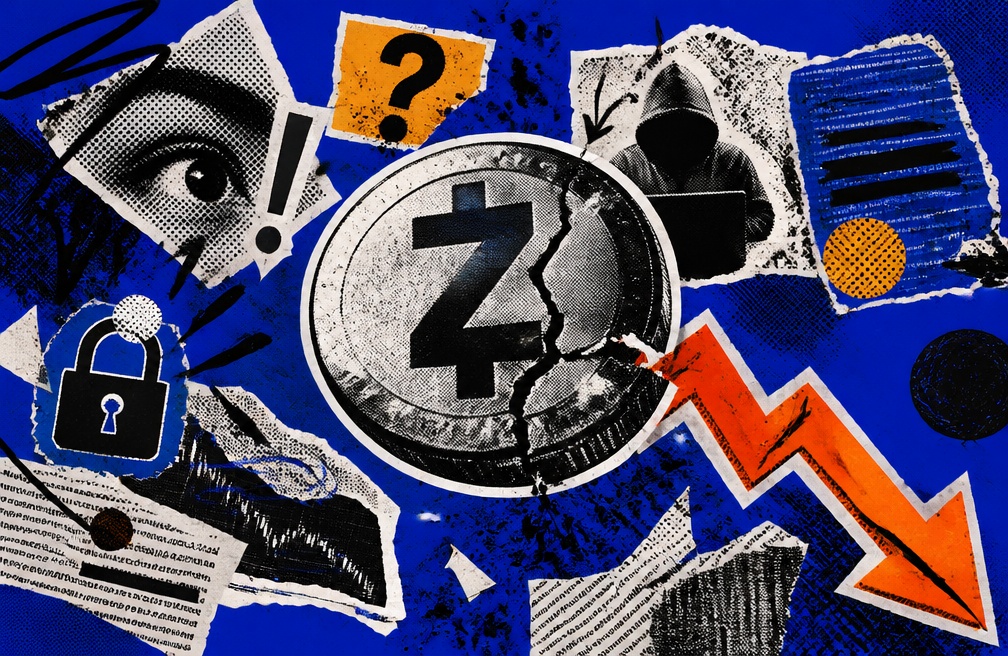
Will the privacy coin really fail?
Original title: privacy Coins -- a Losing battle
Originally written by Chen Zou, Bi Tui
Privacy coins are a unique class of cryptocurrencies that allow users to be completely anonymous, i.e. not traceable, when making blockchain transactions. The identity of users and the source of their transactions are fully protected. These & have spent Token Give senders and receivers the ability to remain anonymous with varying degrees of privacy, such as hiding wallet addresses and transaction balances. With privacy coins, online payments are partly invisible to others.
Does bitcoin, as we know it, guarantee complete privacy?
Bitcoin itself doesn't care much about privacy. Despite the belief of many new cryptocurrencies, bitcoin transactions are anonymous. The truth is that they are only pseudonyms. Bitcoin protects some information, but not all information. Anyone who understands the technical aspects of how bitcoin transactions work and how blockchain works can track transactions.
Here's an example of how bitcoin transactions can be tracked.
Connect the nodes
Bitcoin is a peer-to-peer network where nodes can connect to each other. Anyone with good reasoning skills and an interest in digital forensics can, in theory, connect the dots (nodes) and trace transactions back. It won't be easy, but it can be done.
NYC (Know Your Audience)
Users trade bitcoin on exchanges and identify themselves, making it easy to track them.
The public accounts
Bitcoin's blockchain is a public ledger. Transactions are open to all, which means the address is traceable. If even one address is associated with a particular user, other addresses in that group of transactions on the blockchain can be associated with that user.
All of these are reasons why Bitcoin can't be truly anonymous. And it's estimated that today there are cryptocurrencies in the market. 63 A variety of privacy coins can be traded. While each project undoubtedly tries to provide the best possible method of privacy protection, the reality is that five projects dominate:
Monero
Dash
Zcash
Verge
Bitcoin Private
1. Monroe currency (encryption square: https://cryptosquare.org/wikiDetail?id=13& Slug = monero)
The Monroe coin is by far the most popular privacy coin in the world. Just about every hacking incident involving headlines has seen criminals using Monroe dollars to move stolen money. The project uses ring signatures and hidden addresses to make transactions unlinked and untraceable. This hides the identity of the sender and receiver. The amount of money transferred between the two users is also hidden through ring secret transactions. The Monroe coin is currently the most mature privacy coin on the market.
2. The Dash (encryption square: https://cryptosquare.org/wikiDetail?id=21& Slug = dash)
Dash Actually a fork in the original Bitcoin code, it's a simple combination of the words "Digital" and "Cash". Dash In & have spent 2014 Years & have spent 1 Launched in January, it is often seen as the first privacy coin in cryptocurrency history. Its first-mover advantage in the category is not. Dash The only reason I'm on the list. Its anonymization strategy revolves around something called PrivateSend Things. PrivateSend Hide transactions by mixing them together and introducing them into the blockchain as a single transaction.
3. Zcash (encryption square: https://cryptosquare.org/wikiDetail?id=23& Slug = zcash)
Zcash Use & have spent" Zero knowledge proof & NBSP;" "Allows users to trade with each other without having to reveal their addresses to others. Users have the ability to hide or authorize access to their addresses as they wish, giving them greater control. Zcash Transactions over the Internet are conducted through zk-SNARKS The validation. This represents a concise non-interactive knowledge argument with zero knowledge. All blockchains use non-interactive proof methods because transactions must be verified by every node on the network. It's almost impossible for all parties to interact on a decentralized blockchain while remaining anonymous. Non-interactive is the key.
4. The Verge (encryption square: https://cryptosquare.org/wikiDetail?id=656& Slug = verge)
Verge Is an open source cryptocurrency based on Bitcoin technology. The original vision was to become a privacy coin for everyday use by ordinary people. This open source, volunteer-driven project is providing a fast, efficient and decentralized way to conduct direct transactions while maintaining privacy. Verge Use multiple anonymise-centric networks, such as TOR And I2P. TOR Move user communications to a distributed network run by volunteers. I2P Encrypt data before it is sent. The user's & have spent IP Addresses are completely obfuscated, transactions are completely untraceable.
5. Bitcoins Private (encryption square: https://cryptosquare.org/wikiDetail/?id=650& Slug = bitcoin_private)
Bitcoin Private It's actually the product of two different projects, combining bitcoin and NBSP; Zclassic (itself & NBSP; Zcash Forks of code) merged together. Like many others that use bitcoin names. Token Similarly, Bitcoin Private There are also plenty of advocates. BTCP Support & have spent zk-SNARKS As a means of proving a transaction, possession; 2MB Large block size, and two and a half minutes of faster block time.
The bud of privacy coin market comes from the rigid needs of users in the network age, just like NBSP; Eric Hughes "In the electronic age, privacy is a must for an open society," he wrote in "Cypherpunk's Manifesto." But up to now, the privacy currency market has never ushered in a real outbreak period. Menlo dollar and & NBSP; zcash Such as multiple privacy & NBSP; Token Today they are worth less than they were. 2018 The peak in years. Ethereum's value, by contrast, is. 2018 More than double the annual peak.
That's just the price, and the numbers aren't much better when you consider the use of metrics. Even in the messiest of dark web markets, where privacy coins are supposed to flourish, Bitcoin remains the asset of choice.

In the existing zcash Token In, only less than. 10 % The & have spent Token To be shielded, hidden, or private. User and transaction growth is still very mediocre compared to smart contract platforms.
Users have always existed, but the privacy coin market has been disappointing. So what went wrong?
There are four main reasons.
1. No one wants to trade with privacy coins:
While people may want their money to be untraceable, they don't want to use privacy coins to make payments. When most people think about it, When it comes to "private cryptocurrency", they expect "private bitcoin" or "private Ethereum" or "private Stablecoin" in their minds. Very few people really want to use anything else. Token To settle debts, resulting in only one use case for privacy coins, "privacy."
This is why ethereum-based privacy systems such as &NBsp; Tornado Cash, which is often used as money laundering, can handle so many transactions. Tornado Bringing privacy services to the real world -- namely, the chain of smart contracts that provide the currency users actually want to use, such as NBSP; ETH , & have spent USDC Or & have spent DAI. And privacy features. Monero, with its poor wallet experience and liquidity, will eventually cause most users to abandon it.

Tornado Another reason for its success is that it internalizes the cost of privacy on users who really need it, rather than forcing the cost of privacy on everyone. This is also the common problem of privacy coins on the market at present, that is, all users share the service cost equally.
2. Privacy is not easy
HTTPS, the encryption protocol used today to access almost all websites, validates the fact that people will only choose privacy if it's not hard to do.
Links to websites used to be clear text. Initially, HTTPS A website used only to process credit card or bank data because it is slow and cumbersome. As technology has evolved, computing has become cheap enough to allow websites to execute without the user's awareness. HTTPS, HTTPS Before it became the dominant encryption protocol.
Something similar happens with information services. The largest end-to-end (E2E) encryption service & NBSP; WhatsApp In & have spent 2016 The year quietly opened. E2E Encryption function without prompting its users.
These two changes have probably done more for privacy on the Internet than almost anything else, and what they have in common is that there is no particular customer base that demands privacy. They simply fit into the new system as the technology matures.
And the use & have spent monero Or & have spent zcash The difficulty of conducting daily transactions. Both require sophisticated technology, and the cost of protecting personal privacy is that the cost of network interaction can be very high.
Which brings us to the third reason privacy coins failed.
3. Most people don't care about privacy
This truth may sound harsh, but it is true.
This fact is not hard to mine, just look at users' habits: they use social media apps and sell their data openly to third parties; They use. Venmo, broadcasting their payments openly to the world; They use text messages stored in clear text, ready to be invoked by law enforcement. WhatsApp, Signal And & have spent Telegram It's free, it's always available, but the user base is still very small.
It's often true to blame this on a lack of common sense, but that's not the case. In the case of social media companies, many of the biggest names have had leak scandals of one sort or another, from Cambridge Analytica to last year's Twitter hack, but have done nothing to dent users' enthusiasm for using them.

Privacy is a public good. An iron law of economics is that public goods are in short supply in free markets. If only a small number of users use privacy-protecting technologies, then the use of these technologies becomes a red flag, linked to crime and gray areas. Compare & have spent WhatsApp And & have spent Monero, the former make E2E Encryption is everywhere. The latter is also private, but the first image people have of its user base is "criminal".
There are two basic types of people. First, there are people who don't care about privacy at all and just want their immediate neighbors, spouses and friends not to know what they're doing. Blockchains like Bitcoin or Ethereum are great, and their neighbors obviously can't track their activities.
Then there are the privacy-conscious, who want privacy controls strong enough to resist third-party interference. Like & have spent Monero Such technology, when used properly, can be enough to deter corporations, governments and motivated attackers, but all at a high cost.
Few people are willing to pay the price that privacy-conscious groups are willing to pay for privacy. Expect to see cryptocurrencies until the cost of privacy drops dramatically. HTTPS It's a little naive.
This is reminiscent of the ongoing regulatory problems.
4. To survive a bear encounter, you don't need to outrun the bear, you just need to outrun the person behind you
Privacy coins have been the first target of regulatory investigations. When regulators are asked to. We can't do nothing." That makes privacy coins an easy target.
On the regulatory side, we have seen a string of privacy coin delistings in South Korea, Japan, the UK and the US.
The cryptocurrency lobby is getting bigger; Large numbers of retail and many institutional users now own Bitcoin and Ethereum, but few institutions are willing to defend privacy coins. Rather than tarnish the entire industry, many are content to let privacy coins fall victim.
The bold innovations some crypto leading foundations are making to protect Americans' civil liberties when using privacy protection technologies are truly impressive. But when it comes to private cryptocurrencies, they may be fighting a losing battle.
Until the cost of privacy is fully reduced, regulators will surely continue to use privacy coins as a scapegoat, and their acceptance and liquidity will thus continue to be suppressed.
To be honest, we should respect everyone who contributes to privacy, but reason also tells us that decentralized finance and painless privacy solutions integrated with Stablecoin are the real track in privacy.
The original link
Welcome to join the official BlockBeats community:
Telegram Subscription Group: https://t.me/theblockbeats
Telegram Discussion Group: https://t.me/BlockBeats_App
Official Twitter Account: https://twitter.com/BlockBeatsAsia

 Related Articles