Is it a bear market now? Listen to the researcher's analysis of the current market situation
Original author: Dylan LeClair, 21st Paradigm joint creation
Original compilation: 0x137
This article is based on 21st Paradigm co-founder Dylan LeClair’s views on his personal social media platform, and Rhythm BlockBeats organizes and translates it as follows:
Bitcoin recently fell to around $33,000, why is there such price volatility? What's next? The following is my analysis from on-chain data and derivatives, as well as at the macro level:
On-chain data analysis
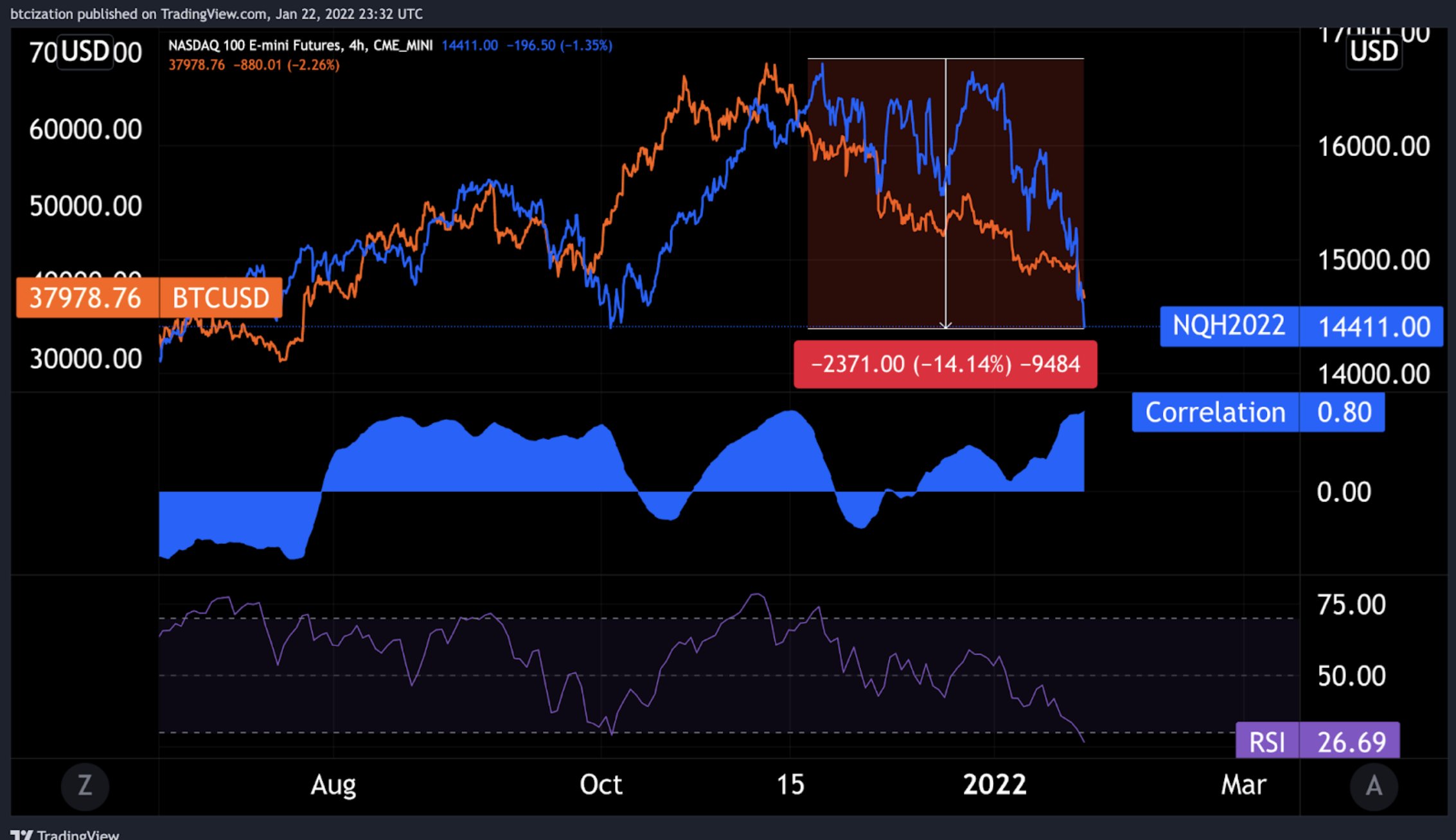
One of the hottest themes recently has been Bitcoin's correlation with the Nasdaq (and other types of risky assets). Currently, the Nasdaq is down 14% from its peak, the most oversold since March 2020. The 30-day correlation index between Bitcoin and Nasdaq is as high as 0.80.
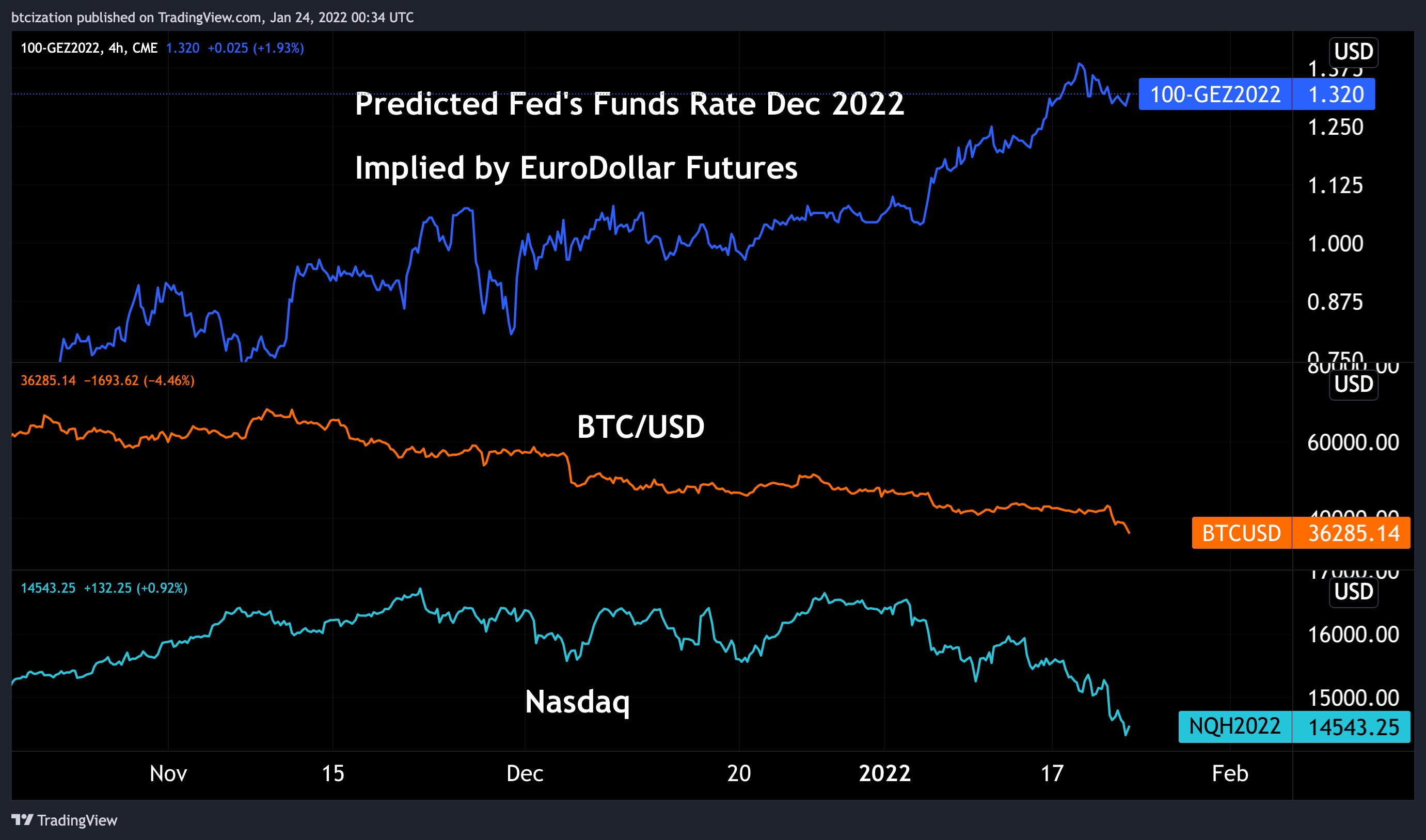
Eurodollar futures can be seen as a proxy for fed funds rate expectations , which has already reacted to 4 rate hikes in 2022. When there is an expectation of tightening loose monetary policy, the market will inevitably react.
2020 to 2021 Macro Fund Acceptance of Bitcoin in Years The continuous improvement of the degree makes Bitcoin more and more like a highly correlated risk asset. We can look at one of the drivers of the early bull market, Grayscale, which acquired nearly 400,000 Bitcoins on behalf of accredited investors and institutions in exchange for Grayscale shares (GBTC).

These investors are seeking assets from Grayscale net worth Buying GBTC and marking their books with a premium for a "risk-free" arbitrage trade, but when GBTC started trading below net asset value in February last year, they realized that this arbitrage model had been broken.
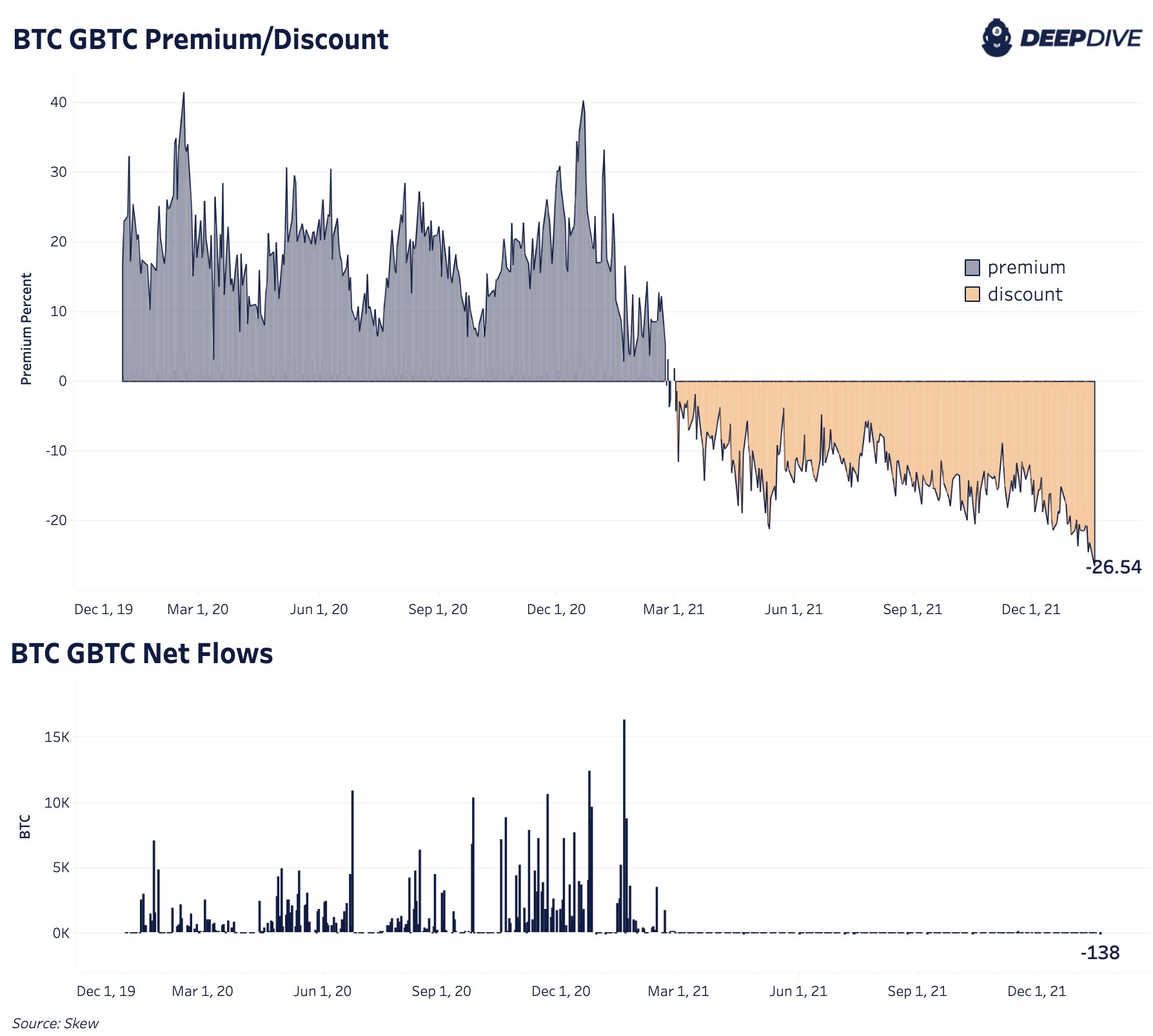
However, it should be noted that the value is 650,000 dollar of bitcoins are still traded as derivatives in grayscale shares on the over-the-counter market. And as its premium turned into a discount, funds began to stop entering the market, and the incentive for investors to allocate funds to GBTC instead of Bitcoin itself also emerged.
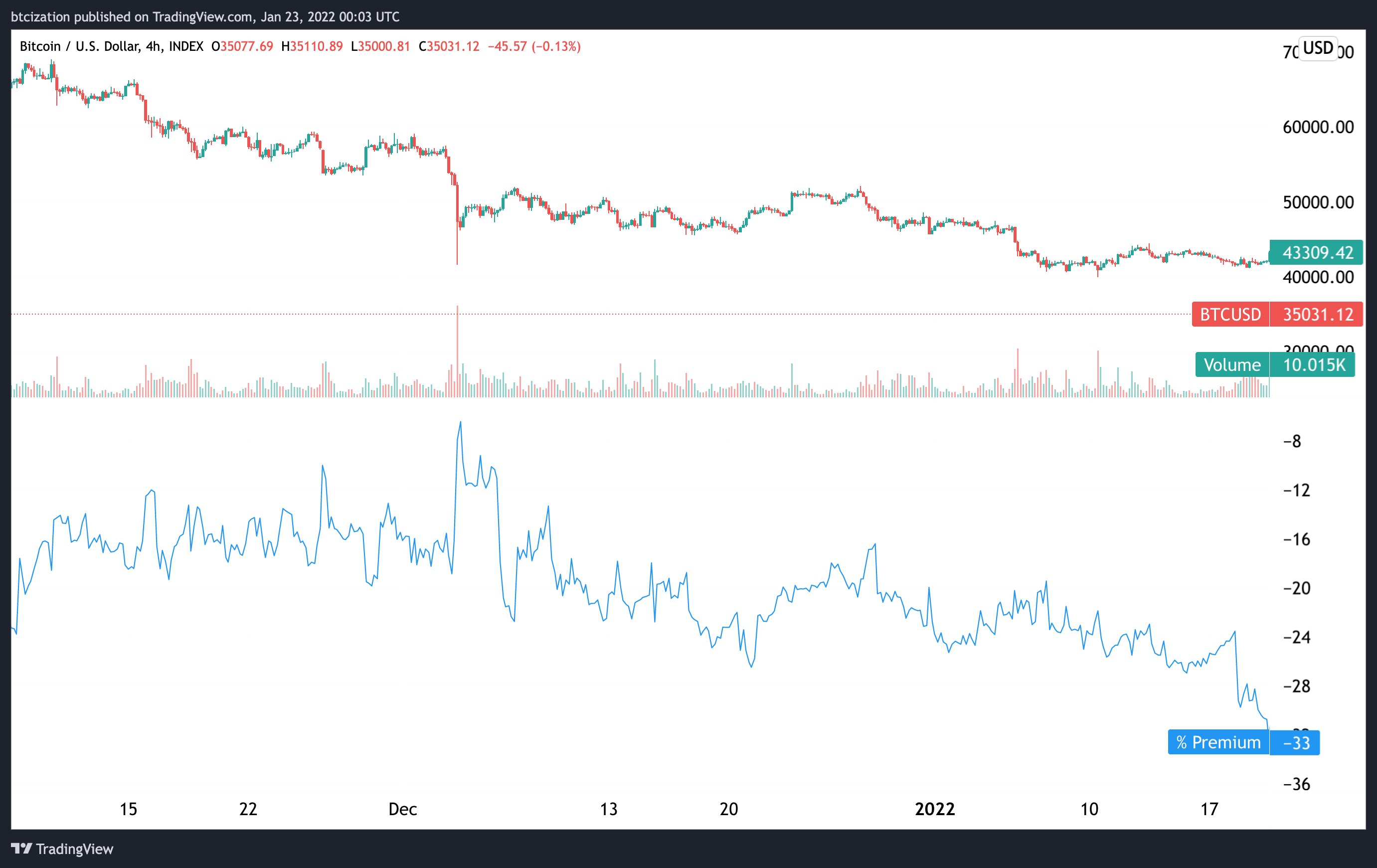
With the recent opening of the market to de-risk mode, GBTC has also been sold indiscriminately, and GBTC’s discount to net asset value has expanded to a record low, but considering Considering the situation of many trust holders, this also makes sense: they are the same group of macro investors who will allocate capital to Bitcoin in 2020-2021.
Now let's look at the current Bitcoin transaction price Position relative to historical valuation.
The MVRV ratio (ratio of cost basis to price) shows Bitcoin's historical boom and bust cycles. The current on-chain cost basis for Bitcoin is $24,000 with an MVRV ratio of approximately 1.5.
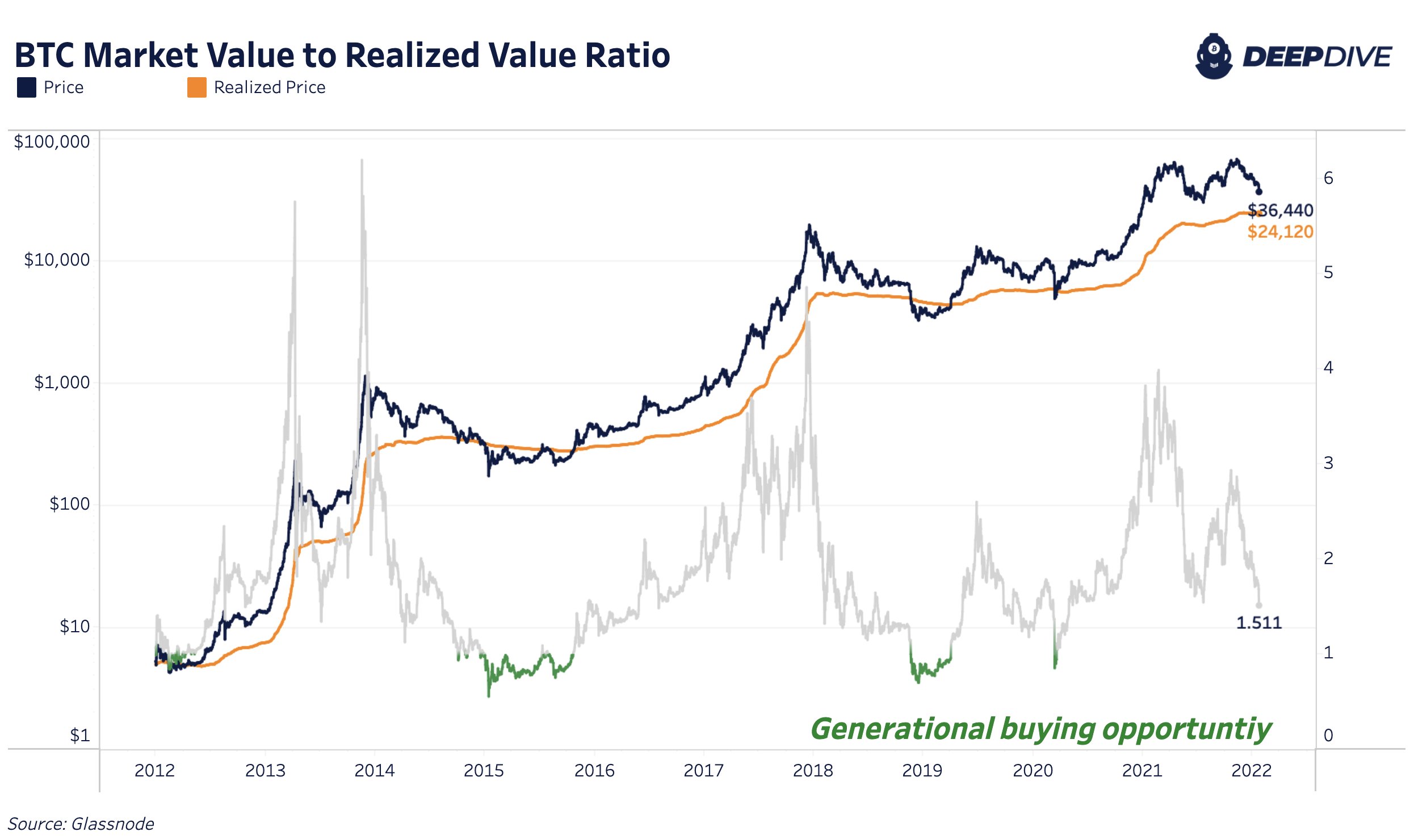
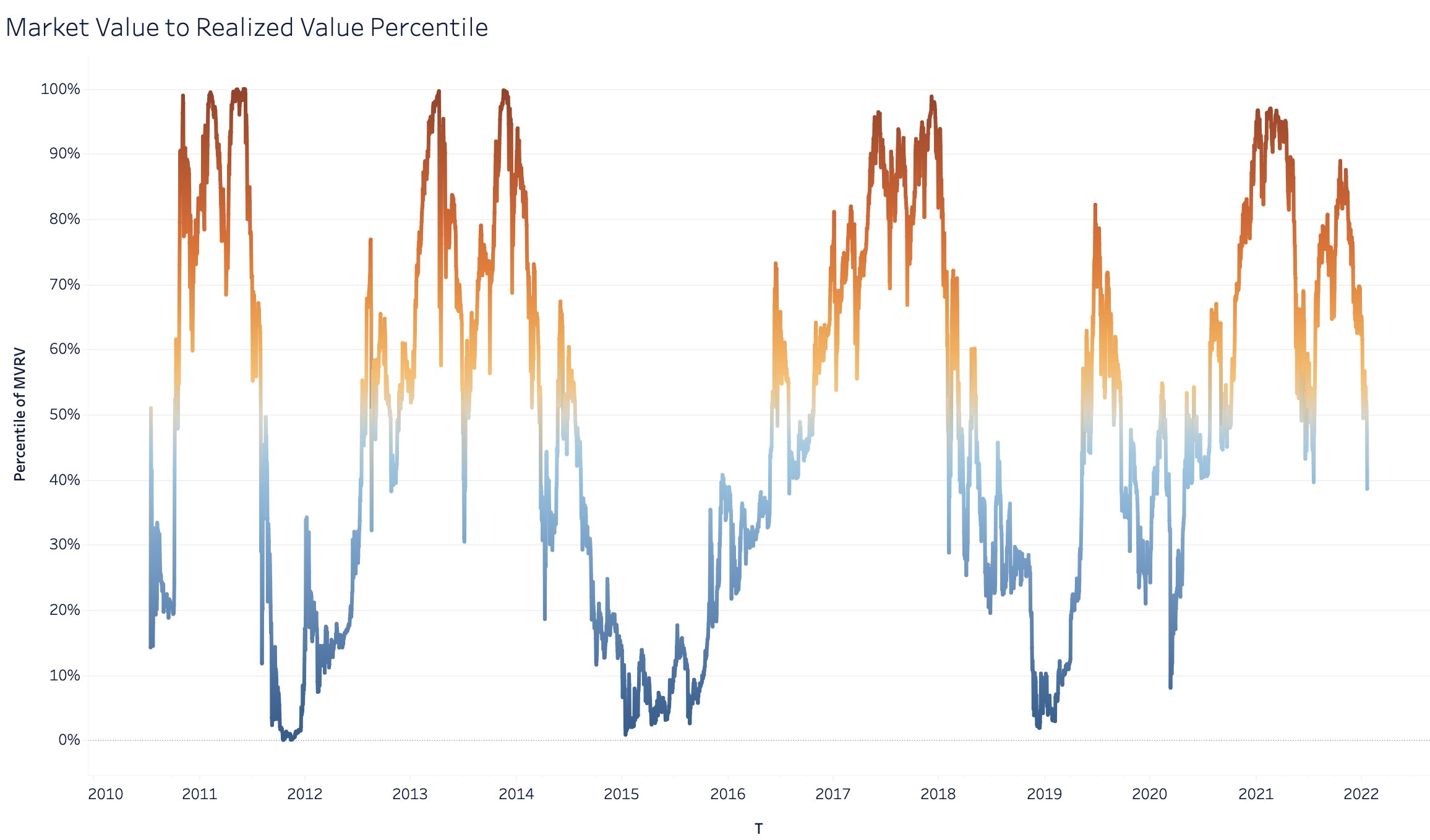
Bitcoin's current MVRV ratio is in history reading 38th percentile. Past data has shown that when Bitcoin dips below the real price (MVRV below 1.0), it is almost always an excellent buying opportunity. While Bitcoin won't necessarily drop to $24,000, the price will certainly be very attractive to buy.
We also see long term holders in the past Selling during months of downtrends is an oddity in Bitcoin history, as long-term holders typically accumulate during bear markets and consolidations and sell during uptrends.
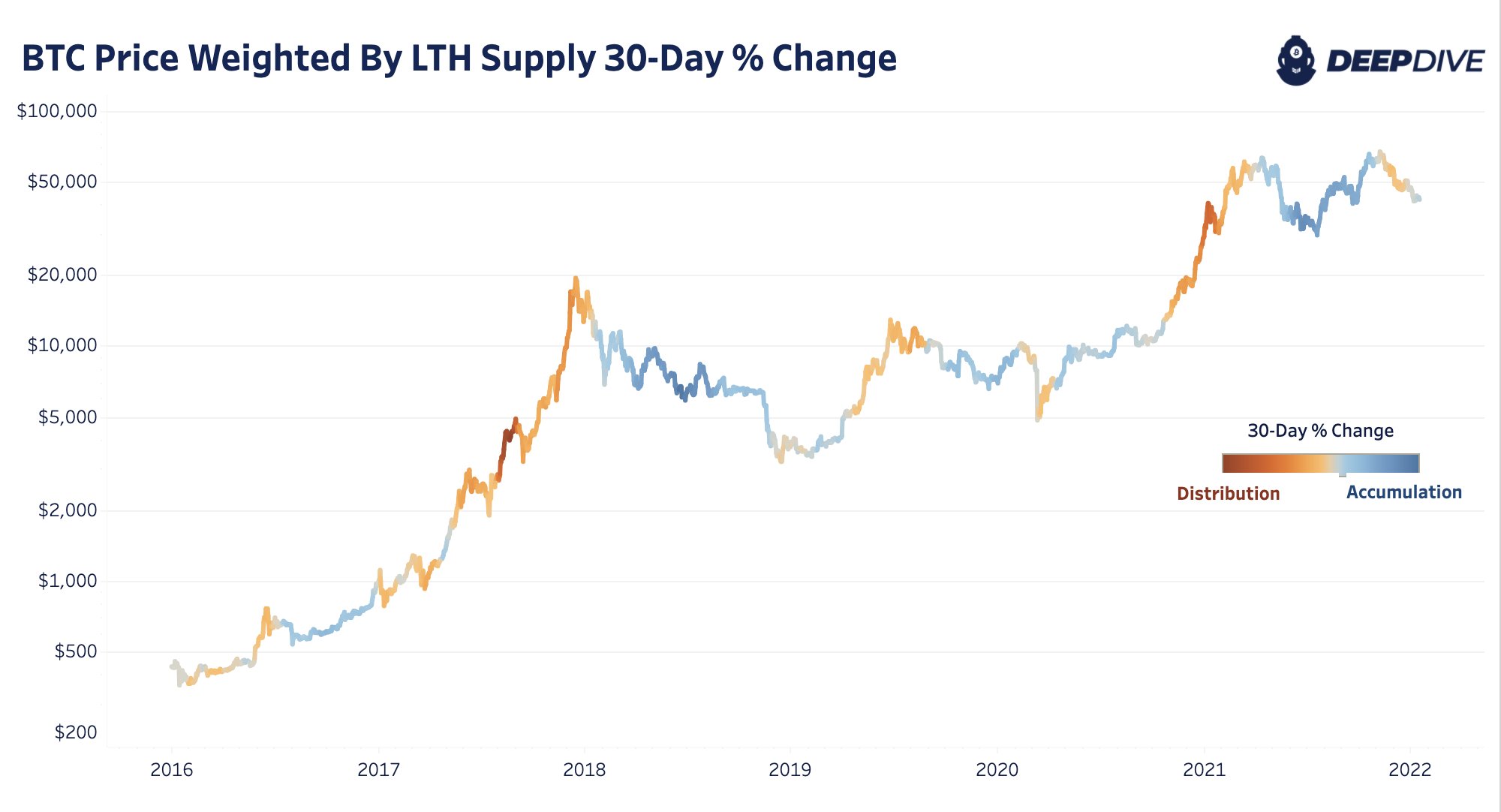
Obviously macro concerns are the driving factor behind this One, but the good news is that the trend of hoarding coins has now started again.
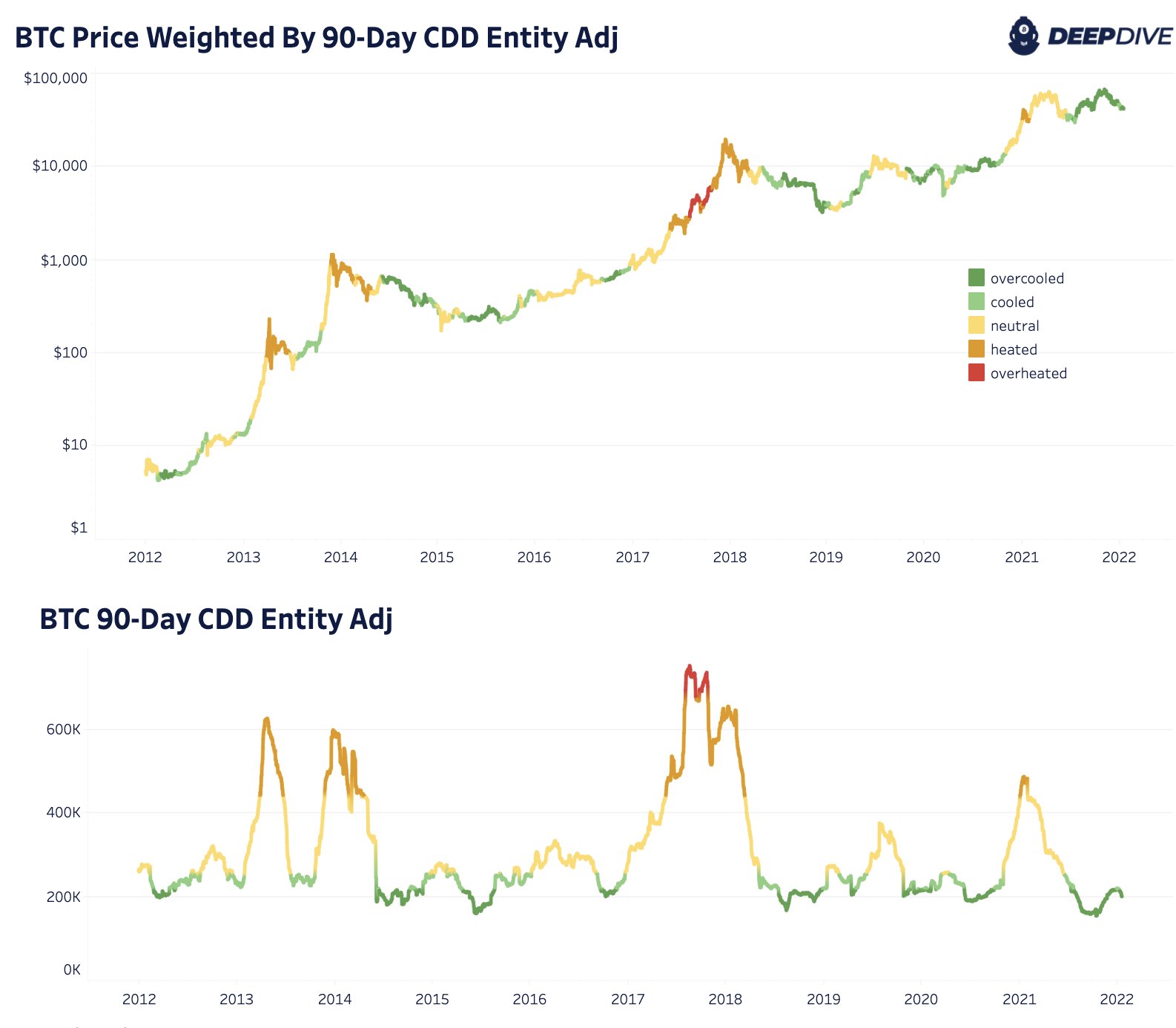
Token Days Destroyed (CDD) is calculated by multiplying the number of tokens in a transaction by the number of days since those tokens were last used, with a rolling 90 days Aggregated data is generally used to show the relative ratio of asset accumulation and sell-off, and the accumulation trend of Bitcoin is currently strong.
Analysis of Derivatives
For Bitcoin derivatives, the following points need to be focused on:
1. Perpetual futures
2. Quarterly futures
3. Collateral types for entering derivatives contracts
Perpetual futures
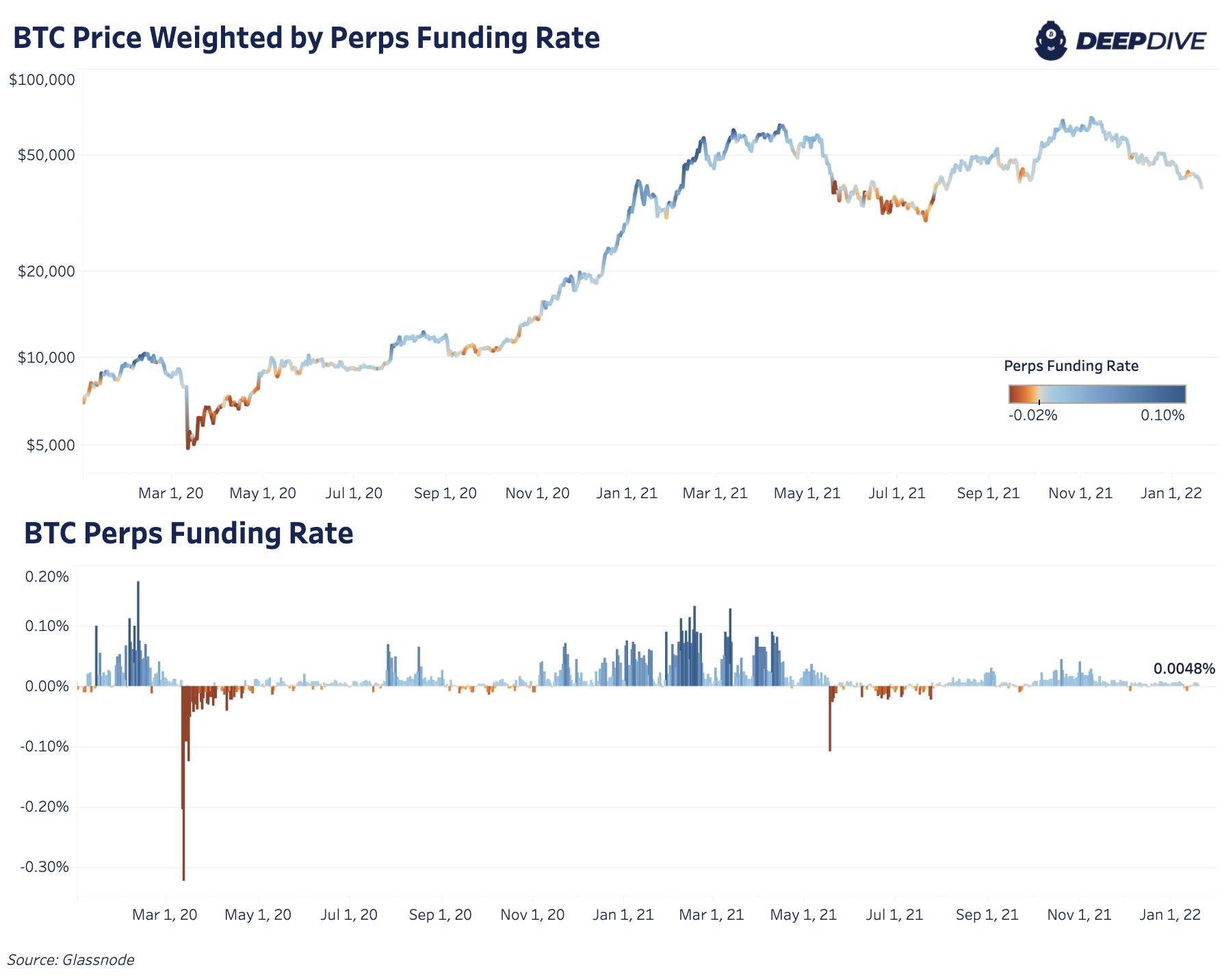
The perpetual futures fund shows whether the derivative is higher or lower than the price of the spot bitcoin. The speculative bulls are no longer dominant at the moment, but the bears are not overly aggressive either. Market bottoms are often characterized by persistent negative funding, accompanied by extreme greed by bears in the derivatives market.
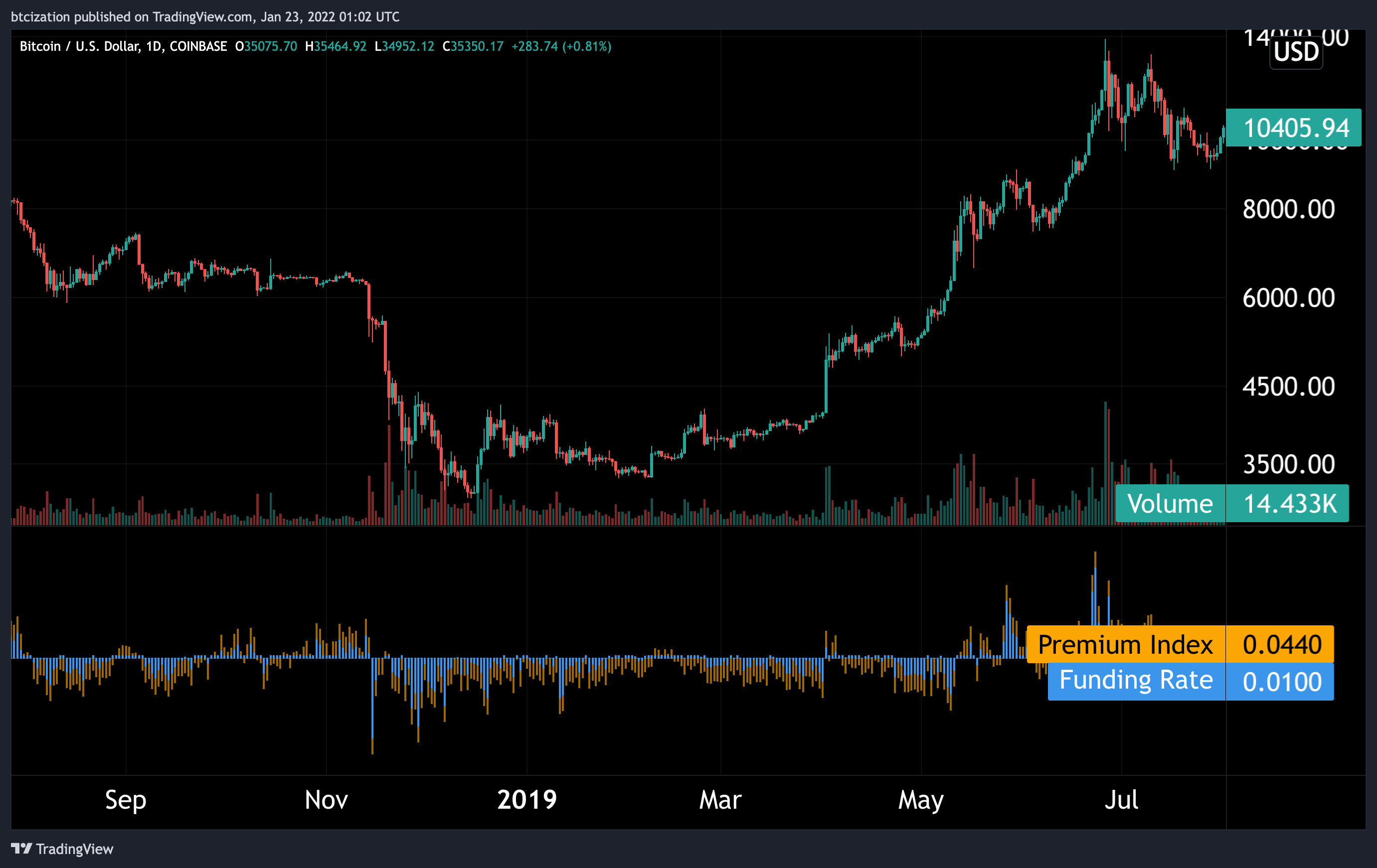
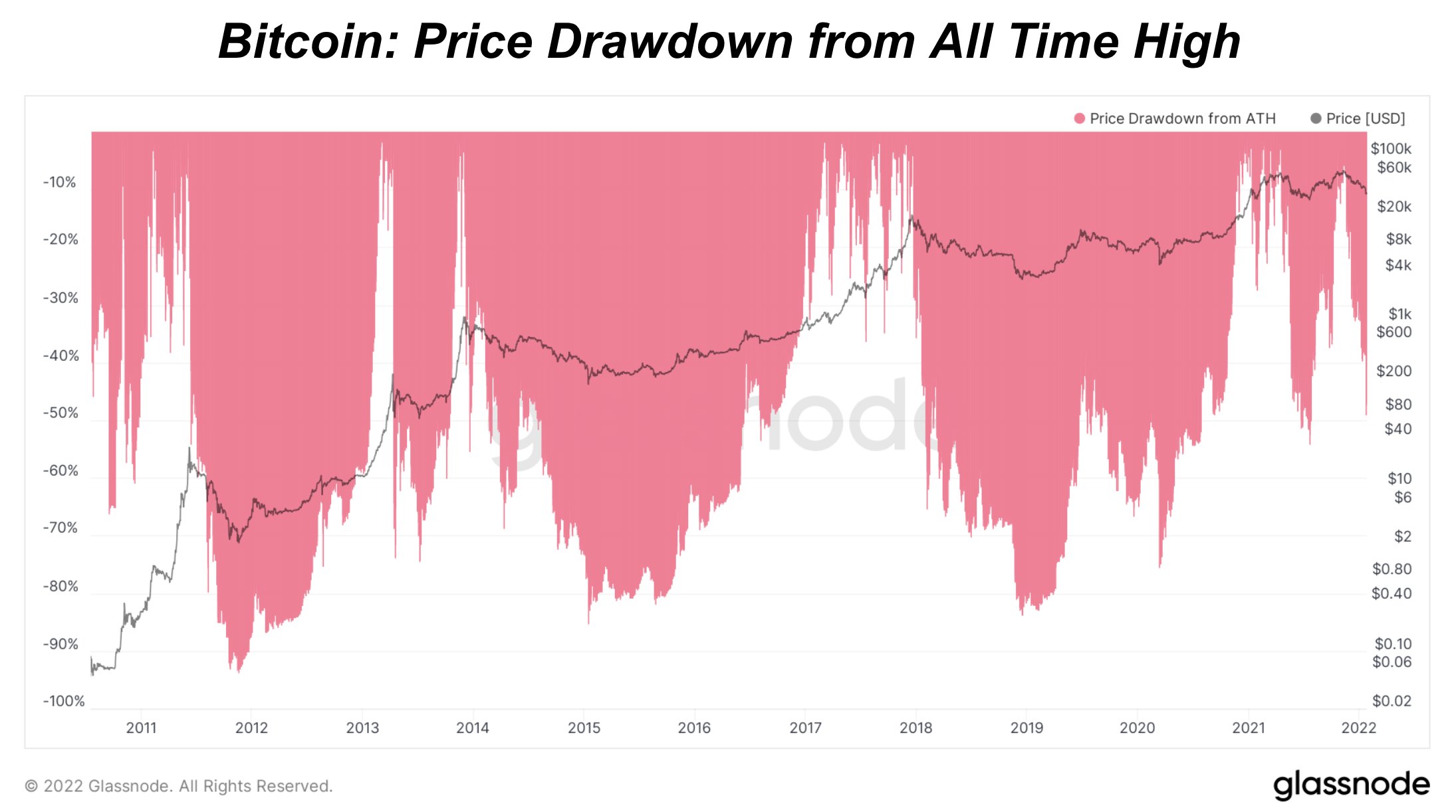
For example, the picture below is from the main derivatives at that time Data from exchange BitMEX shows the market bottom in 2018-2019, when bears aggressively shorted the $3,000 bottom after Bitcoin’s 85% retracement. The crash around the time of COVID-19 and last summer was similar.
Quarterly futures
Since last summer, the correlation between Bitcoin price and futures basis has been close to 1:1, which shows that existing derivatives traders have been pushing market. 0% or a negative base should be a signal for the market to capitulate.
Collateral Types Used to Enter Derivatives Contracts
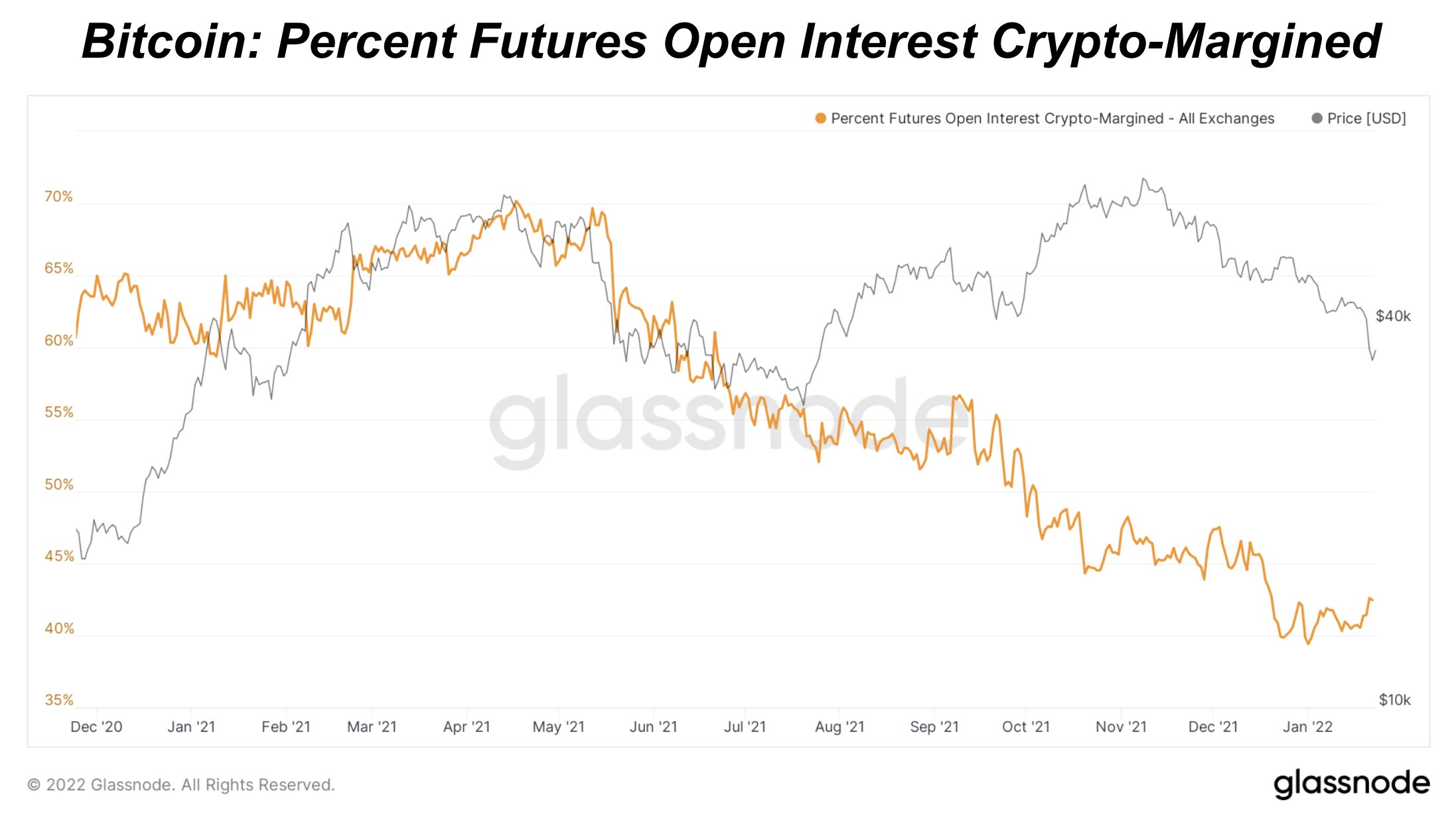
Use of crypto collateral for Bitcoin futures continues its long-term downward trend, which is a positive development as stablecoins will not be as Bitcoin margin futures also exhibit a convex relationship during market downturns.
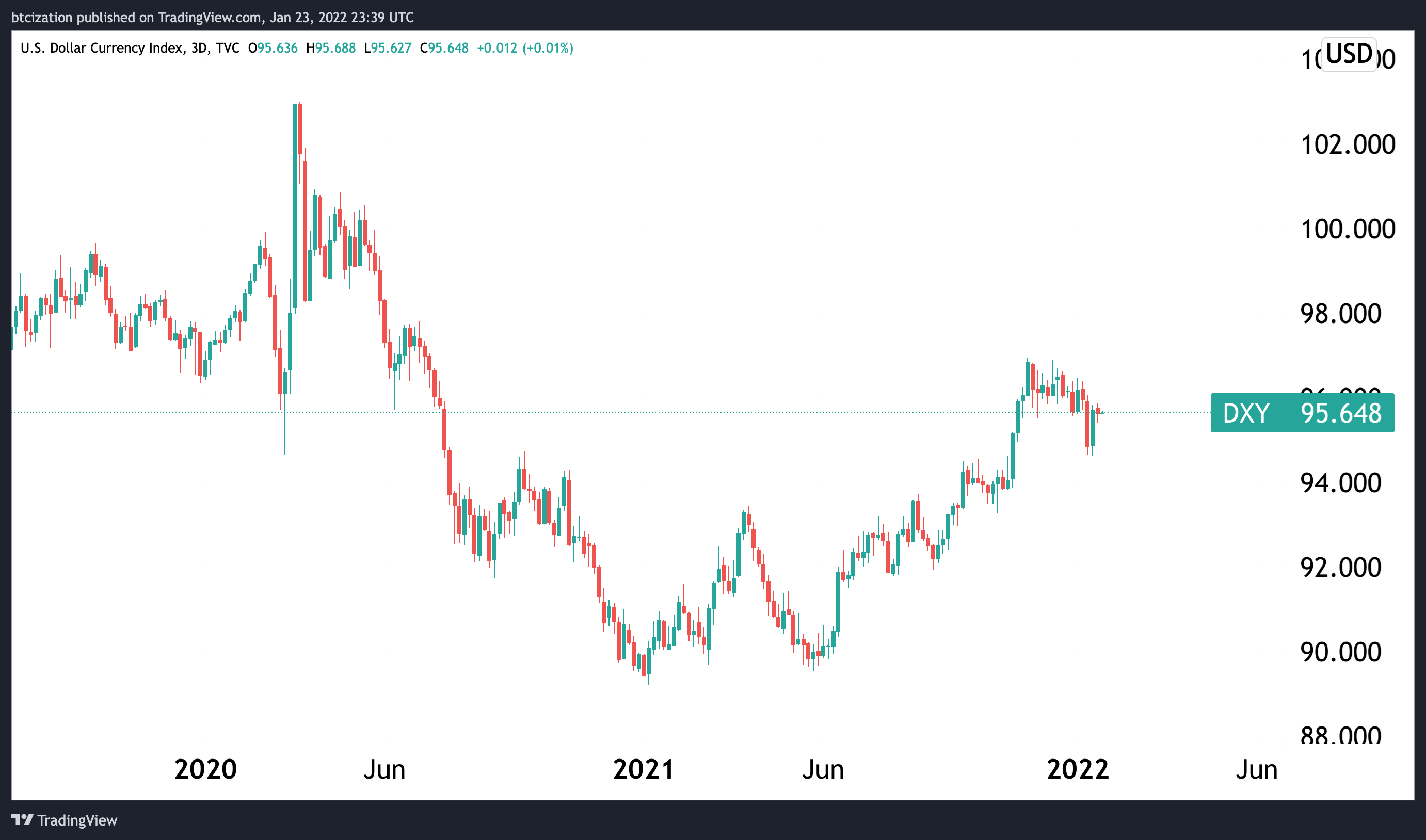
DXY is used to measure USD against other currencies Coin value , which has been on an upward trend since early 2021. As the Fed tries to tighten policy, it will be critical to watch the dollar strengthen as a strong dollar is not good for any asset.
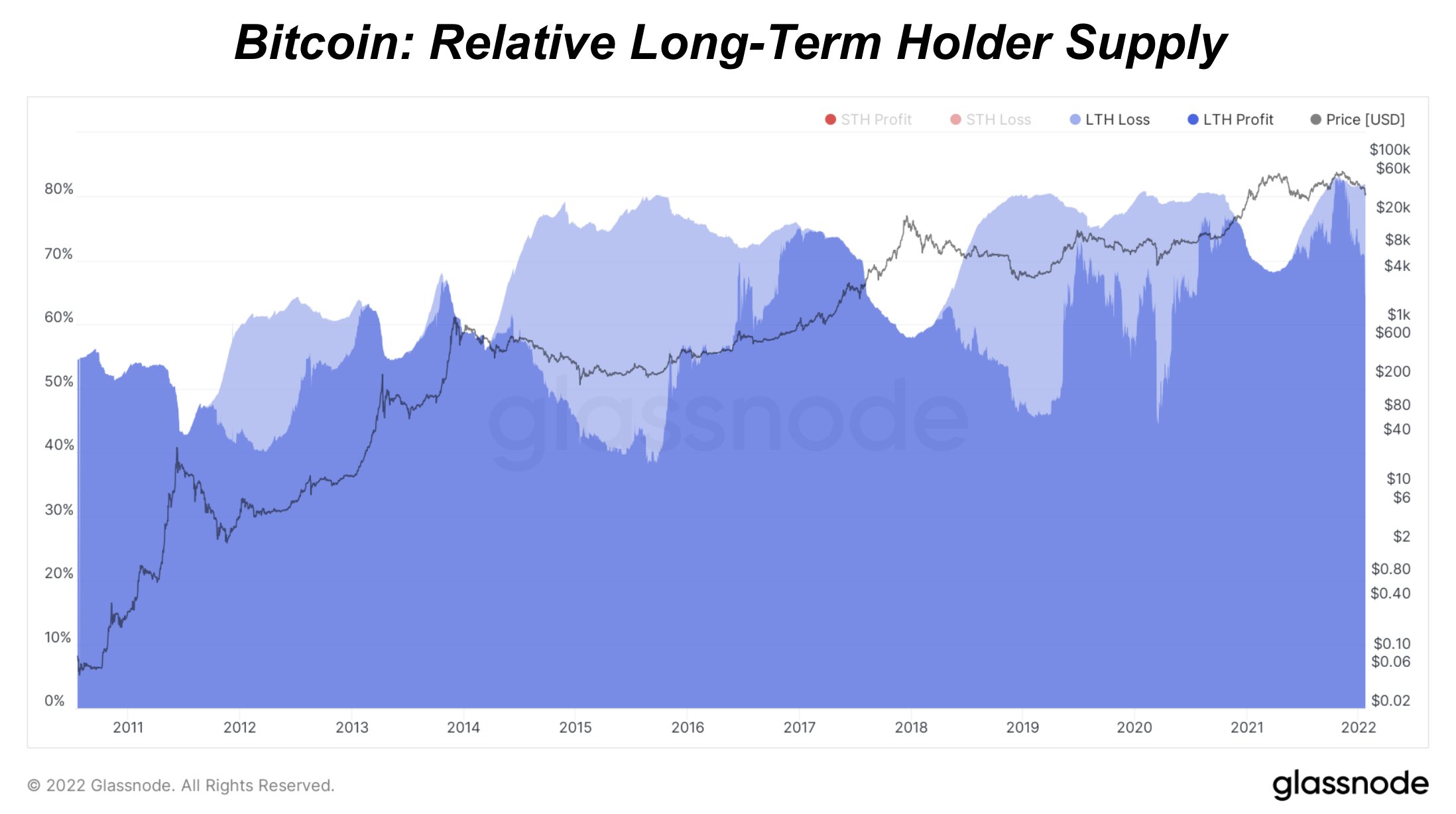
至于牛市何时回归,我认为条件还是More mature, about 81% of the supply is in the hands of long-term holders, but supply is only one aspect of the market. Reviving the bull market requires strong spot demand, not derivatives speculation.
Macro market analysis
From a macro perspective, a key question is when will the marginal selling of macro funds turn into marginal buying?
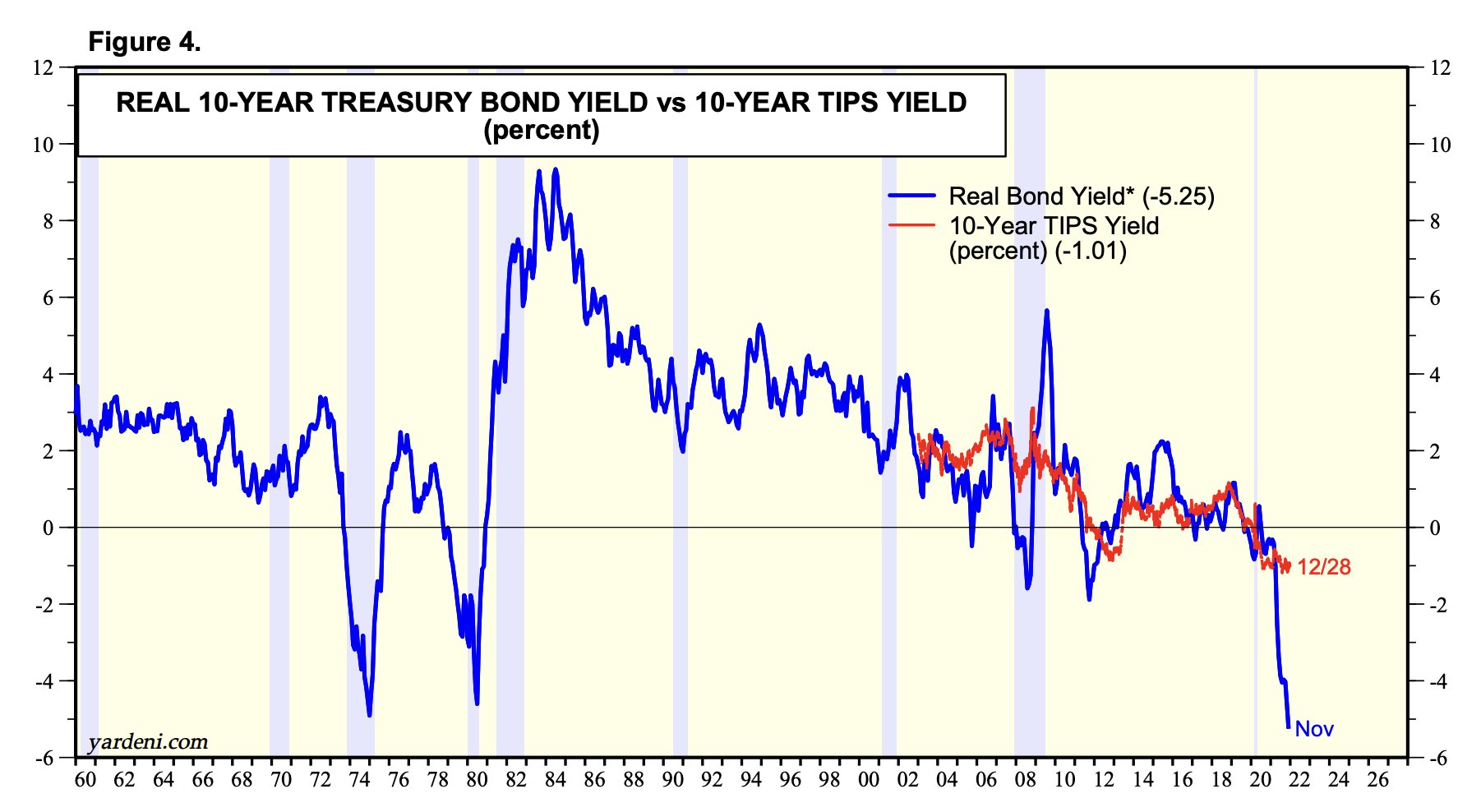
The reality is that dollar bonds with negative real yields are worth hundreds of trillions, meaning they are doomed to lose money. So when the Fed changes its tightening policy, Bitcoin is bound to skyrocket. Yes, "when" not "if".
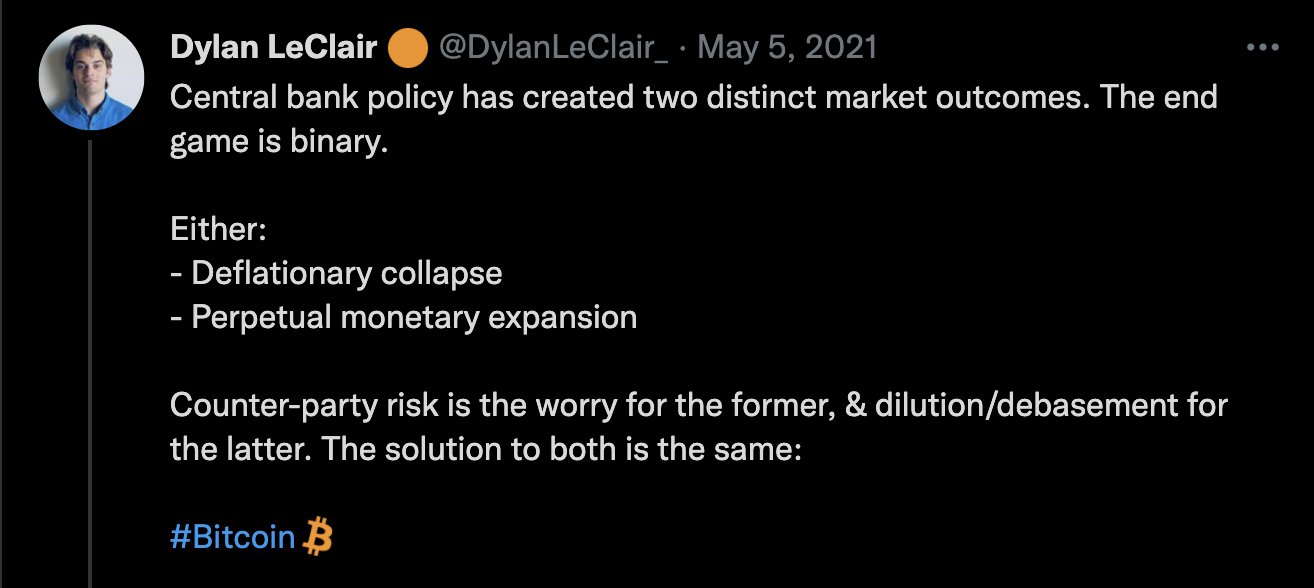
In the long-term debt cycle, the outcome of economic development Only binary is possible. In a true deflationary scenario, there would be unlimited counterparty risk as fiat debt is discharged across the economy.
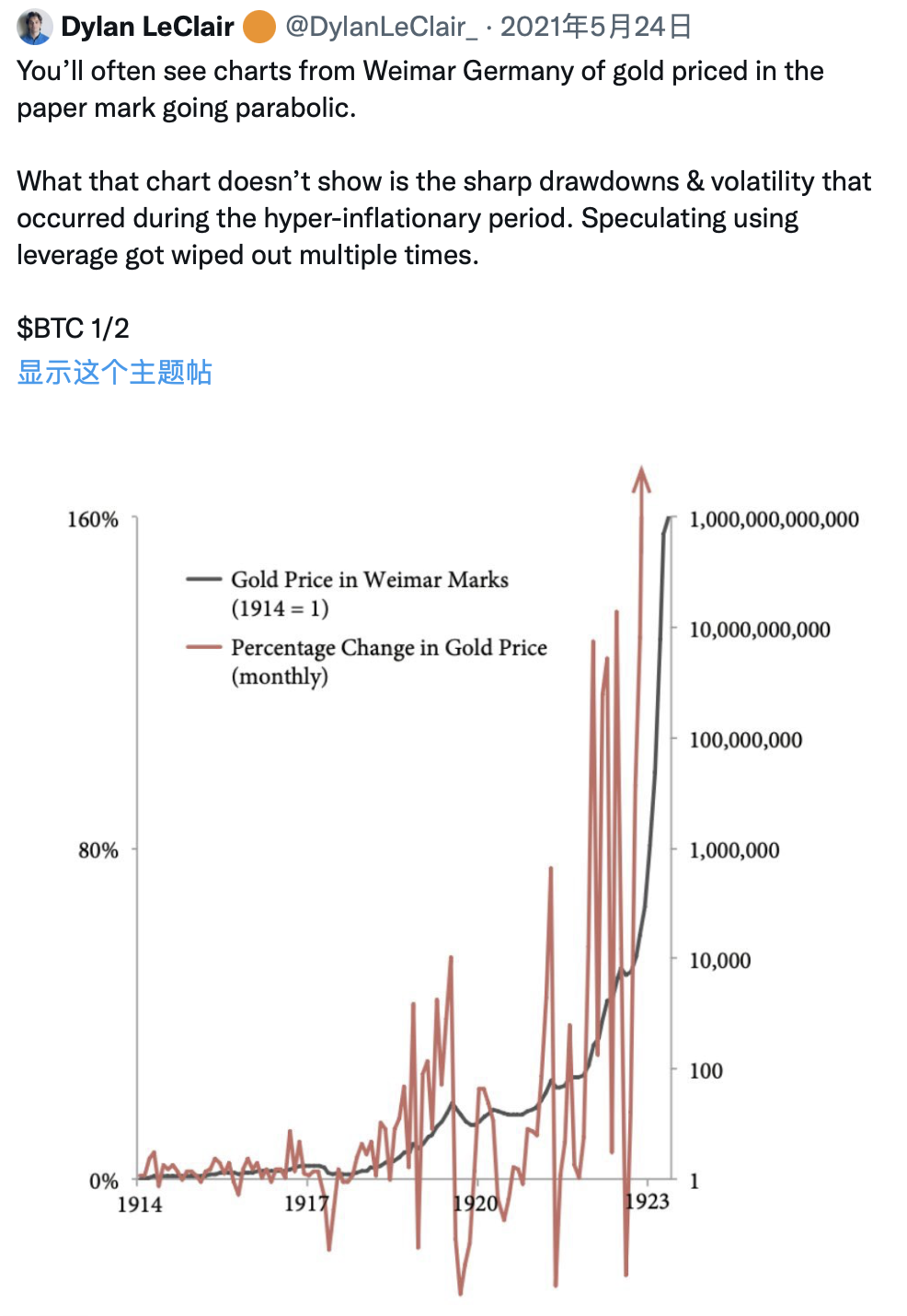
Will there be more disadvantages ? Maybe, especially if the stock market decline continues and spills over into credit markets. If you were a leveraged gold holder during the Weimar Republic, this would have resulted in you being liquidated multiple times. Although the United States is not Weimar, we can still learn lessons from it.
As a capital allocator, your goal is to Maintain and improve your purchasing power over time. Bitcoin's mechanics almost guarantee that the marginal cost of production will continue to rise forever. Therefore, for 95% of people, the best strategy is to passively allocate funds into Bitcoin and then hold it for a long time. In this case, volatility will be your chance, and thankfully, it doesn't look like it's going away anytime soon.
Original link
Welcome to join the official BlockBeats community:
Telegram Subscription Group: https://t.me/theblockbeats
Telegram Discussion Group: https://t.me/BlockBeats_App
Official Twitter Account: https://twitter.com/BlockBeatsAsia

 Related Articles