Electric Capital annual report: The Web3 development ecosystem is at an all-time high
Original title: " Electric Capital Developer Report (2021) "
Original author: Electric Capital
Original compilation: Foresight Ventures
Summary
Web3 is at an all-time high: 18,000 developers per month developers, 2500 active DeFi developers per month, and 3000 new Web3 developers per month. The growth rate of several emerging blockchain ecosystems is faster than that of Ethereum in the same period. The newly added Web3 20% - 25% of developers will flow into the Ethereum ecosystem.

Report Background
< /p>
This report was produced by Electric Capital and authorized by Foresight Ventures for translation. The original report link is at the end of the article.
The report analyzed 500,000 code repositories and countless code submissions, and produced the original text More than 100 charts of .
The report focuses on open source code, so it undercounts the total developer of Web3 by a lot; while focusing on non-copy-pasted valid code.
Web3 Ecological Overview
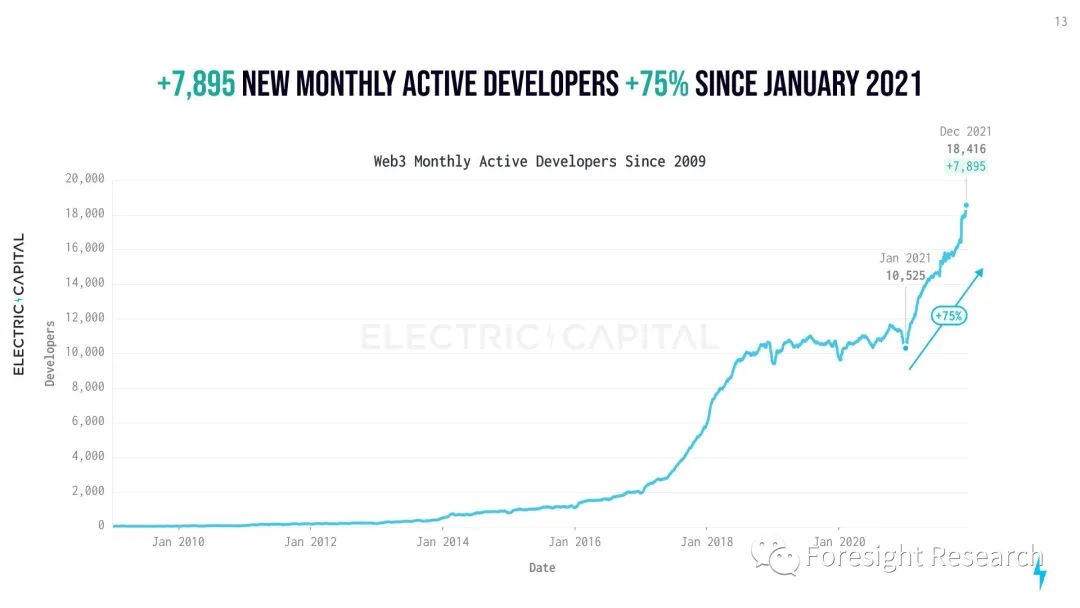
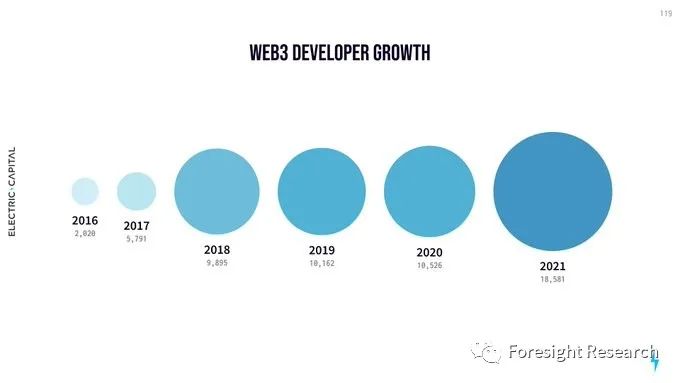
The total number of developers will increase by 75% in 2021
Web3 has 18,400+ developers, an increase of 75% compared to 2021. It is a big growth after the number of people in the past two years.< /p>
 < br>
The number of developers increases with the currency price
One thing that is easy to figure out is that the number of developers increases as the price increases.
Surprisingly: monthly active developers after the latest price hike peaked. After the last pump, developers peaked a year after the price peaked.
The most surprising thing: when the crash happened, the overall developer count remained flat. In a bear market, New developers will be lost evenly.

Web3 developer monthly growth hits record high
More than 3,000 new developers try Web3 every month -- a historic high.
While these developments Many of these adopters are experimenting with Web3 as amateurs and will leave the Web, but some will make it a full-time career in the future.
As @cdixon said, "What the smartest people do on the weekend is what Everyone else will do during the week in ten years."

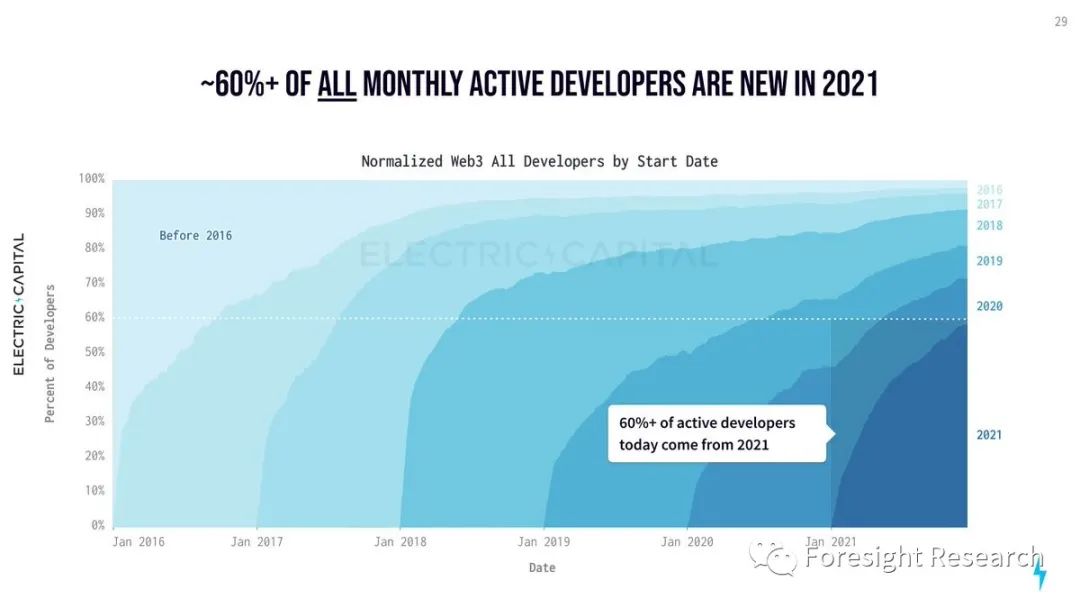
Half of Web3 developers in 2021
The rapid growth in the number of new developers means that 60% of the developers in Web3 have entered the Web3 field in the last year.
Through the statistics of developers who are active for more than ten days per month, we can know that 45% of full-time Web3 developers will join in 2021.
Almost half of the developers in Web3 are new blood.
p>
10% of newly entered Web3 developers will persist for a year
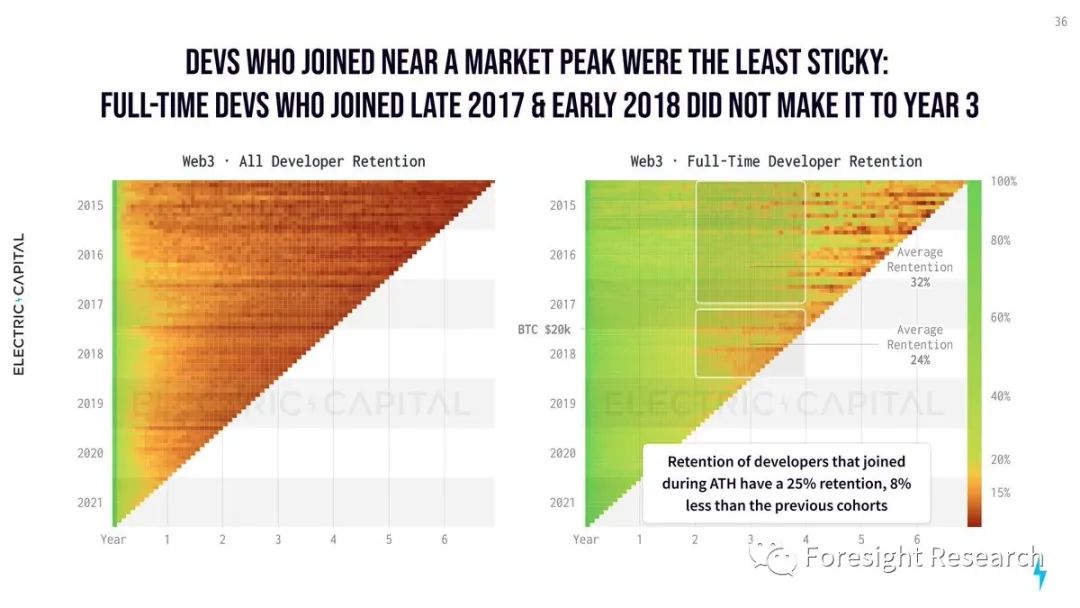
How many of the Web3 developers are likely to stick with Web3?
10% of all developers will stick around by the end of the second year.
30% of full-time developers will insist on doing Web3-related full-time jobs for 4 years.

Retention rate of Web3 developers is related to admission time
From the data point of view, there is a relationship between when developers enter Web3 and the final retention rate.
Developers who have lived through a bull market tend to persist in a bear market. Those who join at the top of a bull market are more likely to eventually leave.
Comparison of Layer 1 development ecology
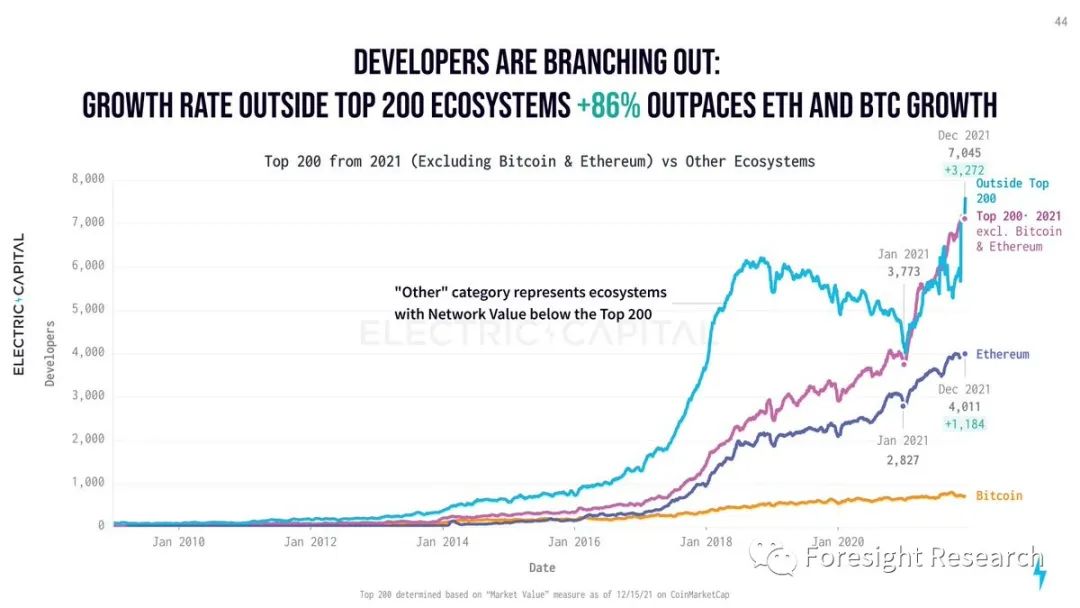
The network ecology of the top 200 in market capitalization is more than Ethereum Fang and Bitcoin have grown faster
In the past year, the top 200 network ecosystems by market capitalization have grown by more than 66%, and the top 200 and beyond projects grew faster, reaching 86%.
These are all growing faster than Ethereum and Bitcoin, which may reflect that developers see more opportunities in ecosystems with smaller market capitalization.< /p>
 < br>
In the bear market, only Bitcoin and Ethereum can still maintain growth< br>
Historically, once the bear market comes, none of the top 200 ecology can maintain the same high growth, while the development ecology of Bitcoin and Ethereum Several years have shown consistent growth.

The development ecology of Bitcoin and Ethereum is growing steadily
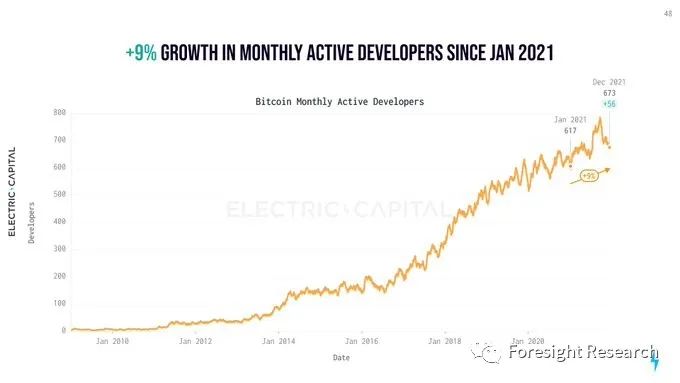
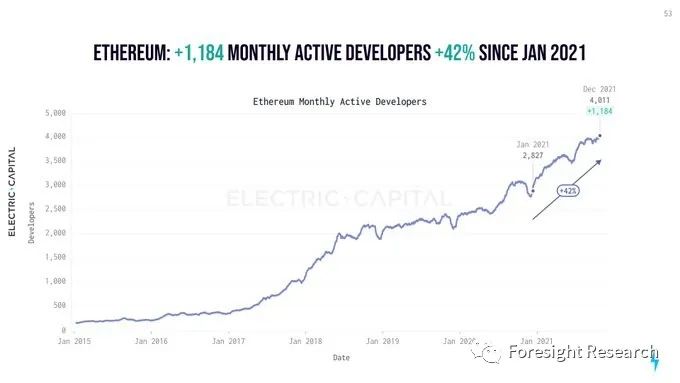
Bitcoin full-time developers increased by 8%, with 100 new developers contributing to the Bitcoin ecosystem every month. Total development of Ethereum There has been a 42% increase in developers and a 24% increase in full-time developers, with about 700 new developers contributing to the Ethereum ecosystem every month.
Ethereum's ecology maintains a strong attraction
Ethereum still attracts developers: 20-25% of new developers entering Web3 go to the Ethereum ecosystem. For those full-time developers, they tend to stay on Ethereum In the square ecology.

Comparison of the number of developers in Bitcoin and Ethereum
Looking forward to Bitcoin and Ethereum, how is the ecosystem developing?
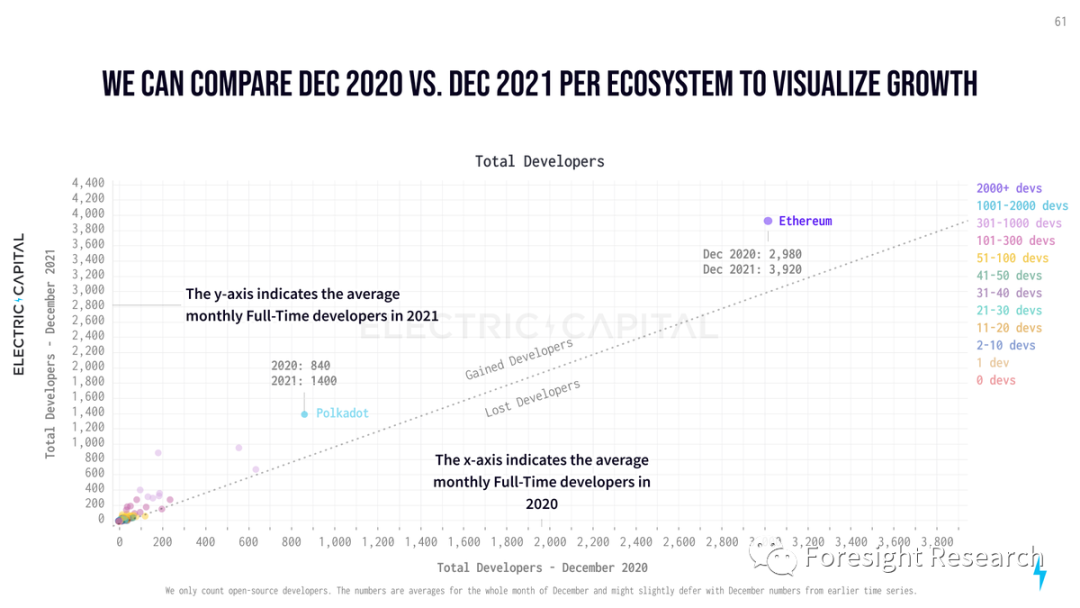
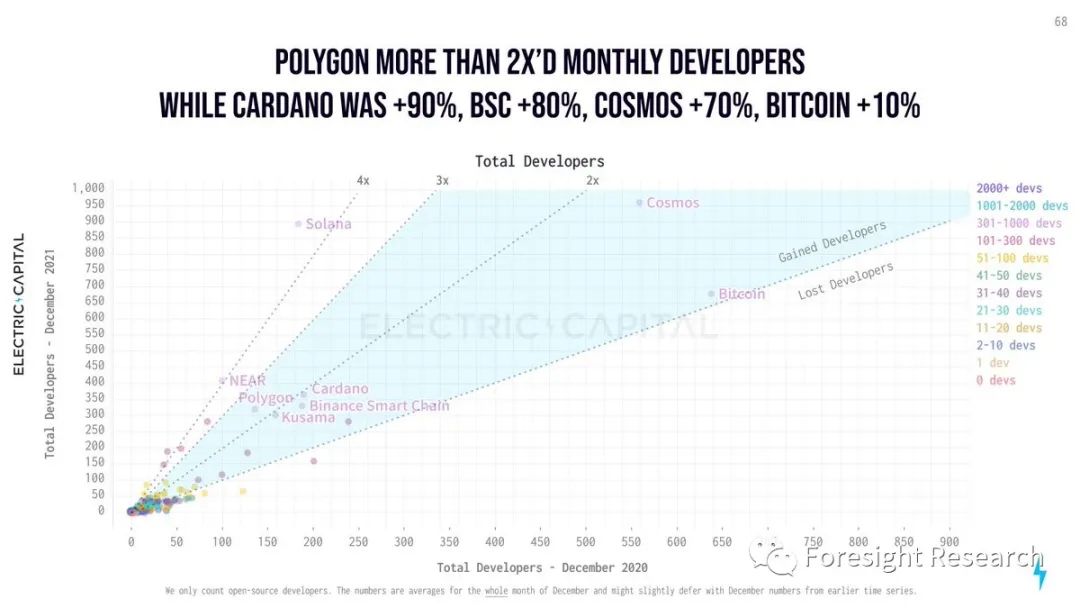
By comparing December 2020 (X-axis) with December 2021 (Y-axis). Connecting the origin and ecosystem developers The steeper the slope of the quantity line, the faster the growth rate.
Ethereum’s development tools, applications, and protocols are 2.8 times that of the second ecosystem
Ethereum continues to have the largest ecosystem of development tools, applications and protocols. The scale of Ethereum is 2.8 times that of the second largest Polkadot ecosystem.
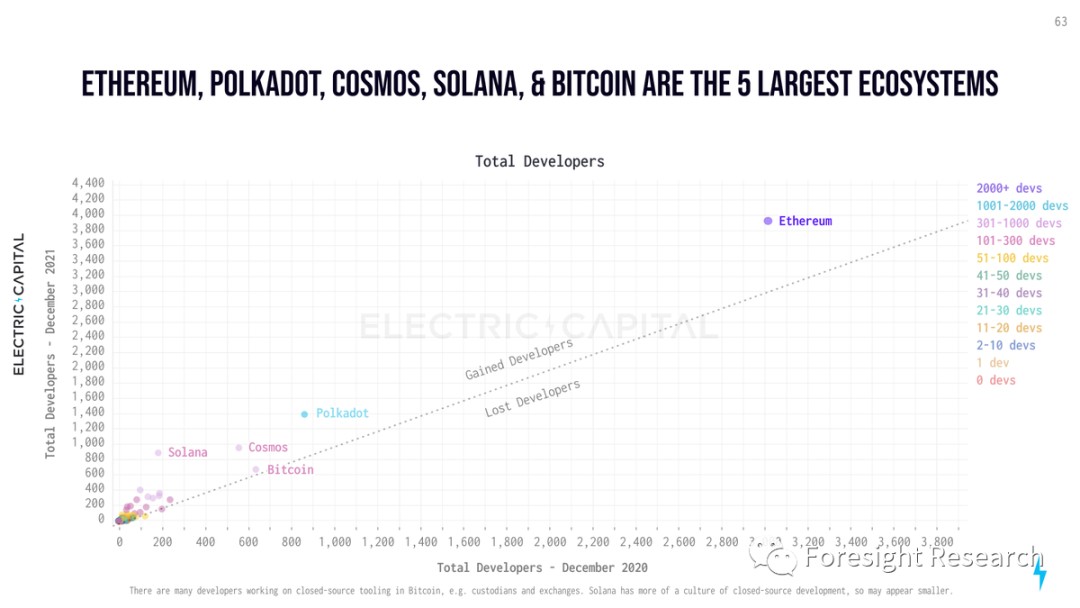
Ethereum, Polkadot, Cosmos, Solana and Bitcoin are the top five ecosystems. Given that Bitcoin does not have smart contracts on the chain, it is reasonable for several other smart contract platforms to have larger ecosystems.
< br>
Solana and NEAR have achieved more than 4 times growth
Except Ethereum And the growth of Polkadot, in 2021, Solana has grown by more than 4.9 times, NEAR has achieved more than 4 times of growth, and has grown into the sixth largest ecology in 2021. As mentioned earlier, the growth of ecology in the report may be underestimated , as only open source codebases are considered.

Other mainstream ecology has a lot of growth< /b>
Polygon doubles its monthly developer count, while Cardano grows 90%, BSC grows 80%, Cosmos grows 70%, Bitcoin is up 10%. The growth of Cosmos and Cardano is somewhat unique in that they started to heat up later than other protocols.
The growth of the new ecology is more rapid
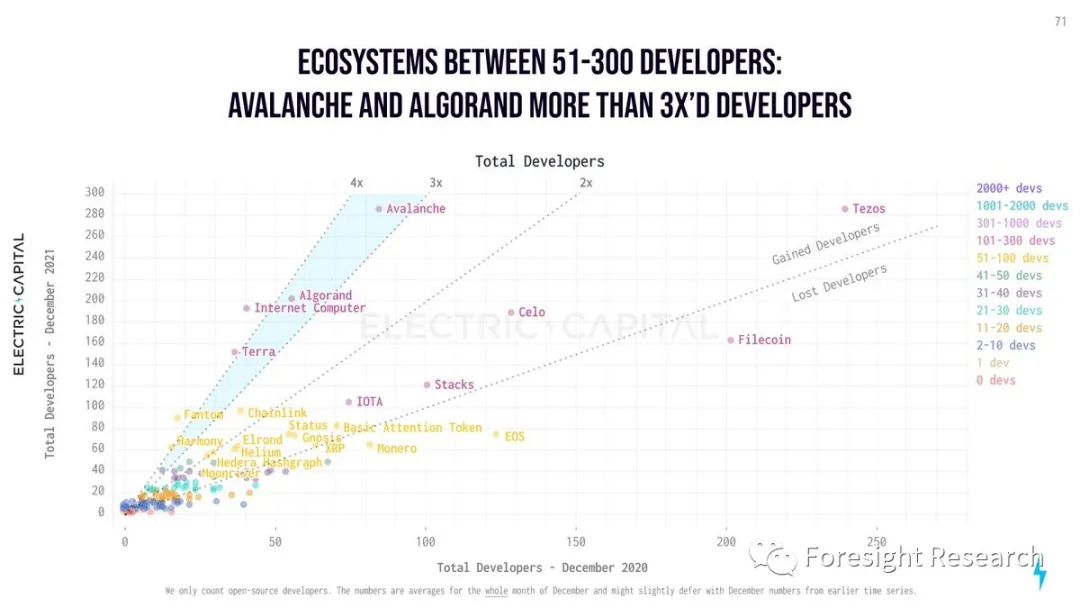
For an ecology with 50-300 developers, We can see:
Quadrupled: Terra, ICP, Fantom, and Harmony
Tripled: AVAX , Algorand
Comparison of ecological growth over the same period
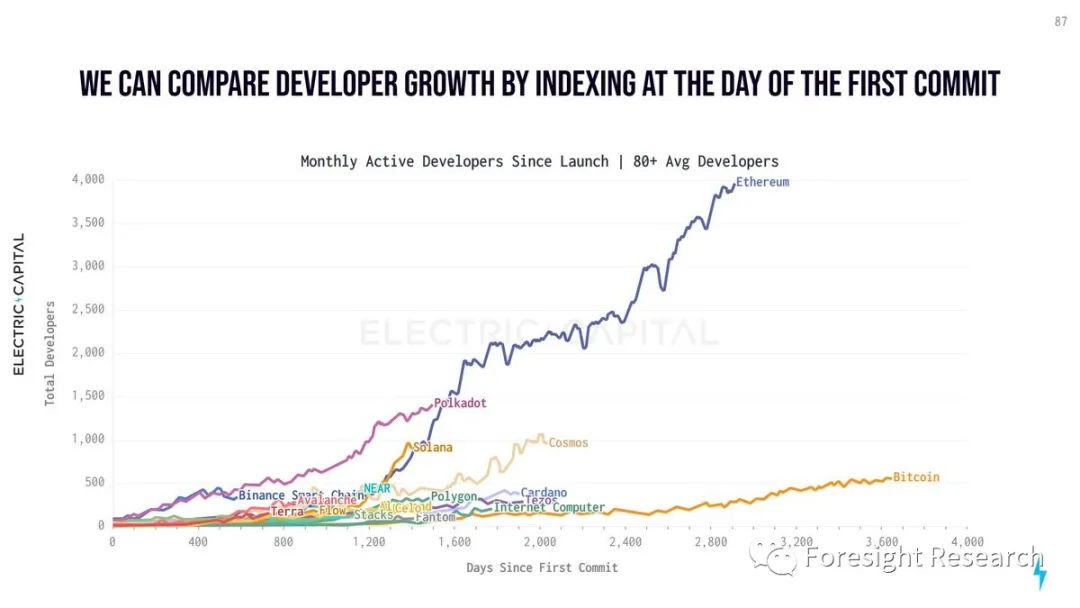
All these projects were launched at different times. In order to visually compare the growth of the ecology in the same period, we use the date of the first commit in the ecology to compare.
< /p>
< br>
The new ecosystem can attract developers from other early ecosystems
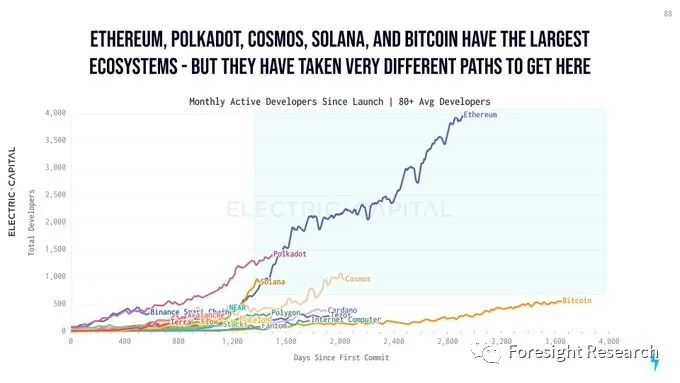
Ethereum, Polkadot, Cosmos, Solana, and Bitcoin have all taken different paths to develop their ecology. The new ecology can attract developers from other earlier ecology.
The entire Web3 developer ecology is more than 5- It was much bigger 10 years ago, so the absolute numbers are growing faster.
< /p>
At the same time, most of the top ten Layer 1 achieved higher growth than Ethereum
We also considered the top 10 Layer1 based on market value, from the date of the first public code submission as a benchmark, the growth rate ratio of Polkadot, Solana, BSC, Near, AVAX, Terra Ethereum is fast.

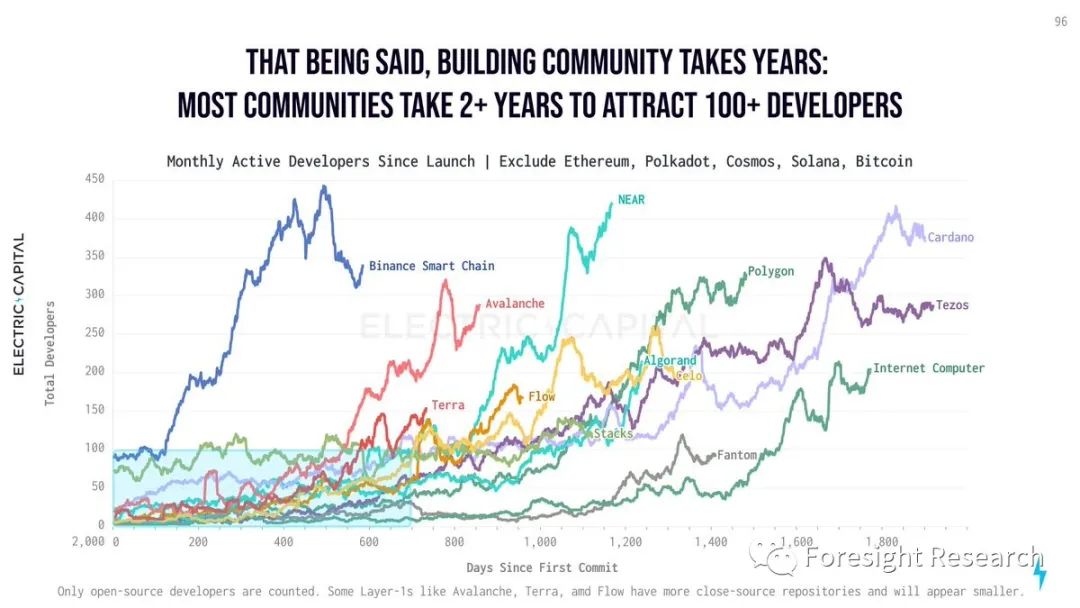
Most communities take 2 years to reach 100+ developers
< /p>
Although the Web3 ecosystem continues to grow and is bigger than ever, it will take time to build a real community.
< /p>
Compatibility with EVM may bring rapid ecological growth
A way for the team to accelerate growth By being compatible with Ethereum EVM. These EVM-compatible Layer1s grow faster than Ethereum (+120% vs. +42% for Ethereum).
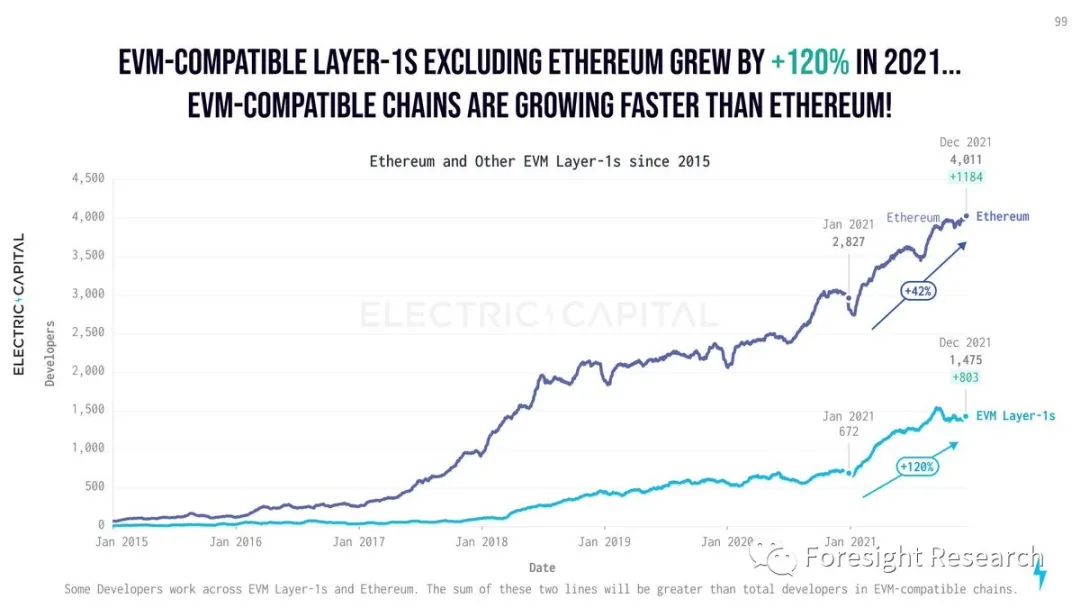
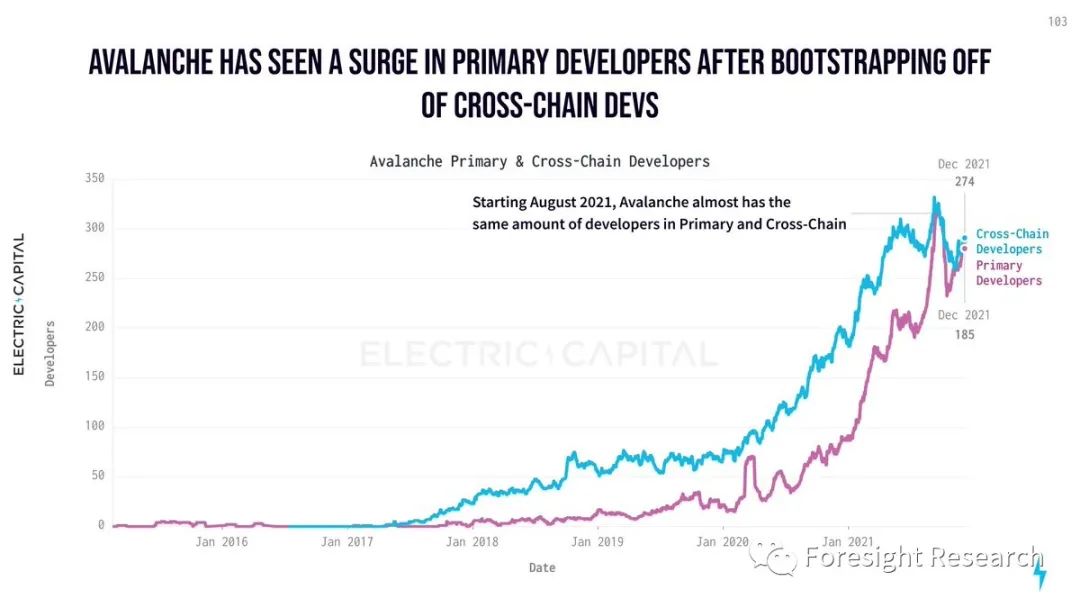
It is feasible to use the compatibility of EVM to guide an ecological development strategy. AVAX and Celo seem to have been able to start the ecology from the compatibility of EVM, and guide their own ecological developers to pay attention to their own chain.
DeFi development ecology comparison
DeFi development ecology growth and Web3 as a whole Growth in line
The development ecosystem of DeFi has grown by 76%, which is in line with the overall growth of Web3. 500 per month New developers submit code to DeFi projects.

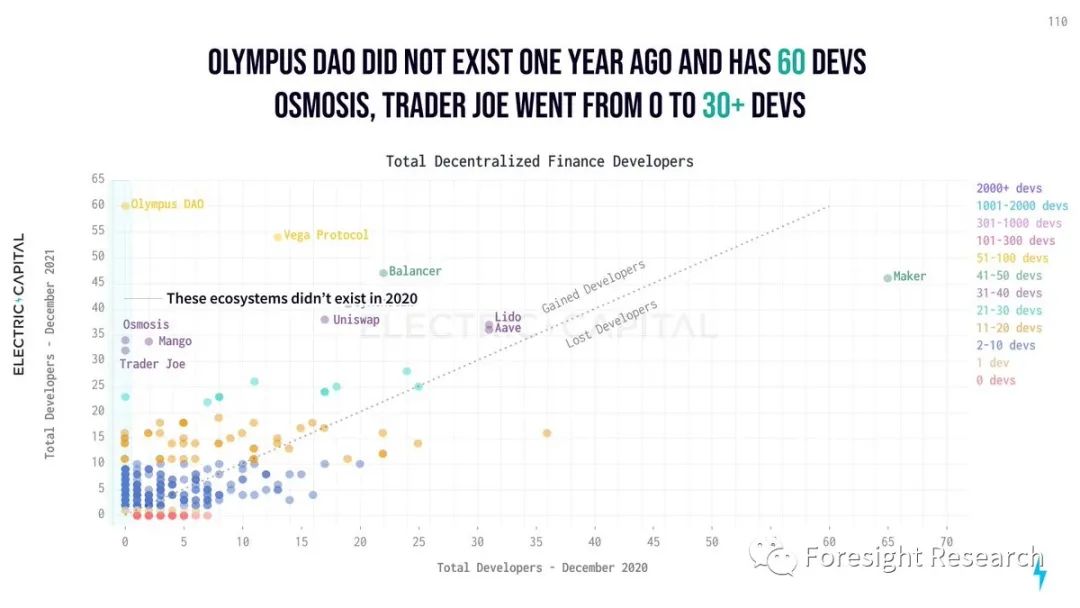
The new DeFi ecosystem can start faster
OlympusDAO grew from 0 to 60 developers in its ecosystem.
Traderjoe and Osmosis from 0 Grow to 30 developers.
ComposableFin grow from 0 to 23 developers.
a lot DeFi projects more than doubled
More than doubled: @mangomarkets, @BalancerLabs,@uniswap , @synthetix_io, @AcalaNetwork, @InjectiveLabs, @beefyfinance, and @SetProtocol.
More than triple growth: @anoma, @RariCapital, @JetProtocol, @Instadapp, @CurveFinance, @pangolindex.

NFT, DAO, chain game development ecology
The data of these types of projects is too noisy, and it is difficult to analyze the number of developers and the activity submitted by developers. Choose not to analyze in the report.
Summary
The number of Web3 developers has grown very strongly over the past few years.
But considering the number of software engineers in the world, Web3 still has a long way to go.

Web3 is just getting started.
Original text link
Welcome to join the official BlockBeats community:
Telegram Subscription Group: https://t.me/theblockbeats
Telegram Discussion Group: https://t.me/BlockBeats_App
Official Twitter Account: https://twitter.com/BlockBeatsAsia
 Related Articles