How do I start a DAO? Consider these five points
The DAO Startup Tutorial: Complete these 5 steps to start your Own DAO Business
Source: Bankless
Thousands of DAO experiments have sprung up in cryptography.
They're everywhere. Protocol DAOs, creator DAOs, media DAOs, social DAOs, and all kinds of DAOs that do crazy things like bidding on priceless art with billionaires.
These new forms of organization are a golden opportunity. We call them the future of work. We believe that very strongly.
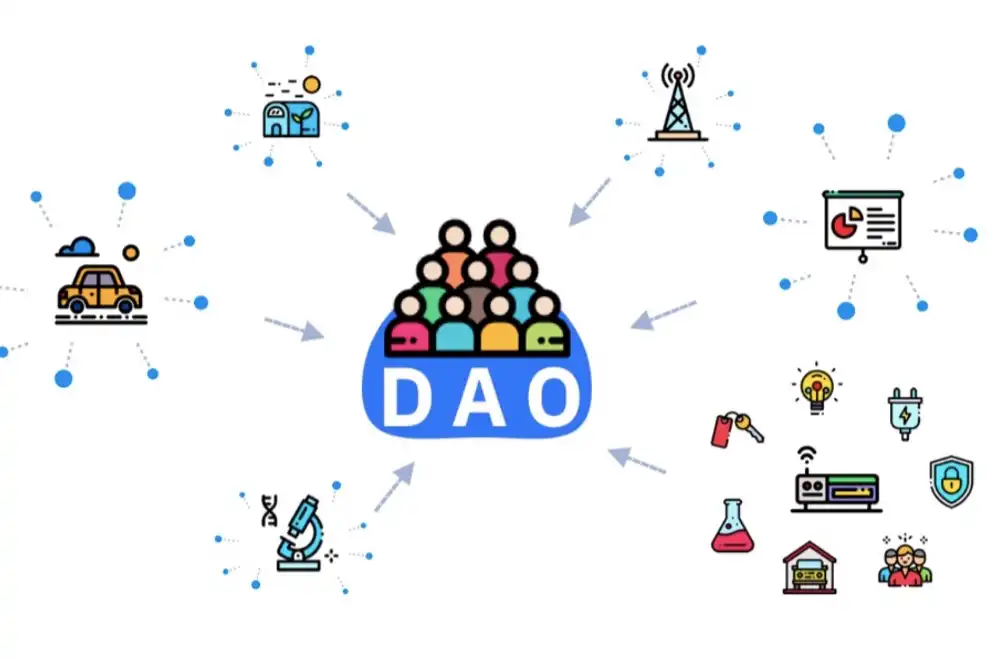
Daos are the coordination layer of encryption. It allows people to collectively decide how to allocate resources globally, forming new digital communities.
As you can imagine from above, you can start the DAO for just about anything.
You only need two things: mission, communication, community finance, and a framework for financial management. The rest is completely open to the imagination.
Below, Lucas explains what you need to know if you want to start one of these new digital organizations.
How do I start a DAO
By Lucas Campbell
The largest organizations in the world will eventually become DAOs.
Decentralized autonomous organizations (DAOs) are digital communities with common missions, common bank accounts, and caps. Over the past few months, we've seen these new digital organizations rise to the forefront of the cryptocurrency narrative as people realize their potential to coordinate people and money on a global scale.
Public blockchains allow people to democratically coordinate values over the Internet -- all they need is a common mission.
With such a broad definition, you can start daOs for almost anything. We've seen DAO bid over $40 million for a copy of the U.S. Constitution, collect Doge memes for $4 million, fight climate change, buy golf courses, fund public goods, and more. The DAO's infinite design space is only just being discovered.
If you are interested in starting a new such organization, consider the following aspects:
mission
community
The national Treasury
governance
The ownership of
Mission 1.
Creating a mission is the first and arguably the most important step in creating a DAO.
What did you create DAO for? What is the goal of DAO?
By reinforcing this, you give DAO members a clear goal to work towards. If you're still trying to figure out why you started the DAO, here are some ideas to help you get started:
GitcoinDAO: Impact DAO
PleasrDAO: Collect artifacts (Collector/Curation DAO)
FreeRossDAO: Release Ross Ulbricht from prison (Impact DAO)
BanklessDAO: Getting 1 billion people to join cryptocurrency (social DAO)
Friends With Benefits (FWB) : Create the Ultimate Social DAO
Uniswap: Building an open Protocol DAO
Constitutional DAO: Purchase a copy of the U.S. Constitution (Collector DAO)
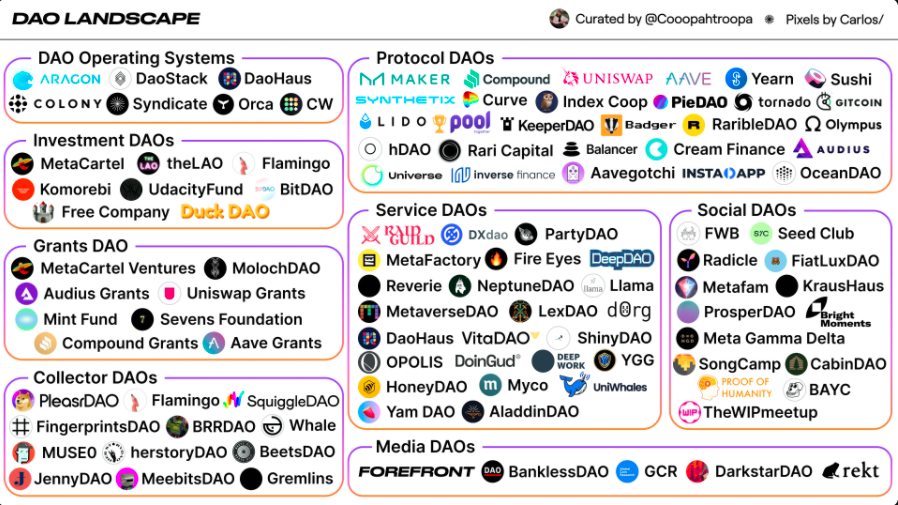
The DAO pattern
Given the above, the DAO's mission can be almost anything. As an interesting example, I helped launch a small DAO (The Gnar Collective) for playtesters with The goal of building a community of crypto shredders, organizing trips around The world, and eventually buying vacation homes for DAO members. This is where the DAO is headed, but it is clear that achieving these goals will take time.
The mission is only the first step. But once you set your goals, then you need people. This leads to the next community.
2. The community
The second step in starting the DAO is arguably the most difficult: building the community.
First, you determine whether your DAO should be large or small; Exclusive or open. Do you want a large community of thousands of people or a small group of select individuals?
This is an important distinction, depending on your task. If your goal is to help a billion people join cryptocurrencies, you're going to need some muscle. If you want to create an exclusive social club, you will want to limit it to specific individuals.
Tapping into platforms like Discord and Telegram is a great way to bring these like-minded people into the same room and start a discussion. You can pair these two communication platforms with Collab Land to create a more Web3 experience.
Communication places are critical to the success of daOs. That said, one aspect to consider when shepherding daOs is to build a community repository of on-chain addresses to which ownership and governance can ultimately be assigned.
We'll talk more about this in a later section, but there are several ways to do this. Distributing POaps and other NFT, collecting ENS domain names, and so on are all possible approaches. Having an on-chain community makes the DAO ownership and governance aspects easier to implement when the time comes.
If you'd like to learn more about how to build a web3 community, I'll follow some tips from my colleague Coopah .
Community tools
- Discord (Communication Center)
- Telegraph Group (Communication Centre)
- Collab Land (token-controlled access)
3. The vault
Community vaults -- shared ownership -- are the main unlock for Web3 that makes daOs so valuable. The vault is about how the community coordinates and deploys funds to achieve its mission. While every DAO is different, determining how you will direct your repository is an important step.
It all depends on the type of DAO you want to start. If you're building a protocol DAO that requires a royalty, this step can be fairly simple:
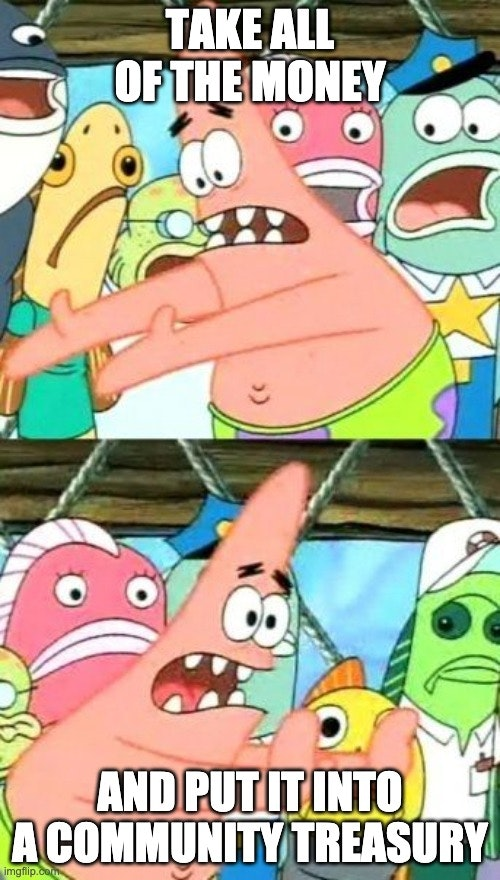
The process is similar for DAOs that sell membership access through NFT. At the end of the day, your goal should be to put as much money into the vault as possible, as this provides working capital for the community.
If you want to start a social DAO with ERC20, this becomes a bit more difficult. Bankless DAO has been working to generate on-chain revenue by launching unique projects and initiatives, a portion of which goes to DAO's coffers.
As a result, the community released some of the best-selling crypto goods, launched unique NFT projects, worked with other DAOs to create new indexes, and generated some high-signal content in encryption. All of these initiatives not only add revenue to the DAO fund to channel working capital, but also to the contributors who help get these projects started!
Another approach is daOs, done by Friends With Benefits, Forefront, and others, which receive investment from large funds in exchange for a piece of ownership of daOs. Again, this in turn provides the DAO with working capital that they can deploy to fulfill their mission -- whether it's paying core contributors, funding new projects, etc.
Once you have money in your community vault, the next step is to figure out how to manage it.
Vault tools:
- Gnosis Multisig (Community Treasury)
- Parcel (Vault Management tool)
- SafeSnap (Governance + Vault tool)
-Juicebox (crowdfunding)
4. Governance
While governance is not everyone's cup of tea, in the DAO it is your civic duty as a member. Participating in discussions, proposals, and submission votes is a critical task that needs to be accomplished to move the DAO forward.
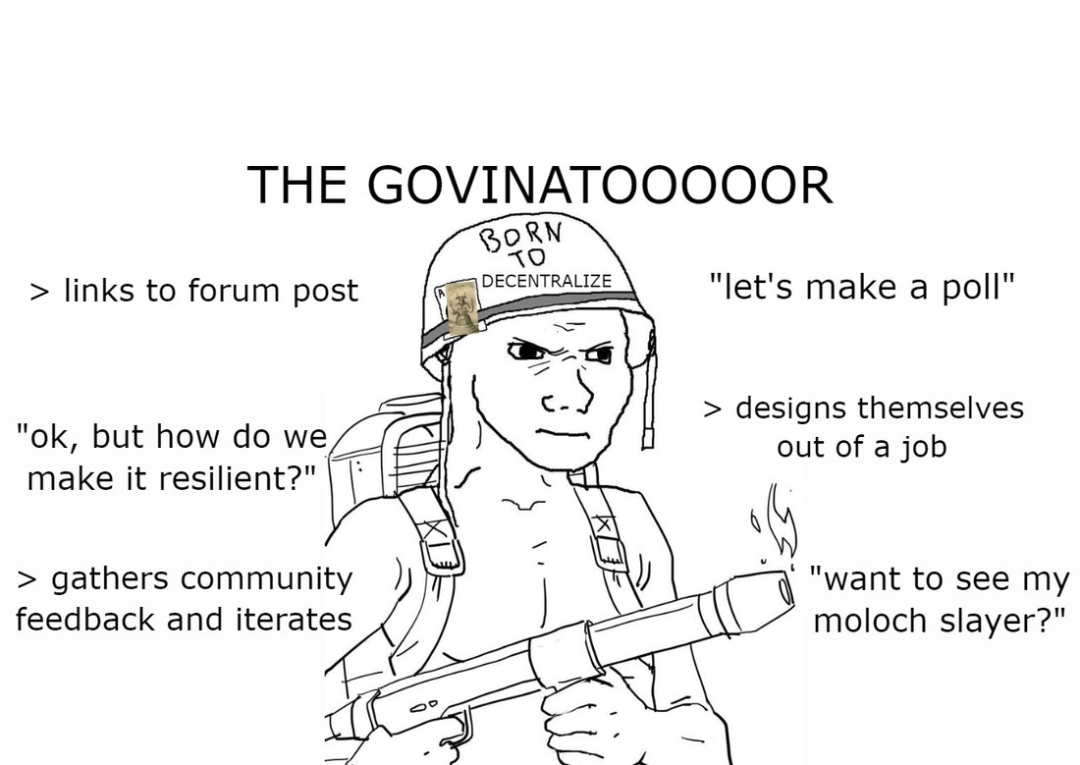
There are several approaches to governance today, but it usually falls into one of two categories: on-chain and off-chain.
On-chain governance revolves around token voting, while off-chain governance is a discussion and forum post that leads to a formal on-chain governance vote.
That said, the general governance process I see in daOs looks like this:
1. High-level community discussions via chat and phone calls
2. Forum proposals to gain soft consensus
3. Token voting for hard consensus
4. If passed and a quorum is present, the proposal shall be carried out
Complete and open community governance is only one aspect. We are also seeing delegated governance come into play, where communities empower a group of individuals/workgroups with specific rights. This is particularly true in appropriations committees, which can draw input from the wider community but are ultimately given the authority to make management decisions about how grants are allocated.
Determining when, where, and how these delegated governance teams function is a key aspect of daOs, as formal governance of every action and decision is slowed down. You don't want to go through a weeks-long governance process to make a decision.
Working groups with established authority enable DAOs to move quickly and smoothly while maintaining the degree of community voice.
But use proxy voting sparingly -- there is a risk of centralisation
Governance tools:
- Snapshot (Token vote)
- Tally (token voting and governance aggregator)
- Discourse (Forum discussion)
- Boardroom (Governance aggregator)
- Messari Governor (Governance aggregator)
The ownership of 5.
Once you have a governance framework, you can allocate ownership. This is how you access and vote on governance decisions on behalf of your membership.
As mentioned in this article, there are two main ways to allocate ownership: fungible tokens (ERC20) and non-fungible tokens (NFT).
Some projects use their community's NFT (such as Lootbags for Loot) as governance weights to vote on Snapshot, while communities like FWB use their native ERC20 tokens. Both have their advantages and disadvantages.
As mentioned in the finance section, the biggest benefit of NFT membership ownership is that it is easier to sell membership rights through NFT airdrops (not legal advice, please consult a lawyer), making it easier to channel capital into community finance.
For ERC20, especially when it comes to ERC20 tokens in the United States, selling membership can become more complicated. Here, a legal team is needed to review the process, and SEC Chairman Gary Gensler will always have a chance to knock on your door (again, this is not legal advice, consult an attorney).
The main advantage of using alternative tokens is that they are a better mechanism for directing the internal economy. The fungibility of ERC20 tokens opens the door to motivating contributors more easily than NFT. Moreover, by allocating most of the supply to the Treasury, if the DAO succeeds, it creates higher leverage for channeled capital in the long run.
With all this in mind, future DAOs can certainly leverage both NFT and ERC20 tokens in their ownership structure and governance framework; However, it is too early in this area.
Ownership instruments:
- Coinvise (ERC20s)
- Mirror (NFT crowdfunding)
DAO will eat the world
As stated in the first sentence of this article, the world's largest organization will eventually become a DAO. I firmly believe that.
DAO provides a new way for humans to coordinate with each other over the Internet and have collective ownership in it. This dynamic is very powerful, and cryptocurrency natives are only beginning to realize it.
Eventually, the rest of the world will realize the same, and the year of DAO will come.
If you want to start a DAO, whether to have fun with friends or to launch a serious plan to change the world, there are plenty of opportunities and design Spaces for you to use.
In summary, there are five steps you can take to start a minimum viable DAO:
1. Create the DAO's mission (this part is open!
2. Pair up with Collab Land on Discord or Telegram to build a community
3. Create shared vaults using Gnosis Multisig
4. Build the governance framework with Snapshot
5. Assign ownership using Mirror or Coinvise
The rest is up to you and the community.
Good luck :)
The original link
Welcome to join the official BlockBeats community:
Telegram Subscription Group: https://t.me/theblockbeats
Telegram Discussion Group: https://t.me/BlockBeats_App
Official Twitter Account: https://twitter.com/BlockBeatsAsia
 Related Articles