Explain decentralized derivative Protocol Kine Protocol from the perspective of product, team and development plan
The Star Ship Kine Protocol in decentralized Derivatives
Source: Kine Community
Derivatives play an important role in traditional financial markets and even in centralized cryptocurrency exchanges, but the gap between high frequency/high speed and slow/high cost of on-chain interaction has not been effectively filled.
Nine months after its launch, What are the characteristics and advantages of Kine, which is on the same track as DyDX, as a top ten DEX on CoinMarketCap?
What is Kine?
Kine Protocol is a decentralized derivatives Protocol platform based on Ethereum. It aims to build a derivatives market with unlimited liquidity and help users to trade derivatives quickly, transparently and conveniently. All trades are supported by the industry's innovative point-to-pool engine, which maximizes capital efficiency at optimal leverage through state-of-the-art cross margin. At present, Kine has achieved a multi-chain layout to meet the diversified needs of users, build a multi-chain integrated trading ecology, and become a decentralized derivatives trading platform with the best user experience.
To put it simply, Kine is a decentralized derivatives trading platform, but not content with "monotonous" crypto derivatives trading.
In general, derivatives can better meet market participants' demand for more advanced asset allocation, such as higher volatility or risk hedging. Although spot portfolio can also carry out risk management, but from the perspective of the whole capital market, it will lose the basis for continuous capital valuation and conversion between capitals, and the efficiency of capital circulation will be significantly reduced. In terms of financial rules, derivatives trading is higher than spot trading in terms of liquidity and transaction scale.
Not content with trading crypto derivatives, Kine wants to "trade everything" and bring mainstream traders into the world of decentralized finance (DeFi) on a massive scale with a more flexible and pragmatic approach.
In terms of product design, Kine's goal of "trading everything" is very similar to what the popular DeFi protocols Synthetix, Mirror, UMA have tried to do, which is to create some "images" of financial assets that already have a broad enough consensus in the blockchain world, And make it more open to every market participant.
U.S. stocks, gold, and a range of other commodities have been proven over time to be more acceptable to traditional financial market participants and investors unfamiliar with the crypto world than the consensus on which cryptocurrencies depend. In addition to lowering the barriers to entry that have risen since Robinhood kowtowed to Wall Street, such an on-chain synthetic asset opens up endless possibilities for players in the cryptocurrency world.
As can be seen from the product design of Kine, Kine takes Synthetix as its mentor, adopts the "peer-to-pool" mode, and DeFi to provide "unlimited liquidity" for derivatives. In addition, Kine has optimized the problem of high pledge rates and further improved the utilization of funds, building on previous efforts by Synthetix and Mirror.
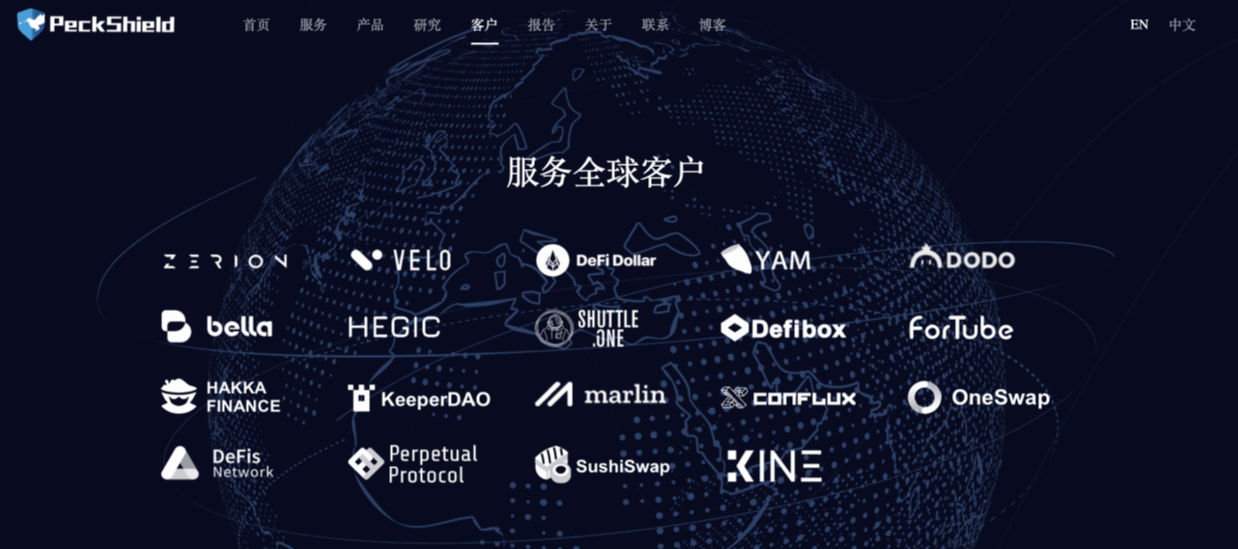
In addition, all Kine Protocol on-chain contracts have passed the Payshield-Pecksheild security audit.
Ii. KINE rejects "decentralization for the sake of decentralization" & NBSP;
Kine hopes to use flexible and pragmatic strategies to bring mainstream traders into the world of decentralized finance (DeFi) on a large scale.
Lei, founder of Kine, pointed out that currently in the field of crypto asset trading, most people are at one end of CeFi (centralized finance) or DeFi (decentralized finance). However, the financial world is not black and white, and DeFi still needs to learn from the efficiency of CeFi. CeFi needs to learn DeFi's security and decentralized governance. So he plans to start with a middle-of-the-road approach, using "on-chain pledge + off-chain trading" to improve the trading experience while protecting the safety of assets; Then, evaluate various on-chain scalable schemes and select and adopt the secure and reliable Layer2 scheme to achieve a completely decentralized transaction.
The core goal of this path is to move the broadest range of cryptocurrency users from centralized exchanges to a world of decentralized trading.
在 Kine 推出的第一版产品中,用户可以在智能合约中质押包括 ETH、WBTC、主流稳定币、Kine(KINE 的平台 Token)以及其他主要 ERC20 格式的 Token ,铸造 kUSD,然后在平台内通过链下撮合的方式进行交易。
The advantage of this approach is that the security of money is prioritized over smart contracts, not the ethics of the platform. Another advantage of online pledge is the transparency of the data. The online pledge data is kept exactly where it is, and there will be no serious exaggeration of transaction data.
At the same time, Kine promised that when the Layer2 solution proved to be a safe and reliable option over time, Kine would not hesitate to adopt it.
"I, like everyone else, am waiting for Layer2 to arrive, but as of now, no one knows when it will arrive effectively and safely. "Currently, Layer2 solutions are experimental; such experimental solutions imply significant uncertainty and security risks, so until Layer2 solutions mature, they are not a viable option for large-scale adoption." Lei said, "But Kine will eventually choose the Layer2 solution that has been proven to work. Our first step was to transform CeFi in a DeFi way, to make an on-chain product that has the same experience as CeFi. In a pragmatic way, Bringing users of traditional centralized exchanges into the world of DeFi."
Iii. In terms of product mechanism, how does Kine ensure transaction liquidity and improve fund use efficiency?
Liquidity and capital efficiency of derivatives trading platforms are also key to mass adoption.
In order to solve the liquidity problem and the related serious slippage problem, Kine draws on the peer-to-pool trading mode of liquidity Pool promoted by Synthetix to provide users with unlimited liquidity and zero slippage and other advantages to greatly improve user trading experience. The so-called peer-to-pool means that the platform creates a liquidity Pool, but most of the liquidity in the Pool is added by DeFi users, who become the ultimate counterparty of transaction users through excessive mortgage.
为了鼓励 DeFi 用户提供流动性,减少他们对于无常损失的困扰,Kine 设计了一整套针对质押用户的激励机制,包括手续费分红和平台 Token (KINE)奖励。在 Kine 设计的体系中,Pool 中流动性的提供者并不是 Kine 本身,而是 Kine 的用户,那是一群对提供流动性,获取收入和 Token 的 DeFi 玩家。
When users trade, the transaction price is a real-time price index based on Chainlink, Coinbase, Bitstamp, Kraken and other price sources, so as to avoid subjective price manipulation and pin inserting.
With the design of "unlimited liquidity + real-time price index", the trading experience for contract investors on the Kine platform will be better and easier to use than that of most centralized and decentralized derivatives platforms currently in the market.
4. Team and Financing & NBSP;
Lei, the founder of Kine, graduated from The Computer science department of Imperial College London, UK. He has more than 15 years of experience in traditional investment banking, including merrill Lynch, HSBC, Standard Chartered, Citigroup and other well-known financial institutions. He is also a CFA holder. After entering the blockchain world, he served as the head of huobi's institutional department and had ample experience in the digital currency market.
According to Lei, the founding team of Kine is mostly from the international teams of well-known traditional financial institutions such as Merrill Lynch, HSBC, Standard Chartered and Citi, with an average of 7 years of R&D experience and over 5 years of core team collaboration.
Kine Protocol has received support from top global investors and institutions and has completed three rounds of funding totaling us $20 million.
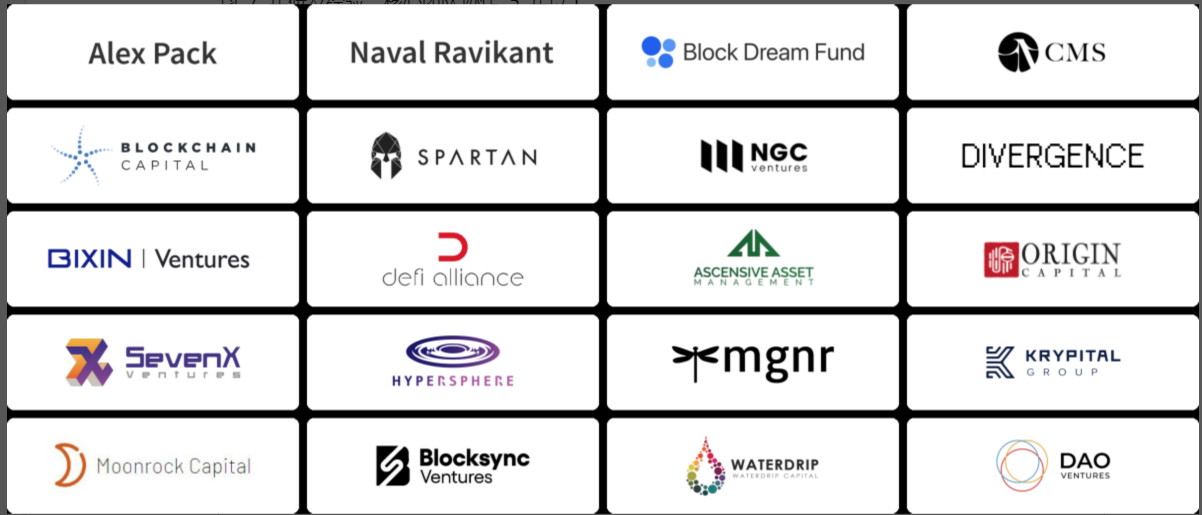
It is worth mentioning that Kine has the backing of two well-known angel investors, Naval Ravikant and Alex Pack.
Naval Ravikant is co-founder and former CEO of Angellist. Not only did he launch Angellist in 2010, he is also one of the most prominent investors in fintech. He has invested in many well-known companies and projects, including Uber, Twitter, Notion, Clubhouse, and more than 10 unicorns (companies with $1 billion or more valuation/market cap) have emerged among his portfolio companies.
Alex Pack was one of the earliest institutional investors in crypto. Previously at Bain Capital Ventures and Dragonfly Capital, he was an early investor in many of the leading crypto teams, These include Compound Finance, MakerDAO, UMA Protocol, Amber Group, MatrixPort, Polychain Capital, Ethereum and Cosmos. In October 2020, Alex Pack joined huobi Strategic Investment Department as an investment consultant.
V. Development Plan:
Kine blind Box NFT, as the beginning of Kine's metauniverse ecological plan, gradually launched Kine version 2.0 to build a more perfect decentralized DeFi ecological product. While satisfying users' basic investment and transaction on the chain, it provides a safer, fairer and highly entertaining and innovative product experience.
In addition, Kine Protocol, not satisfied with its current achievements, is accelerating the deployment of its own meta-universe ecological map, and unprecedented construction and implementation of more multiverse application scenarios. The platform is committed to breaking down the barriers of centralization and decentralization. In the future, the platform will also lead users to travel more freely in the crypto world and seize the opportunities of the blockchain market and the dividends of the metacosmic era.
在 Kine 的去中心化治理中,引入 DAO 作为社区治理去中心化的第一步,Kine DAO 主要由 KINE Token 持有者组成,用户可以通过提案和投票治理的方式,维持项目运行和推动项目发展。Kine DAO 发展的终极目标是解散 Kine 基金会,实现更彻底的去中心化自治,搭建一个完全由用户主导的 Kine 生态系统。
This article is submitted and does not represent the opinion of BlockBeats.
Welcome to join the official BlockBeats community:
Telegram Subscription Group: https://t.me/theblockbeats
Telegram Discussion Group: https://t.me/BlockBeats_App
Official Twitter Account: https://twitter.com/BlockBeatsAsia
 Related Articles