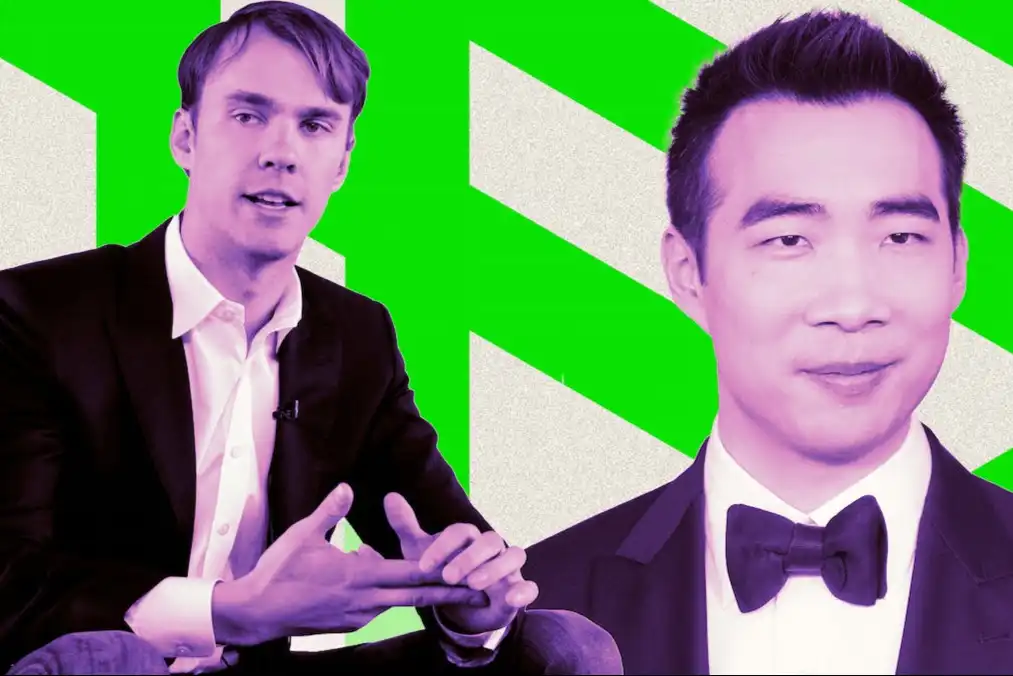
Fred Ehrsam, Paradigm's founder, on how cryptocurrencies can activate creators and communities
原文标题:《 Paradigm 创始人 Fred Ehrsam 再谈加密货币如何激活创作人和社区 》
Fred Ehrsam is co-founder of Paradigm and Coinbase
Original text: Perry Wang, Chainnews
Almost exactly a year ago, Jesse Walden, founder of Variant Fund, Blake Robbins, a former partner at A16Z responsible for cryptocurrency investments, and I speculate on the future of creators, communities and crypto. We had little idea what last year would bring, especially when NFT went mainstream. We recently got together for another conversation to reflect on what happened last year and speculate on trends to come. Here are excerpts from the conversation.
FredA: Nice to see you both again. Almost exactly a year ago, we talked about how encryption can activate creators and communities. A lot has happened since then. What has been the biggest progress?

Fred Ehrsam is co-founder of Paradigm, a crypto asset investment fund, and Coinbase
Blake: The last time we talked, we were all sitting here thinking, if you're an early creator or if you want to support a creator, what's the status symbol? What will digital goods look like? It turns out that it's really just digital art. You can take a cynical view and say, "This is all pure hype, you're buying random NFT, it has no utility", but as you dig further, there are some very cool elements around this idea that can create economic alignment.
Jesse: Think about what has happened in the last year. There are three big inflection points, some crypto specific, others more universal. First, 2021 was the year investing became mainstream culture. This is not unique to the crypto world: events such as WallStreetBets, gamestops, and others are the best examples. I think it has taught people a lot about investing and the Internet community and making money together.
This paved the way for the second major turning point: culture then became investment. With NFT, you can now invest in culture through digital art.
The next step is to fully combine the two, where investment is culture and culture is investment. Investing becomes a team sport where you can play alongside your friends on the Internet. What is exciting is that people now understand that encryption is the right stack to do this. Encryption is social by nature. The traditional financial system is not.
Fred: Blake, what do traditional creators think of this whole phenomenon? What do you think of their reaction?
BlakeIf we've learned anything in the last year or two, it's that these creative people are getting more and more empowered. Take onlyFans, for example. We've seen it explode because it opens up a new way to monetize. I think this will happen with NFT as well. We haven't seen a great creator actually do it yet, and I'm curious to see if anyone will and how. Because if they do it right, the future will be sky high.
Jesse: One of the really cool things that's starting to happen is that we're seeing collector DAOs starting to form around NFT. Edward Snowden sold an NFT for $5 million. The buyer is not an individual, but a group of people using smart contracts on Ethereum to pool their money.
We will start to see groups tokenize themselves. So if a creator's work has this fan base right now, creating a token for that work might be like a social token for the creator or the community that has a lot of interest in their work.
One possibility for content creators to be truly involved is that they might not be the issuers who sold their tokens and took the money out. Perhaps it was fans who took it into their own hands, and that's how social tokens were born.

Jesse Walden is the founder of Variant Fund, a venture capital Fund, and a former partner at A16Z who oversees cryptocurrency investments
Blake: I haven't really thought about it in this context, but I can imagine how the dianbian culture might play out. For example, Bepebers (fans of pop star Justin Bieber) might band together to form a DAO and buy NFT copies of Justin Bieber's latest songs.
Fred: Jesse, do you have any intuition about co-investing or other possible avenues for "investing as a team sport"?
Jesse: If you take this idea to its logical extreme, it means that you and I (the professional investors) will lose our jobs. I think the investment club ultimately determines what people watch on the Internet because it's no longer determined by who gets the most retweets or who follows the most []. The new factor is, who has the most skins in the game? Who invests in what? This trend was initially seen in NFT and will extend to Internet products and services in the future.
Fred: We've actually seen some examples of this today. This is how the modern art market works. Financial support for artists often means a pinnacle in cultural awareness. Encryption could create a really powerful economic value in the feedback loop of cultural values.
Blake: Back when I was younger, I remember those sites where you basically had to earn a reputation -- either by uploading a certain amount of content, or by proving your worth in some way -- in order to visit sites that offered exclusive torrent. I think we'll see similar dynamics with DAOs in the future.
Jesse: Membership of these DAOs will become more sophisticated. Now in most cases, it's just capital. But to maintain the high quality standards of DAOs and these community pleasures, you must move beyond capital as a threshold. There are a number of startups that are trying to essentially help the crypto community raise the bar for membership, creating treasure hunts or Easter eggs that people need to take heart in.
FredYou can already see this in venture capital today. It's just not tokenized. In other words, if you invest in a startup or two early (and successfully), others may want you to invest in theirs early.
BlakeImagine an artist deciding who they want to sell their work to. For example, want to sell it to Pleasrdao, even if they are not the highest bid, because the artist knows that working with them brings a lot of added value.

Blake Robbins is a partner at Ludlow Ventures
Fred: Entertainment and investing are becoming part of the same mix. What began as a status symbol is now moving toward financialization. The Yeezys, the coconut shoes worn by Kanye at the Grammys, have been bought and are now being split up into shares that can be invested by many people. I think the same is true of politics. When you watch an election debate, it feels like you're watching a boxing match with sports commentary, rather than discussing the substantive outcome of a nation-state and the future of its policies.
Jesse: This is a particularly efficient combination in the market, because the distribution of economic benefits that are actually relevant to oneself, whether it is to make money or to lose money, evokes very strong emotions.
Fred: As we've discussed before, aligning the financial interests of communities around different creators or projects can be a powerful incentive to turn them into highly motivated dealer networks. Bitcoin has proven that over the last 10 years, and I think we're just beginning to see the beginnings of that in the NFT space.
Blake: You both have great insights into encryption, but I'm thinking from the point of view of YouTube video creators because I assume that at some point they should be casting NFT for everything they're making. But do you think they will still use a centralized platform for distribution?
Fred: We all know that in the long run, cryptocurrencies will allow creators to connect directly with fans and actually own that popularity, independent of any platform. The NFT is still in its infancy. It will be interesting to see how people build platforms that use NFT as the basic media module. That's how people build a fully encrypted native platform with NFT as the main module, and we're in year 0.5 of that process, which could take more than a decade.
Jesse: In the short term, successful Web 2 creators are also likely to do a better job of creating NFTs that aren't original works they've released elsewhere, but are originally thought of from an NFT perspective, perhaps as a new kind of digital native commodity, as opposed to videos from YouTube.
I do agree with Fred that in the long run, every medium on the Internet will be converted to NFT. And there will be a market to trade these NFTs. I don't think it's going to happen by adding NFT widgets to an existing platform in YouTube. I think it will be more of a bottom-up rise.
Fred: Further, embedded in it is the notion that blockchain will be the only source of truth in the digital world. So almost every digital medium is likely to be cast as an NFT at some point, whether or not it's because you want to know when it was first created, who owns it, and how it has evolved over time.
The second factor embedded in this is that the formal-factor aspect of NFT is currently in its infancy and needs a lot of work. For most of today, we are just beginning to climb on our feet, like the beginning of any new technology. We are just beginning to explore some of the interesting ways in which NFT can create new media, art, or other forms. You could say that the spawn of crypto cat Cryptokitties is one of the earliest versions of this new mechanism, where you can take two digital assets and then create a new unique digital asset. I'm sure there will be others. Games and in-game economies seem to be highly possible.
JesseEpic Games' Tim Sweeney has publicly stated that the Metaverse can only exist with a true digital native property system. Blockchain is exactly that. We are now beginning to see a clash between the meta-universe and crypto native assets. I think the convergence of these two things is inevitable, and it's going to happen faster than people think.
Fred: Tim recently had a great podcast in which he talked about the infrastructure needed for the meta-universe. If you listen to the whole podcast, it's like a great way to send a red flag to the world, "This is encryption, the century of encryption."
Blake: These are particularly problematic in the gaming space, where the centralized platforms actually own these assets. So gamers probably know better than most that this future trend is not shocking because users will say, "I bought this skin, I can't transfer it to another game?" At the moment it feels inevitable.
Fred: One thing that can be underestimated is how many kids have grown up in these virtual worlds, so these ideas may be more intuitive and normal to them. Not only that, kids understand finance, kids are super into creating their own culture and getting involved more and more directly in any way.
Jesse: One of the great things that has happened since we last discussed it is that there are so many other people besides the kids who encrypt native or game soundtrack who have shown up on the doorstep of the crypto field and have learned behaviors that were extremely esoteric to them six to twelve months ago. For example, installing crypto wallets on browsers, phones, and signing transactions and paying Gas are things that Web 2 people scoff at, but millions of people have mastered.
Fred: MetaMask announced 5 million monthly active users the other day. It all started to feel very real. Even some of these experiences, like Topshot, people will debate whether this is really cryptocurrency. I think the answer, to some extent, is that most of the things that use encryption are becoming a normal thing for everyone.
Jesse: I think that's where NFT is going to end up, but it's interesting that some people seem to favor the full encryption experience, including all the awkwardness, because it's real. It will be interesting to see what this conversation predicts over the course of a year, whether people want to be abstract, or whether they want to really own something and feel like they can take it with them and interact with it anywhere.
Fred: Another dimension that people may underestimate is how likely it is that with the proliferation of cryptocurrencies, automatic payment for various actions on the Internet will become. If you're an Instagram influencer, you can now enter into all sorts of paid partnerships directly with brands. In the future, you may just take a picture with the product exposed, intentionally or not, the image will be scanned and you will be automatically paid. If you are a software engineer and contribute code to the encryption protocol, you may also get paid automatically. There is no employment agreement.
At some point, the child will no longer have a bank account and will simply have an encrypted wallet. There will be a lot of progress by then. It's like, "Here's a downloadable widget that works with everything on the Internet."
Blake: In an encrypted environment, everything is the API and your data -- what you actually share, what you choose to support, all those choices you make -- that can be stored with your information and shared with friends for some purpose, if you wish. This really empowers the user in many ways.
Fred: I don't think people have really accepted that crypto or blockchain is going to be the sole source of truth for everything in digital life, which is becoming a big part of life. This includes bank accounts, reputation, identity, all of these form factors are combined.
Jesse: To conclude, some of the ideas we discussed a year ago have yet to materialize. First, the tokenization of physical goods. The other is social tokens. We're still trying to figure out the fit between the product and the market.
The tokenization of physical goods will certainly become a reality. The logistics of the real world are not yet fully packaged into the blockchain, but they will eventually connect. When social tokens mature, they basically buy NFTs from creators through these investment clubs, and then create communities around those NFTs, where community tokens or access to that community eventually become something similar to social tokens from the creators' fan base.
Blake: With social tokens, I can't say exactly how it will happen, but I think at some point in time people will hold these tokens, either earned or purchased, and owning these social tokens will unlock access to the community or to the creators, or both.
Physical goods do suffer from logistical bottlenecks. Let me not move forward on this for a while, but it is indeed inevitable that at some point in the future you will be able to own only a fraction of Yeezy. This seems like a no-brainer.
Fred: Tokenizing physical goods will be similar to Webvan in the early days of the Internet. It's not an idea that will be successful early on, but it will be. We will soon see people try to implement this idea again.
Social tokens: Sounds like we all still have faith in them!
It will be very exciting to see what happens to cryptocurrencies and their creators a year from now.
The original link
Welcome to join the official BlockBeats community:
Telegram Subscription Group: https://t.me/theblockbeats
Telegram Discussion Group: https://t.me/BlockBeats_App
Official Twitter Account: https://twitter.com/BlockBeatsAsia

 Related Articles