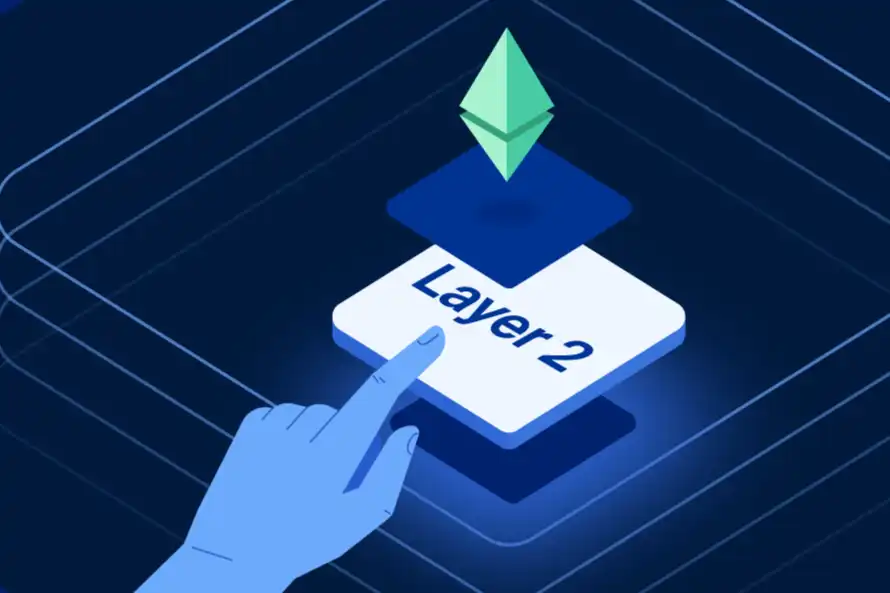
Pantera Partners: Compare the strengths and weaknesses of Arbitrum and Layer2 with other seeds on the expansion track

原文标题:《 Pantera 合伙人:比较 Arbitrum 与 L2 扩容赛道其他种子选手优劣势 》
原文作者: Paul Veradittakit,区块链投资机构 Pantera Capital 合伙人
Original text: Perry Wang
Pantera led the way in early 2019. Offchain Labs , Offchain Labs built the Arbitrum protocol, an Ethereum DAPP scaling solution using Optimistic Rollups technology. It seems like Mark Cuban has been ratcheted up his investment recently.
Last Friday, the developer-only Arbitrum mainnet was launched, including the Arbitrum. Uniswap Community support to "deploy Uniswap V3 on Arbitrum". You can read more about how Arbitrum works and how it compares to other Layer2 solutions on Ethereum in the text below.
Designed to put security and trust above efficiency, Ethereum's massive popularity and surging transaction throughput have resulted in extremely inefficient networks. As a result, crypto users on Ethereum dApps experience a poor user experience, often having to pay ridiculously high transaction fees and face extremely slow transaction times. Hence the growing demand for a Layer2 solution to build on Ethereum, which found a way to efficiently package transaction data and regularly publish it to the Ethereum network, solving many of the inefficiencies of the original network.
Offchain Labs 最近宣布部署 Arbitrum One,即其 Layer2 扩容技术 Arbitrum 的主网测试版,该技术采用了 Optimistic Rollups 机制。
Arbitrum 围绕一个 Rollup 链构建,该链执行提交到 Arbitrum 网络的所有交易,并将其数据记录在以太坊上的收件箱(inbox)智能合约中。
为了在以太坊上反映这些交易,验证者可以将收件箱中多个交易的数据汇总成一个简明的摘要,称为「断言」(assertion),然后将其发布到以太坊主网。这些断言被乐观地认为是有效的,除非在设定的等待期内受到另一个验证者的质疑;不正确的断言或质疑会被处以罚没资金的惩罚。
这种机制有效地减少了以太坊网络必须完全验证的单个交易的数量,使 Arbitrum 能够提供显著提升交易速度、降低交易成本。
Arbitrum 还被设计为对开发者非常友好,与以太坊虚拟机(EVM)完全兼容,并原生支持 Etherscan、Hardhat 和 Truffle 等第三方工具。这些优势,以及 Arbitrum 的大规模扩容性改进,使得该协议成为吸引构建高吞吐量 DApp 开发者的热门种子选手。
支持 Layer2 协议的两种相互竞争的技术是侧链和 ZK Rollups。
(Polygon 所采用的) 侧链本质上是一个完全独立的区块链,它通过将区块头发布到以太坊来定期与以太坊「同步状态」。由于这些侧链仅接收到以太坊交易量的一小部分,因此可以显著提高成本效率和速度。然而由于侧链完全独立于底层区块链运行,它们容易受到各种攻击,影响到开发者在侧链上进行构建的决心。
(StarkWare 所采用的) ZK Rollups 与 Optimistic Rollup 技术类似:它们在链下(在一个 Rollup 链上)执行交易,记录所有交易数据,并定期将聚合多个交易的断言发布到以太坊主网。不过与 Optimistic Rollups 不同,并不总是乐观地假设断言是有效的。验证者还必须发布随附的有效性证明,即 ZK-STARK。不幸的是,ZK-STARK 技术仍然不成熟,不能很好地概括,并且通常其计算构建起来非常缓慢。该技术出色的安全保证使其成为以太坊扩容解决方案的远期候选者,但在目前状态下,它们仍然难以使用且难以处理。
Optimistic Rollups 某种程度上介于侧链与 ZK Rollup 之间,通过开发良好、可用的基础架构,保留了与 ZK-STARK 相同的很多安全保障。
Arbitrum 开发者主网测试版上线一周之内,逾 250 个项目陆续登陆,清晰显示了对以太坊扩容基础设施的疯狂需求。在这一测试版期间,如有必要,Arbitrum 团队将保持暂停或升级网络的能力,以消除最后一刻出现的任何错误或效率低下。在所有项目都能够在 Arbitrum 上构建和测试其应用后,该协议计划向最终用户开放,并开始向完全去中心化过渡。
最终,随着加密货币和 DeFi 继续赢得爆炸式增长,Arbitrum 为希望在以太坊上构建强大、用户友好且高效的 DApp 的开发者提供了最有前途的候选扩容方案之一。
什么是 Arbitrum?
在过去的一周中,Offchain Labs 将其以太坊扩容解决方案 Arbitrum 协议部署到了以太坊主网上。作为 Layer2 协议,Arbitrum 使用 Optimistic Rollups 技术将智能合约执行数据高效紧凑地打包到以太坊上,从而显著提高交易速度和降低交易成本。
什么是 L2?
Ethereum is undoubtedly one of the most popular dApp blockchains today, with nearly $65 billion in assets locked up by various DEFI protocols on Ethereum and more than 100,000 active users per day on Ethereum based dApps. Ethereum's network, which is focused on improving verifiability and security, has struggled to handle the sheer volume of transactions it receives (nearly 1.5 million a day), resulting in extremely slow transactions and excruciatingly high Gas costs. To provide some background, Ethereum users currently expect their transactions to take about four minutes to settle, with an average Gas charge of $1. For larger transactions, such as Uniswap transactions, the Gas fee may be closer to $8- $9.

Ethereum Gas rates in GWEI over the past year, source: YCharts
为了更好地处理 Dapp 和 DeFi 协议的高吞吐量,有几个项目推出了 Layer2 解决方案,构建中被称为区块链「第一层」Layer1 的以太坊之上。Layer2 协议在高层次上找到了一种有效打包交易数据并定期将其发布到以太坊网络的方法。当交易量很高时,直接在以太坊上验证每笔交易可能会导致费用上天、效率慢如蜗牛; 而 Layer2 能够比原生以太坊实现更为巨大的性能改进,因为它们有效地减少了每笔交易在区块链网络上的计算负载。
How does Arbitrum improve Ethereum's efficiency?
The key to the Arbitrum Layer2 solution is the Optimistic Rollup. In Rollup, the transaction verifier bundles multiple transactions together by executing these transactions down the chain, and then publishes the transaction data and a concise account of the final state of the smart contract (called an "assertion") to the Layer1 blockchain.
Arbitrum in particular uses Optimistic Rollups, where assertions published to Ethereum are optimistically "assumed" to be true and true unless challenged by other validators. The verifier simply publishes the assertion -- without the accompanying proof of validity -- to the Ethereum network. To incentivize honest verification, verifiers must also put a margin into Ethereum over a specific period of time. During this window, if another verifier disputes the assertion of the original verifier, they can formally "challenge" the assertion on Ethereum and put up their own margin. If the original verifier's assertion is incorrect, the original verifier loses its deposit. If the challenger is not correct, the challenger loses his margin. If an assertion passes the specified time window without any successful challenge, it is "accepted" as true and will be merged with the final state of the Ethereum blockchain.

Assertion Verification and Challenge on Arbitrum, Source: Arbitrum Whitepaper
通过将多个交易聚合为与以太坊的单一交互(发布单个断言),Arbitrum 大大减少了以太坊所必须处理的单个交易的总数。所有这些交易在技术上仍然「发布」到以太坊(通过断言),但网络不再需要独立验证每个交易(并在每个节点上完全执行每个交易的每个步骤)。此外,由于断言被设计为紧凑型,它们通常在以太坊区块链上占用的空间更少,这有助于它们能更快地被打包进以太坊区块中。总而言之,这些效率提升带来了交易速度和成本的显著提高,使得 DApp 能更容易应对大量用户和交易。
从架构角度来看,Arbitrum 上的交易被提交到 Arbitrum Rollup 链,后者可以被认为是一个侧链,用于处理以太坊链下的交易执行。来自这些交易的数据被记录下来,然后发布到以太坊上一个开放的收件箱智能合约。验证者(可以是任何人,因为 Arbitrum 是完全无需许可的)然后将收件箱中的交易数据聚合成断言,然后发布到以太坊中。外部用户可以通过简单执行发布到收件箱中的交易,来恢复 Arbitrum Rollup 链的当前状态。
Arbitrum 还针对开发难度进行了高度优化,包括完全的 EVM 兼容性、与 Etherscan 的集成以及对 Hardhat 和 Truffle 等流行工具的原生支持。这些特色,再加上 Arbitrum 的大规模扩容性改进,使得该协议成为吸引构建高吞吐量 DApp 开发者的热门种子选手。
Arbitrum 与 Layer2 赛道其他协议相比有何优劣?
Given the widespread popularity of Ethereum, several projects have introduced Layer2 solutions to enhance the scalability of the blockchain. In addition to the Optimistic Rollup technique, two other popular techniques for Layer2 solutions are ZK-Rollups and side chains.
The side chain used by Polygon (formerly known as Matic Network) is essentially a completely separate blockchain for executing transactions, occasionally interacting with the Layer1 blockchain. Since the side chain only handles a small fraction of the total volume of Layer1 network transactions, the possibility of the side chain being "clogged" by high throughput is greatly reduced, thus providing lower transaction costs and faster transaction speeds. To ensure that the side chain and the Layer1 blockchain are consistent, the side chain periodically publishes their block headers to the Layer1 chain, ensuring that the "state" of the two chains remains the same. Side chains improve efficiency by executing transactions outside of Ethereum, reducing Ethereum's overall computing load. An unfortunate consequence of this is that side chains often do not provide the same security guarantees as the Layer1 blockchain, because essentially it requires that the Layer1 chain does not self-validate every transaction/block. Invalid state transition attacks are then possible, where a majority of side-chain validators collude to artificially generate a block, steal money from transaction participants, and publish the accompanying header to Ethereum to complete the theft. Optimistic Rollups prevents such attacks by logging all transaction data into the Ethereum inbox. Anyone can execute a transaction in the Inbox to confirm the state of the Rollup chain, verify or challenge the verifier's assertion. The main difference between the side chain and the Optimistic Rollups is that the side chain posts a snapshot of the blockchain history to Ethereum, while the Optimistic Rollups records the entire blockchain history to Ethereum.
The ZK-rollups technique used by Starkex is similar in architecture to Optimistic Rollups. Both execute transactions in separate Rollup chains, and then periodically log all the data into Ethereum using assertions to validate the Rollup transactions. The key difference between the two is that in ZK-Rollups, verifiers must publish proof of validity and their assertions to Ethereum; Unlike Optimistic Rollups, the ZK-rollups protocol does not optimistically assume that these assertions are valid. The prefix ZK comes from the fact that the accompanying proof is a ZK-Stark, or concise all-transparent zero-knowledge proof. The exact technical details of ZK-Stark are beyond the scope of this article, but in short, ZK-Stark is an encrypted primitive that allows users to prove that they "know" certain facts without including any revealing information about that fact in the proof itself. The main benefit of ZK-Stark in scaling up is that they are very compact, making it much more efficient for verifiers to publish assertions and related proofs to Ethereum. These certifications also ensure that the state of the Rollup chain is always in sync with Ethereum; Since all assertions must be provably valid, unlike Optimistic Rollups, there is no "challenge period" in which invalid assertions may be stored in Ethereum.
Despite its compact structure and strong security guarantees, the techniques and abstractions used to effectively construct and compute ZK-Stark are still fairly undeveloped, making the technology difficult to use and often highly use-case specific. Most existing implementations of ZK Rollups can only handle certain types of transactions, such as token transfers or atomic exchanges. Moreover, they can be very slow to build; For an example of a block with about 1,000 transactions, it might take close to 20 minutes to set up the validation architecture on non-specialist hardware. As more specialized hardware (such as GPU validators) and encryption abstractions that specifically serve ZK-Starks begin to appear, ZK Rollups may prove to be one of the most successful Layer2 scaling mechanisms. Until then, the technology remains very limited in terms of efficiency improvements and availability, making Optimistic Rollups a more promising solution in the short term.
Arbitrum 接下来有何举措?
上周推出的 Arbitrum 主网被特别命名为「Arbitrum One」,以将其明确为由 Arbitrum 技术提供支持的旗舰区块链。随着 Arbitrum 生态系统的不断发展和完善,其他 Rollup 链(也使用 Arbitrum 技术,但可能会进行修改)也可能会涌现,专门为各种用例量身定制。
Arbitrum One 目前处于主网测试阶段,如果需要,Arbitrum 团队将有能力暂停和升级区块链。在这段时间里,开发者可以感受通 Arbitrum 的安全性和效率,并在该区块链接受天量吞吐量之前甄别任何最后一刻出现的漏洞或错误。目前 Arbitrum One 向所有请求访问的开发者开放(已有超过 250 个项目),一旦所有项目都能够在 Arbitrum 上构建和测试其 Dapp,届时将向最终用户开放访问。该团队的目标是在今年夏天尾声时过渡到完全去中心化。
一点感想
The recent surge of interest in crypto has been a double-edged sword -- bringing in new users and sources of liquidity, followed by severe network congestion, long transaction times and huge Gas bills. As Ethereum's current and future popularity continues, it is more important than ever to build a sustainable infrastructure that is efficient and secure to power higher-throughput dApps.
Arbitrum provides a strong real-world example of the use of Optimistic Rollups as a Layer2 expansion mechanism, which greatly improves the cost and time efficiency of Ethereum transactions, while retaining several key security guarantees. A large number of projects (250 and growing) have been built on the Arbitrum developer mainnet, demonstrating the need for this scalable infrastructure and the disappointment of the current Layer2 track players. As the Ethereum ecosystem continues to thrive, the Arbitrum Layer2 solution has spawned a new generation of highly scalable, efficient dApps that provide crypto users around the world with a significantly improved (cheaper, faster) experience.
The original link
Welcome to join the official BlockBeats community:
Telegram Subscription Group: https://t.me/theblockbeats
Telegram Discussion Group: https://t.me/BlockBeats_App
Official Twitter Account: https://twitter.com/BlockBeatsAsia

 Related Articles