Is the Bitcoin bull market over? We asked Pantera Capital

Over the past two weeks, cryptocurrency has been on a losing streak, with multiple factors influencing market pessimism and the ongoing debate about "bulls" and "bears". To get a sense of how top institutions understand the current market, we spoke with Pantera Capital, a leading cryptocurrency fund in the US, and their partner Paul Veradittakit& NBSP; A good chat.
Pantera Capital has established its first institutional Bitcoin fund since 2013, and has been relatively accurate in predicting bitcoin price changes over the past six months. It has extensive investment experience in the crypto world. Paul Veradittakit has more than a decade of experience in venture Capital and has helped grow Pantera Capital along with Dan Morehead, founder of Pantera Capital.
In this interview, we not only asked questions about the trend of bulls and bears, but also asked about the key investment areas and promising projects of Pantera, and conducted a series of discussions around the future market issues that investors care about, to entertain readers.

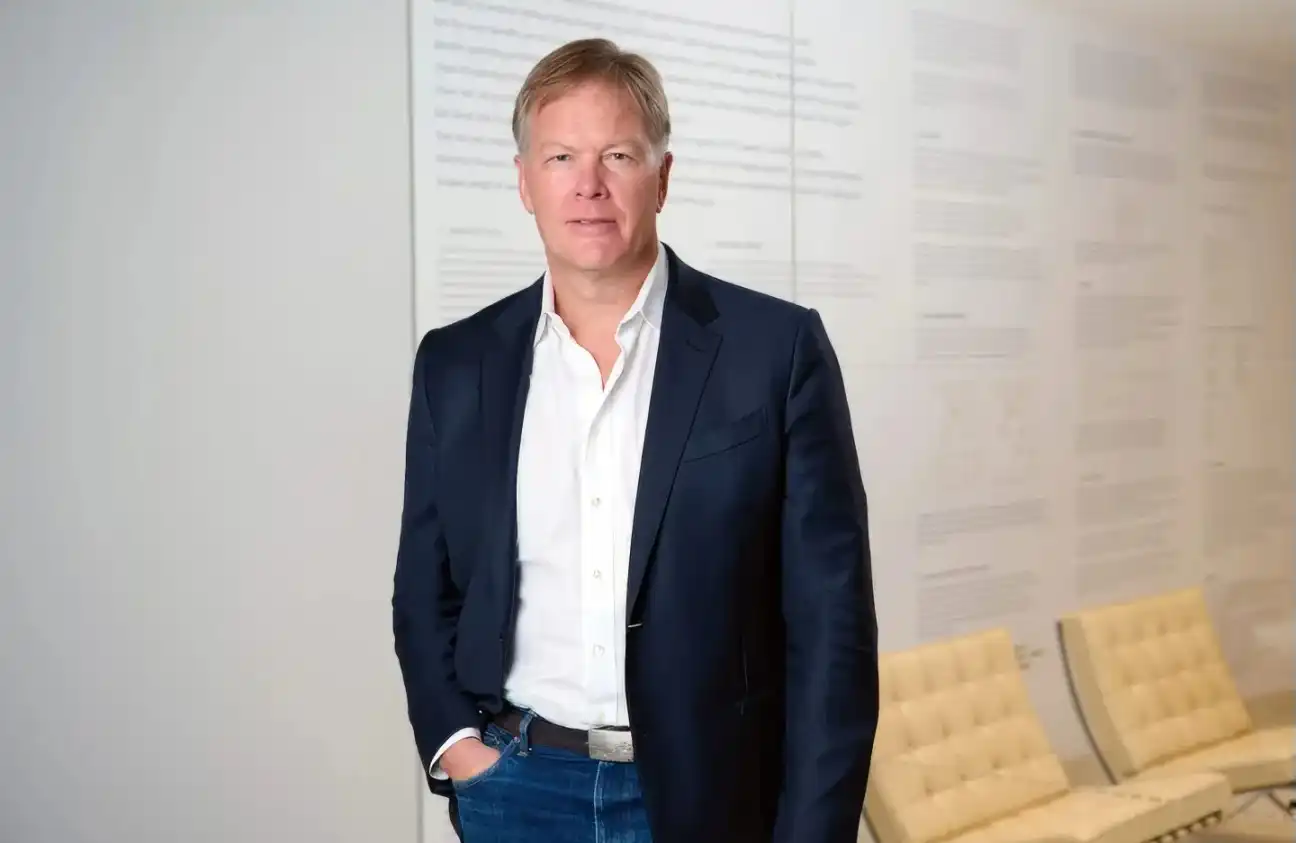
Paul Veradittakit, partner at Pantera Capital
The following is the full transcript of the interview:
Blockchain
Rhythm Blockbeats: How did you first get into the crypto world?
Paul Veradittakit: I graduated from the University of California, Berkeley and started my career as an economic consultant. A few years later, I joined a startup. In this kind of work environment, I found that I like to start a business, like to take risks, like to help the team to build an ecosystem, make business progress, I think this is the area that I really need to develop. So I started looking for more opportunities in the startup ecosystem.
Later, I started at Struggles Capital, an early stage venture Capital focused on mobile, in a basic position. It was a great experience that gave me the opportunity to look at early stage startups from an investor's point of view and focus on the mobile web around 2010. A few years later, when everyone started using mobile phones, I couldn't help but wonder if this trend would last forever. When everyone is starting something, it's actually time to shift direction and look for other early, cutting edge, exciting areas.
In the second half of 2013, I learned about Bitcoin and Blockchain, and I found it very interesting. A decentralized currency with a fixed supply could one day upend remittance, domestic payments, e-commerce payments and all other payment domains. For me, just the technology and use case of Bitcoin and Blockchain is attractive enough, even without the change of Bitcoin price cycle. I judged that Bitcoin was vastly undervalued and that there were many different applications that could be built on top of this technology.
At the time, I said to myself, now is the best time to get into this field, because I see a lot of smart people looking at this field, but no one really understands it. My friends didn't know anything about Bitcoin and thought it was just a scam. I think it was a good time. I might have looked like a fool for a few years, but as soon as there's new developments in the industry, it's amazing.
As an investor, one of the principles is to look for areas with great returns, and I can't find a place with greater potential returns than the blockchain industry. In the second half of 2013, I started looking for new opportunities in the blockchain space and met Dan Morehead, founder & of Pantera Capital; CEO). At the time, I saw Pantera work with some of the most prominent investors and early-stage funds work with Benchmark Capital, Ribbit Capital, and Fortress. Pantera was also the first institutional bitcoin hedge fund at the time.
Dan has a lot of experience in Tiger and hedge funds, and I have a lot of experience in startups and venture capital, so we complement each other very well. That's how I got into the crypto world and Pantera. I just look for areas that interest me, and then I keep going down. During my seven years at Pantera, I helped build venture capital funds focused on early-stage crypto companies. My main interest and focus is to invest in early-stage projects and really help them build companies and help change the financial world. I really enjoy the process of building to help the entrepreneurs we invest in succeed.
Is the bull market over?
Rhythm BlockBeats: It's been a wild week for cryptocurrency public markets. What about Pantera?
Paul Veradittakit: That's a very good question. The drop in the secondary market mainly affected our Liquid Token Fund, which has an active investment strategy. We are very good at judging the market by all kinds of data and signals, and the fund is doing very well.
Basically, Pantera has free reign over the liquid token fund, moving in and out of positions manually. The rest is a small quantization operation. We use a lot of data analysis, from the market sentiment, trend, momentum data, exchange data, etc., all dimensions to judge our corresponding operating strategy, and whether the market is overheated. We'll also look at Bitcoin and Ethereum, and the data that's being converted between them.
At the moment, our models are working pretty well. There have been several big declines in the market this year, and we've been able to get out of the crypto market in time to defuse risk and re-enter the market at relatively low points.
Rhythm Blockbeats: So you avoided the big drop this time?
Paul Veradittakit: Yes, and this time, we are firmly bottom-hunting. We believe this market drop is due to a combination of factors, including overheated markets, tweets from prominent entrepreneurs questioning Bitcoin (referring to Tesla CEO Mark), concerns about the tax on cryptocurrency transactions in the US, and China's cryptocurrency regulatory policies.
From the data, we found that a lot of capital in the bottom, which is very useful for the market. We've seen declines of this size and dimension in the past few years, with the price of bitcoin rising fivefold after the last big drop in 2013. We think this is a good bottom-picking opportunity and from this bottom the market will move up. So we continue to "HOLD" and even buy other cryptocurrencies.
Rhythm Blockbeats: Do you think it's still a bull market?
Paul Veradittakit: Yes, we strongly believe it's still a bull market. We don't think we have reached the top of the market, we think this is a major correction.
Rhythm BlockBeats: Pantera Capital has been very accurate in predicting the price of Bitcoin over the past six months, but the price of Bitcoin in May missed your forecast. Do you think the price of bitcoin will return to the path you predicted and hit $115,212 in August?
Paul Veradittakit: Yeah, we've done a pretty good job of forecasting prices so far. The price of Bitcoin does not exactly follow the graph, but we think the price will rebound strongly in the future, whether in October or in the second half of this year. We believe that the Pantera price forecast will continue to be accurate in the future, and time is the best judge. If you are a long-term currency holder, you will see the value of Bitcoin increase year after year.

Previously, Pantera Capital issued a bitcoin price forecast
Rhythm BlockBeats: According to Pantera, the price of Bitcoin has grown 230% a year over the past decade. But the rules of the financial world of the past may be broken in the future. As more and more investors learn how bitcoin prices rise, will this trend continue?
Paul Veradittakit: I think the price of Bitcoin will keep going up because more and more people are aware of it. During this bull market, bitcoin has become more widely known and used in more scenarios. For example, more (foreign) platforms are beginning to support cryptocurrency payments, and wealth institutions like Goldman Sachs and Morgan Stanley are also investing in cryptocurrency. Many institutional investors, such as endowment funds and pension funds, are beginning to consider allocating bitcoin and cryptocurrency. Despite these signs, it is still early days. As the traditional financial industry learns more about cryptography in the future, more investors will enter the space and prices will continue to rise.
Rhythm Blockbeats: When do you think this great bull market will end?
Paul Veradittakit: I think this bull market is looking into the end of the year, and maybe even into the middle of next year. There's a lot of room left.
Rhythm Blockbeats: What will happen when the year 2140 comes and all the Bitcoins are mined?
Paul Veradittakit: Every time bitcoin is halved, the supply of it is reduced. I really think by 2140 we'll be at least a million dollars, and I think that's where the current trend is going. With Lightning and other companion applications, bitcoin could already be used for payments.
At that point people will probably have built Layer 2 on top of Bitcoin. I'm not sure if Bitcoin will build smart contract applications like Ethereum, but I see the potential. We're seeing a lot of people looking not just at the value of Bitcoin, but at the value of its payments, including cross-border payments, domestic payments and other types of payments.
To sum up, by the year 2140, the price of Bitcoin could reach millions of dollars, and we see the potential for using Bitcoin for payments.
Curious about the Pantera
Routine Blockbeats: For individual investors and ordinary people, would you advise them to be a currency trader or to trade frequently with the channel?
Paul Veradittakit: That's a good question. I think unless you really take the time to research transactions, it's better to own bitcoin or other coins that you have a passion for and a belief in. There are also some index funds, or cryptocurrency funds like Pantera.
So far this year, Pantera Capital's Bitcoin fund has returned 70% to 80%, while hedge funds have returned 400% to 500%. Through diversification strategy and active management, the performance of our fund outperforms the return of simple currency from the point of view of data. So I think in addition to buying cryptocurrencies themselves, investors can buy index funds or look for a strong performing fund to manage your money.
Rhythmic BlockBeats: Is Pantera now open to foreign investment?
Paul Veradittakit: Yes. For a long time, Pantera Capital only had a Bitcoin Fund and an early-stage cryptocurrency Fund. Early crypto funds only focus on early stage projects, such as Filcoin or Poca, which generate better returns. We also have a liquid fund that invests in exchange and publicly traded cryptocurrencies, which was previously only available to U.S. investors and recently opened to foreign investors.
We recently launched a new $600 million fund that invests in all assets in the crypto space, from cryptocurrencies to early stage projects to equity investments, all of which are put into one fund. This is the first time I have made this information public to the international media. The idea behind this new fund is that some investors don't know whether they should invest only in tokens or only in venture capital funds, so we designed a long-term fund for institutional investors that includes a variety of different investment areas, and they don't have to make a choice.
Rhythm BlockBeats: So in practice, does Pantera use leverage?
Paul Veradittakit: We have, but we don't use leverage at the moment. For our liquid token fund, we can short and other hedges, but we don't use leverage.
Rhythm Blockbeats: What are your main hedging strategies?
Paul Veradittakit: We use different strategies in different situations, sometimes short, sometimes futures, sometimes options, depending on the market.
What is optimistic about the future market?
Blockbeats: Over the past few weeks, the market value of Bitcoin has been falling and the market value of Ethereum has been rising. A lot of people think Ethereum will surpass Bitcoin in market capitalization in the future. What do you think?
Paul Veradittakit: That's a very good question. I think in an ideal world Ethereum will eventually be the winner of smart contract platforms and be as scalable as it should be. On top of that, I think Ethereum has the potential to become a store of value, or even a currency. If Ethereum can fulfill these three roles, it could surpass Bitcoin in the next few years.
I'm a big believer in Ethereum, and we think Ethereum could outperform Bitcoin this year. Pantera is currently heavily invested in Ethereum. Of course there are other Ethereum competitors on the market right now, and we are also very bullish on Poca and Near. But if Ethereum can fulfill the three roles just described in the next few years, it will be completely different.
But while Ethereum is still focused on being a smart contract computer, is it up to the task of being a store of value and currency in the crypto world, or even the traditional world?
Paul Veradittakit: I think in the end it can do it. It also depends on whether the people who own Ethereum see it as a store of value. Previously, Ethereum was primarily used as an underlying asset for smart computers, which is what drove its value. I think in the future, once it's owned by a lot of people, it's going to be an asset for ordinary and institutional investors, and it's going to be held for a long time, and it's going to eventually become a store of value, or even a currency.
Rhythm Blockbeats: What would be a fair market share for Bitcoin, Ethereum, and other cryptocurrencies for you in a mature market?
Paul Veradittakit: If the future development of Ethereum continues to optimize, I would expect Ethereum's market share to exceed 50% of cryptocurrency market capitalization, followed by Bitcoin, and Poca and other public chains at 10% or less.
Rhythm BlockBeats: What sectors in the crypto market are Pantera currently watching and investing in?
Paul Veradittakit: First of all, we invested in a lot of centralized infrastructure. In Asia, we invest in AMBER and many other exchanges, intermediaries and trading platforms. We have invested in similar projects in the United States and other countries. From the example of Coinbase, we can see that platforms can be very competitive if they can give ordinary and institutional investors access to the crypto world.
Then, we're also looking at developer tools. If you really want the industry to grow healthily, you need companies like Alchemy or Staked that focus on developer tools and other infrastructure to help people in the industry create and sustain their projects and assets.
In addition, we are looking at other trends in our portfolio. First, in Defi, we already have Compound, Uniswap, and Balancer. In Asia, we've also invested in Dodo and 1Inch. Then in Terra Eco, we invested in Synthetix, Anchor, Mirror  Protocol and other projects.
Beyond that, we're starting to look at really cool consumer applications that are built on top of blockchain technology, and they're not necessarily in the financial sector. Audius, a project focused on streaming content; There are other projects that focus on NFT and games, such as Rocket Protocol; There are new consumer-oriented digital banks that offer consumers more competitive benefits. Many of these new projects are beginning to emerge, often using blockchain technology, but the underlying logic of the encryption technology is difficult for consumers to detect.
Blockbeats: Which areas and sectors do you think will rebound strongly in the secondary market?
Paul Veradittakit: I think infrastructure is very important for the industry because there are still a lot of speculative projects and activities, so things like 1inch, Uniswap, Aave, Compound, SushiSwap This kind of project should have a good rebound, I also think the exchange type infrastructure like FTT, BNB will also have a good performance.
Then with the continuous expansion of industry applications, I think fixed interest lending will also have a good development, such as the representative project Notional. I believe that it will get more users, so as to help people in the real world to lend stables. These financial derivatives will grow bigger and bigger.
Another sector that is also growing is insurance. There are still a lot of risks associated with smart contracts, and recently there have been a lot of DeFi mine projects, such as the Pancake Bunny incident. I think insurance in the crypto world needs to develop and mature. We're going to look at more insurance contracts, and maybe even aggregators of insurance products, and traditional insurance companies may also come into this area and offer their resources. I think there is still a lot of room for exploration and learning in the insurance field.
Acknowledgments: 0x88 contributed to this article.
Welcome to join the official BlockBeats community:
Telegram Subscription Group: https://t.me/theblockbeats
Telegram Discussion Group: https://t.me/BlockBeats_App
Official Twitter Account: https://twitter.com/BlockBeatsAsia

 Related Articles