Who isn't a Layer2?
The move to Layer2 has been going on since last September, with the deployment of headset Defi projects such as Uniswap and Synthetix being seen from time to time, as well as various Bridges being launched on public chains such as Polkadot, Solana and Near.
While many projects are still evaluating the pros and cons of various Layer2 solutions, BSC and HECO have taken advantage of this gap to create a new "world". On February 19, BSC's Pancakeswap transactions in 24 hours briefly surpassed the volume of Dex leader Uniswap, especially its token Cake, which had a six-fold increase in followers in 20 days. However, there are also "centralization", "no soul" and other different voices.
The expansion of Ethereum continues, and the public chain of exchanges continues to expand.
A movement to migrate to Layer2.
Rollup has been one of the most talked about solutions for scalability so far. From founder Vitalik Buterin to the Eco Apps team, the consensus is almost unanimous: "We're not looking at 2.0, we're looking at Rollup." Back at the end of last year, DForce founder Yang Mindao told Rhythm Blockbeats.
"Each project has its own considerations and priorities when choosing." Yang Min way thinks, for the Uniswap that the leading position of trading end is firm, migration is not their priority target, and they insist on the public chain neutral principle, "as long as it is the chain that has assets and users, it is the chain that can consider deployment."
Multi-chain deployment is indeed a practical solution for the project side. Public chains such as BSC and HECO provide programmable development environment compatible with Ethereum Virtual Machine (EVM), which greatly reduces the migration cost and user barrier for application developers.
Due to Ethereum's high transfer costs, more liquidity mining players are moving to the new public chain in search of opportunities. "If the cost is low enough and you can make money, why not play?" Such views are not uncommon.

Image source: Internet
Readers familiar with the mobile system battles can easily understand the importance of "compatibility." That year, Microsoft's Windows Phone to compete with Google's android and apple's iOS, due to the gap between the different generation system, especially version upgrade incompatible, directly hit the enthusiasm of the users, developers and handset makers, let it fall into "developer enthusiasm is not high - mobile Phone manufacturer follow up slow - the user to select less - users from" the vicious circle, finally withdrew from the historical stage.
The Ethereum ecosystem is very much like the early Internet, where the boundary between users and innovation is relatively blurred, where all kinds of passionate developers launch their ideas, similar to the Silicon Valley culture where the idea of technology first occupies an important position. However, the "profit-driven" of investors makes the maximization of traffic value appear. The trading platform, which originally focuses on 2C business, collects the most traffic and assets, and has a strong operational ability, has become an "ideal choice" for investors and project parties.
Who isn't a Layer2?
Developers have been working to improve Ethereum's performance.
As early as August 2017, the Ethereum community recognized the importance of scalability, and early expansion solutions like Plasma and state channels were just a topic of discussion among the community's developers. By the time they got involved in the dApp and Defi craze, even regular users felt the need to migrate to Layer2.
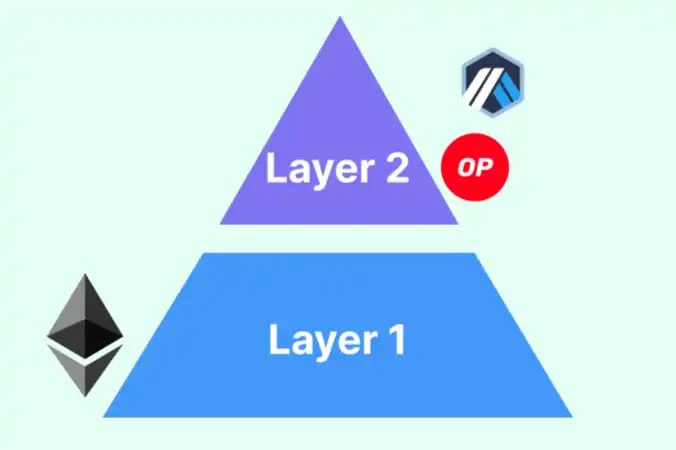
Faced with expansion schemes such as ZK Rollup, Optimistic Rollup and Starkware, the DEFI project and the wallet team need to think about which scheme for the station. Ideally, it can not only reduce the on-chain transaction costs for users, but also give consideration to the combination and security of DEFI. While others wrestle with the question of whether Layer 2 will reduce security, development difficulty, and rolltime, the first movers have taken advantage of the gap.

Source: DeFiPrime
In addition to BSC, Heco, billed as the world's fastest Solana and Near the last male chain block chain successively put forward solutions across the chain, such as Near Rainbow Bridge was introduced last August (Rainbow Bridge), Solana February start the etheric lane two-way cross link Bridge Wormhole provids beta, allows the user to corresponding ERC20 tokens, for their ecology.
It has become a "consensus" for many public chains to integrate into the Ethereum ecosystem. "Both public chains and Layer 2 solutions in various forms, what they will do together is to introduce assets on Bitcoin and Ethereum to develop their own ecology. So in a broad sense, they are all Layer 2." Mr. Zhang, head of ecology of BSC, said that the reason why BSC can achieve today's success is not only due to Ethereum congestion and the gap period, but also due to the combination of factors such as Binance's business resources, network effect and fast execution team.
Both Layer 2 and side chain positioning, on the basis of reducing the degree of decentralization, maximize the "ease of use", thus capturing the support of many developers and users. However, it is undeniable that the current exchange public chain still enjoys the spillover value of Ethereum, but the extent to which the former can countercompensate Ethereum is still difficult to estimate.
Ethereum and Layer 2's future
The migration and deployment of Layer2 was in full swing. Uniswap and Synthetix use Optimistic Rollup, and the latter has also launched an incentive program to reward users who pledge money into Synthetix L2. "I love all of the Rollup projects." In a live stream on February 28, Vitalik gave a nod to all the projects exploring Rollup, which is complicating the Ethereum ecosystem with the constant flow of solutions.
And there are also like Celer Network such teams put forward the ecological way to use Layer 2 without the need for migration Layer2. Finance, due to the current Layer 2 solution needs to ecology and user migration, Layer2. Finance implements to expansion and "in situ" of existing DeFi ecology, that need to be repeated, much account, complete the capital allocation of deal, by a single transaction Layer - 2 a Rollup polymerization, Designed to be a "Defi World Master Gateway" with low barriers to entry and no need to trust a centralized third party.
At the same time, although the exchange public chain has been criticized for its centralization, they also have obvious advantages because of their own assets and traffic, and some DEFI projects have also made the choice. So far, projects such as DForce and 1Inch have also chosen the BSC, "which has shown great vitality... The addition of 1Inch to its deployment is a natural step," 1Inch said in its announcement.
Although the concept of the exchange public chain has emerged as early as 2018, until the second half of last year, everyone has not established a clear understanding of the exchange public chain. Judging from the data, in just a few months, the exchange public chain is rapidly catching up with both the precipitation capital and the trading volume.
The evolution experience of the Internet tells us that from information, to traffic, community, to user portrait and layering, as long as it meets the needs of user behavior, even if innovation is carried out on the original model, the existing realization model can be optimized. Under the background that Layer 2 is not widely adopted and Ethereum is named as "aristocratic chain", user hierarchies begin to be optimized by different public chains and filtered through vulnerability models.
User consolidation seems to be emerging, just as a user in the HECO ecosystem does not easily migrate to BSC. Once a user becomes familiar with the existing system, it is not possible to fully migrate until new productivity tools emerge.
The current public chain ecosystem, dominated by exchanges, is so utilitarian that it's hard to imagine anything interesting coming out of Web3 if the game's rulemakers don't take steps to support models that don't have strong monetisation capabilities. Of course, even with Ethereum, it won't happen overnight.
Recently, cryptocurrency debit card provider Crypto.com released a report estimating that the total number of global cryptocurrency users has increased from 66 million in May 2020 to 106 million in January 2021. It can be predicted that many "Layer 2" ecological data are bound to burst in a short period of time thanks to the early user bonus. However, I hope that the project team will not forget the role of "anise" itself when trying to figure out the N-type and M-type system of "anise".
Welcome to join the official BlockBeats community:
Telegram Subscription Group: https://t.me/theblockbeats
Telegram Discussion Group: https://t.me/BlockBeats_App
Official Twitter Account: https://twitter.com/BlockBeatsAsia

 Related Articles