Play to Earn: Let real blockchain gamers get rich first
Original title: "Play2Earn: How Blockchain Can Power a Paradigm Shift in Building Game Economies"
Original author: Chris Gonsalves
Compiler: 0x13, Rhythm BlockBeats
In the past ten years, the mainstream business model in the game industry is "Free2Play".
This model is to let players experience the most basic parts of the game for free, and then use ads and in-app purchases to get income.
As time goes by, this model becomes more and more unfavorable to ordinary players, and game companies adopt aggressive sales solution, catering to "whales" rather than ordinary users. While the business model was overly greedy, it has been wildly successful, building a $159 billion industry that is now more than twice the size of the global film and music industries combined.
This massive growth really started in 2007 when the iPhone was released and smartphones started to become ubiquitous. Today, the mobile gaming industry alone is worth $77 billion, accounting for 48% of the total gaming market.
How does "Free2Play" squeeze players' wallets?
Mobile games often adopt very aggressive sales plans, psychologically manipulating players to buy "package" game items. Players can choose a price tier, usually ranging from $1.99 to $99.99, which includes loot boxes, character level upgrades, and in-game currency, which will help them level up faster in the game and stand out from the average player .
While package prices are set arbitrarily by developers, often larger packages are often advertised as cheaper than individual Buying items in it is three to five times cheaper. They are often marketed via push notifications and during gameplay.
This model will eventually evolve into a "Pay2Win (krypton gold is victory)" environment, in this environment , those with the most disposable income, the so-called "whales", will have a huge advantage by purchasing more advanced equipment and faster progression times through outright purchases. Top-tier items are usually only randomly obtainable from loot boxes (<1% drop chance), and whales can buy them instantly for a high price.
This leaves most players at a disadvantage as they either cannot afford or are unwilling to pay for this luxury Pay for something that takes weeks or months of honing to get the same gear for free.
According to a gaming report by Facebook, 61% of gamers said they feel comfortable spending money in games regret. While it has been proven that "Free2Play" has successfully advanced the gaming industry over the past decade, we are now entering a new era in which gamers will increasingly reject extremely aggressive sales schemes, And began to insist that the highest-paid game developers give some of their income back to players.
A new business model called "Play2Earn" aims to directly address this divide. In this model, open market dynamics allow game assets to preserve their value and better combine incentive mechanisms with players. Savvy developers chose to empower players to trade assets, giving them a superior sense of ownership and control.
Although it is not possible to kill all "Free2Play" games, some games treat players with a far more attitude than Other games are good, and although PC games serving the e-sports market also cost money, they are definitely better than mobile-first games, because the content purchased for PC games is usually just skins, without attribute bonuses.
Overall though, it's a huge problem, and as the industry grows, the problem getting more serious. Although the average game studio has very limited profits and needs to rely on advertising and in-app purchases to generate income, the most successful game studios do not need advertising, and they can make crazy profits only from package sales.
Games like Call of Duty, Clash Royale, and PUBG Mobile each quarter Can bring in tens of millions of dollars in revenue. Most games today don't achieve that level of success, but the ones that do do continue to generate substantial revenue. Their common practice is to release quarterly updates, allowing players to maintain minimal engagement and continuous consumption, but without any substantial changes to the game experience.
There is nothing wrong with wanting to build a highly profitable game company, but for games that are already at the highest level of revenue In other words, we should try new business models. Of the tens of millions of dollars in revenue each quarter, it only makes sense that some of the value flows back into the game economy and then back to the players who help generate the most value.
It also creates a deeper sense of engagement, as players are directly motivated to do daily tasks and become A loyal player of the game. Rewarding users who create a lot of value has many benefits in the long run.
In stark contrast, some game companies are trying to get as much money as possible from vulnerable players before their inevitable loss. Squeeze money out of your pocket. The new model of "Play2Earn (play to earn)" is very different.
“Play to Earn” mode and closed platform
"Play to Earn" focuses on maximizing player engagement, not profit. "Play to Earn" means the following three things:
Provide experienced players with the opportunity to earn money as part of a highly engaged game award. Rewards are usually in the form of in-game currency with open market dynamics.
Enhancing ownership of digital assets. Players own and are able to trade their assets.
Transparent and participatory game economy. Game developers allow and encourage additional experiences built on top of the game's core experience.
The game industry is mainly composed of closed platforms and closed-loop ecosystems. Players spend money in games to buy currencies and items that they don't really own and often can't be exchanged for real world value. Players get months of enjoyment from a particular game, but eventually they lose it. At this point, they can't monetize the rare items they've spent months honing to acquire. They're trapped within the closed platform of that game and are effectively worthless.
Most players actually never spend money on "Free to Play" games. For some, it may be because they can't afford these $99 packages; for others, it's likely because they don't feel like they're getting enough value. Spent months of time and money collecting gear that's actually worthless, and it doesn't feel good to just leave a heartbreaking bill on your credit card when you stop playing the game.
Additionally, players have no idea what's happening on the back end of the game's economy. Game developers are their own central bank. They determine the supply and inflation rate of a commodity in a non-transparent manner. These closed ecosystems encourage monopolies for profit. In addition, they indirectly discourage spending, as many players refuse to spend knowing that these assets are destined to be locked in their accounts forever.
It’s not just top game developers wreaking havoc on closed ecosystems. Steam, Google, and Apple take a 30% cut of all store and in-app purchases, essentially a payment monopoly. More than 1 billion people play games on Apple devices, and games now generate over 80% of their app store revenue. Apple, which has quietly become the most popular video game platform in the world, is making a fortune from the fees it charges.
Antitrust concerns, strict submission guidelines and increasing competition are encouraging more developers to shy away from Apple’s ecosystem, and if they don't lower fees, we're likely to see this trend accelerate.
43% of the mobile gaming industry’s revenue comes from in-app purchases. And generally this payout only comes from about 5% of the player base.
This means that $33.2 billion (43% of Newzoo’s projected $77.2 billion in mobile game revenue in 2020) comes from only 5% of players.
Based on this logic, a 1% increase in the number of players actually spending would result in approximately $6.5 billion in additional revenue. Put another way, if 2% more players started spending, the industry would earn more than the entire music industry earned in 2019 ($11.1 billion).
In the real world, consumers can cash in their physical assets, such as cars, homes, and other possessions, for preference The changes give way, leaving more capture utility overall. The same should be true in the digital world. Spending months honing in on crafting rare armor or unlocking skins should be more like building a custom PC or buying a car. When you no longer need some of these assets, you can sell them to someone else.
There is also a new generation of games that combine open economies with assets that create residual value. In various ways, they are allowing players to earn in-game currency that can be exchanged for real-world value.
Blockchain-based "Play to Earn" reward
The most direct way to implement the Play to Earn feature is to directly reward high-level players in competitive multiplayer games. One such example is the card game "SkyWeaver". The game's developer, Horizon, chose not to monetize random card purchases; if players wanted to get some SkyWeaver cards, they had to rank high on the weekly leaderboards, or buy them on the secondary market. Buy cards from other players who have won previous matches.
By playing in competitive multiplayer mode, players will automatically enter the leaderboard, top 1000 players every week Will be rewarded with SkyWeaver's blockchain card. These won cards are the property of the players, and they can be played, traded or even sold for the stablecoin DAI.
The emergence of blockchain technology has made it possible to create NFT (non-fungible tokens), and SkyWeaver utilizes block Chain technology is used on the back end to track the provenance and other metadata of each NFT asset in the game.
Pro players and streamers will be able to trade their assets in-game, and anyone can look up every card number of existences and their ownership history. "The open economy changes players' incentives to buy or compete for valuable game items," said Horizon CEO Peter Kieltyka. "With the advent of the blockchain, we can now give our players true ownership of our virtual worlds." Part of it.”
Similar card games, such as Hearthstone, offer no such direct reward , nor can cards be sold individually (or traded at all) on the marketplace. To make money in Hearthstone, you need to be a professional gamer with a guaranteed salary, or a talented streamer who can build a brand around himself. Very few casual players can make money directly from the professional scene in Hearthstone. Several months of high ranking are required to qualify for cash events. Players then need to travel to professional tournaments, where finishing outside the top 16 means no monetary rewards, and even travel expenses themselves.
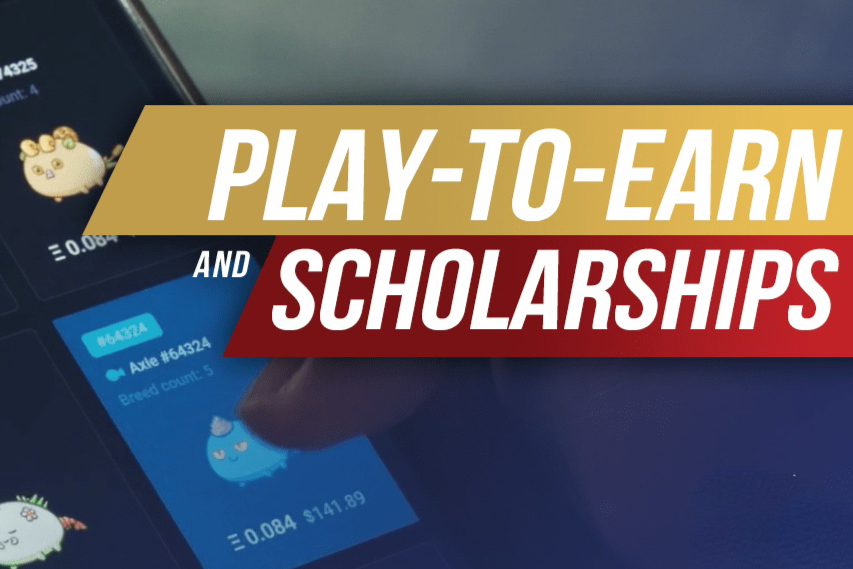
In Axie Infinity, a Pokémon-inspired world where players Fighting, raising and collecting fantasy creatures, the game highlights the benefits of Play to Earn through rewarding gameplay and a player-driven economy. Fighting monsters in the game’s PvE mode will earn you tokens called “Little Love Potions (SLP),” which can be sold for highly liquid cryptocurrencies such as ETH. With these earnings, you can choose to buy more items in Axie Infinity, or migrate the value to different crypto games, or even sell them for USD.
Axie has also been giving out tokens from sponsors like MakerDAO & ; Kyber Network These two top DeFi (decentralized finance) projects. This represents a new model where advertising budgets go directly to players, driving more engagement and demand for game assets within the ecosystem.
Axie players can earn up to $1.50 to $2.50 per hour. It's not a lot, but for players in underdeveloped countries, it's a considerable amount. For the average US player, that's more than enough to top up reinvesting in the game and keep playing without having to make additional outlays right away.
Axie Infinity Head of Growth Jeff Zirlin said, "Axie attracts a few different gamers. We have players from Venezuela and Grinders and farmers in countries with lower average incomes such as Indonesia. We also have fierce PVP competitors who love the token rewards of our leaderboards. Powered by our Ethereum-based marketplace, collectors and traders trade at more than A single Axie was bought and sold for $10,000 with zero counterparty risk.
In the future, we hope to further empower the community , let them earn tokens, let them manage the ecosystem in the future, and make decisions, such as what content to add in the game, what technology upgrades should be focused on, and how to handle the revenue generated by game operations.”
Community Economy
Game developers with more advanced ideas are Embrace the extensibility of games and encourage the community to build tools and experiences on top of them to enhance their usefulness. Game developers often look to their user base to help design future additions to their games. This could be voting or designing a new set of skins, a new level, or even a unique game mode. But right now, the process doesn't really provide long-term benefits to community members who help create high-quality content.
And some examples of scalability for Play to Earn games are card tracking tools for digital card games, or is a website that tracks prices and trends in the game auction house. As we’ve seen with Axie Infinity, The Sandbox, and SkyWeaver, developers not only allow, but encourage, community-built tools and assets because they understand this expands their ecosystem and drives engagement.
Using smart contracts, each purchase of a skin or asset designed by an external artist can include a small revenue share, Pay automatically for a certain period of time (or possibly forever). Talented creators can earn supplemental income for their designs, not to mention having their creations commemorated in-game. By empowering players in the creative economy, artists can gain worldwide recognition for their work, maybe the Ralph Lauren of MMORPGs.
Crowdsourcing content from the community in this way can reduce developer costs and even keep players around the game economy to build a business. This can be seen in The Sandbox, an environment where artists are empowered to help shape their worlds.
“The strong vision behind The Sandbox Metaverse is to provide a truly decentralized economy where games and content are Community building and control. Our circular economy relies on the use of blockchain and various tokens such as LAND, NFT, SAND tokens as well as ASSET, Gem & Catalyst, etc. to build a solid foundation for Play to Earn” COO & Co Founder Sebastien Borget said.
“Whether you are a player, creator, investor, LAND parcel owner or game contributor, as our Stakeholders of the user-generated content game platform, you should accept and participate in this model and contribute to value-added, so as to get rewards.”
< p line="GNt5">Mainstream games like Roblox are already embracing participatory economies on a massive scale. The game's community of over 2 million active developers has access to the tools and support to create on the platform. In 2019, Roblox developers, and the studios built on its platform, earned more than $110 million.
As a16z's David George puts it, Roblox's platform offers "creator/player network effects, more Players attract more creators to create great games, and creators attract more players, forming a virtuous circle that increases the value of the entire network to everyone.”
The economics of Play to Earn are still unproven
Consider using Open economy developers will have many questions about how it will affect their decisions, whether they will face losses, how it will affect player engagement and LTV, whether these features can be self-played or manipulated by bots, whether it is worthwhile at level 2 Market to trade?
For the last question in particular, developers have an interesting opportunity to build and oversee their own secondary market. Existing third-party game marketplaces do have tradable items, but they all operate in black boxes, out of the control of game creators, which is prone to fraud and high fees.
Secondary transactions made within the purview of the developer will permanently generate revenue from secondary sales. Giving up some of the immediate revenue of a primary sale in order to embrace the long tail of secondary sales may result in more revenue in the long run.
This may also have some secondary effects, such as high-stakes events with asset rewards, because there are more Viewership boosted by more bets, and the birth of new markets, like famous streamers selling digital player memorabilia of championship gear. With the $5.4 billion sports memorabilia market, for example, it's clear there's a huge market for collecting rare and valuable items, and the same applies to digital collectibles in popular games.
It can all be very tricky models to model. Engagement initially rises as players start trading and attempting to earn money playing on the secondary market. This will lead to a higher LTV as users stay here longer and spend with more confidence knowing their assets are valuable. Revenue-sharing and royalty agreements can even be coded into deals involving asset artists, streamers promoting those assets, and of course the game developers themselves.
The Future of Play to Earn
Is this new model applicable to game developers of all sizes and attrition rates? No, these features constitute an experimental new blockchain-based business model that hopes to maximize engagement rather than profit in order to build a large user base over the long term. We will need to see experiments succeeding and AAA studios doing more research on new technologies like NFTs and stablecoins using these methods. Once the results are positive, there will be major publishers turning around and major changes starting to take place.
For now though, it's clear that the design strategies employed by the top earning developers have made their games turned into an extremely aggressive sales program, using behavioral tracking and price manipulation as a tactic.
Today’s gamers dream of a game that can be called “World of Warcraft 2.0”, with in-game economy Equivalent to the top ten countries in GDP, MAU is as high as billions. The huge profits generated by in-game commerce are funneled back into its economy, leaving enough money to feed high-quality game development and associated costs.
It will always be a fair game in which the primary focus is not on enriching shareholders but on It's about enriching the players who create the most value and have the best results. As these new approaches scale, it will be exciting to see what kind of network effects emerge and what a truly open in-game economy can produce.
Original link
Welcome to join the official BlockBeats community:
Telegram Subscription Group: https://t.me/theblockbeats
Telegram Discussion Group: https://t.me/BlockBeats_App
Official Twitter Account: https://twitter.com/BlockBeatsAsia
 Related Articles