Dialogue with senior DeFi investors: How to be one step ahead and discover potential projects?
Original title: "Dialogue with the mysterious DeFi investment boss: How to be one step ahead and discover potential projects?" "
Original source: Babbitt
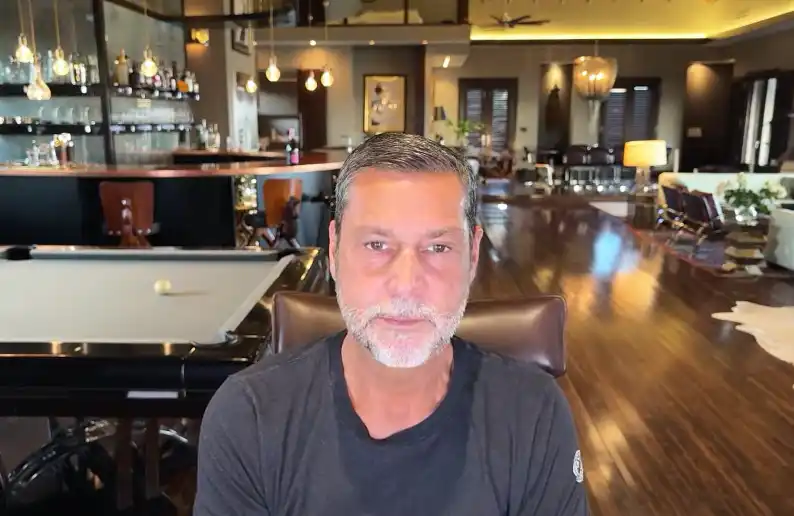
This article is a cryptocurrency researcher and senior DeFi industry participant Hasu An interview with a mysterious DeFi investor whose Twitter account is @DegenSpartan (hereinafter referred to as DS). This anonymous DeFi investor is an early investor in many well-known DeFi projects. His most famous personality is Synthetix’s “Patient Zero”, who was the first to discover the potential of this project. In the interview, he shared his experience in finding potential projects. In addition, unlike most people, DS is not optimistic about Maker, YFI and all other governance tokens.
This interview involves:
< /p>
DS: Degenerate or cautious investor?
How did he discover (and sell) the top DeFi projects?
His investment method?
How to become Synthetix's "Patient Zero"?
Why doesn't he like Maker, YFI and all governance tokens?
The following is the complete interview:
Hasu: First of all, thank you very much for coming to our show, DS. I've always found your account to be not only the most educational of all crypto tweets, but also the funniest.
DS: thank you for your invitation! I've been listening to your podcast since it started and I'm a huge fan so being here is like a dream for me.
Hasu: You have an incredible story— — From a retail investor who bought Ethereum at a high price in 2017-18, to one of the largest DeFi investors in the world. How do you do this? What makes you different from other people going through the same experience?
DS: I'm not sure if I'm the biggest DeFi investor, but maybe one of the more prolific participants, I'm actually a retail investor, not a professional. I have a background in finance and was an active investor in traditional markets before switching to cryptocurrencies. I think this background gives me a pretty good edge when I think about investing in cryptocurrencies, or what strategies to do in the market to make money.
Hasu: Can you tell us about your entry into this field What are your skills and interests before? In particular, what made you see the potential in cryptocurrencies and DeFi and decide to become a full-time investor?
DS: Before I got into crypto, I was a typical retail investor — looking at stocks, bonds, REITs, whatever investing strategies the average person thinks will allow him to retire early. A concept that was very popular at the time was "income-based investment", that is, to find some businesses that can give you fixed dividends or income. This was a very popular investment concept at the time, allowing income to exceed expenditure to obtain "financial freedom and early retirement".
As such, I am particularly sensitive to income-generating investments, and I will look everywhere for An investment that does not put capital at risk. What I'm trying to say is that most products return about as much as you'd expect, or the safer products return less. When I got into crypto, one of the first things I noticed was the rampant mispricing between exchanges and crazy arbitrage opportunities.
I kept comparing numbers and doing calculations because I couldn't believe it. There are many instances where you can earn a $50 net arbitrage return on thousands of dollars, and I see this happen several times a day with multiple pairs. Of course, $50 net income is not much, but if you can do it several times a day, and the market is open 7 days a week... I did the math and it blows my mind how amazing it is possible to arbitrage s return. And this operation is completely manual!
After a period of arbitrage, this makes me even more firm in my opinion - the cryptocurrency market There is a lot of inefficiency, and this inefficiency also means profit opportunities, which is what motivated me to enter this market.
Hasu: Going back to what you said at the beginning, you Saying I started out as a fixed income/dividend investor intrigues me because it sort of confirms my hunch that while you've created yourself a "degenerate" investor persona, You are actually a very careful risk manager. We have to chat about this topic - why did you decide to choose "Degen" (referring to the word Degen in the DS twitter username) as your username?
DS: Ha ha. Maybe in the future when no one really believes I'm a fallen, I should reinvent myself as PrudentSpartan. (cautious warrior)
When I was building my profile, I didn't want to limit myself to any particular coin or project, so I intentionally avoided including Something like Bitcoin. ——I wanted something more neutral, but I also wanted something that would remind me that cryptocurrency is a very crazy space and anything can happen.
I think my depravity works well, it serves as a very obvious warning, Let others think about what I'm talking about. But I never thought I would have so many fans. Sometimes, I really hope that new fans who don't know my memes and humor don't take everything I say seriously.
Sometimes I worry that when I joke about my trading strategy, others will follow me because of my influence one. I think I've managed to keep most copying to a minimum by consistently doing some mental work so that fans can think before imitating me.
As for why there are Spartans (Spartan warriors), it is purely because they are very powerful and cool, not ? *Laughs*
Hasu: I like you very much The "psychological construction" done on Twitter, because this can trigger some thinking in me, many Twitter big V can't insist on this. But I think what impresses me the most is that you're not all about DeFi like most people on Twitter. You came into contact with DeFi very early, but at the same time you were also the first to say "I think this industry is developing too fast". Why can you do this? What signal do you see?
DS: The DeFi price peak at the end of August was a very, very crazy time for me, and liquidity mining was in full swing. I would say that the beginning of the DeFi hype was probably the launch of COMP, and basically from that day on, I was sleeping 3-4 hours a night trying to grasp all the information.
I have been in this field for a while, so I think I have a good Endurance, but this goes on for weeks. But the problem is that the quality of what comes out is really deteriorating rapidly: YAM has a bunch of clones named after food. After YFI there was a bunch of YFI-inspired "fair release" replicas...
When people realize the optimal strategy It's the time to exit earlier than everyone else, the cycle time for each new project gets shorter and shorter, and then everyone tries to cash out before everyone else. At first, YAM took - I think - two weeks and it was over? Mining of the last foodcoin I saw crashed within a day or two!
Of course, as a heavy DeFi user, I was very active throughout this period, mining from one coin to another One coin, being on the front lines and seeing how bad each subsequent project is tells me this madness will end soon!
From my personal point of view, I think Sushiswap is already the pinnacle. This is by far the riskiest form of DeFi mining in this space. Before that, you only took risks (besides malicious or other smart contract risks) if you were brave enough or stupid enough to participate in the "secondary pool" of mining projects.
Sushiswap arguably forces all these mining participants who have never provided liquidity before to suddenly inject Hundreds of millions of liquidity.
Before this, one of the problems with DeFi tokens was that they were very illiquid. Today, as Sushiswap encourages everyone to provide liquidity, it creates a huge opportunity for those looking to exit and finally leave this huge sea of liquidity.
By participating in Sushiswap mining, I make a lot of money every day. This is not realistic, I say to myself every day: this is so stupid, it doesn't make any sense, what could be more stupid than this? The feeling of making a lot of money every day scares me, and it makes me stop and think that I should probably pull away. The last time I had this ridiculous thought was at the height of 2017 and I didn't handle it well lol.
Hasu: You mean, once the reward ends , the prices of these tokens will not only collapse, but also some big players will stop providing liquidity?
DS: I guess just like YAM and YFI, there may be more replicas of sushi using Uniswap LP shares as a "pool" of mining assets, we do see examples such as sashimi and Moonswap...but like all later Like the rapid collapse of replicas, my point is that none of them can provide as much liquidity as Sushiswap during the initial return phase. The shrinkage of liquidity may cause large investors to withdraw when liquidity is still available.
In the past month, basically everyone’s annualized mining has reached a few percent Hundreds... How many people want to transfer these assets to their native protocol, hoping that they can be used reasonably? How many people do so at the risk of potentially massively reduced returns (relatively speaking) or nothing?
I think it is (1) DeFi mining is increasingly crazy and (2) replacing Sushiswap mining Patterns are hard, and those two things combine to make me think the market could go lower and this madness can't go on forever. Digital food mining is not a money making machine for free forever, lol.
Hasu: There are some projects that have earned you A lot of money, you can sell it, but how do you control yourself?
DS: One thing that sets me apart from other traders and even investors is that I never have a clear target price. To me, the decision to buy or sell should be based on the perception of the project. If the price goes up and there's still a lot of skepticism, or you hear people saying that it's just getting started, I'd think there's more power from the sidelines to keep the party going. I think the big question is who will buy these coins next, will anyone buy after that? But this is definitely more art than science.
You can sell bit by bit. Before you sell your coins, see if everything is going well. Every price peak has two sides, but some people seem to forget that you can also choose the right time to sell after the price peak! As long as you don't have the mentality of "oh my god I didn't sell at the top", then you can control yourself.
Hasu: How do you assess market sentiment?
DS: I think it's really hard, but it's one of the reasons I'm on Twitter a lot. You can watch what happens. Observing what people do, how they feel, and what they plan to do next can reflect your point of view. I'll be watching with a lot of different social media and chatting with other investors to see how they're feeling and then trying to figure out what different types of players want to do next.
This is probably a very silly way of doing things. I'm sure some statisticians will be intimidated by what I just said and might give me a blank stare, even though I think the approach is quite useful. But I don't know of a better way, lol!
Hasu: I always It is the believer. How do you see yourself investing? You mentioned sentiment, but I've always felt that you're a very fundamental person. How long do you usually hold a position, and do you go long and short at the same time?
DS: I think my approach so far has been to be a contrarian, find a theory and investment that is fairly unpopular, and figure out if there really are fundamentals that could reverse its fortunes. This basically means I try to research in areas that professionals don't focus on. This means that I am not competing with someone who is smarter and more talented, and if it is a fair competition, I am definitely the one who loses. Instead, I won before they even knew the game had started. This makes my job as a capital allocator easier because I don't need to accumulate positions while competing with others, and they don't bid up the average price of my investments.
Of course, I am not concerned with all unpopular items. There must also be some truth to this idea. Combine a fairly unpopular project with improving fundamentals and I think this is a recipe for high profits.
As long as I think there is room for upside, I will hold, although I may reduce the size of the position, If it's too big for my other portfolio. I almost never short because I'm really bad at it and I think it's much harder and riskier given how irrational the crypto market is. I don't think shorting is worthwhile, unless there is really a clear play, I will use collateral and liquidity to open short!
I think it is definitely easier to be long than short in the crypto market. During the recent decline in the DeFi sector, I was very uneasy about being short all the time. I kept thinking, when will I be able to return to the bull market and just call out orders? Ha ha!
Hasu: Next I want to know what you think about some What about the project. Your connection to Synthetix runs deeper than any other project. You have been called "Patient Zero" of this project, which has attracted many large investors. Would you like to talk to us about Synthetix? When did you discover it? How did you discover its potential?
DS: Patient zero, very interesting statement!
Hasu: You haven’t heard such a thing before statement!
DS: I think the best understanding of Synthetix is a derivative or synthetic protocol where you can go long or short the synthetic assets that are backed. Since these positions are synthetic, these assets are not limited to ERC20 tokens, but also cover non-Ethereum-based crypto assets such as Bitcoin and Ripple, as well as non-crypto assets such as precious metals and stock indices. There are almost no restrictions - as long as there is a source of price somewhere, it may become a synthetic asset on this platform.
Honestly, I think my preference for Synthetix is mostly a blind cat meeting a dead mouse. Synthetix was originally called Havven, which was a decentralized stablecoin project, and what they were doing at the time was tagging protocol fees every time a transaction was completed. But centralized stablecoins like GUSD, USDC, and of course USDT have made almost all stablecoins that charge fees on every transaction obsolete.
The move to synthetic assets has been a success in my opinion. But as far as I know, this process is more a change in the community's mentality for this project than a technological change, because it still has a leveraged debt pool model, which is what Havven was originally based on - they just Discovered how much more you can do with consolidated debt. Guess I'm also convinced by the switch lol. I think it's easier for me to accept and digest this change because I understand technically why they're changing and what they're trying to do with their new direction.
I still believe in my luck, but the main thing is the wisdom of the Synthetix team realizing they can go bigger That's why SNX is a good investment for me lol!
Hasu: I remember reading about Havven's article, I thought at the time that their model of charging transaction fees for transfers might not be sustainable, but unlike you guys, I stopped following them from that moment on.
From there How has your view on Synthetix changed in the future? Are you happy with their current direction? What do you think they will achieve in the end?
I think the big question is, when will they feel comfortable issuing standalone US securities? Will that be a watershed moment for the entire world of synthetic assets?
DS: Maybe there are not many people like me in the current community Same desire, but I would really, really like to see synthetic stablecoins other than the U.S. dollar used for purposes other than transactions and become a replacement for the "official" digital fiat currency.
Synthetix is in Unique by design in that it actually facilitates cryptocurrency versions of various fiat currencies and overcomes the liquidity issues any custodian would have when interacting with the rest of the market. Maybe someday in the far future, this might happen!
In my opinion, the future of Synthetix is to become a multi-asset version of BitMEX, allowing traders to trade multiple assets Trade, including going short or long, with the option to use leverage.
As for independent US securities, perhaps after further decentralization of the project (so that it is not affected by regulatory actions)? I think we are rapidly approaching a point where the team doesn't control everything and is therefore "fully decentralized". At that point, you can't just call everyone into a room and tell them to stop trading.
I actually think the watershed moment will be layer 2 perpetual swaps with leverage rather than standalone US securities.
Hasu: The way to trade on BitMEX is , they only match external market participants with each other, so each client's long position must match another client's short position. Therefore, BitMEX does not incur any balance sheet risk no matter what transactions occur on its platform.
Synthetix is different in that SNX stakers choose outstanding synthetic assets. For example, each sUSD corresponds to short USD-SNX, each sBTC corresponds to short BTC-SNX, etc.
Do you see any significant risks in this approach? What do stakers need to do to hedge their risk?
DS: Yes, that's why perpetual Patterns were a watershed moment for me. At that point, the protocol will be aware of the imbalance in positions and there will be funding ratios to allow people to balance their positions.
I am very Been following this issue for a while, so I'd really like to see this upgrade. I hope it compresses Synthetix's exposure into a narrower range, reducing the risk of serious offside.
The current hedging mode is still relatively clumsy. In fact, I don't think people worry about it enough! However, Synthetix has come up with some stopgap measures to pay shorts by collateralizing reverse synthetic positions with BTC or ETH. Since the project went live, the imbalance of positions and the risk taken by minters has been greatly reduced, at least in my opinion. I think it's a small success right now, but I really don't think the approach is too elegant yet.
Hasu: Yes, I found the output and There are rewards for staking iBTC and iETH as this helps in a way to reduce risk for stakers, and I also think it's a step in the right direction. Speaking of Havven, sUSD, etc., another project that you (and I) have been outspoken about in the past is Maker. Can you say more about why you didn't like it?
DS: My God, I’m talking about Maker again, haha. My main criticism is their design, which I feel is inadequate, as it lacks the ability to deal with negative interest rates and to charge DAI holders to maintain stability, or to put it another way, it doesn't incentivize DAI supply creation .
Another thing I have a problem with the Maker design is that it's a three-party system:
DAI holders/users
DAI providers/CDP holders
and MKR holders< /p>
I think this system of three stakeholders creates a weird kind of There is tension, as there always seems to be one party who will be the "loser" while the other two will benefit.
The last point is not about the protocol, but about their token value accrual design. I don't like the buy-and-burn model very much, because you need to take into account going concern and secondary market bidding. I prefer the fee collection and distribution model as it's more direct and selfish, but I think it might be a safe avoidance/tax decision.
Hasu: What do you mean by going concern ?
DS: When you eventually want to sell, it may continue to be profitable indefinitely. Contrary to the fee allocation model, if it stops working, at least you've "recouped" some of your investment in the allocated fees.
Hasu: In March the market plummeted and Compound mining After the Dai price continued to surge above $1.05, I think it will reach a boiling point and eventually be forced to integrate negative interest rates. But what they do is introduce a centralized stablecoin into the system - and you can't even charge a stability fee from it. What do you think about this? Instead of issuing more synthetic assets (not just dai) with the same trustless collateral, they are focusing on integrating real world collateral.
DS: Yes, I think accepting centralized stablecoins as collateral does affect the "as a purely decentralized stablecoin" positioning, which Maker enjoyed before. Many of its staunchest supporters had to do a great deal of soul-searching to decide if this direction was really something they could support. I feel like their community has split quite a bit since March.
I'm tempted to tell myself that everything they do is planned, but it's not good for their It's all too easy for supporters to divide. To be honest, I really don't know what the future holds for them. Their holders seem out of touch with reality, it took months for them to accept LINK as collateral, while MANA has always been collateral? I do not understand. I don't know what they are doing. At this point, I see Maker as entertainment. What is their future? I have no idea.
Hasu: The last thing I want to talk to you The project is Yearn finance. I'm sure you've been skeptical of them in the past and didn't buy into the hype. Why are you not optimistic about this project? Did you doubt yourself when YFI hit 40k initially?
DS: I was not optimistic about this project from the beginning. I've been familiar with yCRV and iEarn's products for a while now, as I've always kept my goal of earning. I almost don’t want to mine YFI because I’m thinking, ‘What are they going to govern and why are they governing? What product streams do they manage? Where are the fees that they can vote for token holders? ’ But of course the price of the token is crazy, so of course, it’s hard for me to mine YFI.
I don't understand why people are buying this coin. Did Andre commit to working exclusively for all YFI holders without pay before retiring? I'm honestly baffled by Andre's behavior of releasing new stuff all the time under the YFI umbrella.
For example, are yVaults really yVaults? To me, they could easily become AndreVaults, and Andre himself is charging to maintain and manage the vault. But I guess what he wanted was a body that could organize itself. I didn't expect Andre to go ahead and make stuff and inject them under the YFI umbrella.
Shortly after yVaults, Curve launched CRV and guided these machine gun pools to mine, which is the first in this field Perfect timing, which can be very profitable for everyone involved. Everyone is excited about the "cash flow" coming from the smart pool. But are those cash flows sustainable? In my opinion, absolutely not. Yields above 20% are an anomaly in this world that will correct sooner or later.
Of course, seeing token prices go up, there’s always this thought: Damn, if I keep holding By now, I can make more money! But fundamentally, I can't do that, I can't buy coins back. This doesn't make sense to me. I can appreciate it as an interesting trade combination, but when I start thinking about the fundamentals, those numbers mean nothing to me. Maybe I'm really offside. I guess I just have to accept reality. You can't catch every potential cryptocurrency. Even though I had YFI, I didn't have the conviction to hold it, that's why I sold it while I was holding it lol.
Hasu: I think your point makes sense . I'd really be surprised if the opportunities for liquidity mining aren't drastically reduced in the future, especially as large pools operate with full transparency and the rest of the market can replicate for free.
Since you mentioned Yearn's governance capabilities, this brings me to my last topic today. You have always been skeptical of governance tokens. Are you a governance minimalist?
DS: I never really thought about what kind of person I was, but , yes, I guess I'd say I'm a governance minimalist. Look at the real world, it does more harm than good! I disagree with the idea that governance tokens have value because they can later vote on fees.
Governance tokens are having difficulty voting on fees for token holders, and tokens do not Getting strong value, isn't Maker a good example?
I feel that holders of governance tokens, compared to the value they create, are largely You are hitchhiking. Does holding YFI and unvetted governance proposals create value? Or are the builders operating under the YFI umbrella the ones who create the value? Who is creating value and who is earning value seems odd to me.
Perhaps tying governance tokens to more quantifiable work than just voting on proposals, Might be a better way for holders to be value creators rather than (in my opinion) free riders.
Hasu: Well said, thank you very much for taking the time to do the interview.
Original link< /a>
Welcome to join the official BlockBeats community:
Telegram Subscription Group: https://t.me/theblockbeats
Telegram Discussion Group: https://t.me/BlockBeats_App
Official Twitter Account: https://twitter.com/BlockBeatsAsia

 Related Articles