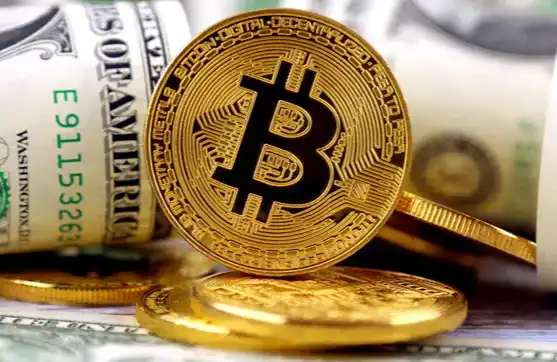
Without Bitcoin, digital currency can't be speculated?
Original title: "Companies and Research 丨 Without Bitcoin, digital currency can't be speculated? "
Original author: Yang Yaru, 36 krypton
Recently, the currency circle has been ups and downs, Xu Mingxing was arrested, Wall Street sang too much.. ....
After shedding the magical coat of the dream of "getting rich", it has been three years since Bitcoin fell from the altar of $20,000.
On November 6, Coinmarketcap platform data showed that Bitcoin soared to $15,900 in a short-term, a new high since January 2018. From re-standing above the $13,000 mark at the end of October to returning above $15,000, it was a long-lost breakthrough for Bitcoin, and the driving force behind it originally came from an announcement from across the ocean.
Global payment company PayPal announced to join the cryptocurrency market, users can buy, sell and hold Bitcoin (BTC), Ethereum (ETH) through the PayPal platform , Bitcoin Cash (BCH) and Litecoin (LTC) and other cryptocurrencies.
Creating a trading platform is not new, users can also use these virtual currencies on their network 2600Wan Shang shopping.
PayPal just opened a small gate, but it shook the entire currency circle.
Bitcoin's "Broken Circle"
The enthusiasm of the currency circle comes from PayPal break the game.
Bitcoin trading platforms make money is nothing new, and PayPal is not the only payment platform eyeing this piece of fat.
Square, also known as the US mobile payment giant, recently announced that it has purchased about 4,709 bitcoins with a total investment of 50 million US dollars. Prior to this, the payment company founded by the Twitter CEO had already made a lot of money from its payment application Cash App.
Cash App is equivalent to the US version of "Alipay", which provides services including buying, holding and selling Bitcoin. In the first half of this year, Square’s revenue was US$3.305 billion, of which the revenue from Bitcoin was US$1.182 billion, a year-on-year increase of 518.8%, and the proportion of Bitcoin revenue also rose from 8.9% in the same period last year to 35.8%.
The strong profitability of the trading platform is due to the speculative nature of Bitcoin. Currently, there are 13 listed companies holding a total of about US$6.9 billion in Bitcoin, of which 12 The company's investment has realized a profit. Especially since the epidemic this year, Bitcoin investment has become a safe-haven asset used by many investors to hedge against inflation risks, and it has become popular again.
This is the end of the story, but PayPal has endowed several mainstream currencies including Bitcoin with a certain circulation value-allowing customers to use Cryptocurrency in hand to shop at merchants on its network.
Why PayPal can innovate?
PayPal has a huge user base, and these account data are "wealth". As of the second quarter of 2020, PayPal has 346 million users worldwide, which means that the currency circle will usher in more incremental users who "touch currency" for the first time, and the currency market is expected to expand.
PayPal also supports 25 international mainstream currencies such as the U.S. dollar, Japanese yen, and the euro. This will provide a new imaginary basis for cryptocurrencies to move towards cross-border payments, and decentralized digital currencies have obvious advantages.
Cost Advantage Vs. Regulatory Fear
Currently cross-border payments have to go through two "gates" "The first gate is the cross-border clearing system of each country's local currency, such as the U.S. dollar cross-border clearing system (CHIPS), China's RMB cross-border payment system (CIPS), and the second gate is the international telex system (SWIFT) shared by all countries. ), cross-border payments can only be realized when SWIFT is connected to cross-border clearing systems of various countries.
Under the complex clearing process, the wire transfer usually arrives in 2 to 3 working days. The "slot" of this system. The cryptocurrency based on blockchain technology is a new peer-to-peer payment method with higher security, which can bypass the high delay and high cost of bank payment, and is more compatible with cross-border payment. A small fee, potentially saving merchants and customers fees.
Enterprises benefit most from using cryptocurrencies for payment, but the US government has always been cautious.
The Fed was the first to express concern. Powell bluntly stated that he is not in a hurry to launch a central bank digital currency (CBDC) for the simple reason that the risks of theft and fraud are immeasurable. The privacy, technical complexity and ease of cross-border payment of digital currency, if not well supervised, will provide opportunities for cross-border money laundering and terrorist crimes, and the risks are not easy to identify, and the consequences are unpredictable.
Facebook's Libra digital currency project has touched the sensitive regulatory nerves of the US authorities, but PayPal and Visa debit cards have made a proof for the US government to promote digital currency . The Visa debit card will be launched by Coinbase in the United States early next year, supporting nine commonly used currencies, and users can convert their cryptocurrencies directly into U.S. dollars before ATM withdrawals and shopping.
PayPal focuses on "making its network ready for new digital currencies that may be developed by central banks and companies", Perhaps this is why PayPal is in the form There is a certain value in currency circulation such as Bitcoin, but there is no reason why it is subject to regulatory restrictions.
Do not push new coins, let local companies take the lead, and do some short-axis extensions on existing cryptocurrencies. However, the U.S. government remains cautious.
The value of "Village Access"
Although it is a path, "Yang Ma" And the Fed is not an attitude.
The digital currency (DC/EP) issued by the People's Bank of China has been preparing since 2014. It originated from Bitcoin and accelerated from Libra. The value of Bitcoin is mainly based on "community consensus" (POW consensus mechanism), and its value is not stable. And Libra is anchored in legal currency, which has the support of national credit and has become an "enterprise version of the digital dollar". The vigilance of the Federal Reserve and central banks of various countries is reasonable.
Of course, this has also accelerated the process of the "Yangma" digital currency. After all, the US dollar is a strong legal currency, and there is no strong demand for the official digital dollar.
When Japan was still entangled in the process of digitization, when the United States was worried about threatening national security, China had actually implemented digital currency. The issuance of the "Implementation Plan for the Comprehensive Reform Pilot of Shenzhen's Pioneering Demonstration Zone for Building Socialism with Chinese Characteristics" by the General Office of the Central Committee and the General Office of the State Council means that the digital currency has entered the stage of implementation.
The digital currency issued by the People's Bank of China has national credit. The DCEP anchored by RMB 1:1 will be combined with electronic payment to partially replace cash. Simply put, Central bank digital currency is digital cash.
Different from the credit card payment that many developed countries are keen on, online payment in China is developing faster, which is the soil where DCEP was first born and promoted. In other words, China Pay has directly realized corner overtaking.
Alipay and WeChat have achieved the necessary manpower and are accessible to every village, which provides the basis for the implementation of digital currency. Statistics from Statista show that in 2017, Chinese e-wallet payments represented by Alipay and WeChat Pay accounted for 49% of all payment methods, while in the United States, e-wallets led by PayPal only had a 15% market share. Credit cards ranked first, accounting for 30%.
Digital currency is the money in the original bank account, while the online payment account is an accounting account, which is associated with the funds in its bank card.
The difference is that the digital currency is directly connected to the bank, which is more efficient and does not require handling fees as a public product, while online payment institutions need to clear and collect procedures fee. Obviously, whether it is public or private, digital currency saves time and costs as well as handling fees.
And the central bank can also directly supervise the flow of each fund, so as to better regulate the monetary policy.
Digital currency is used in the same way as Alipay and WeChat in the final payment link, and you can pay by scanning the code. What is more convenient is that the central bank has adopted the "dual offline" technology, which allows the payment to be completed even when both the payer and the payer are offline.
Will digital currency replace Alipay and WeChat?
As of the second quarter of this year, Alipay and Tenpay (including WeChat Pay) have a combined market share of over 94%. The greatest value of this type of online payment tool is the account.
In this "dislocation" competition, the existing payment structure will not be shaken in the short term. Digital currency and third-party payment are currently complementary. The promotion of currency depends on the current account of this type of payment software, and the third-party account may become a pure payment tool. In the long run, DCEP not only has the possibility of taking over retail payments, but will also make efforts in commercial cross-border payments in the future.
At present, there is no timetable for the official launch of the digital renminbi system, and there are still technical barriers to the full issuance of DCEP.
On the one hand, not all commercial banks that play the role of distributors have complete IT systems, which requires all commercial banks to improve technical security in terms of safe storage and efficient execution On the other hand, although the digital renminbi is at the forefront of the world, there is currently no mature regulatory experience and successful implementation cases for reference.
Pilot, just getting started...
Original link
Welcome to join the official BlockBeats community:
Telegram Subscription Group: https://t.me/theblockbeats
Telegram Discussion Group: https://t.me/BlockBeats_App
Official Twitter Account: https://twitter.com/BlockBeatsAsia

 Related Articles