Re-discuss the moat of DeFi protocols when DeFi is cold: how do they create and capture value?
Original title: "Re-discussing the moat of DeFi protocols when DeFi is cold: how do they create and capture value?" "
Original source: ChainNews
DeFi With the frenzy set off in the summer, it has become the focus of attention, and it is no longer a secret that DeFi protocols are creating real economic value. These protocols now lock billions of dollars in assets , facilitate billions of dollars in financial activity every day, and provide users with open, borderless, and censorship-free financial services.
But what is less known is that although many DeFi protocols have Each has its own unique cryptoeconomic design, but most share a common business model . At the heart of this business model is the protocol's balance sheet , which can be defined as the total amount of assets under management, also known as the total locked value TVL. Understanding this provides insight into how these protocols work and how they protect themselves from competition and capture value.
Agreement as coordinator of financial activities
DeFi protocols are coordination mechanisms that define the rules and provide incentives to facilitate financial activity. Most DeFi protocols raise assets in the community through crowdsourcing, and use these assets for things such as market making (Uniswap and Curve), lending Synthetic asset creation (MakerDAO and Synthetix) and other productive financial activities. Users provide their capital to the protocol in exchange for value streams, whether they are intrinsic to the system, such as governance tokens for liquidity mining, or external to the system, such as payments in stablecoins and other cryptoassets (ETH, BTC, etc.) cost of. How much value an agreement creates for its stakeholders depends on how effectively an agreement monetizes its balance sheet

Balance sheet profitability as a business model is not new. This is how financial institutions like banks have generated cash flow for thousands of years. In the simplest model, banks take capital at one end in the form of debt (such as deposits) and equity, and then profit from that capital at the other end through financial services such as loans .
DeFi protocols are similar, except there is no trusted third There are three parties to guide these financial activities, and a territory-based legal system to specifically monitor the implementation of agreements between stakeholders. DeFi protocols are enforced using smart contracts on public chains to facilitate coordinators of financial activities among each other and resolve their disputes.

Differences between DeFi protocols and traditional financial institutions< p>
Key stakeholders in the DeFi protocol include liquidity providers LP, currency holders, developers and users. Although these groups are described separately, they are not mutually exclusive, and the most successful DeFi protocols are those that best align incentives across these groups.
Liquidity providers provide funds to the agreement , funds are used to facilitate financial activities for production
Token Holder Governance Protocol, Get Value from Agreement Operations
Developers build protocols , design rules and incentives to coordinate desired financial activities
p>
Users use the protocol to meet their financial needs
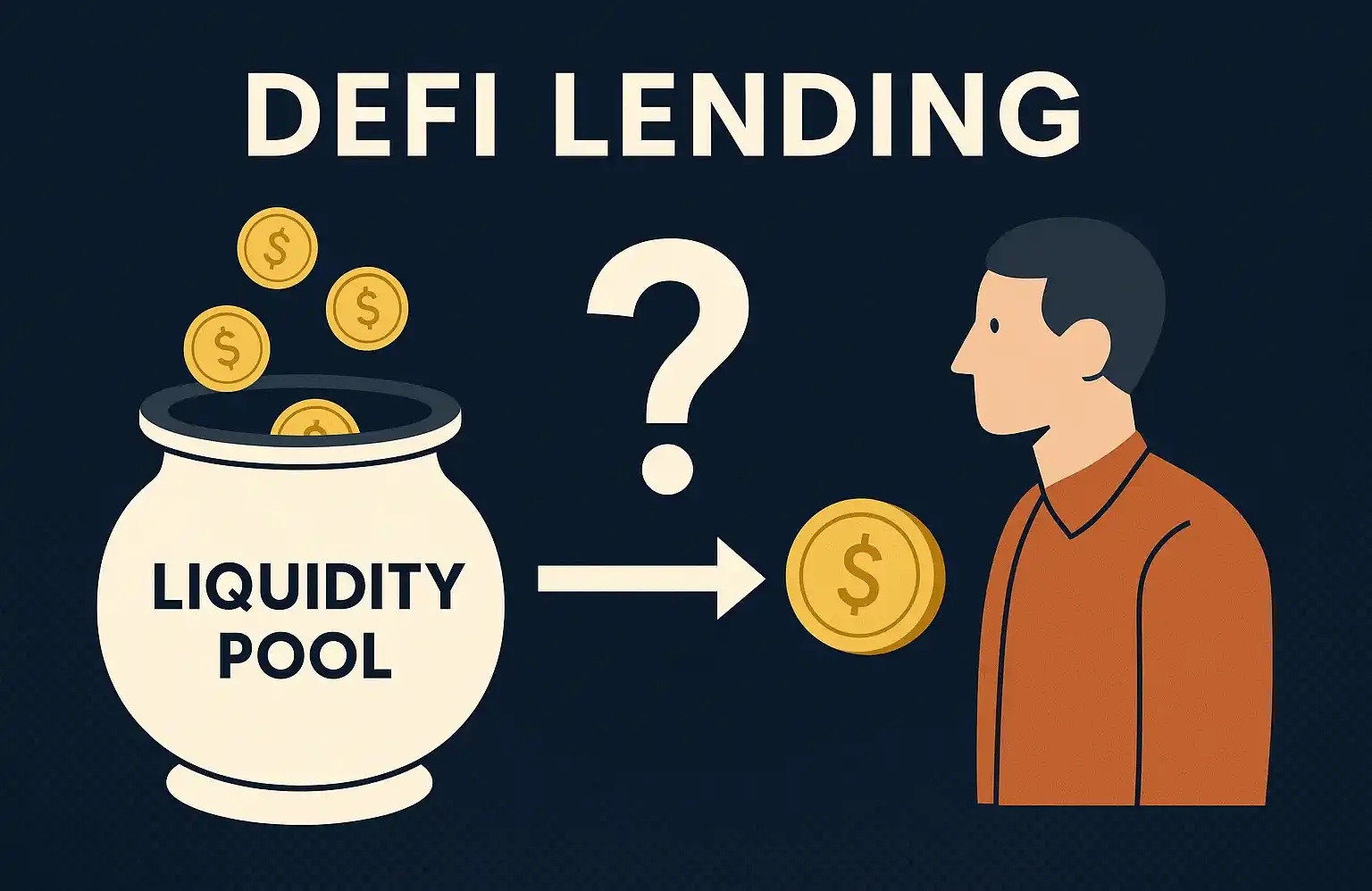
The DeFi protocol sells tokens and retains protocol revenue and crowdsourced liquidity to accumulate capital . The latter was mistaken for the total value locked. In fact, when users provide liquidity to the protocol, nothing is locked. Capital provided by users to the protocol functions more like a demand deposit than any form of permanent capital. Users essentially lend funds to an unsecured protocol, knowing that the protocol distributes benefits according to a set of rules, and can anywhere request funds back.
The agreement can only continue to provide convincing reasons for users to provide The privilege to manage user funds will be preserved only when there are no funds. When these reasons are not established, capital may flee in an instant and rush to more attractive pastures at the speed of the Internet.
Users for various reasons, mainly economic reasons , to leave the funds in the agreement with the agreement. The main reasons include access to transaction fees, token rewards, and security. Users are not mutually exclusive and can consider these reasons according to their own preferences. The conclusion is that as long as users believe that the agreement has the ability to adjust capital according to risk appetite to create value , the agreement can retain user capital.
that is, the DeFi protocol builds a balance sheet for the community and facilitates Creates rules and incentives for financial services creating value for all stakeholders in the protocol.
The following are some case studies to illustrate this Model . Note that the template is the same for each segment to emphasize the similarity between these protocols.
Case Study Uniswap
Uniswap coordinates decentralized exchanges by providing rules and incentives for users to contribute their capital to market-make assets on Ethereum. Users provide their capital to Uniswap in exchange for exchange fees that Uniswap generates by putting capital into productive market making . However, unlike the capital raised by traditional organizations through equity or debt, the capital raised by Uniswap from users is not permanent. Users can get their funds back anytime, anywhere, and keep them in Uniswap as long as they trust the protocol's ability to use that funds to generate transaction fees. Uniswap incurs a level of fees to best serve users who wish to trade assets peer-to-peer P2P without the need for a trusted third party.
Compound
Compound Compound coordinates decentralized lending by providing the rules and incentives for users to contribute their capital to build money markets for assets on Ethereum. Users contribute their capital to Compound in exchange for the interest Compound generates by putting their capital into productive loans. Like Uniswap, the capital Compound raises from users is not permanent, as long as they believe the protocol will remain solvent and earn interest on it, their capital will remain in Compound, otherwise users can withdraw their capital anytime, anywhere. Compound will incur some level of fees in order to continue to best serve users who wish to lend assets peer-to-peer P2P without the need for a trusted third party.
Synthetix
Synthetix coordinates the creation and trading of decentralized synthetic assets by providing rules and incentives for users to contribute their capital to mint synthetic assets (debt denominated in any asset supported by Synthetix) . Users provide their capital to Synthetix in exchange for transaction fees that Synthetix incurs when users reprice synthetic assets through contracts (Synthetix users trade synthetic assets in peer-to-peer contracts rather than peer-to-peer). Like Uniswap, the funds Synthetix raises from users are not permanent. Users can withdraw their funds anytime, anywhere, and only keep funds in Synthetix if they believe in the protocol's ability to remain solvent and generate transaction fees. Synthetix will incur fees to the extent that it continues to best serve users who wish to trade synthetic assets in a permissionless, peer-to-peer manner without the need for a trusted third party.
Defense strategies in a world of free-flowing Internet capital
If the DeFi industry learned something new about protocol defensibility in August, it would be this: Building a moat in DeFi is very difficult .
When code is open source and capital is free on the Internet When moving, traditional sources of competitive advantage such as economies of scale, switching costs, patents and regulatory licenses lose their relevance. Even "obvious" sources of competitive advantage like liquidity are irrefutable in this world, as we witnessed in September when SushiSwap forked SushiSwap forked over 75% of liquidity away from Uniswap. Internet age sources of competitive advantage, such as aggregators, are of little use because aggregators neither own any of their users' data nor have underlying permissionless protocols running on open databases accessible to anyone.
How to Capture Value if DeFi Protocols Seem Indefensible Woolen cloth?

The defensive nature of the protocol stems from the following points:
Community , including developers, Token holders, liquidity providers and users
Integration with real world institutions and other protocols
Brand and user experience Brand and UX are especially powerful when successful, helping it build brand equity and set user expectations
Protocol resources such as protocol vaults and insurance
Security Community is especially important for blockchain applications
The community is the most important value of the DeFi protocol One of the drivers especially when there is a strong shared value narrative between communities that needs to be merged. After all, under all constraints, all decentralized protocols will be guided by their communities, making the protocol the ultimate source of value creation and sustainability. Building a decentralized protocol is a game of institution building, not just writing code. Protocols require a broad, decentralized, and conscientious group of stakeholders who believe in the protocol vision and are willing to do whatever it takes to make the protocol a success. Stakeholders not only need efficient protocols, but also protocols they can trust in the long run.
For financial agreements, in addition to simply creating and distributing Beyond value, much of building trust lies in effective risk management . Anyone can fork some code and provide similar functionality, but forking code does not guarantee strong risk management. The protocol needs world-class developers dedicated to perfecting the protocol, as well as thoughtful and diverse token holders to manage the protocol for the long term.
Careful management of the agreement is that the agreement will attract storage and The only way to manage most of the world's wealth. The combination of shared value narratives, world-class developers, and thoughtful, diverse token holders can create productively engaging and loyal communities who believe in and benefit from the value created by the protocol. A community of missionaries lays the foundation for long-term value creation.
Integrate
Just because a protocol is forked doesn't mean anyone will use it. Integration with real world agencies and other protocols will benefit the protocol significantly. On a real-world level, integrations with exchanges, custodians, wallets, aggregators, payment gateways, and various financial service providers create demand that cannot be easily forked. Terra 's Chai Payments app is a good example. Chai serves over 2 million users and relies solely on the Terra blockchain to facilitate cheap payments for its infrastructure. All subsequent Terra products, such as the upcoming Anchor money market protocol, can reach Chai's large and growing user base at launch, providing strong demand that cannot be forked.
At the protocol level, privileged integration with other protocols can create Forked utility .
Yearn's Vaults and Ea rn products is a good example. Yearn's Vault is whitelisted by certain Maker oracles, which allows them to facilitate asset rebalancing and unbundling more effectively than other protocols that run similar strategies but are not whitelisted. Similarly, when using stablecoins to provide liquidity to Yearn's Curve yPool , it is actually depositing stablecoins into Yearn to get yToken, and then injecting yToken into Curve's liquidity pool to earn transaction fees. This also helps improve yToken liquidity, making it easier and more efficient to acquire and sell Earn yield-optimized stablecoins.
Brand and User Experience
Brand and user experience can become a powerful source for DeFi protocols to maintain their competitive advantage and capture users. This is especially true when a DeFi protocol is the first to build a successful protocol in the market, allowing it to set expectations around user experience and build brand equity hand in hand with users. The simplest example is Uniswap .
By most measures, Uniswap is the first successful The Automated Market Maker AMM . While many more advanced and flexible AMMs have entered the market over the past few months, offering users a better service, Uniswap has remained ahead of the competition. If switching costs are as simple as a user connecting to a new exchange with MetaMask, why would it be? The reason is because users are used to the Uniswap experience and trust the Uniswap brand . Blockchain is an adversarial environment where one wrong move can cost users dearly. Having confidence that Uniswap is working smoothly, and knowing how to use it safely, allows users to focus from quickly switching between protocols. This is a common trend in many of the most successful protocols to date.
Protocol Resources
Whether raising funds through the protocol's operating mechanism or retaining some of the proceeds, certain protocols have substantial financial resources that may be a non-forkable competitive advantage. Stockpiling valuable assets creates a moat for the protocol.
Insurance funds can make users feel safe about using the agreement More confident. A large insurance fund provides users with stronger guarantees that they will not lose their funds when depositing assets into the protocol for certain financial activities. Aave is a good example, its newly issued Aave token will support the Aave protocol, providing insurance for any losses incurred by depositors.
Similarly, a large treasury can both endogenously grow (Through activities like staking) or exogenous growth (through retained earnings or capital raising), they provide substantial asset value that can eventually flow back to stakeholders. The Vault not only allows the protocol to return value to token holders (dividends and token buybacks), but also allows the protocol to participate in various institutionalization activities (ecosystem spending). This could mean everything from paying developers to write code to incentivizing liquidity providers to fund the protocol. The idea is that the treasury provides the opportunity to reward the contributions of a broad and diverse group of stakeholders. For example, as of the end of July this year, Synthetix's vault assets were worth approximately $150 million , which includes various endogenous and exogenous assets such as SNX and ETH. There are only a dozen global cryptocurrency funds with assets larger than Synthetix vaults.
Security
Security is especially relevant for DeFi protocols running on their own blockchains, an important advantage in attracting funds from competitors and a significant source of competitive advantage. A more secure protocol provides users with more confidence and is therefore more attractive for high-value transactions. Delphi has recently adopted the cross-chain liquidity protocol THORChain , contributing an excellent example. THORChain's token economics ensures that its security is proportional to the liquidity added to the network. Specifically, it ensures that the total value of RUNE staked (in the pool) and bonded (by validators) is at least 3x the value of all external assets in the liquidity pool. Once this ratio deviates from its 3:1 target, THORChain achieves this by adjusting the system revenue from or to validators or liquidity providers. The upshot is that forking liquidity from THORChain does not fork its utility because it does not fork its security.
The more DeFi protocols have in the above five defense dimensions, The better the effect. These five features amplify factors such as liquidity to the point where network effects can actually start to occur.
The future trend of the business model that makes profits from the balance sheet
Community Balance Sheet is the basic primitive of DeFi. However, the current attempts by the DeFi protocol to use this pooled liquidity to do something is just Xiaohe's tip.
Short term vs long term liquidity
Currently, the protocol does not distinguish between short-term and long-term liquidity providers. This system benefits more opportunistic liquidity providers who jump from one protocol to the next in search of the highest yield possible. It is actually long-term liquidity providers that provide more value to the protocol.
In traditional finance, illiquid liquidity is more valuable than liquid liquidity: Customers earn more interest than checking savings if they deposit money in time deposits for a longer period of time.
For traditional banks, this is a key point, because if people can withdraw all funds at any time, as a liquidity-dependent institution, banks can go bankrupt very quickly.
Martin Krung, Switzerland Cryptocurrency Analyst
If the agreement includes such as locking funds, token rewards and exiting in stages Mechanisms, strong incentives for long-term liquidity and restraint for short-term liquidity may help to address these problems. It is important not to completely eliminate short term liquidity providers as they also provide value, but more important to ensure that the protocol can effectively attract more sticky capital .
Capital efficiency and use case expansion
Uniswap may only use about 25% of assets on its balance sheet on a typical day to facilitate transactions. The remaining 75% sits idle and is only used when large transactions move asset prices significantly up or down along Uniswap's pricing curve. This is in stark contrast to traditional market makers, which trade far more assets on a daily basis than they have on their balance sheets, often leveraging to further improve their capital efficiency and increase returns. Similar logic applies to other protocols, such as Maker, which only idles $1.8 billion of collateral on its balance sheet in smart contracts that generate zero returns; or Nexus Mutual The idle ETH capital generates zero returns in the fund pool. This list is very long, but here it highlights that DeFi protocols have not yet unlocked the full potential of their balance sheets .
Agreement can unlock this potential in a number of ways. On the one hand, the protocol can further improve risk management , which may lead to lower mortgage rates and thus more efficient use of capital. Although, a more imaginative way is that the protocol can use the assets on the balance sheet for adjacent use cases other than the main purpose. For example, if lending and trading can be easily facilitated using asset pools, why can't the protocol serve both use cases with the same liquidity pool ?
A few months ago, IDEO CoLab investor and MIT Bitcoin Dan Elitzer , founder of the club and one of the founding team members of Yam Finance, speculated on this possibility, saying that some protocols may gradually do this, making the assets in the liquidity pool available for various opportunities at the same time, to yield the highest risk-adjusted rate of return.
If I am willing to hold a fixed percentage of my assets in my wallet and want them to yield the highest return passively, Why don't I put them all into a dedicated Balancer liquidity pool to earn transaction fees? And, if the pool contains ETH, DAI, REP, and ZRX, why would I not want to lend any of these assets if the loan is overcollateralized by other assets in my pool?
Of course, can the assets in the pool also provide flash loans under the premise of paying a small fee? Maybe I'm willing to take more risk looking to lend to traders funding 20x leveraged perpetual contracts (e.g. Futureswap)? Think of it as the ultimate development of passive and personalized investing.
Dan Elitzer, one of the founding team members of Yam Finance
If this is the vision that is almost close to being correct (I think it is), the future may be dominated by a super agreement that facilitates all kinds of financial services, rather than today's professional application protocols. This distinction is akin to the difference between a specialist bank that focuses solely on consumer banking, and a diversified financial institution such as JP Morgan Provide a wide range of financial services in the fields of commercial banking, investment banking and asset management. The idea here is that by making liquidity in a liquidity pool available to multiple use cases at the same time, a symbiotic relationship can be created between these use cases.
DeFi protocols will likely continue to focus on their initial use case, but in the long run many protocols may find themselves in competition with each other.
Fund Allocation
Capital allocation is the process of allocating a company's financial resources to maximize shareholder returns. Essentially, companies have five main options for allocating funds, including reinvesting in operations, paying dividends, repurchasing stock, paying down debt, and acquiring other businesses. In most cases today, DeFi protocols only explore the following two options: paying dividends and repurchasing shares (tokens). However, given the maturity stage of these DeFi protocols, neither option is suitable.

Start-up stage companies rarely use their financial resources to buy back stock or pay dividends to shareholders. the reason is simple. Why reward shareholders now when capital can earn higher returns and be reinvested in the business? This is especially true for start-ups in high-growth industries, where the potential return on capital if the company succeeds in the market is enormous.
Investors in early stage startups do not want dividends and stock buybacks . They want growth and future profits. However, today’s DeFi protocols do the exact opposite.
The DeFi protocol is not to buy back tokens, but just to transfer these ;Tokens are burnt or distributed to token holders, and fee income is distributed to token holders. These agreements could have taken a more thoughtful approach to capital allocation. Placeholder partner Joel Monegro touched on this idea in a recent article, suggesting that instead of buying back and burning tokens, the protocol should buy back and reissue tokens to incentivize growth, returning value to holders. Currency. More generally, protocols are better off letting any revenue they generate accumulate in a treasury, and then take a more proactive stance on how it distributes it. There are many ways for a protocol to use its retained earnings to incentivize growth and reward stakeholders for creating value. From paying developers remuneration, to incentivizing liquidity providers, rewarding agreement managers and even subsidizing users, you can receive effects.
DeFi protocols have proven that they can create value for token holders, That's a good thing, but now that you've proven yourself, it's time to do some thoughtful thinking about fund allocation .
From protocol rise to protocol cooperation protocol parties and meta-governance
The two main problems of the current protocol governance are the indifference of the voters and the giant whale calling the wind and the rain . How can a small holder holding only 0.01% of the token supply compete with five opposing VCs who collectively own 51% of the tokens? Many protocol governance votes typically receive single-digit percentages of token holders - far less than the majority votes seen in US presidential elections and corporate shareholder votes. Many protocols now have delegation mechanisms that can solve this problem, but even these are only scratching the surface of what a protocol can govern. If in addition to delegating voting rights to well-known protocol politicians, can voting rights be delegated to cross-protocol voting bodies? Projects such as PowerPool and PieDAO are addressing this problem.
PowerPool’s first product is liquidity mining The DeFi index builds and establishes weights based on community votes, and realizes the meta-governance of composite agreements. The index will be implemented as a Balancer liquidity pool comprised of eight governance tokens, including PowerPool's own token CVP . Proposing an initial share of 1/8 or 12.5% per token, all governance tokens combined in this liquidity pool will vote in their respective protocols based on the decisions of CVP token holders. The main idea is that the protocol can act as a governance aggregator and coordinate governance decisions across all its constituent protocols.
Similar ideas from coordinated incentive liquidity pools to Privileged integrations open to other protocols are all-encompassing. It is conceivable that PowerPool or its competitors may become a large political party, a force in protocol governance, and obvious synergy between protocols.
Decentralized dispute resolution and subjective contracts
One of the most ambitious projects in the crypto space is Aragon , which ultimately aims to become a sovereign digital nation running on Ethereum. A potentially powerful layer of the Aragon protocol stack is its decentralized dispute resolution system called Aragon Courts . Aragon Courts are composed of jurors who are financially incentivized to participate in arbitration of disputes between community participants.

Tools such as Aragon Court not only allow protocols to create subjective contracts within themselves, but also between protocols. Imagine cross-protocol financial transactions between protocols without over-collateralization, and achieving a high degree of partnership that cannot be expressed in code. Collaborative possibilities are greatly expanded by a decentralized court system that pushes blockchain-based economic systems away from mere “code is law” dispute resolution systems.
Coordinate capacity expansion plan
One thing that has become apparent over the past few months is that DeFi is currently unable to scale . Just a small wave of hype will push the usage of Ethereum to its limit. With blocked block space, increased transaction times, and skyrocketing gas prices, Ethereum feels paralyzed at times. To make matters worse, the underlying scaling in ETH 2.0 will take several years to become a reality, and it will have to wait until the final stage of the ETH 2.0 upgrade. The result, as Ethereum founder Vitalik explained, is that "the Ethereum ecosystem is likely to bet on all kinds of rollup schemes (plus plasma and state channels) as a scaling strategy for the near and mid-term future."
However, that doesn't mean expansion won't happen soon . Actually the opposite is true. With the help of Layer 2 expansion solutions (such as rollup), Ethereum can achieve several orders of magnitude expansion in the near future, and even once ETH 2.0 phase 1 starts and rollup moves to the shard chain for data storage, it can reach 100,000 TPS the theoretical maximum.
These rollups will be composable events for the foreseeable future island center , and cross-rollup activity can only happen asynchronously. The result of this, combined with the fact that many rollup solutions are only just emerging, means that protocols that are the first to migrate to rollup may have a significant competitive advantage over those that don't. Furthermore, protocols that move to the same rollup scheme in a sense are effectively forming partnerships, and maintaining composability in this more scalable environment may lead to synergies between such collaborative protocols.
Summary
In the third quarter of 2020, the risk paid off handsomely . During this time, there is a simultaneous feeling that everything matters and that nothing matters. Long-term questions about sustainability and competitive advantage don’t seem to matter as DeFi asset prices skyrocket across the board. However, now that the market has cooled, the enthusiasm among investors to position for the next stage of DeFi has increased.
The world of open-source financial protocols is the new frontier of economic activity . Most features in DeFi are less than two years old, and only in recent months have we gotten a glimpse of how these protocols will perform and compete in the long run.
It was impossible to predict this fast-moving industry even months ago How it worked, let alone years ago. But that doesn't mean investors can't think carefully about which factors really matter, and which factors don't matter at all. For long-term investors in DeFi, what matters is not the flood of food-named tokens, valueless forks, and Ponzi economics, but the legitimate source of its sustainable competitive advantage. How can DeFi Protocols create and capture value now and in the future
The world of DeFi is full of opportunities. They are waiting to be exploited by thoughtful investors.
Thanks to Qiao Wang, Hasson Bassiri, and the Messari team for their feedback on this article.
Welcome to join the official BlockBeats community:
Telegram Subscription Group: https://t.me/theblockbeats
Telegram Discussion Group: https://t.me/BlockBeats_App
Official Twitter Account: https://twitter.com/BlockBeatsAsia
 Related Articles